 Bellingham Exterior
 Birch Bay's Exterior Challenge
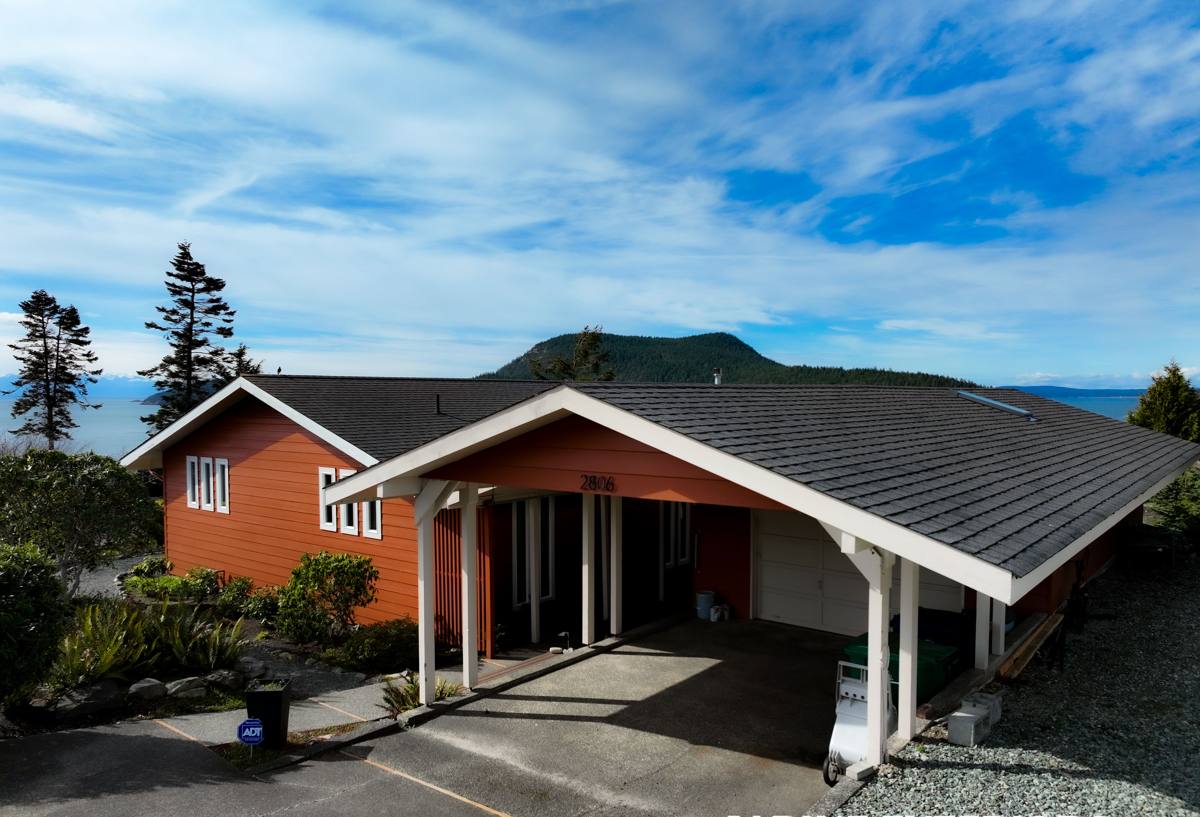
Birch Bay sits right where Whatcom County meets the Salish Sea, and that location shapes everything about how a house ages here. Homes a few blocks from the water get a steady dose of salt-laden air, and even properties set back from the shoreline still deal with the same driving winter rains and long gray stretches that define this corner of Washington. Add in the tree cover common to the area and you get a climate that's genuinely tougher on an exterior than what homeowners a few miles inland in Bellingham proper might experience.
We work throughout Whatcom County, and Birch Bay is one of the areas where we see the clearest evidence of what happens when an exterior isn't built or maintained for the conditions. Paint fails faster near the water. Moss establishes itself earlier in the season and holds on longer. Fasteners and trim corrode ahead of schedule. None of this is unusual — it's just what coastal Whatcom County does to a building, and it's exactly why we approach Birch Bay homes with a different level of attention than a standard interior-valley project.
What Salt Air and Driving Rain Actually Do
Salt Air
Airborne salt is corrosive to metal fasteners, flashing, and hardware, and it accelerates the breakdown of anything with a painted or coated surface. Over years, that means faster fading, chalking, and finish failure on siding and trim that wasn't built to handle it. It also means the metal components of a roofing or window system — nails, screws, flashing, hinges — need to be chosen with corrosion resistance in mind, not just cost.
Driving Rain
Storms coming off the water don't just fall straight down — wind pushes rain sideways into walls, under trim, and into any gap in a building envelope that wouldn't be a problem in calmer conditions. That's a water-intrusion issue as much as a durability issue. Flashing details, caulk lines, and window sealing all matter more here than they would on a home shielded from prevailing weather.
Moss Season
Whatcom County's wet season runs long, and shaded, moisture-retaining surfaces — north-facing roof slopes, decks under tree cover, siding behind landscaping — give moss and algae months to get established. Moss holds moisture against a surface, and sustained moisture is the enemy of almost every exterior material eventually. Roofs lose granule protection faster under a moss mat. Wood decking softens. Even fiber cement siding, which handles moisture far better than wood-based products, benefits from detailing that keeps water moving off the wall rather than sitting on it.
Siding: Why We Only Install James Hardie in Birch Bay
We made a company-wide decision to install James Hardie fiber cement siding exclusively, and nowhere does that decision make more sense than in a marine-exposed community like Birch Bay. Fiber cement is non-combustible and dimensionally stable — it doesn't swell, rot, or delaminate the way wood-based or engineered-wood products can when they take on repeated moisture. In a climate where driving rain and long wet seasons are the norm rather than the exception, that stability matters more than it would somewhere drier.
We don't install vinyl, LP SmartSide, Cemplank, Allura, primed spruce, or cedar. Each of those has a place in the market and each does some things well, but they all come with trade-offs we're not willing to put our name behind on a coastal Whatcom County home:
- Vinyl can warp and become brittle with UV and temperature swings, and its seams and fasteners give wind-driven rain more opportunities to find a way in.
- Engineered wood products (like LP SmartSide) use wood strand cores that are more moisture-sensitive than fiber cement, which matters when a product will spend months a year damp.
- Cemplank and Allura are also fiber cement, and reasonable products — our issue isn't the category, it's that we standardized our crews, warranty process, and detailing on one system rather than juggling several.
- Primed spruce and cedar require the most ongoing maintenance of any option — regular refinishing and vigilant caulk and paint upkeep — which is a heavier burden in a climate that's already hard on painted surfaces.
James Hardie's factory-applied ColorPlus finish is baked on and warranted against fading and peeling in a way field-applied paint can't match, which counts for a lot near salt air. Hardie also engineers regional HZ5 product lines specifically for wetter, harsher climates like ours, and backs installations with a strong transferable warranty when installed to their specifications — something we take seriously on every job.
Roofing for a Wet, Mossy Climate
Roofing in Birch Bay has to deal with the same driving rain and moss pressure as siding, but with less margin for error since a roof failure shows up as a leak, not just a cosmetic issue. We pay close attention to underlayment quality, proper flashing at valleys and penetrations, and ventilation — a well-ventilated attic reduces the condensation that can accelerate moss growth and shingle breakdown from underneath. On shaded roof sections, material choice and detailing that shed water quickly make a real difference in how long moss takes to re-establish after a cleaning.
Windows: Sealing Out Wind-Driven Rain
Window failures in coastal microclimates are rarely about the glass — they're almost always about flashing and sealing at the rough opening. Wind-driven rain will find any gap in a window's integration with the wall, and once water gets behind trim or siding it can travel and cause damage far from where it entered. We flash and seal window installations with that reality in mind, and we pair window work with our siding installations so the whole envelope — not just the window unit — is doing its job together.
Decks: Built for Marine Exposure
Decks in Birch Bay take a beating from both directions — sun and salt from the water side, and shade and moisture where trees or the house itself block airflow. Fastener corrosion, board cupping, and moss buildup on shaded sections are the most common issues we see. Good deck work here means corrosion-resistant hardware, framing that allows airflow underneath, and a surface material chosen with the specific exposure of that deck in mind rather than a one-size-fits-all approach.
Comparing Exterior Materials in a Marine Climate
| Material | Moisture Behavior | Maintenance Burden | Finish Durability Near Salt Air |
|---|---|---|---|
| James Hardie Fiber Cement | Dimensionally stable, resists swelling | Low — factory finish, no repainting cycle needed for years | High — ColorPlus finish warranted against fading/peeling |
| Vinyl Siding | Doesn't absorb water, but seams allow intrusion | Low, but prone to warping/cracking over time | Moderate — UV and temperature swings degrade color |
| Engineered Wood (LP SmartSide) | Moisture-sensitive wood strand core | Moderate — needs consistent sealing at edges/seams | Moderate — field paint wears faster than factory finish |
| Cedar / Primed Spruce | Absorbs moisture, prone to swelling and rot | High — regular refinishing and caulk upkeep required | Low without diligent, ongoing maintenance |
Why a Local Crew Matters Here
A crew that mostly works inland doesn't get daily exposure to what salt air and marine weather do to fasteners, flashing, and finishes. We work across Whatcom County, including Bellingham and the surrounding coastal communities, so our installation details — how we flash, what hardware we specify, how we sequence work around wet weather windows — reflect what actually holds up here rather than a generic approach. That local knowledge shows up in details homeowners don't see until years later, when a properly detailed exterior is still performing and a generically installed one isn't.
What to Look For When Hiring for a Birch Bay Property
- A written scope that specifies flashing and moisture-barrier details, not just "install siding" or "replace roof"
- Corrosion-resistant fasteners and hardware called out for coastal exposure
- A clear warranty — both manufacturer and workmanship — explained in plain terms before work starts
- References or completed work the contractor can speak to specifically in this area
- A crew willing to explain material trade-offs honestly rather than pushing whatever they have on hand
Getting Started
If you're dealing with a Birch Bay home that's showing its age faster than you'd expect — fading siding, moss creeping across the roof, drafts around windows, or a deck that's starting to feel soft in spots — it's worth having someone look at the whole exterior rather than patching one symptom at a time. We offer free, no-pressure estimates and can walk through what we're seeing and what your options actually are, with no obligation attached. Use the form below to get in touch and set up a time.