 Bellingham Exterior
 Exterior Contracting for Silver Beach Homes
Silver Beach is one of Bellingham's older, tree-shaded neighborhoods, and that character comes with a maintenance reality: mature tree canopy, a lot of shade, and homes that were often built decades before today's building science and exterior products existed. Whether you're in a mid-century rambler, a 1970s split-level, or a newer infill build, the exterior of your home in this part of Bellingham is doing constant, quiet work to keep moisture, wind, and organic growth outside where they belong. We do siding, roofing, windows, and decks for homeowners throughout Silver Beach and the surrounding Whatcom County area, and we build every job around the specific way this climate wears down a house.
We're not a national franchise dispatching whoever's available that week. We're a local crew that works this same weather pattern year-round, sees the same failure points repeat on similar homes, and stands behind the work because we're still going to be here next year, and the year after that.
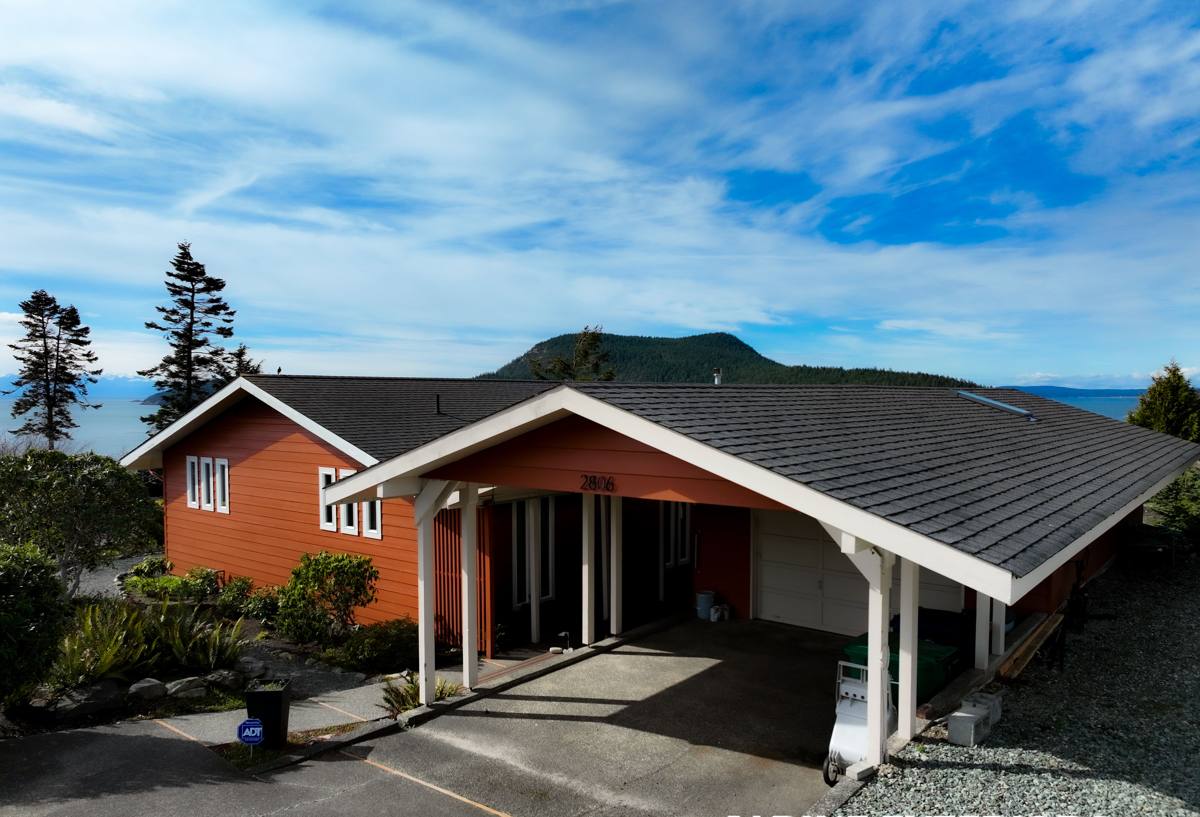
What This Climate Does to a House
Bellingham and greater Whatcom County sit in a marine climate shaped by the Salish Sea — salt-laden air moving inland, long stretches of driving rain, and a low winter sun angle that keeps north- and tree-shaded walls damp for days at a time. In a wooded neighborhood like Silver Beach, that dampness lingers even longer. Less direct sun and more overhead canopy means slower drying, more standing moisture on siding and trim, and a moss and algae season that can run eight months of the year instead of two or three.
Over time, that combination shows up as predictable damage:
- Moss and algae staining on north-facing walls and anything under tree cover
- Soft, swollen, or delaminating trim and siding edges where water sits longest
- Roof moss buildup that lifts shingles and shortens roof life
- Window frames and sills that stay damp long enough for wood rot to set in
- Deck boards, ledgers, and fasteners that corrode or soften from repeated wet-dry cycles
None of this is unique to any one house — it's what this climate does to exteriors generally, and it's why the materials and detailing we use matter more here than they would in a drier region.
Siding: Why We Install Only James Hardie
We install James Hardie fiber cement siding exclusively. We don't install vinyl, LP SmartSide, Cemplank, Allura, primed spruce, or raw cedar — not because those products can't be installed correctly by someone, but because we've made a professional decision about what we're willing to put our name on in this specific climate, and Hardie is it.
Fiber cement is non-combustible, which matters more every year as wildfire smoke and regional fire risk become a bigger part of Pacific Northwest summers. It doesn't feed moisture into the wall assembly the way wood-based products can, and it holds its shape and paint line in freeze-thaw and constant-damp cycles far better than engineered wood. Hardie's ColorPlus factory finish is baked on rather than field-applied, which means better color consistency and a finish that's built to handle years of rain and UV exposure without an early repaint. Hardie also builds region-specific HZ product lines engineered for climates like ours, and backs the material with a strong, transferable warranty that stays with the house if you sell.
Vinyl siding is inexpensive and low-maintenance, but it can warp in heat, gets brittle in cold, and doesn't hold paint if you ever want to change the color. Engineered wood products like LP SmartSide use real wood fiber, which means the long-term outcome depends heavily on how well every cut edge and seam is sealed — a single missed detail can let moisture in over time. Primed spruce and cedar are beautiful but require a maintenance commitment — recoating, caulking, and watching for rot — that most homeowners underestimate until the siding is already failing. We'd rather explain these trade-offs honestly upfront than sell you something we don't believe holds up here.
What Correct Hardie Installation Involves
Fiber cement siding is only as good as its installation. We follow manufacturer-specified nailing patterns, maintain proper clearances at grade and roof lines, flash every window and door opening, and use a rainscreen or drainage gap where the wall assembly calls for it. In a shaded, damp neighborhood like Silver Beach, those drainage details are what actually keeps moisture from getting trapped behind the cladding — the siding material is only half the equation.
Roofing in a Wet, Shaded Neighborhood
Roofs in Silver Beach deal with the same tree cover and moisture load as the siding, often worse, since a roof takes the brunt of both rain and organic debris. Needle and leaf litter collects in valleys and behind chimneys, holding moisture against shingles and accelerating moss growth. Left unaddressed, moss doesn't just look bad — it lifts shingle edges, traps water underneath, and shortens the life of an otherwise sound roof by years.
Our roofing work covers full replacements, repairs, and moss/debris maintenance, with attention to the details that matter most in this climate: proper underlayment, ice-and-water protection at valleys and eaves, ventilation that lets the attic dry out between storms, and flashing details around chimneys and skylights that are common trouble spots on older Bellingham homes.
Windows: Keeping Moisture and Drafts Out
Older windows in Silver Beach homes — especially original wood-frame units on homes built before modern energy codes — are frequently the first thing to fail once wood rot sets in around the sill or frame. Replacing failing windows with properly flashed, well-sealed units does two things: it stops water intrusion at one of the most common entry points on a house, and it noticeably cuts down on drafts and heat loss during Whatcom County's long, damp winters. We integrate window replacement with the surrounding siding work so flashing and water management are continuous across the whole wall, rather than treating windows as a separate, disconnected job.
Decks Built for Pacific Northwest Weather
A deck in Silver Beach's tree-shaded lots faces a rougher year than a deck in an open, sunny yard would. Shade means slower drying after rain, more moss and algae on the deck surface, and faster breakdown of fasteners and ledger connections if they weren't detailed correctly at build time. We build and repair decks with attention to proper ledger flashing, joist protection, and fastener selection suited to constant damp exposure — the difference between a deck that needs re-boarding in eight years and one that holds up for decades.
Material Comparison at a Glance
| Material | Moisture Resistance in This Climate | Maintenance | Fire Rating | Our Position |
|---|---|---|---|---|
| James Hardie fiber cement | Excellent when installed to spec | Low — factory finish, occasional wash | Non-combustible | What we install |
| Vinyl siding | Good, but can warp/crack over time | Low, but can't be repainted easily | Combustible | Not installed by us |
| LP SmartSide / engineered wood | Good if every seam stays sealed | Moderate — edge sealing matters | Combustible | Not installed by us |
| Primed spruce / cedar | Fair — needs ongoing upkeep | High — recoating, caulking | Combustible | Not installed by us |
This table reflects our professional standard, not a claim that every alternative product fails. Plenty of these materials perform adequately when installed and maintained correctly — we've simply chosen to specialize in the one system we believe holds up best, with the least homeowner upkeep, in a climate like ours.
Signs Your Exterior Needs a Look
- Moss or algae streaking on siding, especially on north-facing or shaded walls
- Soft spots, bubbling paint, or visible swelling at siding seams and trim
- Missing or curling shingles, or moss buildup in roof valleys
- Window sills or frames that feel soft or show dark staining
- Deck boards that stay damp long after rain stops, or fasteners showing rust
- Gutters that overflow or hold standing debris during storms
Catching these early is almost always cheaper than waiting. Once moisture gets behind siding or under roofing, the repair scope grows fast — what starts as a trim replacement can turn into sheathing repair if it sits too long.
Why a Local Crew Matters in a Neighborhood Like This
Every neighborhood in Bellingham has its own quirks — lot size, tree cover, sun exposure, how close homes sit to the water or to a hillside. A crew that works Whatcom County exteriors year-round has already seen how Silver Beach's shade and moisture load play out on roofs, siding, and decks, and plans the work accordingly instead of applying a generic install and hoping it holds. We're also here for warranty support and follow-up questions long after the crew leaves, which matters more with an investment that's meant to last decades, not a few years.
What Working With Us Looks Like
We start with an in-person look at your home's actual exposure — how much shade it gets, where water tends to collect, and what condition the current siding, roofing, windows, or deck are really in underneath the surface. From there we walk through material and scope options honestly, including telling you if a full replacement isn't actually necessary yet. Once a project starts, we handle the flashing and drainage details that don't show up in a quick estimate but determine how the exterior performs ten and twenty years out.
If you're noticing moss buildup, soft trim, or an aging roof on a Silver Beach home, we're happy to take a look and give you a straightforward, no-pressure estimate — just fill out the form below.