 Bellingham Exterior
 Exterior Work Built for Lynden's Climate
Lynden sits in the Nooksack Valley in Whatcom County, close enough to the water and the foothills that homes here take on a specific mix of weather stress: long stretches of steady rain, high humidity that never fully lifts in the winter months, and the kind of persistent dampness that keeps moss and algae established on north-facing walls and rooflines for most of the year. Add in the marine-influenced air that moves through this part of the Pacific Northwest and the driving rain events that come off winter storms, and you have a climate that is patient but relentless on exterior building materials. It doesn't destroy a house overnight. It wears down whatever wasn't built or installed to handle it, one wet season at a time.
Bellingham Exterior Contractor works throughout Whatcom County, and Lynden is one of the communities we're in regularly for siding, roofing, window, and deck projects. The town's mix of older farmhouses, mid-century homes, and newer construction near the edges of town means we see a wide range of exterior conditions — from siding that's held up fine for decades to trim and cladding that started failing within the first five or ten years because it wasn't matched to the climate in the first place.
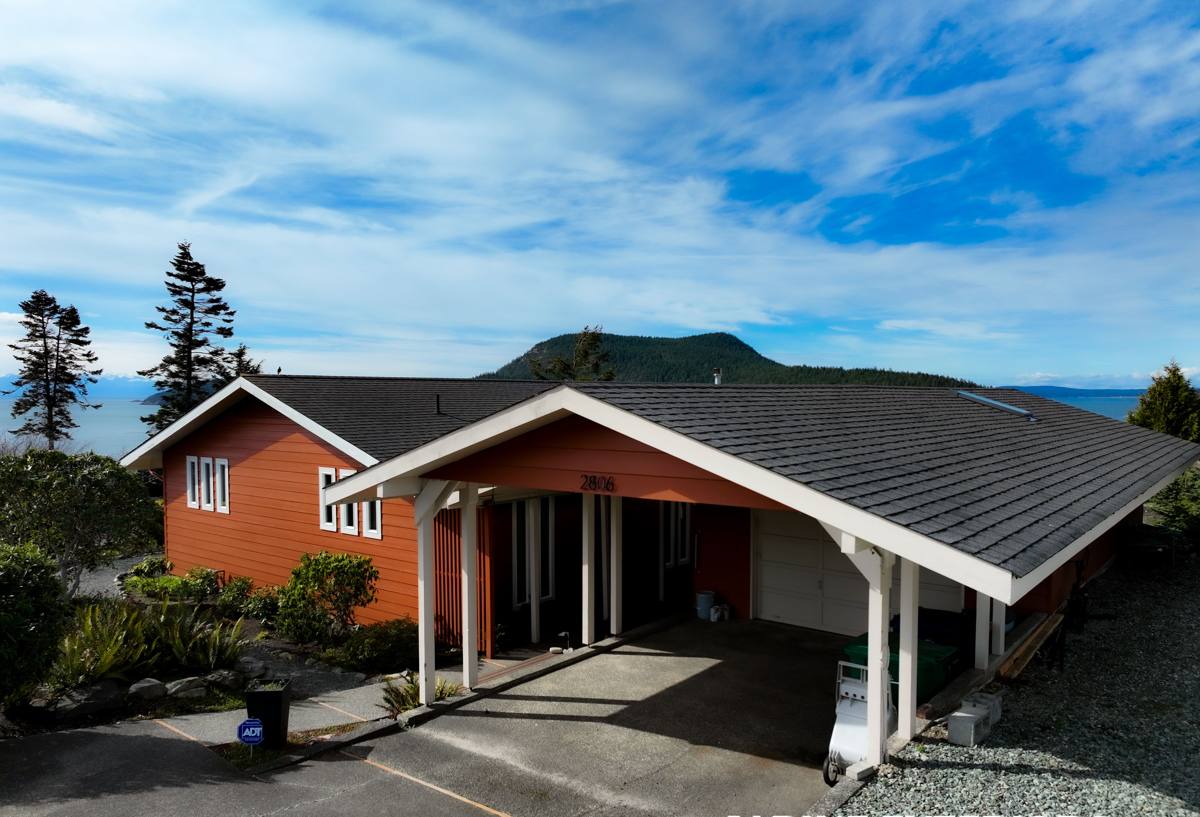
What Lynden Homes Face Over Time
Moisture That Doesn't Let Up
Whatcom County gets a long wet season, and Lynden's inland location doesn't spare it from that pattern. Wood-based siding products — cedar, primed spruce, engineered wood — depend on paint film and caulking staying intact to keep water out. Once a gap opens at a seam, a fastener head, or a butt joint, water gets behind the material and stays there, because the air isn't dry enough long enough to let things fully dry out between rain events. That's how you end up with soft spots, swelling, and rot showing up in places that looked fine from the yard.
Moss and Algae
Shaded walls, roof valleys, and anything under overhanging trees in Lynden tends to grow moss and algae faster than homeowners expect. On roofing, moss holds moisture against shingles and accelerates granule loss. On siding, algae staining is mostly cosmetic but it's also a sign that a surface is staying damp longer than it should — which matters more for materials that absorb moisture than for ones that don't.
Temperature Swings and Freeze-Thaw
Lynden runs a bit colder in winter than areas right on Bellingham Bay, with more frost days and occasional hard freezes. Materials that have already absorbed moisture and then freeze are more prone to cracking, splitting, and fastener failure. This is a real factor for decks and any wood trim exposed to the weather.
Wind-Driven Rain
Storms moving through the valley can push rain sideways into wall assemblies, particularly on the west- and south-facing sides of a house. Flashing details, house wrap, and how siding is lapped and sealed at penetrations matter as much as the siding material itself.
Siding: Why We Only Install James Hardie
We install James Hardie fiber cement siding exclusively. We don't install vinyl, LP SmartSide, Cemplank, Allura, primed spruce, or cedar, and we're upfront about why: those products all have real strengths, but each comes with a maintenance burden or moisture vulnerability that doesn't hold up well against a climate like Whatcom County's over the long run.
- Wood and wood-composite products depend on an intact paint or finish layer to stay dry. In a climate with this much sustained moisture, that finish gets tested constantly, and any lapse in maintenance shows up as swelling, delamination, or rot.
- Vinyl siding doesn't rot, but it flexes with temperature, can crack in hard freezes, and its color fades over time with no practical way to refinish it short of replacement.
- Fiber cement from other manufacturers may be a reasonable product, but we've standardized on James Hardie specifically because of its ColorPlus factory-baked finish, its HZ5 formulation engineered for the Pacific Northwest's moisture and freeze-thaw conditions, and a transferable warranty structure we trust to back up the work.
James Hardie siding is non-combustible, doesn't rot or support insect damage the way wood products can, and the ColorPlus finish is factory-cured under conditions a job-site paint job can't replicate — which means better color retention and fewer repaint cycles over the life of the siding. For a house in Lynden that's going to sit through decade after decade of wet Whatcom County winters, that combination is what actually holds up, not just what looks good on a spec sheet.
Installation matters as much as the product. Hardie siding installed with the wrong fastener pattern, insufficient clearance from grade or roofing, or gaps at butt joints will still cause problems no matter how good the material is. We install to Hardie's published specifications, not shortcuts, because that's what the warranty and the performance both depend on.
Roofing
Roofing in Lynden has to deal with sustained rain exposure, moss growth in shaded and low-slope areas, and occasional wind events. We look at ventilation, flashing details around chimneys and valleys, and underlayment quality as closely as the roofing material itself — a roof with poor ventilation traps moisture in the attic space regardless of what's on top, which shortens the life of the whole system and can cause problems inside the house that have nothing to do with visible leaks.
For re-roofs, we also check what condition the decking is in underneath the old material. If there's been long-term moisture intrusion, patch-repairing over compromised sheathing just delays a bigger problem.
Windows
Older Lynden homes, especially farmhouses and mid-century construction, often still have original single-pane or early double-pane windows. Beyond the energy loss, the bigger issue we usually find is failed flashing and sealant around the window opening itself, letting water track into the wall cavity behind the trim. Window replacement is a good opportunity to correct that flashing detail at the same time, not just swap the glass and sash. We size and integrate new windows properly with the surrounding siding — an especially relevant detail when the exterior is being redone in Hardie at the same time.
Decks
Decks in this part of Whatcom County take a beating from standing moisture, freeze-thaw cycling, and moss buildup on horizontal surfaces that don't dry out quickly. Ledger board attachment and flashing where the deck meets the house is one of the most common failure points we find — it's a hidden connection that's easy to get wrong and expensive to ignore, since water intrusion there can travel into the house framing itself. We build and repair decks with attention to drainage, proper flashing at the ledger, and materials suited to sustained wet exposure.
Cost Factors to Understand
| Project | What Drives the Price | What to Ask About |
|---|---|---|
| Siding replacement | House size, number of stories, trim complexity, existing wall condition | Whether sheathing repair is included if rot is found |
| Roofing | Roof pitch, square footage, number of valleys/penetrations, decking condition | Ventilation and underlayment specs, not just shingle brand |
| Windows | Number of openings, window size, whether trim/flashing is being redone | How the installer handles flashing integration with siding |
| Decks | Square footage, material choice, ledger and footing condition | How the ledger-to-house connection will be flashed |
These are broad factors, not quotes — every property is different, and the only way to get real numbers is a walk-through.
Why a Local Crew Matters
A contractor who works Whatcom County regularly knows what a Lynden winter actually does to a house, not just what a spec sheet says a product can theoretically handle. That means recognizing which walls take the worst of the wind-driven rain, knowing how moss behaves on local rooflines through the wet months, and building in the flashing and ventilation details that matter here specifically — not applying a generic approach that might be fine in a drier climate but falls short in this one. It also means being reachable after the job is done, not just during the sale.
What to Check Before Hiring Any Exterior Contractor
- Washington state contractor license and current insurance, verifiable and in good standing
- Manufacturer certification for the specific siding or roofing product being installed
- A written scope of work that specifies flashing, ventilation, and fastening details — not just "install siding" or "install roof"
- Willingness to explain trade-offs between materials honestly, including the ones they don't install
- A clear warranty structure, both on materials and on labor
- References or completed local work you can actually see
If you're weighing siding, roofing, windows, or a deck project for a home in Lynden, we're glad to take a look and walk you through what we'd actually recommend for your property. Fill out the form below for a free, no-pressure estimate.