 Bellingham Exterior
 Exterior Work Built for the Barkley Neighborhood
Barkley is one of Bellingham's more established planned neighborhoods, with a mix of housing ages, roof pitches, and siding types that reflect several decades of building in Whatcom County. Whatever decade a home in Barkley was built, it's dealing with the same exterior challenge every year: a marine climate that combines salt-tinged air off Bellingham Bay, long stretches of driving rain, and a moss season that can run from fall through spring. We work on homes throughout the Barkley area and the broader Bellingham footprint, and the patterns we see here are consistent enough that we can usually spot a home's exterior weak points before we ever get out of the truck.
This page covers what that climate does to siding, roofing, windows, and decks specifically in this part of Bellingham, and how we approach each of those systems as a local exterior contractor rather than a crew passing through.
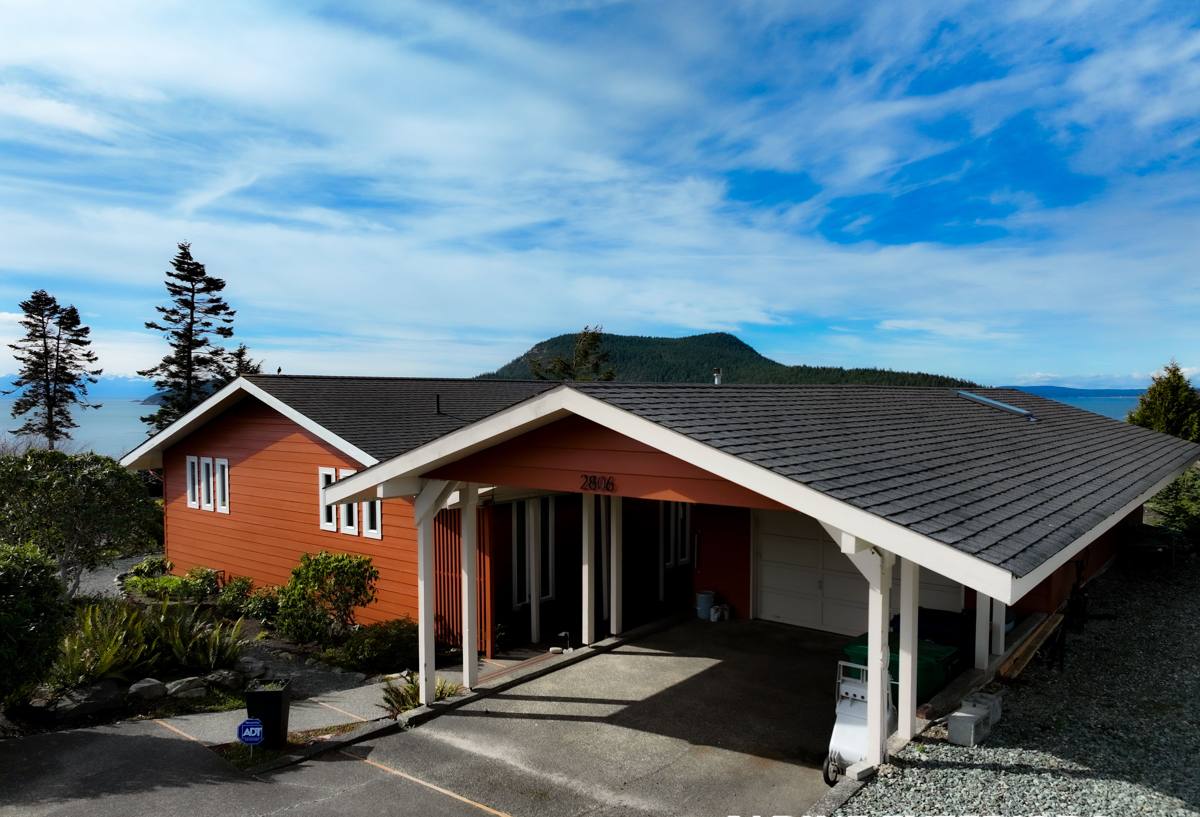
What Bellingham's Climate Does to a Barkley Home
Salt Air
Bellingham sits directly on salt water, and prevailing weather pulls moisture off the bay across most of the city, including inland neighborhoods like Barkley. Salt-laden air accelerates corrosion on fasteners, flashing, and any exposed metal trim. It also speeds up the breakdown of lower-grade paint films on wood and composite siding, which is part of why factory-applied, baked-on finishes hold up so much better here than field-applied paint.
Driving Rain
Whatcom County doesn't just get a lot of rain — a good portion of it arrives sideways, driven by wind off the Strait of Georgia and Puget Sound. Driving rain finds every weak seam, gap, and under-flashed joint on a home's exterior. Siding systems and window installations that aren't detailed correctly for wind-driven moisture will eventually let water behind the cladding, even if the surface material itself is fine.
Moss and Sustained Dampness
Long, mild, wet winters mean moss and algae have months to establish themselves on roofs, north-facing siding, and shaded deck boards. Moss holds moisture against a surface far longer than open air would, which is what turns a cosmetic issue into a rot or granule-loss problem if it's left alone for multiple seasons.
Siding: Why We Only Install James Hardie
We install James Hardie fiber cement siding exclusively. We don't install vinyl, LP SmartSide, Cemplank, Allura, or primed wood species like spruce or cedar. That's a deliberate standard, not a limitation of what we're capable of installing, and it comes down to how those products perform over time in exactly the conditions Barkley homes deal with every year.
How Hardie Handles This Climate
- Non-combustible core — fiber cement doesn't feed a fire the way wood-based siding can, which matters as wildfire smoke and dry-season risk have become a bigger regional conversation.
- ColorPlus factory finish — baked on in a controlled environment rather than field-applied, so it resists the fading and peeling that salt air and UV exposure cause on site-painted products.
- Climate-engineered HZ formulations — Hardie's HZ5 product line is engineered for regions with freeze-thaw cycling and sustained moisture, which fits the Pacific Northwest better than a one-size-fits-all siding spec.
- Dimensionally stable — fiber cement doesn't swell and contract with moisture the way wood and some composites do, so caulk lines and paint films last longer between maintenance cycles.
Vinyl siding is inexpensive and low-maintenance in a general sense, but it can warp under heat, becomes brittle in cold snaps, and relies on lap joints and J-channels that aren't sealed — which is fine in a dry climate and less fine when wind-driven rain is a regular event. Engineered wood products like LP SmartSide perform well when installed and maintained exactly to spec, but they're wood-based, meaning any breach in the factory coating opens the door to moisture absorption and swelling, and that risk compounds in a climate that doesn't give siding much time to dry out between storms. Primed cedar or spruce siding requires the homeowner to keep up a paint and caulk maintenance schedule that most people underestimate going in. We'd rather install a product engineered for this exact climate once and have it hold up, than install something cheaper that shifts a heavier maintenance burden onto the homeowner over the following decade.
Roofing in a High-Moss, High-Rainfall Area
Roofing in Barkley has to account for both volume and duration of moisture exposure. It's not just how much rain falls — it's how many months a roof stays wet without a real drying window. That has a few practical implications:
- Flashing details at valleys, chimneys, and roof-to-wall transitions matter more here than in drier climates, because those are the points where driving rain and prolonged dampness find their way in.
- Moss growth on north- and shade-facing slopes needs to be addressed before it lifts shingles or holds moisture against the roof deck — not just knocked off cosmetically.
- Ventilation is critical. A roof deck that can't breathe traps moisture underneath the roofing material, which shortens its life regardless of the material's own rating.
We evaluate roofing as part of the whole exterior envelope, especially since roof and siding failures in this climate often show up together — a compromised roof edge or flashing detail is a common source of the water damage we find behind siding during a full exterior assessment.
Windows That Actually Hold Up to Wind-Driven Rain
Window failures in this region are rarely about the glass itself — they're almost always about the installation detail around the window: flashing, weather-resistive barrier integration, and sealant. A well-built window installed without proper flashing will still leak in a Bellingham winter storm. We pay close attention to how a window ties into the surrounding wall assembly, not just the unit's energy rating, because that's what determines whether it stays dry through years of driving rain off the bay.
Decks Built for Year-Round PNW Weather
Decks in Barkley take a beating from the same moisture and moss pressure as roofs and siding, plus UV exposure in the drier summer months. The details that matter most for deck longevity here are drainage under and around the structure, spacing that allows boards to dry between rain events, and fasteners and hardware rated for a damp coastal environment. A deck that looks fine on the surface can still have a compromised substructure if water has been sitting against ledger boards or posts for several wet seasons.
Comparing Siding Options for This Climate
| Siding Type | Moisture Behavior in Wet Climates | Finish Durability | Typical Maintenance Burden |
|---|---|---|---|
| James Hardie Fiber Cement | Dimensionally stable, doesn't absorb and swell | Factory ColorPlus finish, long fade resistance | Low — periodic cleaning, caulk checks |
| Vinyl | Doesn't absorb water, but unsealed joints let moisture behind panels | Can fade, warp, or become brittle over time | Low upfront, but limited repair options if damaged |
| Engineered Wood (LP SmartSide, etc.) | Wood-based core can swell if coating is breached | Good when factory coating stays intact | Moderate — coating breaches need prompt attention |
| Primed Cedar/Spruce | Absorbs moisture readily, prone to swelling and rot | Requires field-applied paint that weathers faster | High — regular repainting and caulking |
Why a Local Crew Matters in Barkley
Exterior work in Whatcom County isn't generic construction work — it's construction work done in a climate that punishes shortcuts. A crew that works across Bellingham neighborhoods regularly, including Barkley, knows what wind-driven rain does to an under-flashed window, what a shaded north wall does to unmaintained siding, and how long moss can sit on a roof before it becomes a real problem instead of a cosmetic one. That local pattern recognition shows up in the details — flashing laps, drainage planes, fastener choices — that don't show up on a spec sheet but determine whether an exterior lasts fifteen years or forty.
Signs Your Barkley Home's Exterior Needs Attention
- Moss buildup on the roof, especially on north-facing or shaded slopes
- Soft or discolored siding near ground level, roof lines, or window trim
- Peeling or chalking paint on wood-based siding
- Visible gaps or cracked caulk around window and door trim
- Deck boards that stay damp long after rain has stopped, or soft spots near ledger boards
- Water stains on interior ceilings or walls near exterior corners
What to Ask Before Hiring an Exterior Contractor
Whatever contractor a Barkley homeowner ends up hiring, a few questions separate a crew that understands this climate from one that doesn't:
- Do you install to the manufacturer's specific climate zone requirements, or a generic install?
- How do you flash and seal transitions where siding meets windows, doors, and rooflines?
- What's your plan for existing moisture damage found once old siding or roofing comes off?
- What warranty coverage transfers with the home if it's sold?
If your home in Barkley needs siding, roofing, window, or deck work — or you're just not sure what shape your exterior is really in after a few wet Bellingham winters — we're happy to take a look and put together a free, no-pressure estimate.