 Bellingham Exterior
 Exterior Work in Sunnyland: What Makes This Neighborhood Different
Sunnyland sits close to the heart of Bellingham, tucked between busy corridors and quieter residential streets, with a housing stock that spans decades of Whatcom County building history. Like much of Bellingham, the neighborhood has a mix of older homes that have seen generations of Pacific Northwest weather and newer construction going up on infill lots. That mix matters when you're talking about exteriors, because a house built decades ago and a house built five years ago can need very different things from a siding, roofing, window, or deck project — even if they're two blocks apart.
What doesn't change block to block is the climate. Bellingham sits in a wet marine environment, close enough to the Salish Sea that salt-tinged air, driving rain off Bellingham Bay, and a moss season that can stretch most of the year all take a toll on exterior materials. We work on homes across Whatcom County every week, and Sunnyland's combination of mature tree cover, older housing stock, and persistent moisture is a pattern we know well.
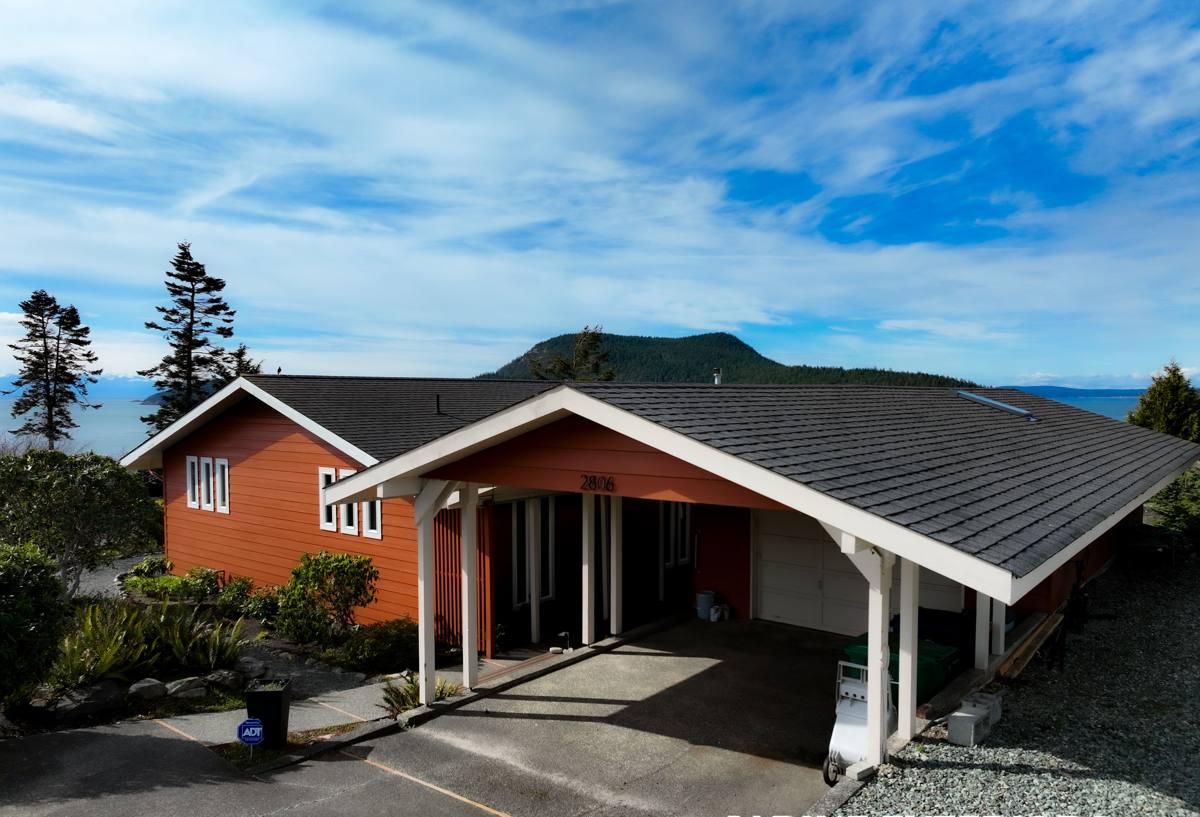
How the Local Climate Wears on a House
Homeowners in Sunnyland often don't think about their siding, roof, windows, or deck until something visibly fails — a soft spot near a downspout, a shingle that's curling, a window that won't seal, a deck board that's gone spongy. By the time those show up, the underlying moisture damage has usually been building for a while. A few things drive that in this part of Bellingham specifically:
- Salt-influenced air. Proximity to the bay means metal fasteners, flashing, and untreated wood corrode and degrade faster than they would further inland.
- Driving rain. Wind-driven rain doesn't just fall straight down — it pushes horizontally into siding seams, window frames, and deck ledger boards, finding any gap in the weather barrier.
- Extended moss and algae season. Shade from mature trees plus near-constant moisture means moss, algae, and lichen get a long runway to establish themselves on roofs, siding, and deck surfaces.
- Freeze-thaw swings. Whatcom County doesn't get brutal winters, but the repeated freeze-thaw cycling that does happen is enough to widen small cracks in old caulk, trim, and roofing over time.
None of this is unique to Sunnyland — it's Bellingham, it's Whatcom County, it's the whole western Washington corridor. But it's worth naming specifically, because a lot of exterior problems we see start as small, climate-driven issues that get ignored until they're expensive.
Siding: Why We Only Install James Hardie
Siding is the single biggest exterior surface on most homes, and in a climate like this, the material matters more than the color. We install James Hardie fiber cement siding exclusively — we don't install vinyl, LP SmartSide, Cemplank, Allura, primed spruce, or cedar. That's a deliberate standard, not a default, and it's worth explaining why.
What We See With the Alternatives
Vinyl siding is inexpensive and low-maintenance in a general sense, but it's a plastic product that expands, contracts, and can warp or crack in temperature swings, and it doesn't hold up structurally to the kind of driving rain and wind this area sees over decades. Wood-based composite sidings like LP SmartSide use engineered wood strand technology that's improved over the years, but any wood-based product is still vulnerable to moisture intrusion at cut edges and seams if installation isn't flawless — and in a marine climate, that margin for error is thin. Primed spruce and untreated cedar are traditional choices with real aesthetic appeal, but both require far more ongoing maintenance — repainting, sealing, checking for rot — than most homeowners want to keep up with year after year in a wet climate. Cemplank and Allura are also fiber cement products and share some of Hardie's core advantages, but we've standardized on one manufacturer so we can guarantee consistent installation training, product knowledge, and warranty support across every job.
Why James Hardie
James Hardie fiber cement is non-combustible, resists moisture far better than wood-based products, and holds paint and factory finish for far longer than traditional wood siding. Hardie's ColorPlus finish is baked on at the factory under controlled conditions, which gives more consistent, longer-lasting color than field-applied paint. Hardie also engineers specific product lines (HZ5, HZ10) for different climate zones, which matters in a region where rain and humidity are constant companions. Backed by a strong transferable warranty, it's the material we're willing to put our name behind for homes in this climate — installed correctly, to spec, every time.
Roofing: Built to Handle Rain and Moss
A roof in Sunnyland does more work than a roof in a drier climate. It's not just shedding water — it's resisting the moss and algae growth that comes from shade and standing moisture, and it's dealing with driving rain that tests every flashing detail around chimneys, vents, and valleys. We look closely at flashing and underlayment on every roofing job, because in our experience, roof leaks in this area are far more often caused by a flashing detail that was done wrong than by shingles simply wearing out.
Moss removal and prevention matter here too. Moss holds moisture against roofing material, works its way under shingle edges, and shortens the life of an otherwise sound roof if it's left unchecked. We talk to Sunnyland homeowners about realistic moss management as part of a roofing project — not a one-time treatment, but an ongoing part of maintaining a roof in a shaded, wet neighborhood.
Windows: Sealing Out Wind-Driven Rain
Older homes in Sunnyland often still have original or early-replacement windows, and window failure in this climate rarely looks dramatic — it's usually a slow drip of drafts, fogging between panes, and soft trim that shows up gradually. Wind-driven rain off the bay tests window seals in a way that calmer climates don't, pushing water sideways into gaps that would never be an issue somewhere drier. When we replace windows, we're paying as much attention to flashing and sealing at the rough opening as we are to the window unit itself, because a good window installed with a bad seal will fail just as fast as a cheap one.
Decks: Standing Up to Shade and Standing Water
Decks in this neighborhood deal with a specific combination of problems: shade from mature trees that slows drying time, and near-constant moisture that encourages rot at ledger boards, joists, and any spot where water can pool instead of drain. A deck built without enough attention to drainage, ledger flashing, and material selection will show algae and soft spots faster here than almost anywhere else in the state. We build and repair decks with that reality in mind — proper flashing where the deck meets the house, drainage that actually moves water away from structural members, and materials chosen for a shaded, wet environment rather than a sunny one.
What a Typical Exterior Assessment Looks Like
When we come out to a Sunnyland home, we're not just looking at the surface — we're checking for the patterns that this climate tends to produce. That includes moisture readings at vulnerable points, a look at flashing and trim details, checking for moss and algae buildup, and an honest assessment of what's cosmetic versus what's a real structural concern. Homeowners get a clear picture of what needs attention now, what can wait, and what the realistic cost range looks like — no pressure, no upselling.
Signs It's Time to Have Your Exterior Looked At
- Siding that's soft, bubbling, or visibly separating at seams
- Heavy moss or algae buildup on the roof, especially in shaded sections
- Window frames with visible rot, fogging between panes, or persistent drafts
- Deck boards that feel spongy, or a ledger board area that stays damp longer than the rest of the deck
- Paint that's peeling or chalking faster than it should on a wood-based surface
- Water stains on interior ceilings or walls near exterior corners
Cost Factors to Understand Before You Start
Every home and project is different, but a few factors consistently drive cost on Sunnyland exteriors. Understanding them up front makes it easier to plan and to compare quotes honestly.
| Factor | Why It Matters Here |
|---|---|
| Home age and existing material | Older homes often need more prep work — removing old siding, addressing hidden moisture damage, or upgrading flashing before new material goes on |
| Tree cover and shade | Heavier shade means more moss/algae history to address and can affect drying time during installation |
| Roof complexity | Valleys, dormers, and multiple roof planes multiply the flashing detail work that keeps driving rain out |
| Access and lot layout | Narrower lots and tighter setbacks common in older Bellingham neighborhoods can affect equipment access and staging |
| Scope of moisture damage | Hidden rot found once old siding or roofing is removed is the most common source of a project growing beyond the original estimate |
We walk through these factors with every homeowner before work starts, so there aren't surprises once a project is underway.
Why a Local Crew Matters
A crew that works across Whatcom County regularly sees how Bellingham's specific climate plays out on real homes — not a generic "Pacific Northwest" checklist, but the actual pattern of salt-influenced air, driving rain angles, and moss growth that shows up on this side of the Cascades. That local, repeated exposure is what lets us catch problems that a crew unfamiliar with this climate might miss, and it's why we can speak plainly about what a Sunnyland home actually needs versus what a one-size-fits-all national franchise might recommend.
If you're noticing wear on your siding, roof, windows, or deck — or you just want an honest read on where things stand — we're happy to take a look. The estimate is free, there's no pressure, and you'll get a straight answer about what your home actually needs.