 Bellingham Exterior
 Fairhaven's Exterior Climate: What Homes Are Really Up Against
Fairhaven sits close to Bellingham Bay, which means homes here deal with a specific combination of stresses that inland Whatcom County properties don't face to the same degree. Salt-laden air off the water accelerates corrosion on fasteners, flashing, and any exterior material that isn't built to handle it. Add in the long stretch of driving rain that defines a typical Pacific Northwest fall through spring, and you've got siding, trim, and roofing that stay damp for extended periods. That dampness, combined with shade from mature trees common in older Fairhaven neighborhoods, sets up ideal conditions for moss, algae, and mildew to take hold on roofs and north-facing wall sections.
None of this is unusual for the Bellingham area broadly, but Fairhaven's proximity to the water and its older housing stock mean the effects show up faster and more visibly than in some other parts of town. We see it consistently: paint failing early on wood trim, moss lines creeping down roof slopes, and siding that's held moisture long enough to start delaminating or rotting at the edges.
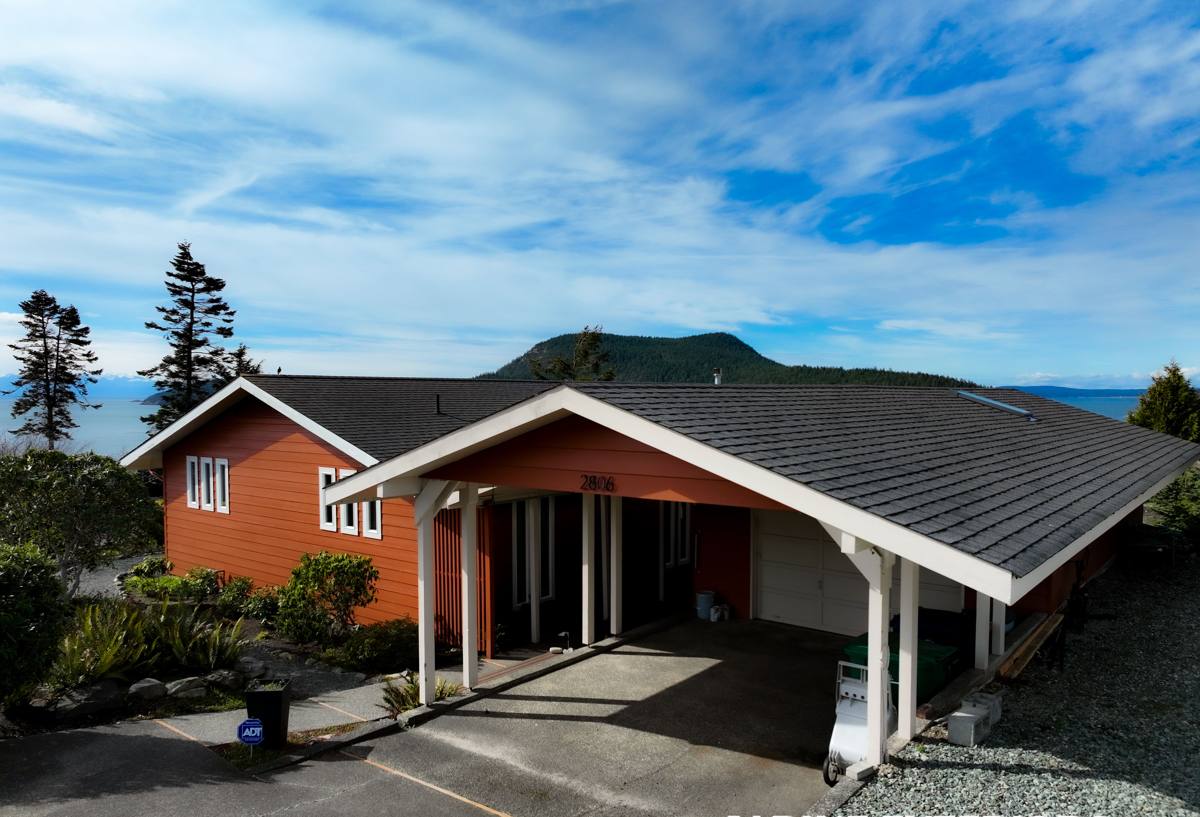
Siding in Fairhaven: Why We Only Install James Hardie
We install one siding product across every job we take on: James Hardie fiber cement. That's not a marketing angle — it's a standard we've held to because of what we've seen fail and what we've seen hold up in this specific climate.
Wood-based and engineered-wood siding products can perform well in a controlled, dry environment, but Fairhaven's combination of salt air, near-constant seasonal moisture, and shaded lots is a tough test. Products with wood fiber components are more vulnerable to swelling, edge deterioration, and moisture intrusion if a seam or cut edge isn't sealed and maintained exactly as specified. Vinyl siding, for its part, holds up reasonably well against moisture but tends to show its age through fading, warping in temperature swings, and a look that reads as less substantial on the kind of character-driven homes common in Fairhaven and other established Bellingham neighborhoods.
James Hardie fiber cement is non-combustible, dimensionally stable, and engineered specifically for wet marine climates — the HZ5 product line is built for exactly the freeze-thaw and moisture cycling this region sees. It doesn't feed moss growth the way wood substrates can, and the factory-applied ColorPlus finish holds color far longer than field-applied paint, which matters when a house is a short walk from the bay and getting hit with salt spray and rain most of the year. It also carries a strong transferable warranty, which adds real value if you ever sell.
We're upfront that Hardie costs more upfront than some alternatives. We think the math works out in a homeowner's favor over a 20-30 year horizon, especially in a climate that doesn't give inferior materials much room for error — but we'll walk through the real trade-offs with you rather than just tell you what to buy.
What Correct Hardie Installation Requires
- Proper rain-screen or drainage plane behind the siding, not just a direct nail-up
- Correctly sized starter strips, flashing, and kick-out flashing at every roof-wall intersection
- Factory-cut edges sealed per manufacturer spec wherever field cuts are unavoidable
- Fastener spacing and type matched to Hardie's published requirements, not general carpentry habits
- Caulking and joint treatment appropriate for a marine, high-moisture environment
Most siding failures we're called out to inspect trace back to installation shortcuts, not the product itself. That's true of every siding brand, which is part of why we standardized on one system we can install to spec every time rather than juggling multiple products with different rules.
Roofing for Salt-Air, Moss-Prone Homes
Roofs in Fairhaven earn their keep. Between the moisture load and the tree cover on many lots, moss and algae growth is one of the most common issues we see — and left unaddressed, moss lifts shingles at the edges and holds water against the roof deck, which shortens the life of an otherwise sound roof. Salt air also accelerates corrosion on exposed metal flashing, vents, and fasteners faster than it would 15-20 miles inland.
Our roofing work focuses on the details that matter most in this environment: metal flashing and fasteners rated for coastal exposure, ventilation that actually moves the moisture load out of the attic space, and underlayment that gives a roof a real second line of defense during the months when rain doesn't let up. We'll also talk through moss prevention options — including zinc or copper strips — as part of a new roof or a repair, since prevention is a lot cheaper than a full moss remediation and shingle replacement down the line.
Windows: Managing Condensation and Driving Rain
Older Fairhaven homes often still have original or aging window units that were never built for today's insulation standards, and that mismatch shows up as condensation, drafts, and rot in the surrounding trim. Driving rain off the bay puts real pressure on window flashing and sealant, especially on walls facing the water or prevailing weather.
When we replace windows, flashing integration with the surrounding wall assembly is just as important as the window unit itself — a well-built window installed without proper flashing will leak eventually. We size and spec window lines based on the home's exposure, with extra attention to water management details on elevations that take the brunt of the weather.
Decks: Building for a Wet-Season Reality
A deck in Fairhaven spends a good part of the year wet. That means ledger board flashing, joist protection, and fastener corrosion resistance aren't optional extras — they're what determines whether a deck is still structurally sound in ten years or needs early rebuilding. We build and repair decks with materials and hardware rated for sustained moisture exposure and salt-air corrosion, with drainage and ventilation underneath factored in from the start rather than added as an afterthought.
Why a Local Bellingham Crew Matters Here
Exterior work in a marine climate isn't generic. A crew that mostly works drier, inland markets can miss the details that matter in Fairhaven — the flashing details that prevent wind-driven rain intrusion, the ventilation choices that keep moss and mildew from taking over a shaded roof, the fastener specs that hold up against salt air instead of corroding out in a few years. We're a Bellingham-based crew that works Whatcom County exteriors year-round, which means we're making these calls on similar homes constantly, not occasionally.
Being local also means we're accountable locally. If something needs a warranty callback or a follow-up years down the road, we're not a crew that drove in from out of the area for one job and moved on.
What to Expect From Our Process
- A free on-site inspection where we look at the actual condition of your siding, roof, windows, or deck — not just a sales pitch
- An honest assessment of what needs attention now versus what can wait
- A written estimate that spells out materials, scope, and timeline in plain language
- Work scheduled around Bellingham's weather windows, with moisture management built into the plan rather than treated as a surprise
- A walkthrough at completion so you know exactly what was done and what maintenance it needs going forward
Cost Factors for Fairhaven Exterior Projects
| Project | Key Cost Drivers | Climate-Specific Factor |
|---|---|---|
| Siding (James Hardie) | Home size, trim complexity, tear-off vs. overlay | Rain-screen assembly and flashing detail for marine exposure |
| Roofing | Roof size/pitch, material choice, decking condition | Moss prevention treatment, coastal-rated flashing and fasteners |
| Windows | Number of units, frame material, sizing | Flashing integration to stop wind-driven rain intrusion |
| Decks | Square footage, material grade, structural repairs | Corrosion-resistant hardware, ledger and joist moisture protection |
Every one of these numbers depends on the specific condition of your home, so treat this as a starting framework rather than a quote — that's what the on-site estimate is for.
A Seasonal Maintenance Checklist for Fairhaven Homeowners
- Check roof slopes and valleys for moss buildup each fall before the heavy rains set in
- Clear gutters and downspouts at least twice a year — clogged gutters push water back under roofing and siding
- Inspect caulking and sealant around windows and siding joints annually for cracking or gaps
- Look for early paint or finish failure on wood trim, which often signals moisture getting in behind it
- Walk your deck each spring to check for soft spots, loose fasteners, or corrosion on hardware
- Trim back tree cover where it's keeping roof or siding sections shaded and damp longer than necessary
If you're noticing moss on the roof, paint that won't hold, or siding that looks tired, we're glad to come take a look. We offer free, no-pressure estimates for Fairhaven homeowners — use the form below to schedule a time that works for you.