 Bellingham Exterior
 Exterior Work in Bellingham's Columbia Neighborhood
Columbia sits close to Bellingham Bay, which means homes here deal with a specific mix of weather stress that inland Whatcom County neighborhoods don't feel as sharply. Salt-laden air off the bay, wind-driven rain that comes in sideways during fall and winter storms, and long stretches of shade and dampness that keep moss and algae established year-round all add up on siding, roofing, trim, and decks. None of this is dramatic on its own, but it's constant, and constant is what wears exteriors down over time.
We work in Bellingham and across Whatcom County, and Columbia's older housing stock and mature tree canopy mean we see a fairly predictable pattern of problems: siding that's held moisture too long, roofs with moss buildup in shaded valleys, windows that have started drafting or fogging between panes, and deck boards showing rot at the fastener points. None of it is unusual for this part of the Pacific Northwest — it's just what happens when a home's exterior isn't matched to the climate it's sitting in.
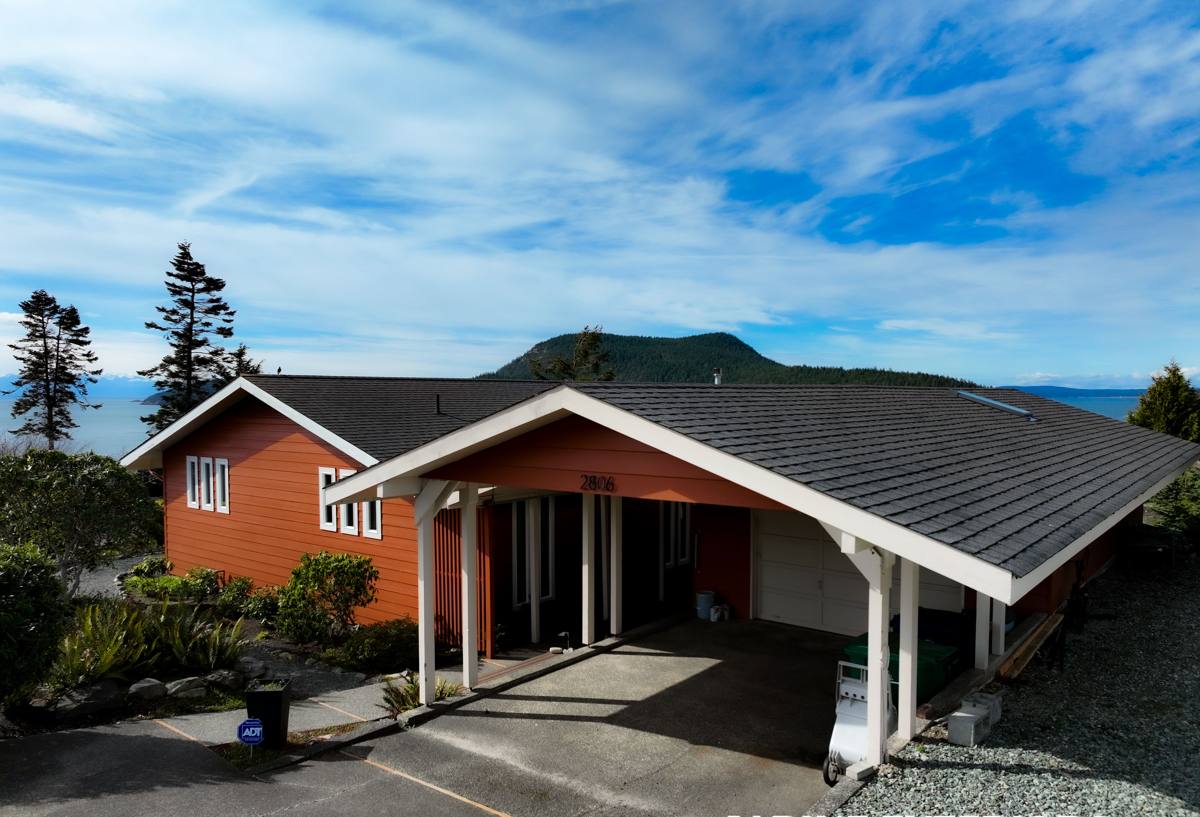
Why Salt Air and Driving Rain Matter for Siding Choice
Proximity to the bay puts a fine layer of salt on everything outdoors, including your siding. Salt accelerates corrosion on fasteners and hardware, and it can degrade certain coatings and sealants faster than they'd wear inland. Combine that with rain that doesn't just fall straight down but gets driven horizontally into wall assemblies during winter storms, and you have an environment where the siding material and the installation detailing both matter more than they would in a drier region.
This is a big part of why we install James Hardie fiber cement siding exclusively and don't offer vinyl, LP SmartSide, Cemplank, Allura, primed spruce, or cedar. Each of those products has legitimate uses elsewhere, and we're not going to pretend they're junk — but each one also comes with a trade-off that we think matters too much in a climate like this one.
What We See With the Alternatives
- Vinyl siding is affordable and low-maintenance, but it expands and contracts with temperature swings, can warp or crack in wind-driven weather, and its color is baked into a relatively thin material that fades over time.
- LP SmartSide is an engineered wood product with real structural advantages, but it's still wood-based, which means edge sealing and caulking have to be maintained diligently in a wet climate or moisture can find its way in.
- Cedar looks great and has a long tradition in the Pacific Northwest, but it needs ongoing staining or sealing, and in a moss-prone, moisture-heavy area like Columbia, upkeep demands are real and recurring.
- Primed spruce and other primed wood products rely entirely on the paint film for protection — once that film is compromised anywhere, moisture gets a path into the wood underneath.
James Hardie fiber cement is non-combustible, dimensionally stable across our wet-to-dry seasonal swings, and finished at the factory with ColorPlus technology, which bonds color to the board under controlled conditions rather than relying on a field-applied paint job to hold up against salt air and rain. It's also engineered in specific product lines (the HZ5 line, for example) built for climate zones like ours. That combination is why it's the only siding we put on homes.
Roofing for a Neighborhood That Stays Damp
Columbia's tree cover is part of what makes it a nice place to live, but shade plus persistent moisture is exactly the recipe moss and algae need. Left unchecked, moss holds water against roofing material, works its way under shingle edges, and can shorten the life of a roof that would otherwise perform well for decades. Proper ventilation, correctly installed flashing at valleys and penetrations, and a maintenance rhythm that keeps moss from establishing in the first place all matter more here than in a drier climate.
We look at ventilation and flashing details as closely as the shingle or roofing material itself, because in a climate this wet, the details are usually where roofs actually fail — not the field of the roof.
Common Roof Issues We Find in This Area
| Issue | Typical Cause | Why It Matters Here |
|---|---|---|
| Moss buildup in valleys and north-facing slopes | Shade, moisture, lack of regular cleaning | Holds water against shingles, accelerates granule loss |
| Soft or discolored decking at eaves | Water intrusion behind gutters or under drip edge | Bellingham's rain volume makes small gaps costly over time |
| Poor attic ventilation | Blocked soffit vents, inadequate ridge venting | Traps moisture indoors, encourages mold and premature roof aging |
| Corroded fasteners or flashing | Salt air exposure near the bay | Weakens the roof's weather seal at penetrations |
Windows: Keeping Moisture and Drafts Out
Older homes in neighborhoods like Columbia often still have original or early-replacement windows that were never sealed or flashed to modern standards. In a climate that delivers rain from multiple directions across most months of the year, a window that's even slightly under-flashed will eventually show it — fogging between panes, soft trim, or a draft that shows up specifically during winter storms off the bay.
When we replace windows, flashing and integration with the surrounding wall assembly get as much attention as the window unit itself. A high-efficiency window installed with poor flashing will still leak; a mid-range window installed correctly will usually outperform it. We size window upgrades to what the home actually needs, not to whatever's easiest to sell.
Decks: Built for Rain and Salt, Not Just Looks
Decks in Columbia take a beating from the same forces as the rest of the exterior — rain, humidity, and salt air — plus the added stress of foot traffic and direct sun exposure where trees don't provide cover. The most common deck failures we see aren't dramatic structural problems; they're rot starting at fastener points, ledger board connections that have trapped moisture against the house, and boards that have cupped or split because water couldn't shed properly.
Good deck work in this climate comes down to a few fundamentals: proper flashing where the deck meets the house, fasteners and hardware rated for coastal exposure, and enough drainage slope and gapping between boards that water actually leaves the surface instead of sitting on it.
What a Local Crew Brings to Columbia Projects
A contractor based in Whatcom County has seen how homes in this specific microclimate age — which sides of a house take the worst of the driving rain, where moss establishes first, which older construction details tend to leak. That's not something you get from a national installer who rotates through on a project-by-project basis. Local knowledge shows up in small decisions: extra attention to flashing on the bay-facing side of a house, choosing hardware rated for salt exposure without being asked, recognizing an aging roof valve before it becomes a leak.
It also means accountability. A local crew is still around next year, next storm season, and the one after that — not just for the install, but for warranty follow-through and honest answers if something needs attention down the road.
What to Expect From the Process
Every project starts with a walk-around assessment of the home's current siding, roofing, windows, and any decks, looking specifically for moisture damage, moss, failing seals, and areas where the exterior has been fighting Bellingham's climate longer than it should have to. From there we talk through what actually needs attention now versus what can be monitored, and we give a straightforward estimate — no pressure, no inflated scope.
For siding specifically, that conversation usually includes why we recommend James Hardie for the project and how the specific product line and color fit the home, rather than a generic pitch.
Seasonal Exterior Checklist for Columbia Homeowners
- Clear moss and debris from roof valleys and gutters before the fall rains pick up
- Check caulking and sealant around windows and doors for cracking or gaps
- Look for soft spots, discoloration, or peeling on siding, especially on bay-facing walls
- Inspect deck ledger boards and fastener points for staining or softness
- Confirm attic and crawlspace ventilation isn't blocked by insulation or debris
- Walk the exterior after major windstorms to check for loosened flashing or trim
Get a Free Estimate for Your Columbia Home
If your home in Columbia is due for new siding, a roof inspection, replacement windows, or deck work, we're happy to take a look and give you an honest, no-pressure assessment of what it actually needs. Use the form below to request a free estimate.