 Bellingham Exterior
 Building New in Birch Bay: What the Site Throws at Your Windows
Birch Bay sits right on the water, and that changes what a new-construction window package needs to do compared to a build a few miles inland in Bellingham proper. You've got salt-laden air moving off the bay almost constantly, wind-driven rain that hits walls sideways instead of falling straight down, and a wet season that stretches long enough for moss and algae to get a foothold on anything that stays damp. None of that is exotic information to anyone who's lived out there a while, but it matters enormously when windows are going into a house that's still just studs and sheathing. Get the window selection and installation right at this stage, and you've built in decades of trouble-free performance. Get it wrong, and the mistakes get sealed behind siding and trim where nobody sees them until there's a stain on the drywall.
New construction is also the one point in a home's life where you have full access to the rough opening, the housewrap, and the flashing plane before anything covers it up. That's an advantage worth using well — it's a lot cheaper to do this correctly the first time than to chase a leak after the siding's on.
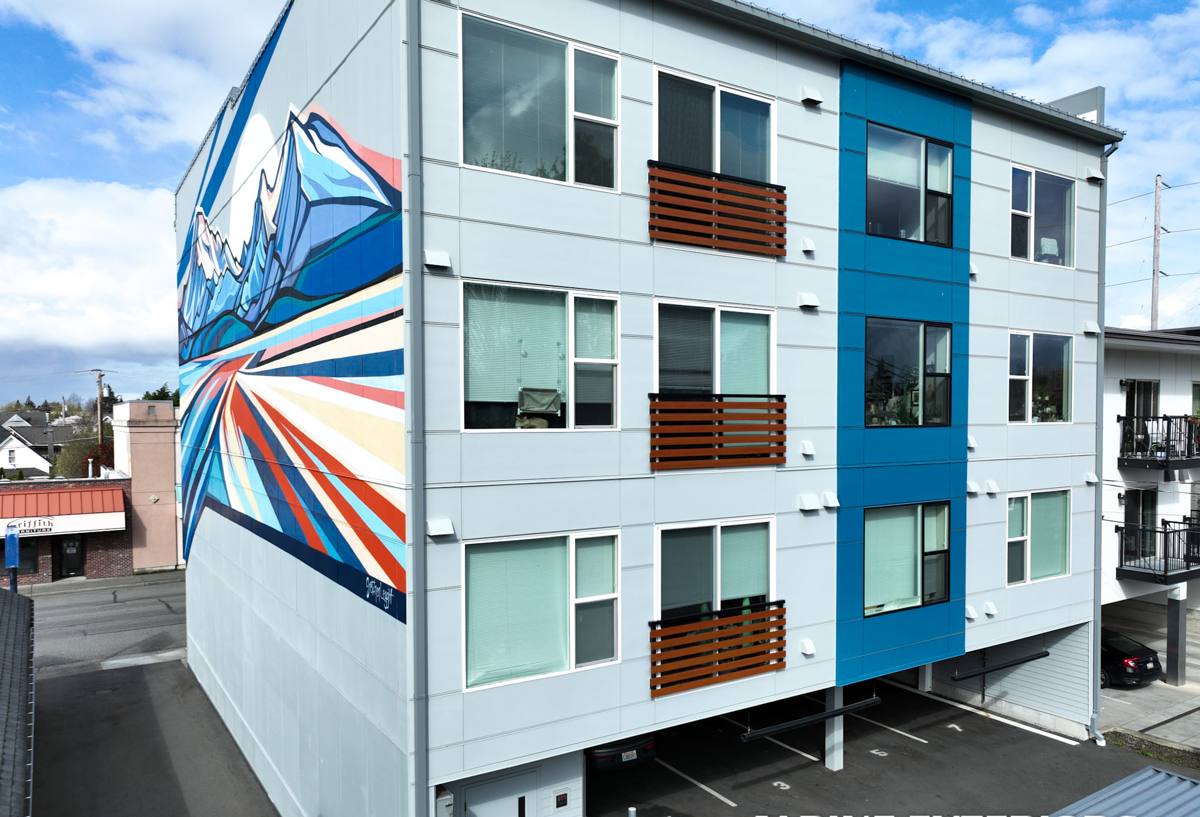
New-Construction Windows vs. Replacement: Why the Distinction Matters
People sometimes assume a window is a window, but new-construction and replacement units are built and installed differently, and mixing them up on a new build causes real problems.
- New-construction windows have a nailing flange (fin) around the perimeter that gets integrated into the wall's weather-resistive barrier before siding goes on — flashing tape and housewrap lap over the fin in a specific shingle-style order so water sheds outward, never in.
- Replacement (pocket) windows lack that fin and are designed to slide into an existing frame, relying on the old frame and trim for weatherproofing. Installing a replacement-style unit into new framing skips the flange-and-flashing system entirely, which is exactly the system that keeps wind-driven rain out of a wall in a spot like Birch Bay.
On a new build, we spec and install flanged units integrated properly with the wall assembly. That decision alone prevents a large share of the moisture problems we get called out to diagnose in older Whatcom County homes.
Salt Air, Driving Rain, and Moss: Designing the Window Package for the Bay
Salt air and hardware
Airborne salt accelerates corrosion on fasteners, hinges, and cranks faster than it does a few miles inland. We favor corrosion-resistant hardware and frame materials that don't rely on painted steel components exposed to the elements, and we pay attention to which fasteners go into the flange and trim so you're not fighting rust streaks in a few years.
Wind-driven rain and water management
A house on an open bay lot takes rain from angles a sheltered inland lot never sees. That makes the flashing detail — not just the window itself — the single biggest factor in whether the wall stays dry. Sill pan flashing, properly lapped jamb and head flashing, and a continuous drainage plane behind the siding all matter more here than the window brand printed on the glass.
Moss, algae, and shade
Whatcom County's long wet season keeps north-facing and shaded elevations damp for months at a stretch, which is exactly the environment moss and algae like. On windows, this usually shows up as green staining in sill corners and grimy buildup in tracks and weep holes. We grade sills to shed water fully, keep weep systems clear and functional at install, and choose finishes that don't hold moisture the way some untreated wood trims do.
Getting the Installation Right: Flashing and Water Management
The window unit itself is only part of keeping water out. The installation sequence is what actually does the work, and it has to happen in the right order:
- Housewrap or building paper lapped correctly below and beside the rough opening
- Sill pan flashing installed to direct any water that gets past the window back outward, not into the wall cavity
- Window set, leveled, and shimmed so the frame isn't racked or bowed
- Jamb flashing tape applied over the side flanges
- Head flashing installed last, lapping over the jamb tape and top of the wrap above — never tucked underneath it
- Interior air-sealing with low-expansion foam or backer rod and sealant, so the window is sealed on both the outside water plane and the inside air plane
Skip a step or do them out of order — head flashing under the wrap instead of over it is the classic mistake — and you've built a path for water to enter the wall that won't show itself until there's already damage behind the finish surfaces.
Frame Material and Glass Package: What Actually Holds Up Here
There's no single "best" window for every project, but some materials and glass packages are a better match for a bay-front, high-moisture, high-wind climate than others. Here's how the common options stack up for this specific setting:
| Frame Material | Salt Air / Moisture Performance | Maintenance | Typical Cost Tier |
|---|---|---|---|
| Vinyl | Good — won't corrode or rot; quality of the extrusion and welds matters | Low | $ |
| Fiberglass | Very good — dimensionally stable, resists warping in temperature/moisture swings | Low | $$$ |
| Wood, unclad | Poor near the water without diligent upkeep — prone to moisture absorption and rot at joints | High | $$ |
| Wood, aluminum- or vinyl-clad | Good exterior protection with wood warmth inside; cladding seams need to be well-sealed | Moderate | $$$ |
Glass matters as much as the frame. Double-pane, low-E glass is the baseline; on exposed elevations facing the bay, argon-filled units and a warm-edge spacer help control condensation on cold, humid mornings — a common complaint in coastal Whatcom County homes when the glass package is undersized for the exposure.
Meeting Washington's Energy Code on a Waterfront Lot
Washington's energy code sets minimum U-factor (heat loss) requirements for new-construction windows, and those minimums apply whether you're building in downtown Bellingham or out on the water in Birch Bay. What changes on an exposed bay lot isn't the code number — it's how hard the assembly has to work to actually hit it in practice, given more wind exposure and temperature swing at the glass. We select glass packages and frame types that meet code with margin rather than right at the line, so performance doesn't slip once the house is actually sitting in real bay weather instead of a lab spec sheet. If your plans are still with the county for permitting, we're glad to review the window schedule and flag anything that's tight against code before it becomes a change order.
Our Process for New-Construction Window Installs
We work directly with builders and owner-builders on new Birch Bay construction, and the process is straightforward:
- Plan review: we look at the window schedule, rough openings, and elevations to confirm sizing, egress requirements, and code compliance before ordering
- Material selection: we walk through frame and glass options suited to the specific exposure of your lot — a north-facing wall in the trees isn't the same problem as an open elevation facing the water
- Coordination with framing: we time delivery and install to the builder's schedule so openings aren't sitting exposed longer than necessary
- Installation: full flashing and air-sealing sequence, documented as we go
- Walkthrough: operation, hardware, and weep systems checked before we consider the job done
Why Hire a Crew That Already Works Birch Bay
A lot of window problems in coastal homes trace back to an install crew that does great work inland but hasn't accounted for what a bay-front exposure actually demands — more aggressive flashing details, hardware that won't corrode, glass packages sized for real wind and condensation loads. We work throughout Bellingham and Whatcom County, including Birch Bay's coastal lots, so this isn't a one-off adjustment for us — it's how we build the window package from the start. That familiarity shows up in fewer callbacks and windows that are still performing the way they should years after the framing crew has moved on to the next job.
Before You Finalize Your Window Package
A few things worth checking with any contractor before openings get framed:
- Confirm the windows specified are true new-construction (flanged) units, not pocket/replacement style
- Ask what sill pan flashing method will be used and in what order the flashing steps happen
- Check that the U-factor and any solar heat gain requirements on the window schedule actually meet Washington's current energy code for your project
- Ask about hardware material on any window facing open water or prevailing wind
- Confirm weep holes and drainage paths will be clear and functional, not painted or caulked shut during finish work
If you're planning a new build or major addition in Birch Bay and want a window package that's actually sized for the site, we're happy to take a look at your plans and put together a straightforward, no-pressure estimate — just fill out the form below.