 Bellingham Exterior
 Exterior Homes in Sehome Face a Specific Kind of Wear
Sehome sits close enough to Bellingham Bay and the surrounding water to catch salt-laden air on a regular basis, and close enough to the hills and tree cover around it to stay shaded and damp for long stretches of the year. That combination is harder on a home's exterior than either factor alone. Salt air accelerates corrosion on fasteners, flashing, and any exposed metal. Shade and moisture keep siding and roofing surfaces wet longer after every rain, which is exactly the condition moss, algae, and mildew need to take hold.
Add in Whatcom County's driving rain, which tends to come in sideways off the water during fall and winter storms, and you have a neighborhood where exterior materials are tested from multiple directions at once: wind-driven moisture at wall penetrations, standing dampness on shaded roof slopes and north-facing walls, and slow material fatigue from the salt content in the air. None of this is dramatic on its own. It is cumulative, and it shows up over years, not weeks, which is why the choice of siding, roofing, and window materials matters more here than in a drier, more sheltered part of the state.
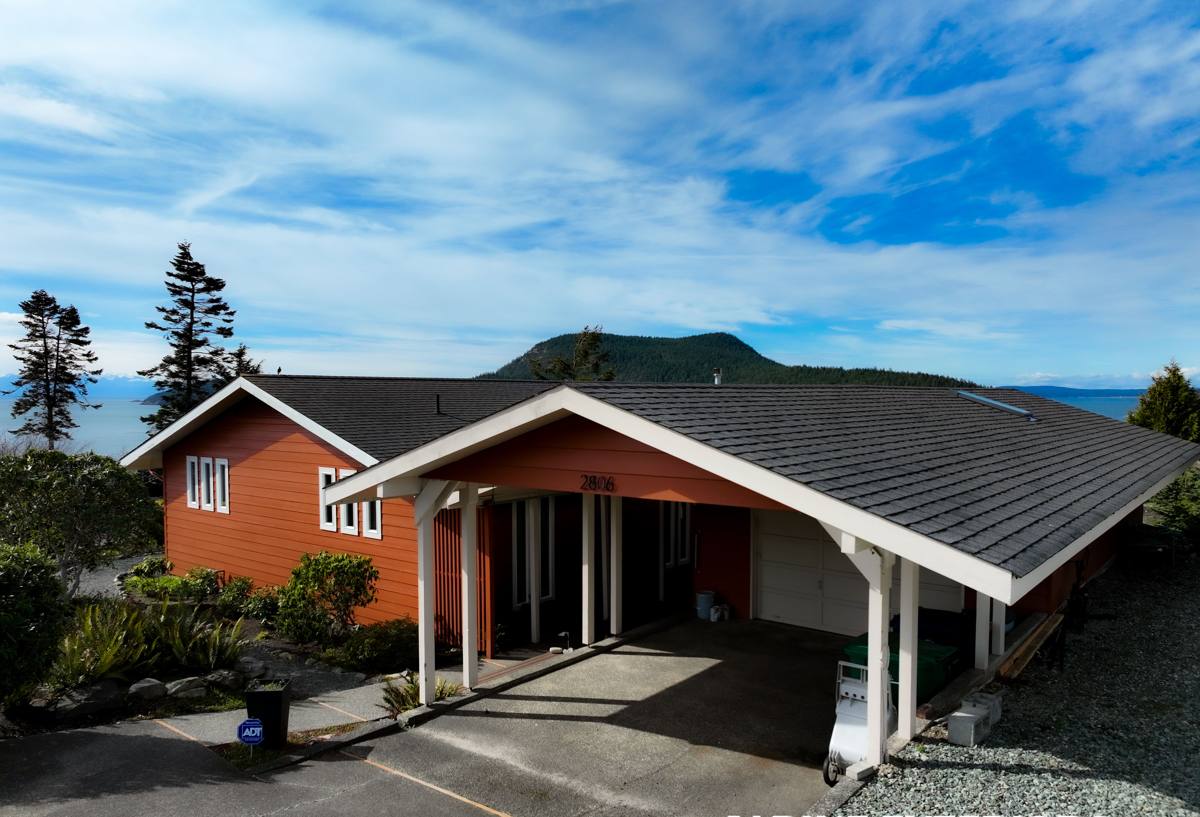
What We See on Sehome Homes
Moss and Algae on Shaded Surfaces
Sehome's mix of mature trees and closely spaced homes means a lot of roof and wall area never gets direct afternoon sun for much of the year. Moss doesn't just sit on the surface — it holds moisture against the substrate underneath, and over time that trapped moisture is what causes real damage, not the moss itself. Roofing is usually the first place this shows up, but siding in shaded side yards and under eaves is right behind it.
Fastener and Flashing Corrosion
Salt air is hard on anything metal that isn't properly rated for coastal exposure. Nails, screws, and flashing that would last decades inland can start showing rust streaks and pitting years sooner near the bay. This is one of the most common things we point out to homeowners during an inspection — the siding material itself can be in decent shape while the fasteners holding it are quietly failing underneath.
Moisture Intrusion at Seams and Penetrations
Driving rain finds every gap. Window trim, siding joints, and anywhere a deck or porch roof ties into the main structure are the spots where wind-driven water gets pushed past surfaces that would shed a normal vertical rain just fine. Over time, poorly sealed or poorly flashed penetrations are where we find rot, not in the open field of the wall.
Why Material Choice Matters More Here Than Elsewhere
A lot of siding products perform fine in a mild, dry climate and struggle in a wet, salt-influenced one. Wood-based siding — engineered wood, primed spruce, or cedar — depends on paint film and edge sealing to keep water out, and in a neighborhood like Sehome, that paint film is under constant pressure from moisture and shade. Vinyl siding doesn't rot, but it isn't dimensionally stable in temperature swings and doesn't hold up well against embedded grime and algae the way a factory-baked finish does. We install James Hardie fiber cement siding on every project because it is engineered specifically for wet, coastal-influenced climates like this one — it does not absorb water the way wood-based products do, it is not combustible, and its ColorPlus factory finish resists the fading and moisture staining that plague field-painted siding.
| Exterior Factor | What Sehome Homes Face | What It Means for Materials |
|---|---|---|
| Salt air proximity | Bay-influenced air moving through the neighborhood | Corrosion-resistant fasteners and flashing matter; non-absorptive siding resists salt buildup |
| Shade and tree cover | Extended damp periods on north and shaded walls | Moss/algae-resistant surfaces reduce long-term surface damage |
| Driving rain | Wind-driven moisture at seams, trim, and penetrations | Correct flashing detail and a water-resistant substrate are essential |
| Roof slope shading | Slower drying after storms on shaded pitches | Roofing material and underlayment quality affect long-term moss resistance |
Siding: Why We Standardize on James Hardie
We do not install LP SmartSide, vinyl, Cemplank, Allura, primed spruce, or cedar siding. That is a deliberate standard, not a marketing line. Each of those products has legitimate strengths, but each also comes with a trade-off — paint maintenance, moisture absorption at cut edges, dimensional movement, or a warranty structure that doesn't match what we want to stand behind on a home in this climate. James Hardie fiber cement is engineered to resist moisture absorption, doesn't feed mold or fungus the way wood-based sidings can, and holds its factory-applied color far longer than field-painted alternatives. Hardie also offers HZ5 and other climate-engineered product lines built for higher-moisture regions, which fits the Pacific Northwest better than a one-size-fits-all product line.
What Correct Installation Looks Like
- Proper rainscreen or drainage plane behind the siding so any moisture that gets past the surface can drain and dry
- Stainless or coated fasteners rated for coastal and high-moisture exposure
- Correctly lapped and sealed flashing at every window, door, and roof-to-wall transition
- Manufacturer-specified gaps and caulking at butt joints and trim to allow for expansion
- Factory-finished ColorPlus panels installed per Hardie's published fastening and clearance specs
Installation quality matters as much as the product itself. Fiber cement installed without proper flashing and drainage detail can still develop problems — the material is only as good as the crew putting it on the wall.
Roofing in a Moss-Prone Neighborhood
Roofing decisions in Sehome need to account for shade and moss more than almost anything else. A roof system that sheds water well but has no resistance to organic growth will still need moss treatment and gutter maintenance on a regular schedule. We look at slope, tree coverage, and existing drainage when recommending roofing work, and we pay close attention to valley flashing and any spot where two roof planes meet — those are the areas driving rain and accumulated moss debris cause the most long-term damage. Regular gutter clearing and a periodic moss treatment plan go a long way toward extending the life of any roof in this part of Bellingham, regardless of material.
Windows: The Weak Point in Wind-Driven Rain
Older or poorly installed windows are one of the most common sources of water intrusion we find in coastal-influenced neighborhoods like Sehome. It's rarely the glass or sash that fails first — it's the flashing and sealant around the window opening. When we replace windows, integrating the new unit properly with the surrounding wall's drainage plane and flashing is just as important as the window unit itself. A high-quality window installed without correct flashing will leak eventually; a modest window installed correctly can outperform it for years.
Decks: Built for Wet-Weather Use
Decks in Sehome deal with the same shade-and-moisture combination as the rest of the exterior — slow drying, algae buildup on the surface, and fasteners exposed to salt-influenced air. Whether you're building new or replacing an aging deck, material choice and proper drainage beneath the decking surface both matter for how well it holds up through Whatcom County winters.
Why a Local Crew Matters Here
Exterior work in Bellingham isn't identical to exterior work fifty miles inland, and it isn't identical to exterior work in a different coastal city either. Every neighborhood has its own mix of shade, wind exposure, and moisture patterns, and Sehome's proximity to the bay combined with its tree cover creates a specific set of conditions. A crew that works in this area regularly knows which details — flashing laps, fastener choice, drainage planes — actually matter here versus which are just generic best practices. That local knowledge, paired with a single-standard product like James Hardie siding, is what keeps an exterior performing well for decades instead of needing early rework.
What to Check Before Hiring for Exterior Work
- Ask what siding brands and lines they install, and why — a contractor who installs everything usually isn't specializing in correct installation for any one system
- Confirm they carry current Washington state contractor licensing and adequate liability insurance
- Ask how they handle flashing at windows, doors, and roof transitions — this is where most real damage originates
- Get specifics on warranty coverage: manufacturer warranty versus workmanship warranty, and who is responsible for each
- Ask whether they've worked in your specific neighborhood and what moisture or shade issues they've seen locally
Get a Straightforward Look at Your Exterior
If you're noticing moss buildup, staining, drafty windows, or aging siding on a Sehome home, it's worth having someone look at the whole exterior system rather than patching one symptom at a time. We offer free, no-pressure estimates — no obligation, just an honest look at what your home actually needs and what it would take to fix it right.