 Bellingham Exterior
 Why Birch Bay's Shoreline Climate Is Hard on Siding
Birch Bay sits right on the water, and that changes what a siding job has to survive. Homes here don't just deal with Pacific Northwest rain — they deal with salt-laden air coming off the water, near-constant wind exposure, and long stretches of shade from the evergreen tree cover common throughout Whatcom County. That combination is tougher on exterior walls than what you'll find a few miles inland in Bellingham proper. Salt air accelerates corrosion on fasteners and trim, wind pushes rain sideways into joints and laps that would stay dry in a calmer setting, and shaded, damp walls grow moss faster than they dry out.
None of that means siding can't hold up in Birch Bay for decades — it means the material and the installation both have to be chosen with this specific exposure in mind, not just "what's standard" for a typical inland home.
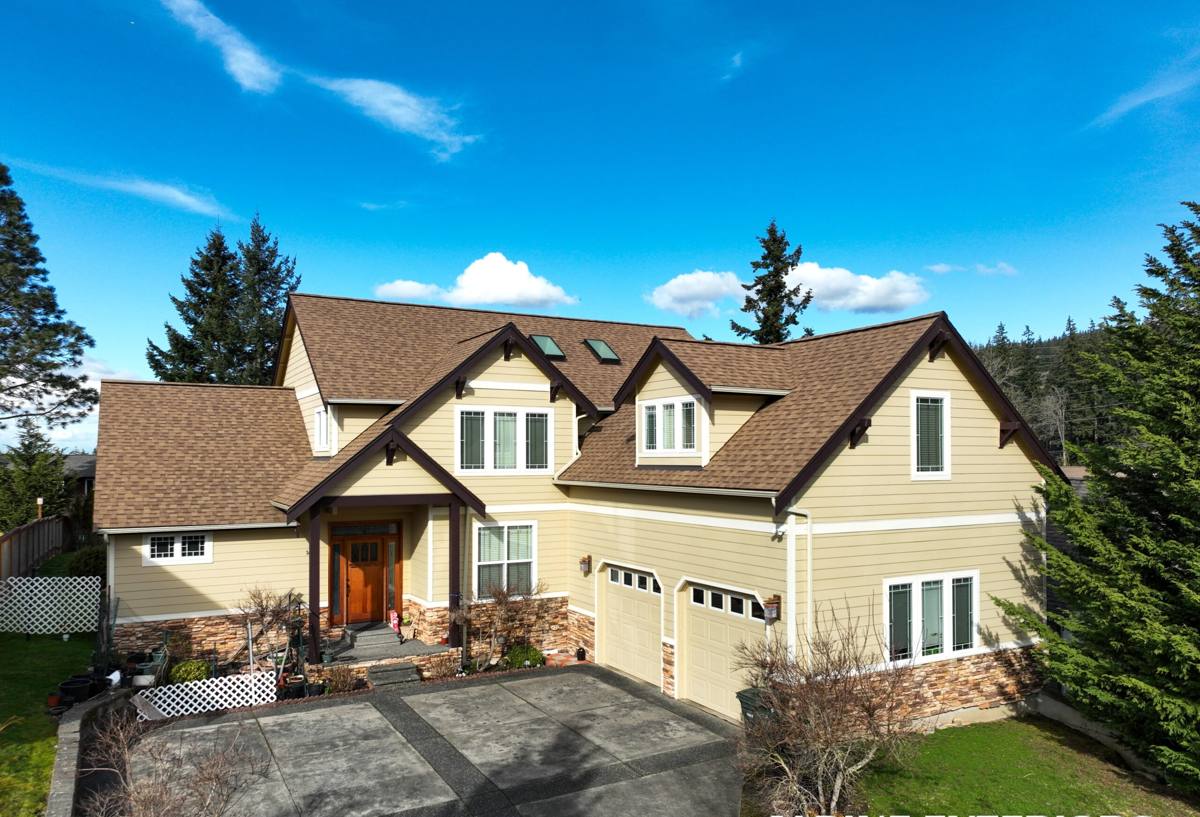
What Salt Air and Moisture Actually Do to a Wall System
It helps to understand the failure points before talking about the fix. Coastal exposure attacks a home in a few specific ways, and a siding installation that ignores any one of them will show problems within a few years, not decades.
Wind-Driven Rain and Flashing
Ordinary rain falls straight down and mostly sheds off a wall. Wind-driven rain off the water doesn't behave that way — it gets pushed up under laps, into corner joints, and around window and door openings. If flashing details and lap coverage are even slightly undersized, water finds its way behind the siding instead of off of it. Once that happens, the sheathing and framing behind the siding are what actually take the damage, long before it's visible from the outside.
Moss, Shade, and Trapped Moisture
Whatcom County's moss season is long, and Birch Bay's tree-shaded, moisture-heavy lots make it worse. Moss and algae hold water against a wall surface far longer than an open, sun-exposed elevation would. On a wood-based siding product, that constant damp contact is what starts rot at seams and butt joints. On any siding, moss buildup around trim and behind gutters traps debris and moisture in exactly the spots where a wall needs to breathe and drain.
Salt Air and Metal Components
Fasteners, flashing, and trim hardware corrode faster in salt air than they do a few miles inland. A nail or flashing detail that would last the life of the siding elsewhere can start failing early near the water if the wrong fastener grade or exposed metal was used. This is a detail that's easy to get wrong and expensive to fix later, because by the time corrosion shows through the paint, the damage underneath is already done.
What a Correct Siding Installation Looks Like Here
Given all of that, a Birch Bay installation isn't just "put new siding on the house." It's a set of specific decisions made with the shoreline exposure in mind, from the sheathing out.
- A continuous, correctly lapped weather-resistive barrier behind the siding — not just taped seams, but proper shingle-style lapping so water sheds down and out
- Rain-screen spacing (a drainage gap) where the wall assembly calls for it, so any moisture that does get behind the siding can drain and the wall can dry
- Corrosion-resistant, manufacturer-approved fasteners at the correct spacing — not whatever is fastest to run through a nail gun
- Flashing at every window, door, and roof-to-wall intersection, installed to shed water onto the layer below it, not just caulked and hoped for
- Factory-finished siding and trim wherever possible, so the painted surface isn't dependent on field conditions and cure time
- Caulking used only where the manufacturer specifies it — over-caulking traps moisture instead of releasing it, which is a common mistake on coastal jobs
Skip any one of these and the siding might still look fine going up. The problems show up two, five, or ten years later, usually as soft trim, staining, or paint failure at the joints — right where the shortcuts were taken.
James Hardie: The Only Siding We Install in Birch Bay
We install James Hardie fiber cement siding exclusively — not as one option among several, but because it's the product we're willing to put our name behind in an exposure like Birch Bay's. Fiber cement is non-combustible, dimensionally stable, and doesn't absorb and swell with moisture the way wood-based products do, which matters directly in a climate where walls stay damp for long stretches at a time.
HZ5 Engineering for Wet, Coastal Climates
James Hardie engineers its siding by climate zone, and the HZ5 product line is built specifically for regions with heavy moisture exposure — which describes Birch Bay and the broader Whatcom County coastline well. That engineering affects the formulation of the board itself, aimed at standing up to prolonged wet conditions rather than just tolerating occasional rain.
ColorPlus Factory Finish
Most of what fails first on a coastal home is the paint, not the substrate underneath it. Hardie's ColorPlus finish is baked on at the factory under controlled conditions, which gives it better adhesion and fade resistance than a field-applied paint job — and it removes the variable of painting siding outdoors in Whatcom County's damp weather, where cure times are never fully in your control.
HardiePlank, HardiePanel, and Trim
Depending on the home's style, a Birch Bay project might use HardiePlank lap siding for a traditional look, HardiePanel for a more modern or vertical application, and matching Hardie trim boards around windows, corners, and fascia. Keeping the whole envelope in one engineered system — siding and trim from the same manufacturer, installed to the same spec — is part of what makes the wall assembly perform as a system instead of a collection of separate parts.
Why We Don't Install Vinyl, LP SmartSide, or Cedar Here
We get asked about alternatives regularly, and we'd rather explain our reasoning than dodge the question. Each of these products has real strengths — we're not claiming otherwise. But for a shoreline exposure like Birch Bay's, each one has a trade-off we're not willing to install and then hope holds up.
| Material | What it does well | Why we don't use it here |
|---|---|---|
| Vinyl siding | Low upfront cost, low maintenance in mild exposures | Expands and contracts with temperature swings, can warp or crack under wind-driven impact, and offers no fire resistance |
| LP SmartSide | Engineered wood strand product, easier to cut and handle than fiber cement | Wood-based core is more sensitive to sustained moisture exposure and requires disciplined field caulking and paint upkeep to keep water out at the seams |
| Cedar siding | Natural look, long tradition in the Pacific Northwest | Needs ongoing sealing or staining, and constant damp/shade conditions like Birch Bay's accelerate the maintenance cycle and rot risk at joints |
Every one of these can be installed correctly and last a reasonable amount of time in the right setting. Our position is simply that Birch Bay's combination of salt air, wind, rain, and shade is not the forgiving setting where those trade-offs disappear — and James Hardie's fiber cement system is engineered specifically to handle that combination.
Our Installation Process, Start to Finish
- On-site assessment. We walk the home, check current siding condition, sheathing access points, and note anything specific to the lot — tree shade, wind exposure, drainage patterns.
- Tear-off and sheathing inspection. Old siding comes off and we inspect the sheathing and framing underneath for existing moisture damage before anything new goes up. This step catches problems that would otherwise get sealed behind new siding.
- Weather-resistive barrier and flashing. We install or repair the barrier, then flash every window, door, and wall penetration before the siding goes on.
- Hardie installation. Siding and trim go up to manufacturer fastening and clearance specifications, with attention to lap coverage and joint placement given the wind exposure.
- Finish detailing. Caulking only where specified, touch-up on any factory-finished cut edges, and a check of all trim and flashing lines.
- Final walkthrough. We go over the finished job with the homeowner before calling it done.
Cost Factors for Siding Installation in Birch Bay
Every home is different, so we won't quote a number without seeing the house, but these are the factors that move the price up or down on a Birch Bay project:
| Factor | How it affects cost |
|---|---|
| Home size and wall complexity | More square footage and more corners, gables, and dormers mean more cutting, fitting, and trim work |
| Condition of existing sheathing | Rot or moisture damage found during tear-off adds repair work before new siding can go on |
| Removal of existing siding | Vinyl, cedar, or other tear-off adds labor and disposal compared to installing over new construction sheathing |
| Trim, soffit, and fascia scope | Full trim replacement in matching Hardie product costs more than reusing sound existing trim |
| Access and elevation | Steep lots, tall walls, or limited equipment access near the shoreline can add labor time |
| Color and finish selection | Factory ColorPlus finishes vary by product line and color, which factors into material cost |
Living With Hardie Siding Through Moss Season
James Hardie siding installed correctly needs very little upkeep, but "very little" isn't "none" — especially with Birch Bay's shade and moisture. A few habits go a long way toward protecting the investment:
- Rinse siding periodically to keep salt residue and organic buildup from accumulating, especially on shaded or north-facing walls
- Keep gutters clear so water isn't sheeting down the wall face during heavy rain
- Trim back vegetation and tree limbs that keep a wall section shaded and damp longer than the rest of the house
- Address any caulking or trim issues early — a small gap is a quick fix, a wall that's been wet behind the siding for a season is not
None of this is unusual maintenance — it's the same kind of upkeep any exterior surface needs near the water. The difference with a correctly installed Hardie system is that it's forgiving of Birch Bay's climate rather than fighting it.
Why Hiring a Crew That Already Works in Birch Bay Matters
Siding installation isn't identical from one part of Whatcom County to another. A crew that mostly works drier, inland neighborhoods can install a technically correct job that still isn't matched to shoreline wind and moisture exposure — the flashing details, fastener choices, and rain-screen decisions that matter most in Birch Bay aren't always second nature elsewhere. A crew that already works this specific area knows which elevations take the worst of the wind-driven rain, how the tree cover affects drying time on shaded walls, and what the local permitting and inspection process expects for a shoreline-area home. That familiarity shows up in fewer callbacks and a wall system that's actually built for the conditions it has to live in, not just the conditions on a spec sheet.
If you're planning a siding project in Birch Bay, we're happy to take a look at your home and walk you through what it needs — no pressure, no obligation. Fill out the form below for a free estimate.