 Bellingham Exterior
 Exterior Work Built for Ferndale's Climate
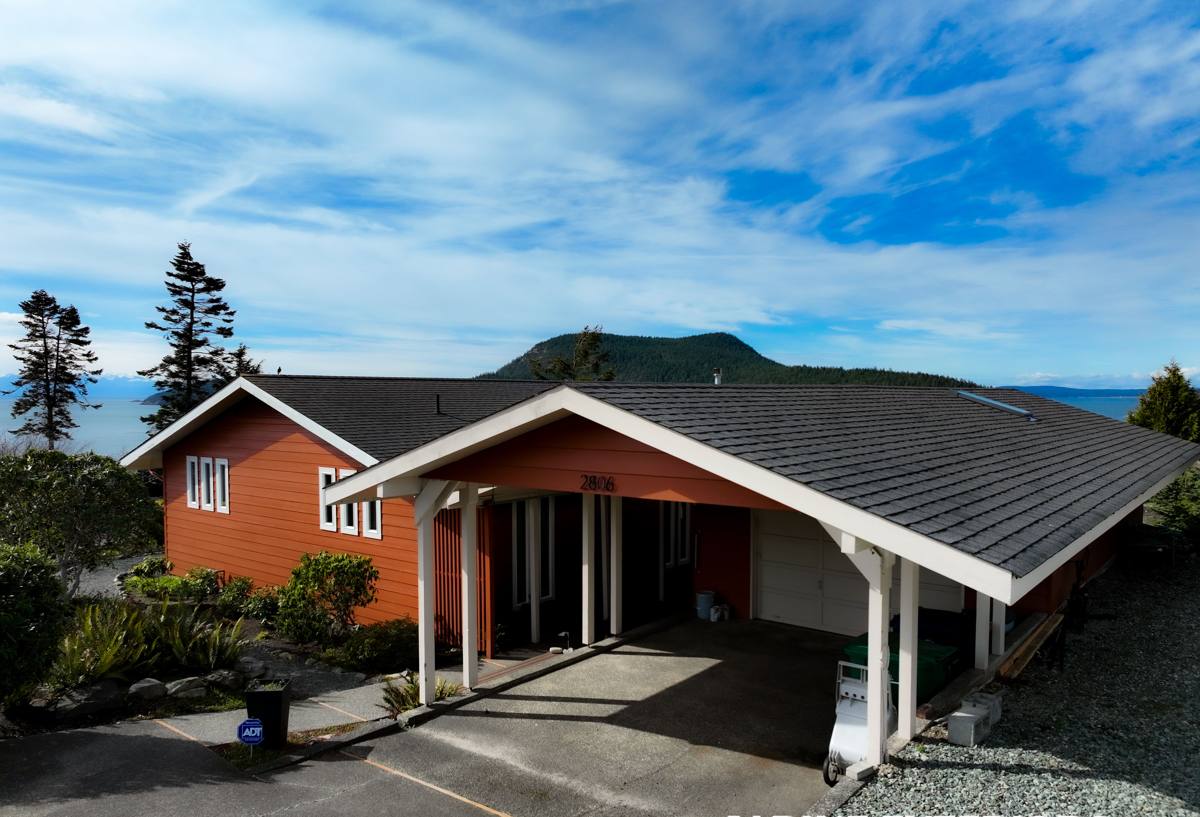
Ferndale sits close to Bellingham Bay and the Strait of Georgia, which means homes here deal with a combination that inland Whatcom County neighborhoods don't see as intensely: salt-laden air coming off the water, driving rain that arrives sideways more often than straight down, and a moss season that can run most of the year in shaded, north-facing spots. None of that is dramatic on its own, but stacked together year after year, it's exactly the kind of slow, steady exposure that finds every weak point in a home's exterior — a caulk joint that was never quite right, a fascia board that stays damp two extra days after every storm, a roof valley that collects debris because nobody's cleaned it in three years.
We work throughout Bellingham and the surrounding Whatcom County communities, and Ferndale is one of the areas where we see this pattern most consistently. Homes near the water age differently than homes fifteen minutes inland, and the exterior products and installation details that hold up in one location don't always hold up in the other.
What Salt Air and Driving Rain Actually Do to a House
Salt Air
Airborne salt is corrosive to exposed metal — nail heads, flashing, hinges, and fasteners all take a beating over time if they're not rated for coastal exposure or properly protected. It also accelerates the breakdown of some paints and coatings, which is part of why we care so much about what finish is actually on a piece of siding, not just what the siding is made of.
Driving, Wind-Driven Rain
Rain that comes in at an angle behaves differently than rain falling straight down. It gets pushed up under laps, into seams, and behind trim in a way that vertical rain doesn't. That makes flashing details, house wrap integration, and proper lap coverage more important here than they would be in a drier, calmer climate. A siding job that's "close enough" somewhere else can leak in Ferndale.
Moss and Persistent Moisture
Shaded roof planes, north-facing siding, and anywhere airflow is limited will grow moss and algae if given the chance. Moss holds moisture against the surface underneath it, which shortens the life of roofing materials and can push water back under shingles or siding laps at the edges. It's not usually the moss itself that causes damage — it's the trapped moisture underneath it, working quietly for months at a time.
Siding in Ferndale: Why We Only Install James Hardie
We install James Hardie fiber cement siding exclusively. We don't install vinyl, LP SmartSide, Cemplank, Allura, primed spruce, or cedar — not because those products can't be installed well by someone, but because we've made a professional decision about what we're willing to put our name behind in this climate, and Hardie is it.
Fiber cement is non-combustible and dimensionally stable, meaning it doesn't expand and contract with moisture the way wood-based products do. That matters in a place where humidity swings between a wet winter and a drier summer. James Hardie's ColorPlus finish is baked on at the factory under controlled conditions, which gives it better fade and chip resistance than field-applied paint — an advantage that shows up specifically in salt-air environments, where lesser coatings tend to chalk and fade faster.
Hardie also builds region-specific product lines (their HZ5 line is engineered for climates like ours, with wetter, more variable weather), and backs the product with a long, transferable non-prorated warranty. That combination — a stable substrate, a factory finish built to hold color, and a warranty that means something — is why we standardized on it rather than offering a menu of siding options.
We're not going to tell you vinyl or LP SmartSide are junk. Vinyl is inexpensive and low-maintenance in the sense that it doesn't need painting; its weakness here is that it can warp or become brittle with temperature swings and doesn't offer the same fire performance. LP SmartSide is a wood-strand product with a resin-treated exterior — it performs reasonably when installed and maintained exactly to spec, but it's an engineered wood product at its core, and engineered wood products are more sensitive to sustained moisture exposure than fiber cement is. In a climate with this much sustained dampness, that sensitivity is the trade-off we're not willing to build a home around.
Siding Product Comparison
| Product | Core Material | Moisture Sensitivity | Finish Durability | We Install It? |
|---|---|---|---|---|
| James Hardie Fiber Cement | Cement, sand, cellulose | Low | Factory ColorPlus finish, long fade resistance | Yes |
| Vinyl | PVC | Low, but can warp/crack with heat/cold cycling | Color molded in, but can fade and chalk | No |
| LP SmartSide | Engineered wood strand | Moderate — sensitive to sustained moisture at cut edges/seams | Field or factory finish, needs consistent maintenance | No |
| Cedar | Solid wood | High — needs regular sealing/staining | Requires ongoing maintenance to hold appearance | No |
Roofing Considerations for Ferndale Homes
Roofs here need to shed water fast and resist the slow moss creep that shaded, moisture-retaining roof planes are prone to. When we're on a roof in this area, we're paying close attention to valley flashing, ridge and soffit ventilation, and how well the underlayment is sealed at penetrations — pipe boots, chimneys, skylights. A roof can look fine from the ground and still be losing the fight at these detail points, which is usually where leaks actually start.
Ventilation matters more than people expect. A roof deck that can't breathe stays damp longer after every rain, which is exactly the condition moss and algae need to establish themselves. Balanced intake and exhaust ventilation isn't a cosmetic upgrade — it's one of the more effective ways to slow moss growth and extend shingle life in a climate like this one.
Windows: Where a Lot of Quiet Damage Starts
Old or poorly flashed windows are one of the most common sources of hidden water intrusion we find during siding jobs. Wind-driven rain pushes against window trim and sills constantly here, and if the flashing behind the trim isn't integrated correctly with the house wrap, water can travel behind the siding for years before it ever shows up as a stain inside the house. When we replace siding, we treat window flashing as part of the job, not an afterthought — it's often the single biggest factor in whether a re-side actually solves a home's moisture problems or just covers them up.
Decks in a Wet, Salt-Air Climate
Decks take a different kind of abuse — standing water on horizontal surfaces, ledger board connections that stay damp against the house, and fasteners exposed to salt air. The details that matter most for deck longevity here are proper drainage and slope so water doesn't pond, correct flashing at the ledger board where the deck meets the house (a common rot point on older decks), and fasteners and hardware rated for coastal/wet exposure rather than standard interior-grade hardware. A deck built without those details might look fine for a few years and then need structural repair well ahead of schedule.
Why a Local Crew Matters
Exterior work in Ferndale isn't identical to exterior work in a drier part of the state, and it isn't identical to work fifteen minutes inland either. A crew that works this area regularly knows which details actually matter here — how much lap coverage to leave, where flashing needs extra attention, which north-facing walls are going to fight moss no matter what. That's not something you can fully specify on a set of plans; it comes from doing the work in this specific climate, on this specific coastline, repeatedly.
We're a Whatcom County company. We're not driving in from out of the area for one job and leaving — if something needs a warranty follow-up in a few years, we're still local.
What to Expect From Our Process
| Step | What Happens |
|---|---|
| Initial assessment | We walk the exterior, check current siding/roofing/windows/decking for moisture damage, and note problem areas specific to sun and wind exposure on your lot |
| Estimate | Written scope covering materials, labor, and any repair work uncovered during the walk-through |
| Prep and flashing details | House wrap, window and door flashing, and any rot repair addressed before new material goes on |
| Installation | James Hardie siding installed to manufacturer spec, or roofing/window/deck work completed per the scope |
| Final walkthrough | We review the finished work with you before calling the job complete |
Questions Worth Asking Any Exterior Contractor in This Area
- Do you install to the manufacturer's climate-specific installation instructions, or a generic standard?
- How do you handle flashing at windows, doors, and deck ledger boards?
- What's the warranty, and is it transferable if you sell the home?
- Are you licensed and insured to work in Washington State?
- Can you explain why you recommend one siding product over another for a home in this specific location?
- How do you address existing moss or moisture damage before new material goes on, rather than covering it up?
Getting Started
If you're noticing moss buildup, soft spots in trim, siding that's fading unevenly, or a deck that feels less solid than it used to, it's worth getting a professional look before those small signs turn into a bigger repair. We offer free, no-pressure estimates for siding, roofing, window, and deck work in Ferndale and throughout the Bellingham area — fill out the form below and we'll take a look at what your home actually needs.