 Bellingham Exterior
 Roof Repair That Accounts for Birch Bay's Weather
Birch Bay sits right up against the water, and that changes what a roof deals with over the course of a year compared to homes farther inland. Salt-tinged air drifts off the bay and works on exposed metal and fasteners month after month. Storms roll in off the water and drive rain sideways instead of letting it fall straight down and run off. Shaded roof planes, especially on the north side of a house or under overhanging trees, stay damp long enough for moss to take hold and spread through most of the wet season. None of that means a roof in Birch Bay is doomed to leak — it means a repair here has to be diagnosed and executed with those specific conditions in mind, not treated as a generic patch job.
This page is about roof repair specifically — fixing a roof that has a real, identifiable problem, not replacing the whole system. A surprising number of roofs that homeowners assume need full replacement actually just need the right repair done correctly, and knowing the difference can save real money without cutting corners on safety or longevity.
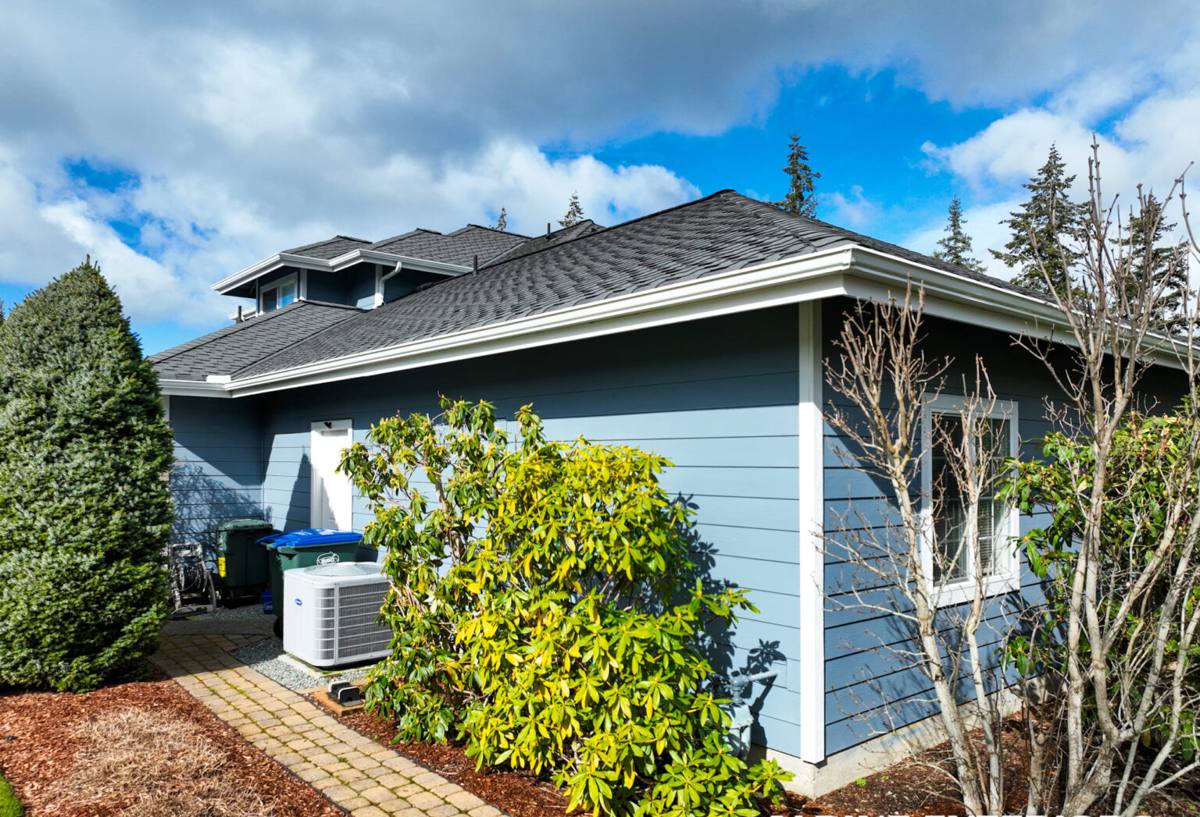
Why Birch Bay Roofs Fail in Specific, Predictable Ways
After working on roofs throughout this stretch of Whatcom County, the failure patterns in Birch Bay tend to repeat themselves. Understanding why helps explain what a correct repair actually needs to address, rather than just covering the visible symptom.
Salt Air and Metal Corrosion
Flashing, fasteners, and any exposed metal on a roof slowly corrode faster near the water than they would a few miles inland. A galvanized nail or a lower-grade flashing panel that would last decades in a drier, inland climate can start rusting through in a fraction of that time here. Once a fastener corrodes, it loses grip, and once flashing metal thins out or perforates, water has a direct path underneath the roofing material.
Wind-Driven Rain
Storms coming off the bay don't just drop rain — they push it. Wind-driven rain gets forced up under shingle tabs, sideways through poorly lapped flashing, and into gaps that would never see water under calmer conditions. A roof that looks fine in dry weather can still be actively leaking during a windstorm, because the failure only shows itself when rain is being pushed against the roof rather than simply falling onto it.
Moss and Trapped Moisture
Shaded slopes and roofs under tree cover hold moisture longer through Birch Bay's damp season, and moss doesn't just sit on top of the roofing material — it grows into the surface, lifts shingle edges, and holds standing moisture against the roof deck underneath. Left alone, that moisture works its way into the wood over time, well before any leak is visible from inside the house.
Signs a Repair — Not a Full Replacement — Is What You Need
Homeowners often assume a leak means the whole roof is failing, but most roofs develop isolated problems long before the overall system is actually worn out. Catching these signs early is usually what keeps a job in repair territory instead of tipping it into full replacement.
- A leak that appears in one specific spot, especially near a valley, chimney, skylight, or wall intersection
- A handful of cracked, curling, or missing shingles concentrated in one area rather than spread across the whole roof
- Visible moss buildup on part of the roof, with the rest of the roofing material still in solid shape
- Flashing that's visibly rusted, lifted, or separated at a specific transition point
- Granule loss in gutters that's noticeable but not accompanied by widespread shingle wear
- Staining on an interior ceiling that traces back to a single, identifiable roof penetration or seam
If the roofing material overall still has reasonable life left in it and the damage is contained to one or two areas, a properly done repair is usually the right call — both financially and practically. If the shingles are uniformly worn, brittle, or past their expected service life across most of the roof, repair becomes a short-term fix and replacement is the more honest recommendation.
What a Correct Roof Repair Actually Involves
Roof repair has a bad reputation in some corners of the trade because it's easy to do badly — a tube of roofing cement smeared over a visible crack looks like a fix and buys a little time, but it isn't one. A repair done right follows the same logic as a full roofing job, just scoped down to the area that actually needs it.
Finding the Real Source, Not Just the Visible Symptom
Water doesn't always leak in a straight line down from where it enters. It can travel along the underside of the roof deck or along a rafter before showing up as a stain on a ceiling that's several feet away from the actual entry point. A correct repair starts with tracing the leak back to its actual source — on the roof surface, at the attic level, or both — rather than patching wherever the interior stain happens to be located.
Matching Materials, Not Just Covering the Gap
A repair patch that doesn't match the surrounding roofing material in type, weight, and profile creates a weak seam even if it stops water in the short term. Shingles, underlayment, and flashing all need to tie into the existing roof system correctly so the repaired section performs the same as the rest of the roof, not as a separate patch bolted on top of it.
Rebuilding Flashing Properly
Most roof leaks in this region trace back to flashing, not the open field of shingles. A correct repair rebuilds the flashing at the affected valley, chimney, wall, or penetration — lapped and integrated with the underlayment the way it should have been done originally — rather than just adding sealant over the existing metal and hoping it holds.
Checking the Deck Underneath
Any time a repair opens up a section of roof, it's worth confirming the decking underneath is solid before new material goes back down. Soft or delaminated decking from long-term moisture exposure won't support a repair properly, and covering it back up without addressing it just delays a bigger problem.
Removing Moss the Right Way
When moss is part of the problem, a correct repair includes removing it without damaging the shingle surface underneath — moss should be cleared gently, not power-washed or scraped aggressively, both of which can strip granules and shorten the life of otherwise sound shingles. Addressing what's keeping that section of roof damp, whether it's shade, poor airflow, or debris buildup, matters as much as clearing the moss itself.
Repair vs. Replacement: How to Think About the Decision
| Situation | Repair Usually Makes Sense | Replacement Usually Makes Sense |
|---|---|---|
| Age of roofing material | Well within its expected service life | At or past the end of its expected lifespan |
| Extent of damage | Isolated to one or two areas | Spread across most or all of the roof |
| Leak history | First occurrence or a known, contained cause | Recurring leaks in multiple, unrelated locations |
| Deck condition | Solid, no widespread rot | Soft or damaged decking in multiple areas |
| Shingle condition elsewhere | Still flexible, granules intact | Brittle, curling, or granule loss roof-wide |
An honest contractor should be willing to tell you when repair is the right call, even if a full replacement would be a bigger job. Recommending repair on a roof that genuinely doesn't need replacement yet is part of doing the work honestly, not a missed sales opportunity.
Cost Factors for Roof Repair in Birch Bay
Roof repair costs vary a lot depending on scope, and it's worth understanding what actually drives the number before comparing bids.
| Factor | What It Affects |
|---|---|
| Size of the affected area | Labor and material quantity for the repair itself |
| Flashing work required | Whether the repair addresses the actual leak source or just the surface symptom |
| Roof pitch and access | Staging, safety equipment, and time needed to work the area safely |
| Deck repair, if needed | Whether damaged plywood or OSB has to be replaced before new material goes down |
| Material matching | Sourcing shingles or panels that match the existing roof's type, weight, and color |
| Moss removal and treatment | Time spent clearing growth carefully without damaging surrounding shingles |
A written estimate that breaks out these components separately gives you a much clearer picture than a flat number with no explanation behind it. It's reasonable to ask any contractor exactly what's included in a repair bid before agreeing to the work.
How Our Repair Process Works
- In-person inspection: We get on the roof and check the attic where accessible, rather than estimating a repair from photos or a description over the phone.
- Tracing the actual leak source: We identify where water is really entering, which isn't always where the interior damage shows up.
- Honest repair-vs-replacement assessment: If the roof genuinely needs more than a repair, we'll tell you that directly rather than patching something that's already past its useful life.
- Written estimate: You get a clear scope covering the repair area, flashing work, material matching, and any deck repair needed — not a vague single line item.
- The repair itself: Old damaged material comes out, the deck is checked, and new material and flashing go in matched to the existing roof system.
- Cleanup and walkthrough: We do a full site and magnetic nail sweep and review the finished repair with you before considering the job done.
Why a Crew That Already Works Birch Bay Matters for a Repair
Repair work rewards local experience more than almost any other part of the roofing trade, because so much of it comes down to correctly diagnosing a problem rather than following a standard installation checklist. A crew that regularly works roofs in Birch Bay has already seen how salt air corrodes specific types of flashing and fasteners, which roof orientations hold moss longest through the wet season, and how wind-driven rain off the bay tends to find its way through certain flashing details. That pattern recognition is what separates a repair that actually solves the problem from one that just buys a few dry months before the leak comes back.
It also matters that the company doing the repair is still reachable if a question comes up afterward. A repair that comes with a workmanship warranty is only as good as the contractor standing behind it, and a crew with an ongoing, established presence in this part of Whatcom County is one you can actually get back on the phone months or years down the road — not a name that did one job here and moved on.
A Practical Checklist Before Hiring a Roof Repair Contractor
- Do they physically inspect the roof and trace the leak source, or quote sight unseen?
- Does the estimate specify the repair area, flashing scope, and materials, not just "roof repair"?
- Will they tell you honestly if the roof actually needs replacement instead of repair?
- Do they carry current WA contractor licensing, liability insurance, and workers' compensation?
- Can they point to recent, real repair work in or near Birch Bay?
- Is the workmanship warranty on the repair separate and clearly explained from any manufacturer material warranty?
Don't Wait Out a Leak
A roof leak rarely stays the same size. Water that finds one weak point tends to widen it over time, especially with repeated exposure to wind-driven rain off the bay, and what starts as a small, contained repair can turn into deck damage, insulation replacement, or interior repair work if it sits too long. Addressing a problem area early, while it's still isolated, is almost always the more affordable path compared to waiting until the damage spreads.
If you're dealing with a leak, visible moss, damaged flashing, or just want a second opinion on whether your roof needs a repair or something bigger, we're glad to come take an honest look. Use the form below to request a free, no-pressure estimate.