 Bellingham Exterior
 Two Products, Same Category, Different Standards
Cemplank and James Hardie are both fiber cement siding — a mix of cement, sand, and cellulose fiber pressed into planks and panels. That puts them in the same broad category as each other, and both are a real step up from vinyl or wood in terms of fire resistance, rot resistance, and durability. We get asked fairly often why we only install James Hardie when Cemplank is available through some of the same distributors at a lower price point. This page is our honest answer.
We're not going to tell you Cemplank is a bad product, because that wouldn't be true or fair. What we will do is walk through the specific differences in finish systems, climate engineering, distribution, and warranty structure that led us to standardize our crews, our training, and our warranty backing on one manufacturer instead of splitting our attention across two.
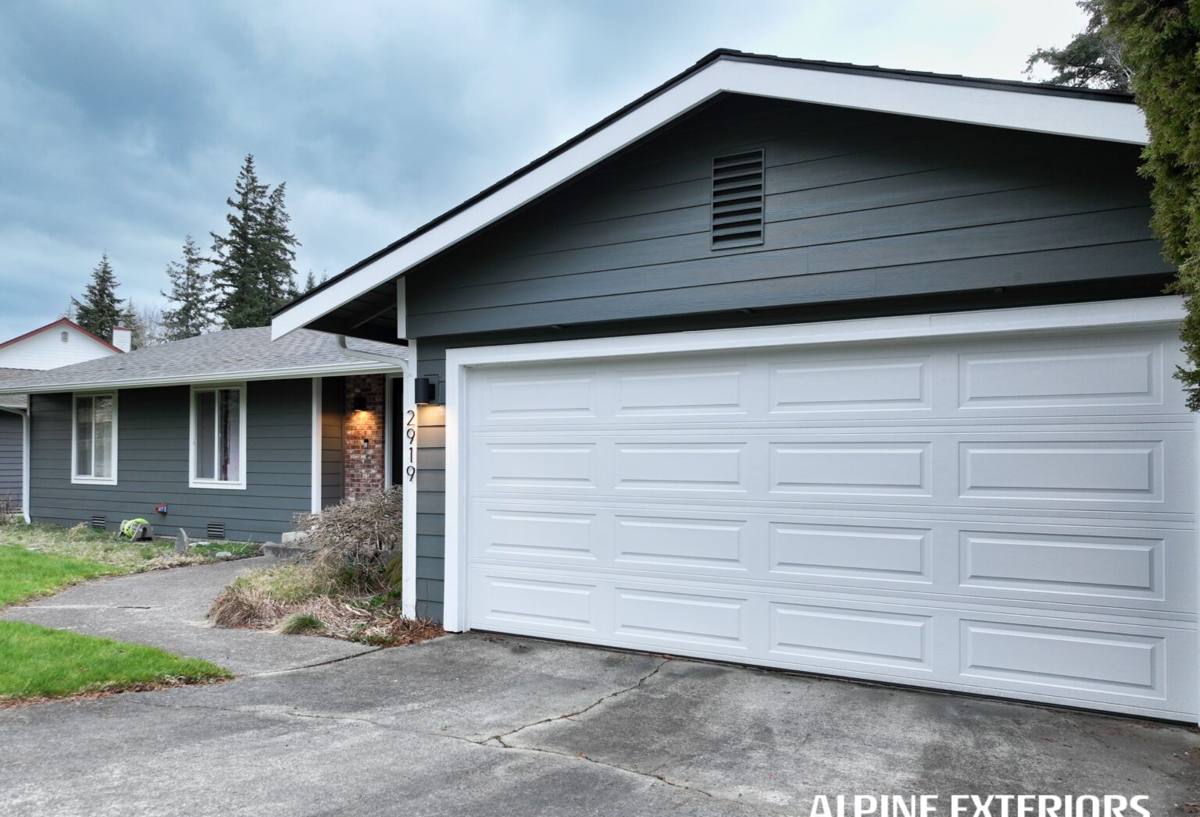
What Cemplank Gets Right
Cemplank fiber cement is non-combustible, resists pests that go after wood siding, and holds up to moisture far better than engineered wood products or primed spruce. For a homeowner comparing it against vinyl siding on price alone, Cemplank is a legitimate upgrade in durability and long-term value. It's a real fiber cement product, not an imitation, and in the right application installed correctly, it will perform.
Where we start to see daylight between the two brands isn't in the raw material — it's in everything built around the material: the finish, the product engineering for specific climates, and what happens to a homeowner five, ten, or twenty years after installation.
The Baseline Similarity
Both products are cut, fastened, and caulked using similar techniques, and both require correctly treated cut edges and proper flashing details to perform as designed. Installation sensitivity is not unique to one brand — fiber cement siding of any make fails prematurely when installers skip the manufacturer's fastening pattern, clearance requirements, or joint treatment. That's a separate issue from the brand question, but it's worth knowing going in.
Factory Finish: Where the Real Gap Opens Up
This is the single biggest difference we see in the field. James Hardie's ColorPlus finish is a baked-on, factory-applied color system cured onto the board before it ever reaches a job site. It's engineered specifically to bond to fiber cement, resist UV fading, and hold color consistency across an entire order — including trim pieces that are pre-matched to the field color.
Cemplank siding is more commonly sold primer-only or with a standard factory primer finish, which means the topcoat gets applied on site or shortly after installation, by whichever painter is on the job that week. That shifts the finish quality — and the exposure window while paint cures — onto local weather and local labor, rather than a controlled factory process.
Why That Matters in Bellingham Specifically
Whatcom County doesn't give you long, reliable dry stretches. Between the driving rain off the Strait, salt air along the water, and a moss season that runs most of the fall through spring, a field-applied finish has to cure in a narrower window than it would in a drier climate. A factory-cured finish sidesteps that risk entirely — the color and sealant are already locked in before the truck leaves the plant.
Climate-Engineered Product Lines
James Hardie builds siding in different formulations by climate zone — referred to as HZ (HardieZone) products — with the Pacific Northwest and coastal areas falling into a wetter, moisture-heavy zone than, say, the desert Southwest. The formulation, moisture management, and installation specs are adjusted for the conditions a board will actually face.
Cemplank does not offer that same zone-specific engineering across its product line in the way Hardie does. That's not a knock on the material itself, but for a region dealing with sustained moisture exposure and moss growth on north-facing walls, a product built with that specific exposure in mind is a meaningful edge, not a marketing detail.
Availability and Long-Term Repairs
Siding gets damaged over the life of a house — a ladder scrape, a tree limb, a remodel that requires opening up a wall section. When that happens years down the road, you need to source a matching board: same profile, same color, same finish sheen.
James Hardie has a deep regional distribution network through the Pacific Northwest, with ColorPlus colors that stay in the catalog for years and are stocked by multiple local suppliers. Cemplank's distribution footprint in our area is thinner, and because much of it is field-finished rather than factory-color-matched, getting an exact match years later depends on your original paint records and a painter who can replicate it — not a simple reorder.
What This Looks Like in Practice
- A single damaged Hardie board can typically be reordered by profile and color code, even years after the original install
- Field-finished siding repairs depend on saved paint cans, mix records, or a color-match attempt by a painter
- Regional lumberyards and distributors in Whatcom County stock Hardie product and trim more consistently than some competing fiber cement lines
- Storm or impact damage repairs move faster when the replacement material is a phone call away, not a special order
Warranty Structure
Warranty length isn't the whole story — what matters is what's covered and whether it transfers if you sell the house. James Hardie backs its siding with a long-term limited warranty on the substrate, and a separate finish warranty on ColorPlus color, both of which are transferable to a subsequent homeowner within the coverage period. That transferability is worth something concrete at resale — a buyer's inspector or agent will recognize it.
Cemplank does offer manufacturer warranty coverage as well, but because so much of its finish is field-applied rather than factory-cured, the color/finish warranty terms typically fall back on the paint manufacturer and the applicator rather than the siding manufacturer. That splits your recourse across two parties instead of one if a finish problem shows up.
| Factor | James Hardie | Cemplank |
|---|---|---|
| Finish application | Factory-cured ColorPlus system | Commonly primed, finished on site |
| Climate-specific formulation | HZ zone-engineered lines | Not zone-differentiated |
| Regional distribution (Whatcom County) | Multiple stocking distributors | Limited local stock |
| Warranty transferability | Transferable substrate + finish warranty | Substrate covered; finish often via applicator/paint mfr. |
| Color matching for future repairs | Reorderable by code, years later | Depends on original paint records |
Installer Accountability
James Hardie runs a contractor recognition program that requires training, a track record, and adherence to install specs to maintain status. That gives homeowners a way to check whether a contractor has actually been vetted by the manufacturer, not just self-described as "experienced." Cemplank doesn't have an equivalent contractor network with the same reach in our region, which means there's less of a manufacturer-side check on installation quality before a warranty claim ever comes up.
We standardized our crews on one product for a practical reason: our installers get deep, repeated experience with one fastening spec, one flashing detail, one finish system — instead of switching methods between two products with different tolerances. That consistency is where most siding failures actually get prevented, long before a homeowner ever has to think about a warranty claim.
What This Costs You Up Front vs. Over Time
Cemplank product typically runs somewhat less than Hardie per square foot on the material side, and if it's sold unfinished, the field-painting cost has to be added on top — which can close or erase that gap depending on your painter's rates. Hardie's ColorPlus product folds the finish into the manufactured cost, so the price you're quoted is closer to the price you actually pay, with fewer separate line items and less risk of a mismatched second contractor doing the paint work.
The bigger cost difference shows up 10-20 years out: color-matched repairs, warranty claims that stay with one manufacturer instead of splitting across a siding maker and a paint company, and resale conversations where "James Hardie siding" is a term buyers and agents already recognize.
Before You Sign With Any Siding Contractor
- Ask exactly which fiber cement brand and product line is being quoted — not just "fiber cement"
- Ask whether the finish is factory-applied or field-painted, and who backs that finish if it fails
- Ask whether the contractor is manufacturer-recognized or independently verified for that brand's install spec
- Get the warranty document itself, not a verbal summary — read what's covered and for how long
- Ask how repairs and color-matched replacement boards would be sourced five or ten years from now
Why We Only Install James Hardie
We made the decision to standardize on James Hardie because it's the product where the finish, the climate engineering, the local distribution, and the warranty backing all line up with what a home in Bellingham actually needs to face — salt air near the water, driving rain off the Strait, and a moss season that tests any siding's moisture handling for months at a time. It's also the product our crews know cold, install to spec on every job, and can stand behind without hedging.
If you're weighing siding options for a home in Bellingham or elsewhere in Whatcom County, we're glad to walk through what we install, why, and what it would look like on your specific house. Reach out for a free, no-pressure estimate — no obligation, just a straight answer.