 Bellingham Exterior
 Why Birch Bay Decks Wear Out Faster Than You'd Expect
A deck in Birch Bay takes on a different kind of punishment than one a few miles inland. Being this close to the water means salt-laden air settles on every board, railing, and fastener year-round, not just during storms. That salt film holds moisture against wood and metal long after the rain stops, which speeds up corrosion in hardware and accelerates rot in end grain and connection points long before the boards look obviously bad on the surface.
Add in the driving, wind-pushed rain that comes through this stretch of Whatcom County in the fall and winter, and you get water forced sideways into gaps that a calmer rain would never reach — under flashing laps, behind ledger boards, into the end cuts of joists. Then there's moss season, which here isn't really a season so much as most of the year. Moss and algae hold moisture against decking and framing, and on a shaded or north-facing deck it can build up faster than most homeowners think to check for it.
None of this means a Birch Bay deck is destined to fail. It means the repair work has to account for salt exposure, wind-driven moisture, and near-constant dampness in a way that generic deck advice doesn't cover.
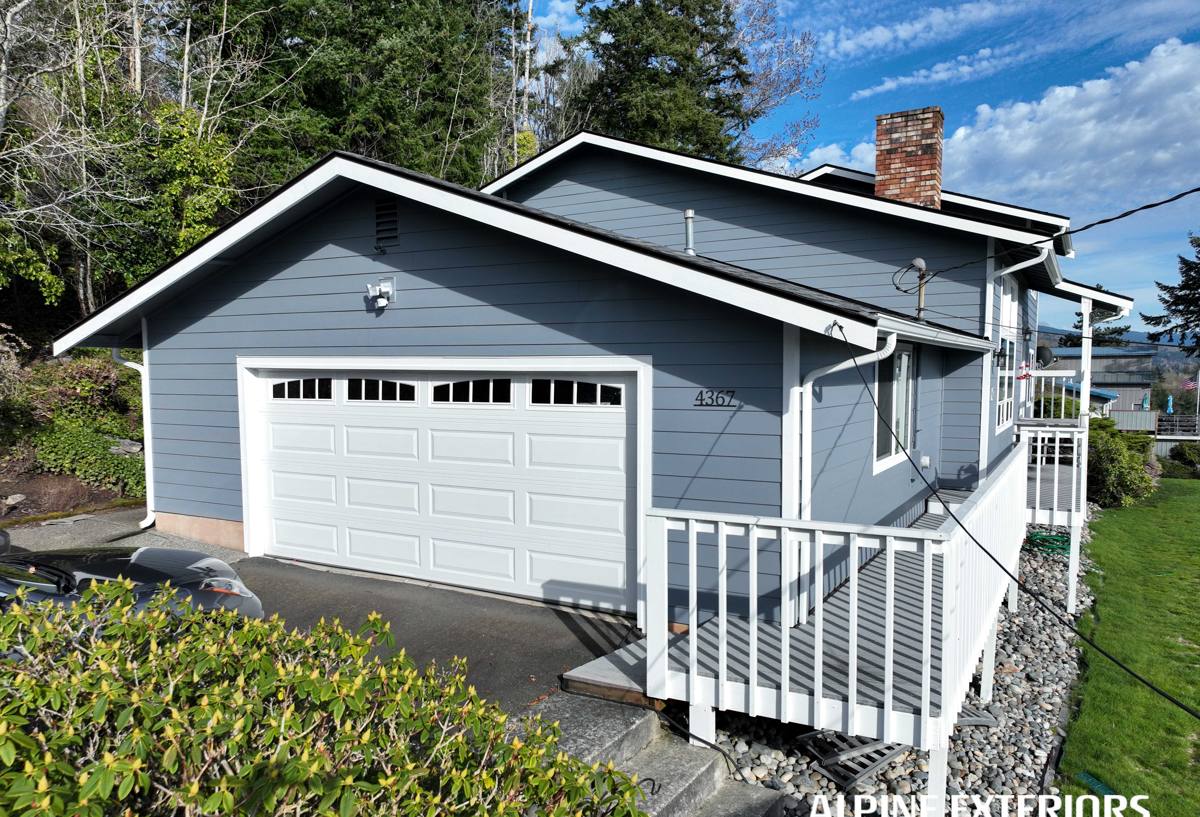
Warning Signs Worth a Second Look
Some deck problems are obvious. Others hide in plain sight until a board gives way underfoot. Here's what we tell Birch Bay homeowners to check for, especially heading into the wetter months:
- Soft or spongy spots when you walk across the decking, especially near the house or along the perimeter
- Rust streaks running down from screw heads, joist hangers, or bolts
- Gaps or separation where the deck meets the house (the ledger board connection)
- Wobbly or loose railings and posts — a code and safety issue, not just cosmetic
- Green or black staining that keeps coming back within weeks of cleaning
- Cracked, cupped, or splitting boards, particularly on the shaded side of the structure
- Visible daylight or gaps between joists and beams that weren't there originally
- A musty smell coming from underneath the deck
Any one of these can be a minor fix caught early. Several at once, or anything involving the ledger board or main structural framing, usually means it's time for a proper inspection rather than a patch job.
What a Correct Deck Repair Actually Involves
"Deck repair" covers a wide range of work, and the right scope depends entirely on what's actually failing underneath the surface. A repair that only addresses what's visible from standing height often misses the parts of the deck doing the real structural work.
Framing and Structural Members
Joists, beams, and posts carry the load of everyone standing on the deck. Rot or corrosion at these points isn't cosmetic — it's a load-bearing problem. We check for soft wood with a probe, not just a visual look, since surface paint or stain can hide rot underneath.
Ledger Board and Flashing
The ledger board — where the deck attaches to the house — is the single most common failure point on any deck, and it's especially vulnerable here given how often wind pushes rain against the house wall. Proper flashing, installed so water sheds outward and never behind the siding, is non-negotiable. A deck with failed ledger flashing can look fine while quietly rotting the rim joist behind it.
Decking Boards and Surface
Individual board replacement is often the most visible part of a repair, but boards should be matched for movement and moisture behavior with what's already there, and end cuts need fresh sealing every time a board is trimmed to fit.
Fasteners, Hardware and Connectors
This is where salt air exposure really shows. Standard coated screws and joist hangers corrode faster near the water, and once a fastener starts rusting it loses holding strength well before it looks obviously failed.
Railings, Stairs and Guards
Railings take constant hand pressure and lateral force, and post connections are a common weak point. Loose or rotted railing posts get fixed as a structural item, not just tightened and left as-is.
Repair or Replace? What Actually Drives the Decision
Homeowners usually want a straight answer on repair versus full replacement, and it genuinely depends on where the damage is concentrated. Surface-level wear on an otherwise sound frame is a very different job than rot that's reached the ledger board or main beams.
| Factor | Favors Repair | Favors Replacement |
|---|---|---|
| Framing condition | Joists and beams solid, probe test passes | Rot found in multiple joists or the main beam |
| Ledger board | Flashing intact, connection solid | Rot or persistent moisture behind the ledger |
| Age of structure | Under 15-20 years, built to a reasonable standard | Original construction predates current code, or fasteners are original and heavily corroded |
| Extent of damage | Isolated boards, localized hardware | Damage spread across most of the deck footprint |
| Footings and posts | Stable, no movement or settling | Shifting, heaving, or undersized footings |
We'll always tell you honestly which category your deck falls into. A repair that only delays an inevitable full rebuild by a season isn't a favor to anyone, and a full rebuild recommended for a deck that just needs targeted work isn't either.
How Our Deck Repair Process Works
Inspection and Moisture Check
We start underneath the deck, not on top of it. A moisture meter and a probe tell us more about actual condition than a visual walk-through ever will, especially on a deck that's been through a few Whatcom County winters.
An Honest Scope, in Writing
You get a clear breakdown of what's failing, what's still sound, and what your realistic options are — repair now, plan for a rebuild later, or full replacement. No pressure toward the more expensive option if it isn't warranted.
The Repair Work Itself
Structural fixes happen first — framing, ledger flashing, footings — before any surface or cosmetic work. Fasteners and hardware get upgraded to corrosion-resistant grades appropriate for a shoreline environment, even if that wasn't part of the original build.
Cleanup and a Straight Answer on What's Next
We clear debris and old material, and if there's a maintenance step you should be doing yourself going forward — like a seasonal moss treatment — we'll tell you plainly instead of leaving you to figure it out.
Materials We Choose for This Climate
Every material decision on a Birch Bay deck repair gets weighed against salt exposure and near-constant moisture, not just upfront cost.
Wood decking is often the right call for matching an existing deck's look and for straightforward spot repairs, but it needs consistent sealing and won't forgive skipped maintenance in this climate the way it might further inland.
Composite decking resists moisture and moss staining better over time and needs less upkeep, but it comes with its own trade-offs — higher upfront material cost, and it still needs a properly built and ventilated frame underneath, since composite doesn't fix a rotting substructure, it just sits on top of one.
Fasteners and hardware are where we don't cut corners regardless of decking material. Stainless steel or hot-dip galvanized hardware costs more than standard coated fasteners, but standard coated hardware simply doesn't hold up as long this close to salt air, and replacing corroded fasteners later means tearing back into finished decking to get at them.
Moss, Mildew, and Keeping a Repaired Deck Healthy Longer
A repair only holds up as long as the deck is kept reasonably clear of the moss and standing moisture that caused the original damage. Shaded and north-facing sections of a deck in this area will grow moss again if left alone, often within a single wet season.
Simple habits make a real difference: keeping gutters clear so runoff isn't dumping onto the deck surface, sweeping leaves and debris off the boards before they trap moisture, and having gaps between boards checked periodically so they haven't closed up with swelling or debris buildup. None of this replaces a proper repair, but it extends the life of one considerably.
Why Hiring a Crew That Already Works Birch Bay Matters
A contractor who mainly works drier, inland jobs can still do competent general carpentry, but they may not default to marine-grade fasteners, extra flashing attention at the ledger, or the framing checks that matter most this close to the water — not because they're careless, but because it's simply not what they see every day. Working Birch Bay and the surrounding Bellingham area regularly means we know what tends to fail first here, what the local building department expects for permits on structural deck work, and what actually holds up through a full Whatcom County winter instead of just looking good the first season.
It also means a faster, more accurate assessment. We're not guessing at how this climate treats a deck — we're looking at the same salt exposure, the same driving rain patterns, and the same moss cycle we see on jobs throughout the area.
If you're noticing soft spots, rust streaks, or a railing that's not as solid as it used to be, it's worth getting a straight answer before it becomes a bigger job. We offer free, no-pressure estimates for Birch Bay homeowners — use the form below to get one scheduled.