 Bellingham Exterior
 One Product, On Purpose
We get asked a lot why we don't carry a catalog of siding brands the way some contractors do. The honest answer is that we made a decision years ago to install James Hardie fiber cement siding exclusively, and we haven't found a reason to change our minds. That's not a marketing angle — it's a standard we hold because of what we've seen happen to homes in Bellingham and across Whatcom County when the wrong siding material meets our climate.
This page explains what James Hardie siding actually is, how it's engineered, what the different product lines do, and why standardizing on one manufacturer lets us guarantee the work we put on your walls instead of hedging our bets across five different products with five different failure modes.
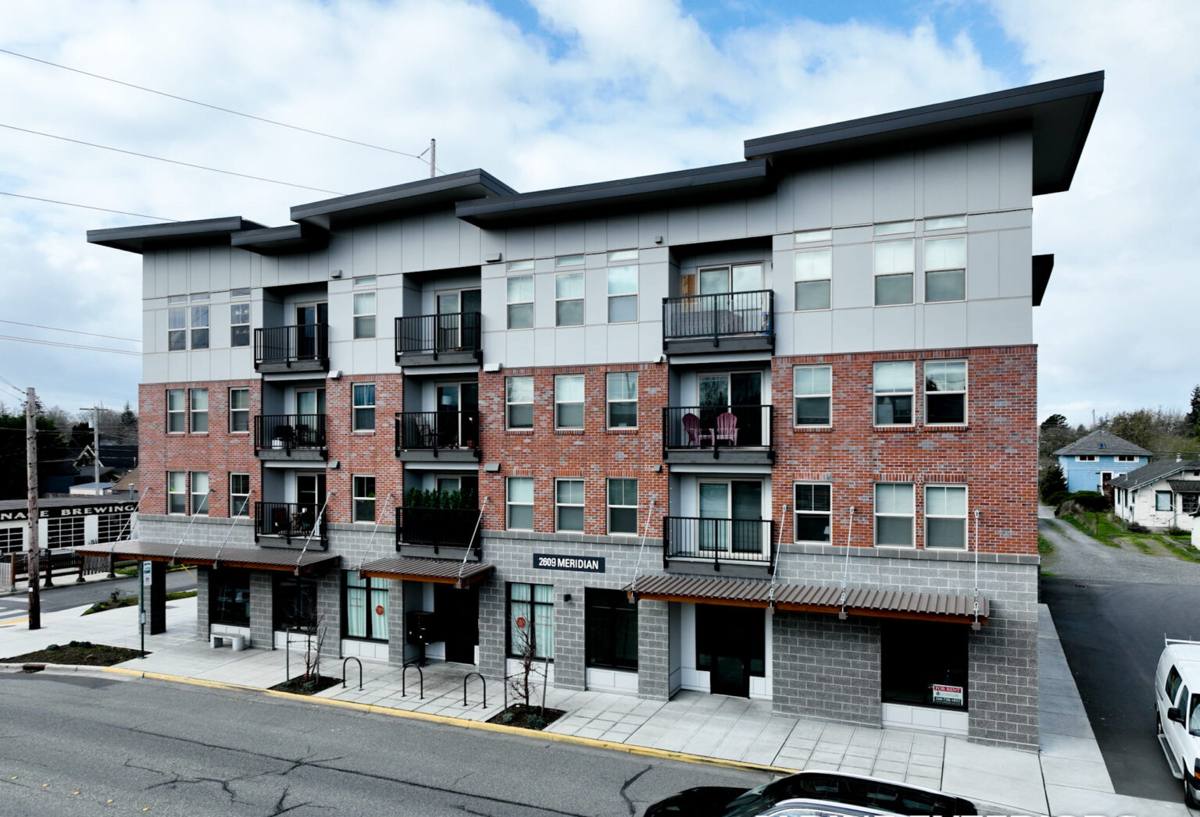
What Bellingham's Climate Does to Siding
Whatcom County sits at the intersection of a few tough conditions for exterior building materials. We're close enough to the water that salt-laden air reaches homes well inland, especially on days with a strong westerly wind off Bellingham Bay. Add in a rainy season that stretches for most of the year, plus long stretches of overcast, damp weather that never quite lets siding dry out, and you have an environment that's genuinely hard on the wrong materials.
Moss is the other piece of it. On north-facing walls, under eaves, and anywhere shaded by mature trees — which describes a lot of Bellingham neighborhoods — siding stays damp for extended periods and moss gets a foothold. Materials that absorb moisture or that rely on paint film to keep water out are the ones that suffer most. Fiber cement doesn't solve moss by itself, but it doesn't feed the problem the way wood-based products can, and it holds up structurally even when moss is present until it's cleaned off.
Driving Rain and Wind-Driven Moisture
Storms coming off the Salish Sea don't just drop rain straight down — wind pushes it sideways into wall assemblies, gaps, and seams. Siding that isn't dimensionally stable, or that swells and shrinks with moisture cycles, opens up those gaps over time. That's a big part of why we care as much about installation detail as we do about the product itself.
What James Hardie Fiber Cement Actually Is
James Hardie siding is made from a mix of Portland cement, sand, cellulose fiber, and water, cured into a dense, stable board. It's not a wood product and it's not a plastic product — it's a manufactured composite that behaves more like a masonry material. That composition is why it doesn't rot, doesn't attract wood-boring insects, and won't warp or delaminate the way some wood and wood-composite sidings can.
James Hardie also engineers its product line by climate zone. The HZ5 formulation, which is what we install in this region, is built specifically for wetter, more moisture-exposed climates like ours in the Pacific Northwest — as opposed to the HZ10 formulation designed for hot, humid, freeze-thaw regions elsewhere in the country. That climate-specific engineering is one of the reasons we don't treat fiber cement as a generic commodity product; the formulation matters, and Hardie is the manufacturer doing that work at scale.
The Product Lines We Install
James Hardie makes several distinct product lines, and part of doing this job right is matching the right line to the right part of the house. We don't install one board everywhere — we spec lap siding, panel siding, trim, and shingle-style siding depending on the architecture and the wall detail.
| Product Line | Typical Use | Notes |
|---|---|---|
| HardiePlank Lap Siding | Primary wall cladding | Most common choice; available in multiple plank widths and textures |
| HardiePanel Vertical Siding | Accent walls, gables, modern facades | Clean vertical lines, often paired with board-and-batten trim |
| HardieShingle | Craftsman and cottage-style accents | Mimics traditional cedar shingle look without the maintenance |
| HardieTrim | Corners, window and door surrounds, fascia | Matches the cladding's durability so trim doesn't fail before the field siding does |
Texture and Profile Choices
Within those lines, you're choosing between smooth and cedar-textured finishes, and between plank widths that change the shadow lines on the house. On older Bellingham homes we're often matching an existing lap reveal; on new builds or full re-sides, homeowners usually have more freedom to pick a profile that suits the architecture.
ColorPlus Technology vs. Field Painting
One of the bigger decisions on a Hardie project is whether to use ColorPlus factory-finished siding or install primed boards and paint them after installation. We steer most clients toward ColorPlus, and here's why: the color is baked on in a controlled factory environment, cured, and backed by its own finish warranty. Field-applied paint depends on weather conditions at the time of installation, and Bellingham doesn't hand out many long dry windows for a proper paint job. A rushed field paint job is one of the more common ways a siding project underperforms, not because the siding failed, but because the finish did.
ColorPlus also touches up more predictably. Manufacturer touch-up kits are formulated to match the factory finish, which keeps future repairs from turning into a visible patchwork of slightly different paint batches.
Fire Resistance
Fiber cement is non-combustible. That's not the primary reason most Whatcom County homeowners choose it — we're not in a high wildfire-risk zone the way parts of eastern Washington are — but it's a real, material advantage over wood-based and some engineered wood sidings, and it matters more every year as regional wildfire smoke seasons stretch longer even here on the west side of the state. It's also a genuine factor in some homeowners insurance conversations.
Installation Is Where Siding Actually Succeeds or Fails
Most siding problems we get called out to inspect on other contractors' work aren't material failures — they're installation failures. Fiber cement is forgiving in a lot of ways, but it still has to be installed to spec to perform the way it's engineered to. Gaps, wrong fastener placement, and skipped flashing details are the most common issues we see.
Here's what correct installation involves, and what you should expect any contractor to get right:
- Proper clearance from grade, decks, and roof lines to keep the bottom edge of the siding away from standing water and splash-back
- Correct fastener type, spacing, and placement — face-nailing or blind-nailing per the manufacturer's specification for the wind and exposure zone
- Weather-resistant barrier and flashing installed behind every seam, window, and door opening before the siding goes on
- Properly sized gaps at butt joints and around penetrations, caulked with a compatible sealant rather than pinched tight
- Panel and plank overlap that meets minimum manufacturer requirements, not just "close enough"
- Trim details that shed water away from the wall assembly instead of trapping it behind the board
When any of those steps get shortchanged, you can end up with moisture intrusion behind siding that looks fine from the curb for a year or two before problems show up. That's a big part of why we don't subcontract this work out to crews unfamiliar with Hardie's installation manual — we install to the manufacturer's spec because that's also what keeps the warranty valid.
Why This Beats the Alternatives, Practically Speaking
We're not going to tell you every other siding product is bad — vinyl, LP SmartSide, and cedar all have legitimate uses and plenty of homes wearing them without issue. What we will say is that when we weighed moisture behavior, maintenance burden, appearance longevity, and warranty structure against what our climate does to a house over 20-30 years, fiber cement came out ahead for the work we're willing to put our name on.
| Factor | James Hardie Fiber Cement | Vinyl | Wood-Based Siding |
|---|---|---|---|
| Moisture absorption | Very low | Doesn't absorb, but seams can trap water behind it | Higher; prone to swelling and rot without maintenance |
| Repainting needed | Rarely with ColorPlus; longer intervals if field-painted | Never painted, but fades and can't easily be repainted to match | Every 3-7 years typically |
| Impact resistance | High | Can crack in cold, dent easily | Moderate; dents and gouges more easily |
| Fire rating | Non-combustible | Combustible | Combustible |
| Typical warranty | 30-year limited, transferable | Varies widely, often prorated | Varies by manufacturer |
The Warranty We're Actually Willing to Stand Behind
James Hardie backs its siding with a non-prorated limited warranty of up to 30 years on the substrate, and ColorPlus finishes carry their own separate finish warranty. Both are transferable to a new owner if you sell the home within the coverage window, which is a real selling point in a market like Bellingham's where buyers are increasingly asking about exterior maintenance history. Our installation work is covered separately under our own workmanship warranty, and we keep our crews trained specifically on Hardie's installation requirements so that if something ever needs to be addressed, there's no ambiguity about whether it was a material issue or an installation issue.
What This Means for Your Project
Standardizing on one manufacturer means our crews are deeply familiar with one installation system rather than being generalists across several. It means our estimates are more predictable, our warranty conversations are simpler, and we're not learning a new product's quirks on your house. For Bellingham homeowners dealing with salt air, sideways rain, and shaded walls that never fully dry, that focus is the point, not a limitation.
If you're planning a re-side, an addition, or you're just trying to figure out what's on your house now and whether it's holding up, we're happy to come take a look. We'll give you a straightforward, no-pressure estimate and tell you honestly what we see — no obligation either way.