 Bellingham Exterior
 Building a Deck That Actually Belongs in Birch Bay
Birch Bay sits right on the water, and that changes what a deck needs to survive. A deck built with inland assumptions — standard fasteners, tight-to-the-house framing, no real airflow underneath — tends to show its age fast out here. Salt-laden air off the bay accelerates corrosion on anything less than the right hardware grade. Driving rain off Georgia Strait finds every gap in flashing and fastening. And Whatcom County's long, wet shoulder seasons mean moss and algae get a real head start on any deck surface that doesn't shed water and dry out quickly. None of this means a deck in Birch Bay has to be high-maintenance or short-lived. It means the build has to account for the environment from the framing up, not just at the surface finish.
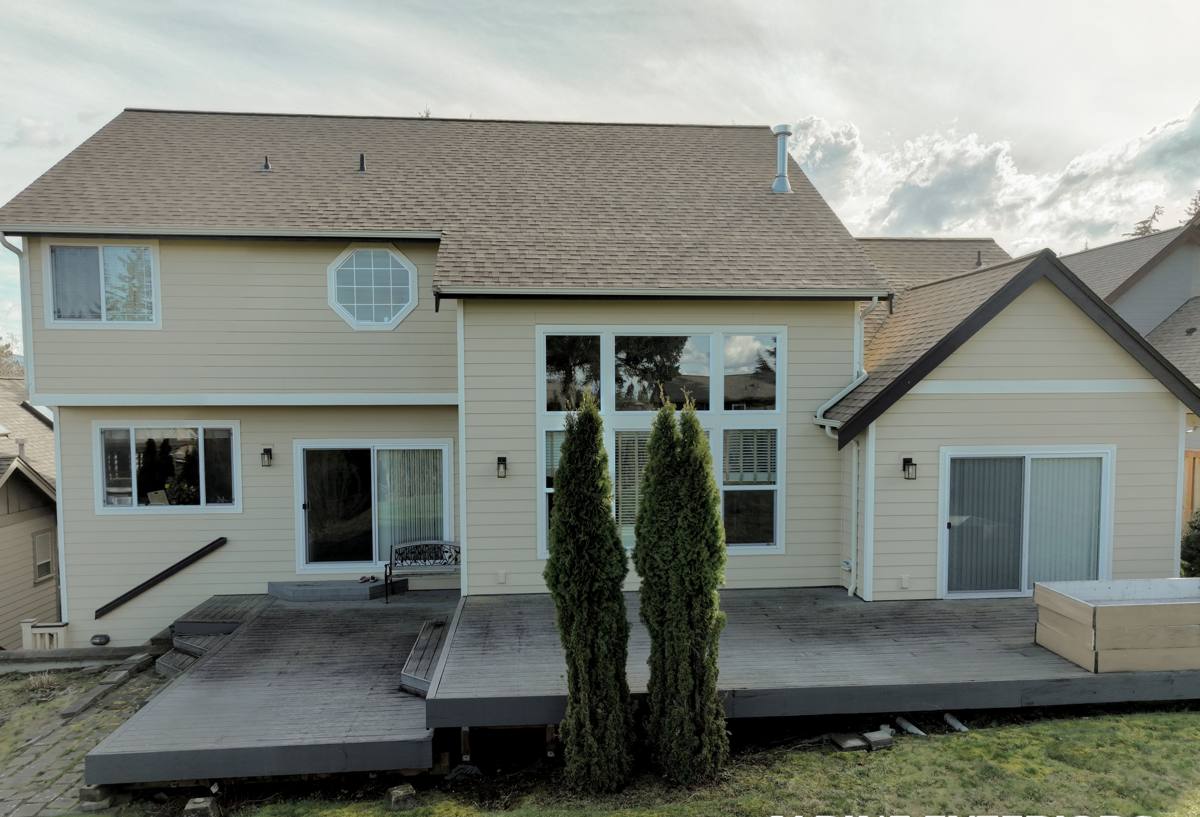
What Birch Bay's Climate Actually Does to a Deck
Salt Air and Metal Fasteners
Proximity to saltwater is the single biggest difference between building a deck in Birch Bay versus building one a few miles inland. Standard electro-galvanized screws and joist hardware corrode noticeably faster in a salt-air environment, and once a fastener starts rusting, it weakens the connection it's supposed to hold and can streak or stain the surrounding wood. This is why fastener and hardware selection matters more here than the framing lumber species does.
Driving Rain and Wind-Driven Moisture
Storms coming off the water don't just fall straight down — wind pushes rain sideways into ledger connections, under rail posts, and into any seam that isn't properly flashed or sealed. A deck built without attention to water-shedding details will develop soft spots at the house connection and around post bases well before the rest of the structure shows wear.
Moss, Algae, and the Long Wet Season
Whatcom County's damp, overcast stretch from fall through spring gives moss and algae plenty of time to take hold on any deck surface that stays wet. Shaded decks, north-facing decks, and decks with poor airflow underneath are the most vulnerable. Left unaddressed, this isn't just cosmetic — trapped moisture under moss growth keeps the decking material wet longer, which shortens its service life.
Framing and Structure Built for the Site
The framing is where a deck's long-term durability is decided, and it's the part of the job nobody sees once the decking boards go down. For Birch Bay properties, that means:
- Corrosion-resistant structural connectors and fasteners rated for coastal or high-moisture exposure, not standard-grade hardware
- Proper ledger board flashing and a positive air gap or flashing detail where the deck meets the house, so wind-driven rain can't wick into the band joist
- Joist spacing and blocking sized to the actual decking material span rating, not the minimum code allowance
- Footings set to the correct frost depth and bearing for the soil conditions on the lot
- Adequate clearance and airflow underneath the deck to let the structure dry out between rain events
Skipping any of these doesn't show up as a problem in year one. It shows up in year five or six as soft framing, rust streaks, or a deck that never quite feels solid underfoot.
Choosing Decking Material for a Water-Adjacent Property
There's no single "best" decking material — the right choice depends on how much upkeep the homeowner wants to do and how the deck is used. Here's how the common options actually compare in a Birch Bay setting:
| Material | Moisture/Salt Air Behavior | Maintenance | Typical Lifespan |
|---|---|---|---|
| Pressure-treated wood | Performs well if fasteners and hardware are corrosion-rated; needs sealing to resist moss and graying | Annual cleaning and periodic sealing | 15-20+ years with upkeep |
| Cedar | Naturally moisture- and insect-resistant; still needs sealing near salt air to prevent surface breakdown | Sealing every 1-2 years | 15-20 years |
| Composite decking | Doesn't absorb moisture like wood, but can stay damp on the surface longer in shaded, low-airflow spots, which is where algae shows up first | Periodic washing; no sealing or staining | 25-30 years, brand-dependent warranty |
| PVC/capped composite | Fully moisture-sealed surface; best resistance to moss growth and salt exposure | Occasional washing | 25-30+ years, brand-dependent warranty |
Our standard is to walk homeowners through these trade-offs honestly rather than push whatever has the highest margin. A wood deck that's sealed on schedule can outlast a neglected composite deck, and a composite deck in a shaded, poorly ventilated spot can grow moss just as readily as wood if airflow underneath is inadequate. Material choice matters less than installation quality and site conditions.
Railing, Fastener, and Hardware Details That Matter Here
Railings and hardware take more direct weather exposure than almost any other part of a deck, since they're vertical, unshaded surfaces facing the wind and rain coming off the bay. A few specifics we treat differently on Birch Bay jobs:
- Stainless or coated structural screws at every connection point exposed to open air, not just at the ledger
- Post base hardware set with a standoff or drainage gap so water doesn't pool against end grain
- Cable or metal railing components rated for coastal exposure, since unrated hardware can develop surface rust within a season or two this close to the water
- Baluster and post spacing built to current code, since railing failures are one of the most common deck safety issues nationally
Drainage and Surface Water Management
A deck's surface needs a slight pitch away from the house — usually a small fraction of an inch per foot — so water runs off rather than pooling. On a site exposed to driving rain, that pitch, combined with properly spaced decking boards, is what keeps standing water from sitting on the surface long enough to feed moss growth or work its way into fastener holes.
Our Process for a Birch Bay Deck Project
1. Site Visit and Assessment
We look at sun exposure, wind exposure, existing drainage patterns on the lot, and how close the deck will sit to salt air and prevailing weather. This is also when we check the house connection point and existing structure if it's a rebuild.
2. Design and Material Conversation
We talk through decking material, railing style, and layout based on how the homeowner actually uses the space — not just what looks good in a photo. Budget, maintenance tolerance, and how much sun or shade the deck gets all factor into the recommendation.
3. Permitting
Deck projects of most sizes require a permit in Whatcom County jurisdictions. We handle that process as part of the project so the structure is inspected and documented correctly — this also matters at resale, since undocumented decks can complicate a home sale or insurance claim.
4. Framing and Structural Work
This is where the corrosion-resistant hardware, proper flashing, and correct footing depth all come together. We don't shortcut this stage because it's invisible once decking goes down — it's the part that determines whether the deck is still solid in ten years.
5. Decking, Railing, and Finish
Final surface installation, railing, and any sealing or finishing the material requires happens last, with attention to proper board spacing and drainage pitch.
6. Walkthrough and Maintenance Guidance
We go over what upkeep the specific material and site will need — cleaning frequency, sealing schedule if applicable, and what to watch for given the deck's sun and wind exposure.
Signs an Existing Birch Bay Deck Needs Attention
If you already have a deck and are trying to decide between repair and rebuild, these are the signs worth taking seriously:
- Soft or spongy decking boards, especially near the house connection
- Rust streaking around fastener heads or hardware
- Persistent moss or algae growth that returns quickly after cleaning
- Railing posts that feel loose or flex under moderate pressure
- Visible gaps or separation where the deck meets the house siding
- Footings or support posts showing rot, cracking, or settling
Any one of these on its own might be a minor fix. Several together usually mean the underlying structure was built without the coastal-exposure details a Birch Bay site needs, and a rebuild is the more honest recommendation than a patch.
Why Local Experience on This Coastline Matters
A deck built for a dry inland lot and a deck built for a Birch Bay property facing open water are different projects, even if they look similar from the street. The difference is in hardware grade, flashing detail, airflow planning, and material selection — decisions made before the first board goes down. A crew that regularly works this stretch of Whatcom County has already seen which shortcuts fail here and which details are worth the extra cost, because they've been back to see the results a few years later. That's not something a generic deck-building approach picks up on its own.
If you're planning a new deck or dealing with an aging one in Birch Bay, we're happy to take a look and give you a straightforward assessment. Fill out the form below for a free, no-pressure estimate.