 Bellingham Exterior
 Exterior Work Built for the Sudden Valley Setting
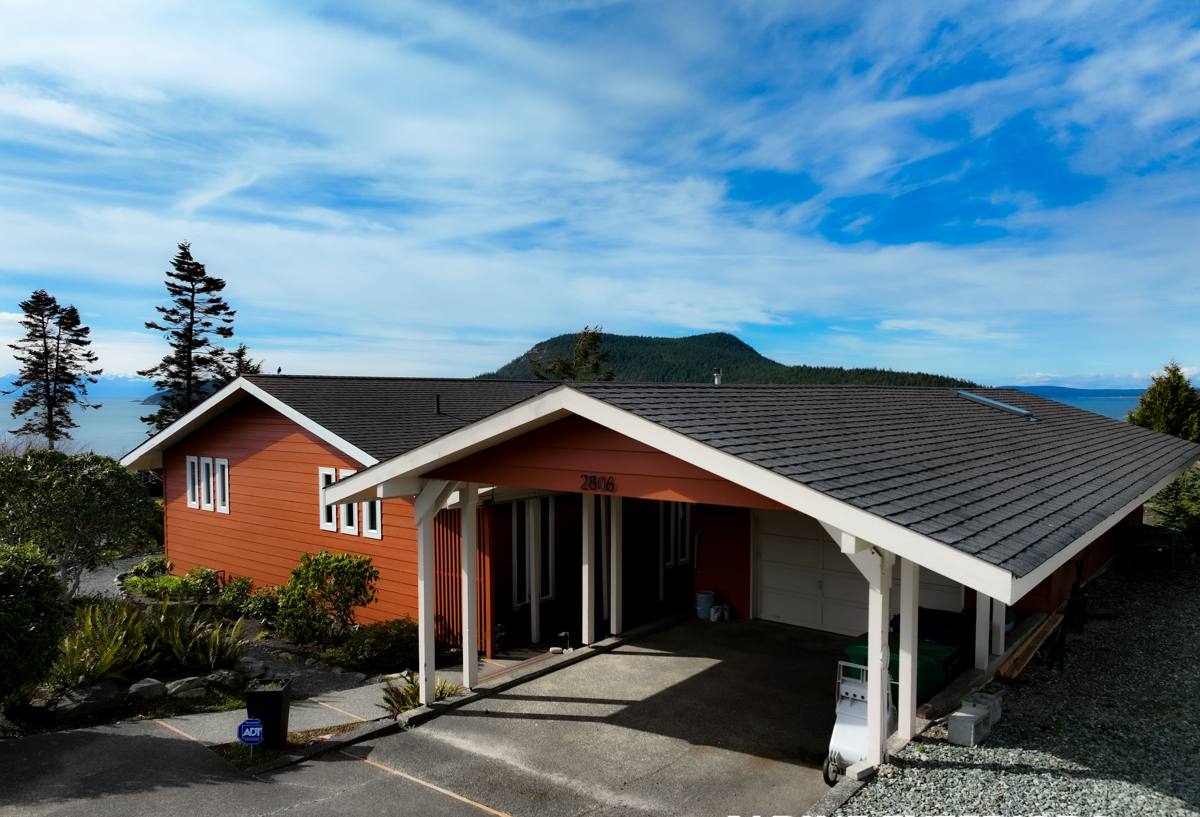
Sudden Valley sits in a heavily wooded, lake-adjacent pocket of Whatcom County, and that setting shapes almost every exterior decision a homeowner there makes. Mature tree canopy means constant shade on large sections of most roofs and walls. Proximity to Lake Whatcom keeps humidity higher than it is in more open parts of Bellingham. And the broader Whatcom County climate — the same marine-influenced weather that brings salt-tinged air off Bellingham Bay, driving rain much of the year, and a moss season that can run eight months or longer — reaches into the valley too, layered on top of the shade and moisture the trees themselves create. Homes here don't fail because owners neglected them. They fail because the exterior products chosen for them weren't built for this combination of shade, damp, and organic growth.
We work throughout Bellingham and Whatcom County, and Sudden Valley is a service area we know well: the narrow, tree-lined roads, the steep driveways, the homes tucked back under fir and cedar canopy where a roof or a wall can stay damp for days after a storm has passed everywhere else. Siding, roofing, windows, and decks all have to account for that reality, not just the general Pacific Northwest forecast.
What the Climate Actually Does to a Sudden Valley Home
Moss and Organic Growth
Moss needs shade, moisture, and time — Sudden Valley has all three in abundance. On roofing, moss holds water against the surface long after a rain event, which accelerates granule loss on asphalt shingles and can work its way under laps if left unchecked for years. On siding, the same organic growth shows up as green-black staining, especially on north-facing walls and anywhere gutters overflow or sprinklers hit the wall repeatedly.
Rain Volume and Driving Wind-Driven Rain
Whatcom County sees a genuinely wet fall, winter, and spring, and Sudden Valley's tree cover doesn't stop wind-driven rain from finding gaps in flashing, window trim, and siding laps — it just changes where the water lands and how slowly it dries afterward. Materials and details that rely on quick drying between storms don't get that luxury here.
Shade, Slow Drying, and Wood Rot
Constant shade is the quiet threat. A wall or deck ledger that gets full sun for a few hours a day can dry out between rains. One that sits under canopy most of the day often can't, and that's exactly the condition that lets wood rot, siding delamination, and deck substructure decay take hold over years, often before it's visible from the ground.
Siding: Why We Only Install James Hardie
Siding is where the shade-and-moisture problem shows up earliest and most visibly, which is why we standardized on James Hardie fiber cement and don't install vinyl, LP SmartSide, Cemplank, Allura, primed spruce, or cedar. Each of those products has genuine strengths — cedar looks beautiful when new, vinyl is inexpensive, engineered wood products install quickly — but each also carries a real-world trade-off in a wet, shaded, moss-prone climate like Sudden Valley's:
- Cedar is a wood product. In constant shade with limited drying time, it's more susceptible to moisture absorption, cupping, and rot at panel edges, and it needs ongoing refinishing to hold its look.
- Primed spruce lap siding relies on a field-applied paint system as its only moisture barrier. Once that finish is compromised — often at cut ends or fastener points — the wood substrate underneath has little protection.
- LP SmartSide is engineered wood (OSB-based) with a factory coating. It performs reasonably when installed and maintained exactly to spec, but any breach in that coating exposes a wood-based core in a climate that doesn't give it much chance to dry out.
- Vinyl siding is affordable and low-maintenance in a general sense, but it's a thin plastic product that can warp in heat, become brittle in cold, and doesn't hold paint — so color and appearance options are locked in at installation and fade over time.
- Cemplank and Allura are also fiber cement, and fiber cement as a category is the right material family for this climate. Our choice to install James Hardie specifically comes down to their manufacturing consistency, factory finish system, and product engineering for specific climate zones — not a claim that competing fiber cement is unsafe or defective.
James Hardie fiber cement is non-combustible, dimensionally stable, and doesn't feed moss or rot the way a wood-based product can. Their ColorPlus factory finish is baked on under controlled conditions rather than brushed on in the field, which matters in a place where a job site can go from dry to soaked in the same afternoon. Hardie's HZ5 product line is engineered for climates with more moisture exposure, which fits Sudden Valley better than a generic siding spec.
Roofing for a Shaded, Moss-Prone Property
Roofing in Sudden Valley has to solve for two things at once: shedding a lot of rain, and resisting moss in areas of a roof that rarely see direct sun. That means attention to underlayment quality, proper flashing at every valley and penetration, and ventilation that lets a roof deck dry from underneath even when the surface stays damp for long stretches. We also look at overhanging branches and gutter placement as part of a roofing job, not just the shingles themselves — a roof that's constantly fed debris from overhead trees will moss up again quickly no matter how good the install was.
Practical Moss Management
- Keep tree branches trimmed back from roof edges where practical
- Clean gutters on a schedule that matches the actual leaf and needle drop on the property, not a generic calendar
- Address moss growth early with proper roof-safe treatments rather than pressure washing, which can strip granules
- Make sure attic or roof ventilation is adequate — a roof that can't breathe stays wetter longer
Windows: Sealing Out a Wet, Shaded Microclimate
Old or poorly installed windows are a common source of hidden water intrusion in homes like the ones in Sudden Valley, where a wall can stay damp for days. Failed seals, degraded flashing tape, and gaps around trim let moisture track into the wall assembly, often well before a homeowner sees a stain indoors. When we replace windows, correct flashing and sealing at the rough opening matters as much as the window unit itself — a great window installed without proper water management will still leak eventually in this climate.
Decks: Built to Handle Shade and Standing Moisture
Decks under tree canopy face the same slow-drying problem as walls and roofs, plus direct exposure to falling debris and standing moisture on the deck surface itself. Ledger board attachment, proper flashing where the deck meets the house, and gapping between boards to let water and debris pass through all matter more here than on a deck that gets consistent sun. Composite decking is often a good fit for shaded Sudden Valley lots because it doesn't absorb moisture the way wood does, though we'll talk through wood and composite options honestly based on your specific site and budget.
Cost Factors for Sudden Valley Exterior Projects
Every home and lot is different, but a few factors specific to this area tend to move the numbers on siding, roofing, window, and deck projects:
| Factor | Why It Matters Here |
|---|---|
| Tree cover and access | Overhanging canopy and narrow lots can affect staging, scaffolding, and material delivery |
| Existing moss or moisture damage | Rot repair or substrate replacement found during tear-off adds scope beyond a straightforward re-cover |
| Home orientation | North- and shade-facing walls or roof sections often need more attention to detailing than sun-exposed sides |
| Driveway grade and lot layout | Steeper Sudden Valley driveways can affect equipment access and staging logistics |
| Product selection | James Hardie fiber cement, roofing materials, window lines, and deck material (wood vs. composite) all price differently |
Why a Local Crew Matters
A contractor who works across Bellingham and Whatcom County regularly sees how differently the same weather affects an open lot in one neighborhood versus a shaded, lake-adjacent lot in Sudden Valley. That's not something you can spec from a generic checklist — it comes from having actually worked on homes with this exact combination of tree cover, humidity, and access. We bring that local knowledge to every estimate: what to expect from the site, what corners not to cut, and which products are actually engineered for the conditions your home faces rather than a national average climate.
A Straightforward Process
Whether you're dealing with moss-stained siding, a roof that's holding water longer than it should, windows that are letting moisture into the wall, or a deck that's showing early signs of rot, the process starts the same way: a walkthrough of the property, an honest look at what's driving the problem, and a clear explanation of the options — including what we do and don't recommend and why. We're not going to talk you into more scope than your home needs, and we're not going to install a product just because it's cheaper if we don't think it'll hold up to a Sudden Valley winter.
If your home in Sudden Valley is dealing with moss, moisture, or aging siding, roofing, windows, or a deck, we'd be glad to take a look and give you a straightforward, no-pressure estimate.