 Bellingham Exterior
 Edgemoor's Exterior Environment
Edgemoor sits close enough to Bellingham Bay that salt-laden air, wind-driven rain, and heavy tree cover shape how homes age here. It's a different exposure profile than a home a few miles inland in Whatcom County. Wood, paint, and siding on Edgemoor homes tend to work harder over the course of a year, and the exterior details that get overlooked elsewhere — flashing laps, caulk joints, ventilation gaps — are the ones that matter most when a house sits this close to the water and under a canopy of mature trees.
We've worked on enough homes in this part of Bellingham to know the pattern: exteriors here don't fail because of one dramatic event. They fail slowly, from moisture and organic growth finding the same weak points year after year until something finally gives.
Salt Air and Wind-Driven Rain
Proximity to Bellingham Bay means airborne salt settles on siding, trim, roofing, and metal fixtures, accelerating corrosion on fasteners and hardware that wouldn't take the same beating inland. Combine that with Pacific storm systems that push rain sideways rather than straight down, and you get water intrusion at points a lot of exterior systems simply aren't built to handle — lap joints, window returns, and butt seams that face the prevailing weather.
A Long Moss and Algae Season
Western Washington's wet season stretches long, and Edgemoor's tree cover keeps things shaded and slow to dry out even between storms. That combination is exactly what moss, algae, and mildew need to take hold on roofing and siding. Once organic growth establishes itself, it holds moisture against the surface underneath it, which is a slower but just as damaging problem as a direct leak.
Mature Trees and Shade
Many Edgemoor lots carry significant tree canopy, which is part of the neighborhood's character but also means less direct sun reaching exterior surfaces, more debris in gutters, and surfaces that stay damp longer after rain. It's a good-looking problem to have, but it's still a problem for anything on the outside of the house that isn't built to tolerate sustained moisture.
Siding: The First Line of Defense
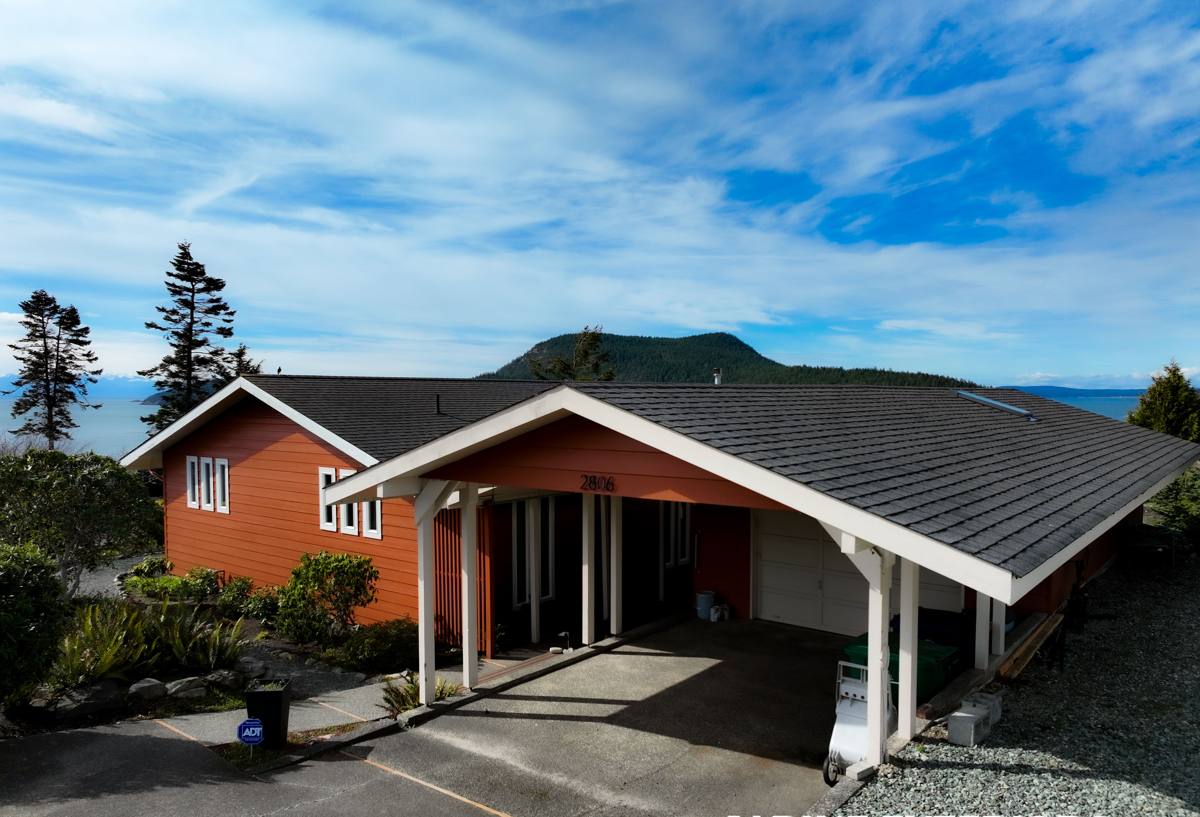
Siding is the single biggest factor in how well an Edgemoor home holds up to salt air and driving rain, because it's the surface taking the direct hit year-round. We install James Hardie fiber cement siding exclusively, and that's not a marketing position — it's a decision we made after years of seeing which materials actually perform in this climate and which ones create ongoing maintenance headaches.
Fiber cement doesn't rot, doesn't provide a food source for moss and mildew the way wood does, and holds paint and factory finish far longer than wood siding exposed to this kind of moisture cycling. Hardie's ColorPlus factory finish is baked on and warrantied against fading and peeling, which matters on a home that's going to see a lot of gray, wet months between good drying stretches. We also size the Hardie product line to the specific exposure — HZ5 formulations are engineered for the kind of freeze-thaw and moisture cycling the Pacific Northwest delivers, which is exactly what a bay-adjacent, tree-shaded lot in Edgemoor deals with.
What We Don't Install, and Why
We don't install vinyl, LP SmartSide, primed spruce, cedar, or composite alternatives like Cemplank or Allura. Vinyl can warp and fade with sustained UV and temperature swings and doesn't hold up structurally the way fiber cement does. Engineered wood products like LP SmartSide use wood fiber with resin binders — a legitimate product for the right application, but one that depends heavily on perfect installation and ongoing maintenance to keep moisture out of the edges and cut ends, which is a harder standard to hold in a climate like this. Cedar and primed spruce are natural wood, which means they're inherently more vulnerable to the rot and moss issues that define exterior maintenance in a shaded, salt-air neighborhood like Edgemoor. We'd rather install one product well than offer five and hope each one gets installed perfectly.
Roofing for Edgemoor's Climate
A roof in this part of Bellingham does more work than a roof somewhere drier. Moss growth on roofing isn't just cosmetic — moss holds water against shingles or panels, works its way under tab edges, and shortens the life of the roofing material significantly if it's left unaddressed. Combine that with wind-driven rain finding its way under improperly lapped flashing, and you have the two most common roofing failure points we see on homes in this area.
Good roofing work here starts with ventilation and flashing detail, not just the shingle or panel choice. A well-ventilated attic keeps the underside of the roof deck dry, which reduces the moisture differential that helps moss take hold in the first place. We pay close attention to valley flashing, step flashing at wall intersections, and penetration seals around vents and chimneys — the places where a roof actually fails, long before the field material itself gives out.
Windows: Comfort and Weather Sealing
Older windows on Edgemoor homes often show their age through drafts, condensation between panes, and soft or discolored trim where water has been working its way in around the frame for years. Replacing windows here isn't just about energy efficiency — though that matters with Bellingham's heating season — it's about closing off entry points for wind-driven rain before it reaches the wall assembly behind the siding.
Correct window installation means proper flashing integration with the surrounding siding or wall wrap, not just caulking around the frame and calling it done. That integration is especially important on a home where the siding itself is doing the primary job of keeping bulk water out.
Decks: Built for Marine Exposure
Decks in Edgemoor take a combination of hits that inland decks don't: salt air accelerating corrosion on fasteners and hardware, shade from tree cover keeping boards damp longer after rain, and moss finding a foothold on any surface that doesn't dry out quickly. A deck built or maintained without accounting for that exposure tends to show soft spots, fastener staining, and slick, moss-covered surfaces well before it should.
We build and repair decks with attention to drainage, ledger board flashing, and hardware rated for coastal exposure, so the structure underneath isn't quietly failing while the surface still looks fine.
Comparing Exterior Material Behavior in This Climate
| Material | Moisture/Moss Resistance | Maintenance in Edgemoor's Climate |
|---|---|---|
| James Hardie Fiber Cement | Non-combustible, doesn't feed organic growth, engineered HZ5 for PNW moisture cycling | Low — factory finish holds up for years without repainting |
| Vinyl Siding | Doesn't rot, but can warp with temperature swings and doesn't hold up structurally over decades | Low upfront, but replacement-driven rather than repaint-driven |
| Cedar / Primed Spruce | Natural wood; vulnerable to rot and moss without diligent upkeep | High — regular painting, sealing, and moss treatment needed |
| Engineered Wood (LP SmartSide) | Resin-treated wood fiber; performance depends heavily on sealed edges and correct installation | Moderate to high — cut edges and joints need ongoing attention |
Why a Local Crew Matters
Exterior work in Edgemoor isn't the same job as exterior work in a drier part of Whatcom County. A crew that works across Bellingham regularly knows which details actually matter here — how far to hold siding off grade near shaded, damp foundations, which flashing details hold up against wind-driven rain off the bay, and where moss tends to establish itself first on a roof. That local knowledge shows up in the small decisions made on site, not just in the materials chosen.
It also matters for follow-through. A local company is still around next year if a warranty question comes up, and understands the permitting and inspection process for Bellingham and Whatcom County jobs without a learning curve.
Signs Your Edgemoor Home's Exterior Needs Attention
- Moss or algae streaking visible on the roof, especially in shaded valleys or north-facing slopes
- Soft, discolored, or bubbling siding, particularly near ground level or under overhangs
- Caulk that's cracked or pulled away around window and door trim
- Rust staining running from fasteners or metal fixtures on siding, trim, or deck hardware
- Deck boards that stay damp or feel spongy days after the last rain
- Paint that's peeling or chalking faster than expected between paint cycles
- Gutters overflowing or holding standing water due to debris from tree cover
Getting Started
If you're weighing a siding, roofing, window, or deck project on an Edgemoor home, we're happy to take a look and walk through what we're seeing and why. Reach out for a free, no-pressure estimate using the form below.