 Bellingham Exterior
 Why Birch Bay Decks Wear Out Faster Than You'd Expect
Birch Bay sits right on the water, and that location is exactly why decks here age differently than decks a few miles inland in Bellingham proper. Salt-laden air corrodes fasteners, hinges, and hardware from the inside out, often long before the visible wood shows serious damage. Add Whatcom County's driving rain — the kind that comes in sideways off the water during winter storms — and you get moisture forced into joints, ledger connections, and end grain that a typical roof overhang doesn't fully protect. Then there's the moss season, which in this part of Washington isn't really a season at all — it's most of the year. Moss and algae hold moisture against decking boards and structural framing, keeping wood damp for days after a rain instead of letting it dry out.
None of that means a deck in Birch Bay is doomed. It means the materials, fasteners, and construction details matter more here than they would in a drier inland climate, and a deck that was built to a generic standard is going to show its age faster than one built with this specific exposure in mind.
Repair or Replace? Signs It's Time for a New Deck
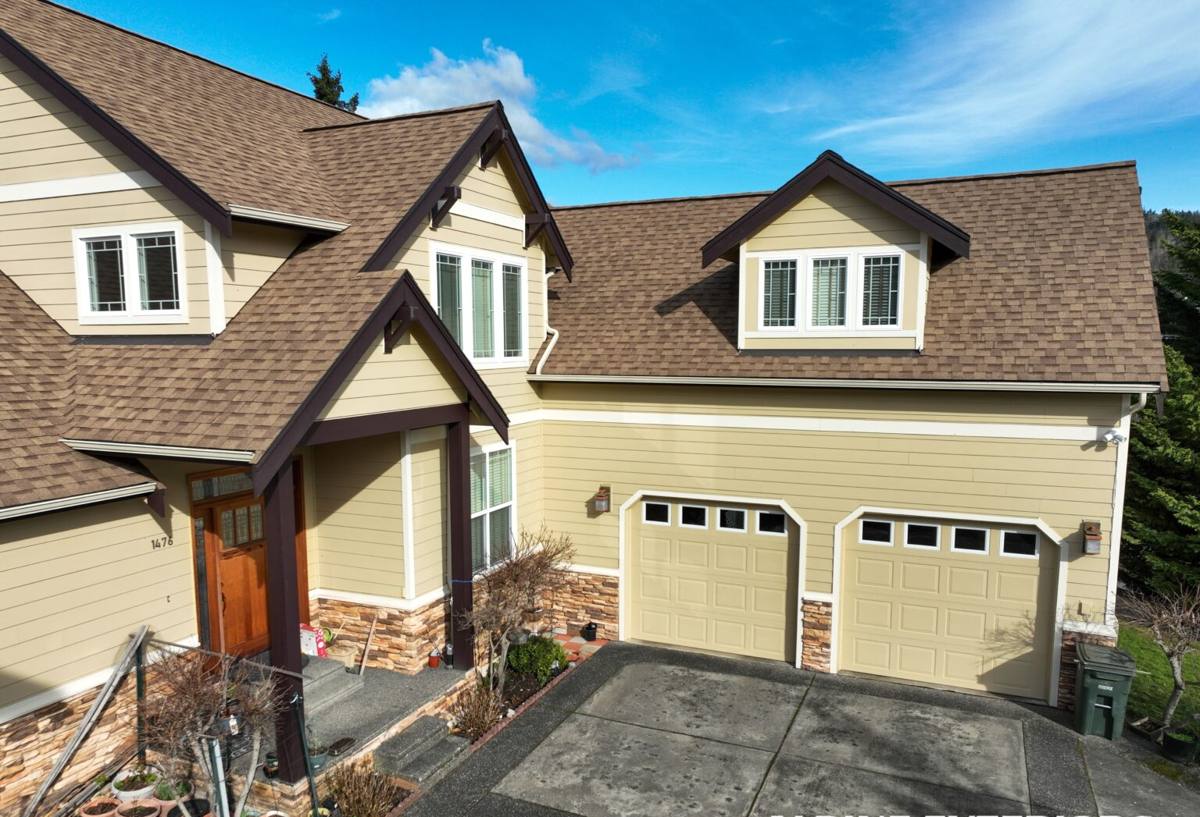
Not every tired-looking deck needs to be torn out. But there's a point where patching boards and re-staining stops being a real fix and starts being a way to delay the inevitable. Here's what we look for when we're deciding whether a deck can be saved or whether replacement is the honest answer.
- Soft or spongy spots when you walk across the decking, especially near the house or at board ends
- Rust streaks or corrosion around fasteners, joist hangers, or post bases
- Gaps opening up at the ledger board where the deck meets the house
- Persistent moss or dark staining that comes back within weeks of cleaning
- Railing posts that wiggle or feel less solid than they used to
- Visible rot at the framing level, not just the surface boards
- A deck older than 15-20 years that has never had its structure inspected
If the problems are limited to a handful of surface boards and the framing underneath is sound, repair can make sense. But once corrosion or rot has reached the structural members — joists, beams, posts, or the ledger — patching the surface just hides a problem that's still getting worse underneath.
What a Correct Deck Replacement Actually Involves
A deck replacement isn't just pulling up old boards and screwing down new ones. The parts you can't see are what determine whether the new deck lasts 10 years or 30, especially in a climate that punishes weak points.
Substructure and Footings
Everything starts below the decking. Footings need to be sized and set to current code depth, posts need proper bases that keep wood off standing water, and joists need to be spaced and sized for the actual span and load, not just matched to whatever was there before. If the old deck was under-built, we're not going to reproduce the same mistake just because it's faster.
Ledger Board and Flashing
The ledger — the board that attaches the deck to the house — is the single most common failure point on decks in wet climates, and it's almost always a flashing problem, not a wood problem. Water gets behind the ledger, has nowhere to go, and rots the rim joist and sill plate from the inside. A correct install uses proper flashing that directs water out and away from the house, not just caulk and hope. This is also where a lot of cheap deck rebuilds cut corners, because it's hidden work that nobody sees once the decking goes down.
Fasteners and Hardware
Given the salt air, we use fasteners and structural hardware rated for corrosive coastal exposure — not the standard-grade screws and hangers that are fine for a dry inland yard but start rusting within a couple of seasons this close to the water. Cheaper hardware might save a little on the front end, but replacing rusted-out hangers means tearing up decking again, which costs more than doing it right the first time.
Decking Material Options for a Coastal Climate
There's no single "best" decking material — there's a best material for how you'll use the deck, how much upkeep you want to do, and your budget. Here's how the common options actually perform in Birch Bay's conditions.
| Material | How it handles salt air & moisture | Moss/algae resistance | Maintenance |
|---|---|---|---|
| Pressure-treated wood | Holds up if sealed regularly; end grain and cut edges are the weak point | Needs periodic cleaning and treatment to resist growth | Annual cleaning, re-sealing every 1-2 years |
| Cedar | Naturally moisture-resistant but still needs sealing near the water | Moderate; still grows moss without upkeep | Sealing every 1-2 years, more attentive care |
| Composite decking | Doesn't absorb moisture the way wood does; hardware compatibility matters | Better resistance, but capless composites can still stain | Occasional washing, no sealing |
| Capped composite / PVC | Best overall resistance to salt air and moisture intrusion | Best resistance; smooth cap sheds algae growth more easily | Occasional washing only |
Wood costs less upfront but asks more of you every year in a climate like this. Composite and capped composite cost more initially but hold up with far less attention, which matters if you don't want to be re-sealing a deck every spring for the life of the house. We'll walk through the honest trade-offs for your specific deck and budget rather than pushing one material as the automatic answer.
Our Process for a Birch Bay Deck Replacement
We keep the process straightforward because a deck replacement is disruptive enough without added confusion about what happens next.
- On-site assessment. We inspect the existing deck down to the framing where possible, check the ledger and flashing condition, and identify anything the old deck got wrong structurally.
- Design and material selection. We talk through decking material, railing style, and layout based on how you actually use the space, plus your budget and maintenance preferences.
- Permitting. Deck replacements in Whatcom County typically require a permit, especially for structural work involving footings, framing, or attachment to the house. We handle that process rather than leaving it on you.
- Demolition and structural build. Old decking and, where needed, old framing come out. New footings, framing, ledger flashing, and hardware go in to current code and to the corrosion-resistant standard this location calls for.
- Decking, railing, and finish work. Final decking material, railings, stairs, and any trim details are installed and inspected.
- Site cleanup. We remove old materials and debris — you shouldn't be left staring at a pile of rotten lumber for a week after the job is done.
Keeping a New Deck Ahead of Salt Air and Moss
A well-built deck in Birch Bay still needs a little seasonal attention — the climate doesn't let anyone off the hook entirely. The good news is that the maintenance burden depends heavily on what material you chose during replacement, which is part of why that decision matters so much upfront.
- Rinse off salt residue and organic debris a few times a year, especially after winter storms
- Keep gutters and downspouts near the deck clear so runoff isn't draining directly onto it
- Trim back overhanging vegetation that keeps decking shaded and damp longer than it needs to be
- Check railing posts and stair connections annually for looseness
- Re-seal wood decking on the schedule the manufacturer recommends — don't wait until it's visibly gray and dry
- Address any soft spots or fastener corrosion early, before it spreads to neighboring framing
Why Hiring a Crew That Already Works Birch Bay Matters
Deck construction standards that work fine in a drier, inland part of Whatcom County can fall short right on the water in Birch Bay. A crew that's already built and repaired decks in this specific area knows which fastener grades actually hold up, how aggressive the moss growth gets on a north-facing deck near the beach, and where flashing details need extra attention because of how hard the rain drives in during a winter system. That's the kind of judgment that only comes from working this exact stretch of coastline repeatedly, not from a generic deck-building checklist.
It also means we're not guessing about permitting or code requirements for the area — we know what Whatcom County inspectors are looking for on deck structural work, which keeps the project moving instead of stalling on avoidable corrections.
Get a Straightforward Estimate
If your deck is showing its age — soft boards, rusting hardware, persistent moss, or a structure you're just not confident in anymore — we're happy to take a look and give you an honest read on whether it needs repair or full replacement. Use the form below to request a free, no-pressure estimate for your Birch Bay property.