 Bellingham Exterior
 Exterior Work in Bellingham's Puget Neighborhood
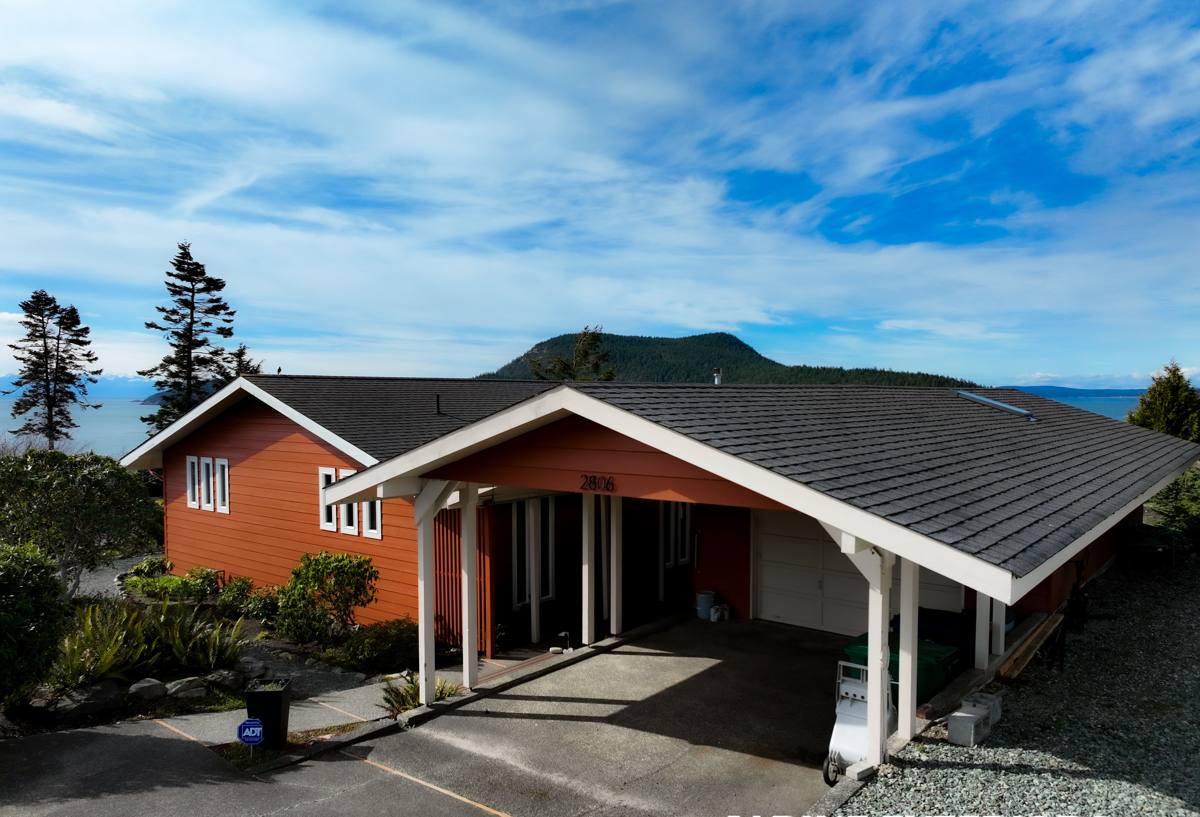
The Puget neighborhood sits within Bellingham, close enough to Bellingham Bay and the broader Salish Sea shoreline that its housing stock deals with the same coastal weather pattern that shapes exteriors across this part of Whatcom County. That means salt-tinged marine air moving through the area more days than not, rain that frequently comes in sideways on a wind rather than dropping straight down, and a moss and mildew season that can run for the better part of the year on shaded or north-facing walls. We do exterior contracting work throughout Bellingham, and Puget is one of the neighborhoods where we regularly see how that climate combination plays out on real houses over time.
Like a lot of Bellingham's established neighborhoods, Puget has a mixed housing stock, older homes built decades ago sitting alongside newer construction and remodels. That mix matters for exterior work because a 1960s house with original siding and a home built in the last ten years are starting from very different points, even if they're facing identical weather. We look at each property on its own rather than assuming one approach fits every house on the block.
What Bellingham's Climate Does to Siding, Roofs, Windows, and Decks
Salt Air and Sustained Marine Moisture
Proximity to the bay means a steady background level of moisture-laden, salt-tinged air, not just something that shows up during an obvious storm. Over years, that kind of exposure is harder on fasteners, flashing metal, and lower-grade finishes than a drier inland climate would be. It's a slow, cumulative type of wear that's easy to miss until it's already well established.
Wind-Driven Rain
Rain in this part of Whatcom County frequently arrives at an angle, pushed by wind off the water rather than falling straight down. That matters for every part of a home's exterior envelope: siding laps, roof valleys and step flashing, window head flashing, and deck ledger connections all need to handle water approaching sideways, not just from above. Details that would hold up fine in a calmer climate can fail here specifically because of that wind-driven angle.
A Long Moss and Mildew Season
Mild temperatures, cloud cover, and consistent dampness add up to extended moss and mildew growth, particularly on shaded roof planes and north-facing walls. Roofs with the wrong surface texture or inadequate ventilation can hold moss for months at a time, and any siding material with even slight porosity becomes a growth surface under the same conditions. It usually shows up first in the spots nobody looks at often: behind shrubs, under eaves, and on shaded side walls.
Siding: Why We Only Install James Hardie
We don't run a menu of siding brands and let price alone decide. We install James Hardie fiber cement siding, and the reason comes down to what we've consistently seen on tear-offs and repair calls in this exact climate.
- Non-combustible core: Fiber cement doesn't feed a fire the way wood-based siding can, which matters for household safety and can matter for insurance.
- Factory-applied ColorPlus finish: The color coat cures under controlled factory conditions instead of being brushed on at the job site, so it resists fading and moisture intrusion far longer than field-applied paint.
- Climate-engineered HZ product lines: Hardie's HZ5 formulation is built for regions with heavy sustained moisture and freeze-thaw cycling, a better fit for coastal Whatcom County than a generic national spec.
- Dimensional stability: Fiber cement doesn't swell, cup, or warp the way engineered wood products can after repeated wet-season moisture cycles.
- Strong transferable warranty: Hardie backs its products with one of the more substantial warranty structures in the industry, provided installation follows spec.
We don't install LP SmartSide, vinyl siding, Cemplank, Allura, primed spruce, or cedar. Those are legitimate products, and other contractors install them well. But we made a professional decision that in a climate this consistently wet and salt-exposed, standing fully behind one system we trust is a better position for our customers than offering a cheaper alternative that quietly pushes maintenance risk onto them a few years down the road.
How the Common Alternatives Compare in This Climate
| Material | Moisture Behavior Here | Ongoing Maintenance | Fire Rating |
|---|---|---|---|
| James Hardie fiber cement | Engineered for sustained coastal moisture; doesn't swell or rot | Low; factory finish holds color for years | Non-combustible |
| LP SmartSide (engineered wood) | Sensitive at cut edges and fastener points in high-moisture climates | Moderate; needs caulk and finish upkeep | Combustible |
| Vinyl | Can trap moisture behind panels if wrap/flashing isn't precise | Low, but prone to warping and cracking over time | Combustible |
| Cedar / primed spruce | Natural material; absorbs moisture without regular sealing | High; repainting or resealing on a recurring cycle | Combustible |
That table isn't a claim that the other products are poorly made, it's a reflection of the specific trade-offs each one carries in a marine, high-rainfall climate like Bellingham's, which is the reasoning behind our own standardization on Hardie.
Roofing
Roofs in the Puget area take on the same wind-driven rain and moss exposure as everything else on the exterior, and the details that matter most are usually the ones you can't see from the ground: underlayment quality, valley flashing, and ventilation that keeps the roof deck dry from underneath as well as protected from above. We handle full roof replacements and repairs, and on tear-offs we're also checking the decking underneath for moisture damage that a simple shingle swap wouldn't catch.
Windows
Window failures in this climate are rarely about the glass itself, they're almost always about the flashing and sealant detail around the frame. A window that's flashed correctly sheds wind-driven rain even in a hard storm; one that isn't will eventually show it as staining, soft trim, or fogged glass from a failed seal. We install replacement windows with attention to that flashing detail specifically because it's the part that determines whether a window lasts.
Decks
Decks take a different kind of punishment: standing moisture on horizontal surfaces, ledger board connections against the house that need to stay dry, and UV and rain cycling on any exposed wood or composite decking. We build and repair decks with drainage and ledger flashing as priorities, not afterthoughts, because a deck that traps water against the house structure can cause damage well beyond the deck itself.
Signs Your Exterior Needs a Look
Most exterior problems give some warning before they become expensive. Worth checking for on a Puget-area home:
- Peeling paint, bubbling, or visible warping on siding boards
- Moss buildup on roof planes, especially on north-facing slopes
- Soft or discolored trim around window frames
- Visible gaps at siding seams, corners, or trim joints where water can track in
- Standing water or a spongy feel on deck boards after rain
- Rising heating bills that may point to a wall assembly that's no longer sealing properly
What Drives Cost on an Exterior Project
| Factor | Why It Matters |
|---|---|
| Home size and story count | More surface area and taller walls mean more material and labor, plus added scaffolding or lift needs |
| Trim and architectural complexity | Multiple rooflines, dormers, or detailed trim work take more time per square foot than a simple rectangular home |
| Substrate condition found at tear-off | Hidden rot or water damage under old siding or roofing has to be addressed before new material goes on |
| Access and site conditions | Steep lots, tight setbacks, or limited driveway access can add time for material staging and equipment |
We walk through these factors during the estimate itself rather than quoting a flat per-square-foot number sight unseen, since two homes of the same size can end up needing very different scopes of work once we're actually looking at the substrate.
Why a Local Crew Matters
A crew that works Bellingham neighborhoods regularly, Puget included, sees how salt air, wind-driven rain, and moss actually behave on real houses across a full year, not just how a product performs on paper. That translates into practical decisions on install day: where extra flashing attention pays off, which wall and roof orientations stay wet the longest, and which details are worth the extra time so a callback isn't waiting two winters down the road. Because we handle siding, roofing, windows, and decks under one crew, we can also look at a Puget-area home as one connected exterior system rather than treating each component in isolation, which matters when a leak in one area is actually being caused by a failure point somewhere else on the house.
If your home in the Puget neighborhood or elsewhere in Bellingham needs new siding, a roof repair, window replacement, deck work, or just an honest second opinion on what's going on behind an aging exterior, we're glad to take a look. Reach out using the form below to schedule a free, no-pressure estimate.