 Bellingham Exterior
 Why "How Old Is It?" Isn't the Only Question
Most homeowners start thinking about roof replacement the way they think about a car's odometer — once it hits a certain number, it must be time. Roof age matters, but it's a rough guide, not a verdict. A 15-year-old roof that was installed correctly, ventilated properly, and faced a mild south-facing exposure can still have good years left. A 12-year-old roof on a shaded, moss-prone north slope in Bellingham can already be failing underneath, even if it looks fine from the driveway.
The honest answer to "when should I replace my roof" is: when the material has stopped doing its job of shedding water and protecting the structure underneath — not when a calendar says it should. That means the real work is learning what to look for, both on the surface and underneath it.
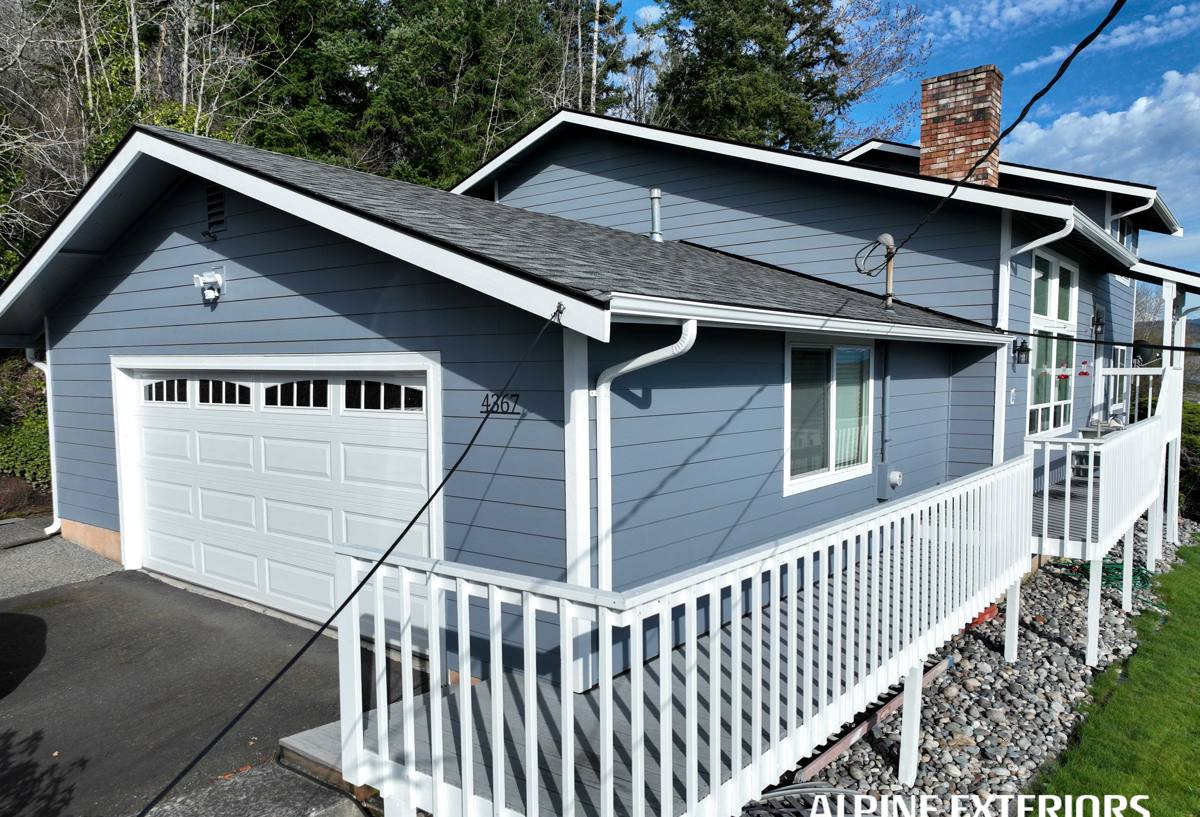
Signs You're Looking at Repair vs. Full Replacement
Not every roofing issue means a full tear-off. A contractor who's honest with you will tell you when a repair is the right call and save the replacement conversation for when it's actually warranted. Here's a practical way to sort the two:
- Isolated shingle damage (a few cracked or lifted shingles from wind, a branch strike) — usually repairable.
- Granule loss concentrated in one area, like around a chimney or valley — often a flashing or localized wear issue, not whole-roof failure.
- Widespread granule loss visible in your gutters as dark grit, especially on a roof over 15 years old — a sign the shingles are aging out across the board.
- Curling or cupping shingles over large sections — this is asphalt breaking down from UV and heat cycling and isn't something you patch your way out of.
- Persistent moss growth that returns within a season of cleaning — a symptom of a roof that's staying wet too long, which accelerates every other failure mode.
- Daylight or water stains in the attic that show up in more than one spot — this usually means the underlayment has failed, not just the surface layer.
- Sagging deck lines when viewed from the street or a ladder — a structural sign that needs immediate attention, repair or replacement.
If what you're seeing matches the first three items, a repair or targeted maintenance visit is often the right, less expensive answer. If you're seeing the last four, you're likely looking at replacement, and waiting typically just adds interior repair costs to the roofing bill.
What a Roof Inspection Should Actually Cover
A thorough inspection isn't a walk around the yard with binoculars. It should include a look at the field of the roof, all flashing points (chimneys, skylights, sidewalls, valleys), the condition of gutters and downspouts, and — critically — a look inside the attic for moisture staining, insulation compression, and ventilation function. Skipping the attic is skipping half the story.
How Bellingham's Climate Shortens Roof Life
Whatcom County roofs don't fail the same way roofs do in drier climates, and that's worth understanding before you make a decision.
Driving rain. Storms coming off the Strait of Georgia don't always fall straight down — wind-driven rain gets pushed sideways under shingle tabs, around flashing, and into valleys that were never designed to handle water moving uphill. Roofs here need more generous underlayment coverage and better-sealed penetrations than a roof built for a calmer climate.
Salt air. Homes closer to Bellingham Bay and the county's coastal edges deal with airborne salt that accelerates corrosion on any exposed metal — flashing, fasteners, gutter hardware, and vent caps. Standard galvanized fasteners can start rusting years before an equivalent roof inland would show the same wear.
Long moss season. Northwest Washington's combination of shade, moisture, and mild temperatures gives moss and algae a nearly year-round growing window. Moss doesn't just look bad — it holds moisture against the shingle surface, works its way under tabs as it grows, and lifts shingle edges over time, letting wind and water in where they shouldn't be.
Put together, these three factors mean an asphalt roof in Bellingham often ages faster on its shaded, north- or east-facing slopes than the manufacturer's rated lifespan would suggest — even when the material itself is a good product.
Reading Your Roof From the Inside
Some of the most useful information about your roof's real condition is inside your attic, not on your rooftop. Before you decide anything, it's worth a look — or having a contractor look — for these:
- Brown or gray water stains on the underside of the roof deck or rafters
- Visible daylight through the roof boards
- Damp or compressed insulation, especially near eaves
- Rusted nail tips poking through the decking (a sign of trapped moisture and condensation)
- A musty smell, which often points to slow, ongoing moisture intrusion rather than a single leak event
Any of these findings usually means the problem has been developing longer than the visible symptoms suggest, and it reinforces why an inspection should never stop at the shingles.
Common Roofing Materials and What to Expect Locally
The material you choose affects both how long the roof lasts here and how it handles our specific weather pattern. Here's an honest comparison:
| Material | Typical Lifespan (PNW) | How It Handles Our Climate |
|---|---|---|
| 3-tab asphalt shingle | 15-20 years | Budget-friendly, but the thinnest wear layer; moss and driving rain shorten life on shaded slopes |
| Architectural (laminate) asphalt shingle | 20-30 years | Heavier profile sheds wind-driven rain better; the most common replacement choice locally |
| Metal (standing seam or panel) | 40-60 years | Excellent water shedding and moss resistance, but fastener and flashing material matters near salt air |
| Cedar shake | 20-30 years with upkeep | Natural look, but moisture retention in our climate demands consistent maintenance to prevent rot and moss |
There's no universally "correct" choice — it depends on your roof's exposure, your maintenance appetite, and your budget. But whichever material you choose, correct underlayment and flashing detail matters more here than in drier regions, because the material is only as good as the water management system underneath it.
The Real Cost Factors in a Roof Replacement
Roof replacement quotes vary widely, and the differences usually come down to a handful of factors rather than the shingle brand alone:
| Factor | Why It Moves the Price |
|---|---|
| Roof pitch and access | Steep or hard-to-access roofs take longer and require more safety setup |
| Number of layers being removed | Tear-off of multiple existing layers adds labor and disposal cost |
| Deck condition | Rotted or soft decking found during tear-off requires replacement boards before new roofing goes on |
| Number of penetrations | Chimneys, skylights, plumbing vents, and valleys each need individual flashing work |
| Underlayment upgrade | Synthetic or ice-and-water-shield underlayment costs more up front but performs better against driving rain |
| Ventilation changes | Adding or correcting ridge and intake ventilation affects both cost and long-term roof health |
Be cautious of quotes that are dramatically lower than others for the same scope of work — the difference is usually in what's being skipped: underlayment quality, flashing detail, or deck repair allowances. Those are exactly the things that matter most in a wet, moss-prone climate.
What Correct Installation Actually Involves
A roof is a system, not a single layer of material. Doing it right, especially here, means:
- Full tear-off and deck inspection, with any soft or rotted sheathing replaced before anything new goes down
- Ice-and-water-shield membrane at eaves, valleys, and around penetrations, where wind-driven rain is most likely to find a way in
- Properly lapped synthetic underlayment across the full field of the roof
- Correct flashing at every wall intersection, chimney, and skylight — not just re-using old flashing to save time
- Balanced intake and exhaust ventilation, so the attic isn't trapping moisture that leads to premature failure from underneath
- Corrosion-resistant fasteners and metal components, particularly important for homes closer to the water where salt air is a factor
Skipping any one of these steps doesn't always show up right away — it shows up in year eight or ten as a leak that seems to come out of nowhere. Most premature roof failures we see trace back to a shortcut taken during installation, not a defect in the shingle itself.
Timing Your Roof Replacement Right
Roofing can be done in Bellingham nearly year-round, but there are practical windows worth knowing about. Late spring through early fall gives crews the most consistent dry stretches for tear-off days, which matters because an open roof deck is vulnerable to exactly the kind of driving rain this area is known for. Winter replacements are absolutely possible and sometimes necessary, but they require more careful scheduling around weather windows and typically move at a slower pace for safety.
If your roof is showing multiple warning signs going into fall or winter, it's usually better to address it before the wettest months rather than nurse it through another moss season and risk interior damage.
Roofing and the Rest of Your Exterior
Roof problems rarely stay isolated. Water that gets past a failing roof often shows up next in fascia boards, soffits, and the top courses of siding — and a full exterior assessment usually catches these connections before they become bigger repairs. If your roof project uncovers rot or moisture damage at the wall line, or if you're already planning a broader exterior update, it's worth evaluating your siding at the same time rather than treating each component in isolation.
On the siding side, our position is straightforward: we install James Hardie fiber cement exclusively, specifically because of how it holds up in this climate — it's non-combustible, factory-finished with a baked-on ColorPlus finish that resists our region's moisture and UV cycling, and engineered in HardieZone formulations built for wet climates like ours. If a roof inspection turns into a broader exterior conversation, that's the standard we build to.
A Practical Pre-Decision Checklist
Before committing to repair or replacement, walk through this list:
- Check gutters for granule buildup after a rain
- Look at shaded and north-facing slopes specifically for moss and standing moisture
- Check the attic for staining, daylight, or damp insulation
- Note the age of the roof and whether it's had prior repairs
- Get at least two independent inspections if you're unsure, especially if quotes vary widely
- Ask what underlayment, flashing, and ventilation approach is included — not just the shingle brand
If you're weighing repair against replacement, or just want a straight answer on where your roof stands, we're happy to take a look and give you a free, no-pressure estimate.