 Bellingham Exterior
 Why This Decision Is Different in Bellingham
Every siding contractor gets some version of the same question: "Can this be patched, or do I need to replace the whole wall?" In most of the country that's a simple math problem — square footage, material cost, labor. In Whatcom County it's a little more complicated, because our climate doesn't just damage siding, it hides the damage. Driving rain off the Strait, salt air near the water, and a moss season that can run from October through May all work on siding in ways that don't always show up on the surface until the problem is well established underneath.
That matters because the repair-or-replace decision should never be made on appearance alone. A wall that looks fine from the sidewalk can be rotting behind the surface, and a wall with cosmetic damage can be structurally sound. This page walks through how to actually tell the difference, what the common failure patterns look like here, and when a repair is genuinely the right call versus when it's just delaying a bigger bill.
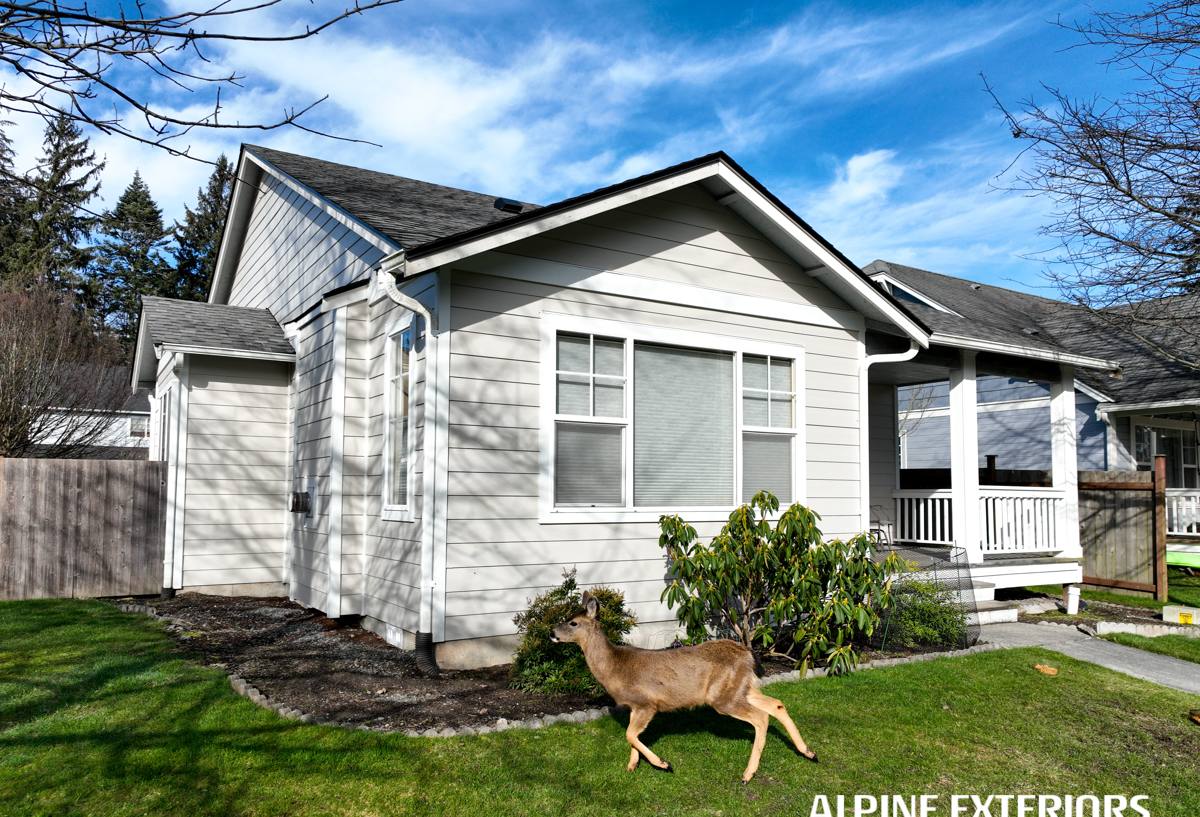
The Repair-or-Replace Decision: What Actually Matters
Three questions decide almost every case:
- Is the damage isolated or systemic? A single cracked board from a lawnmower strike is a repair. Cupping, cracking, or soft spots showing up across multiple elevations is a sign the material itself is failing, not just one piece of it.
- What's happening behind the siding? Surface damage is cosmetic. Damage that has let water behind the cladding — into house wrap, sheathing, or framing — changes the job from a siding repair to a moisture-damage repair, which is a different (and usually bigger) scope of work.
- How old is the siding, and what is it made of? A 6-year-old install with storm damage is worth repairing. An 18-year-old wood composite product nearing the end of its realistic service life is not — you'd be repairing something that's going to keep failing anyway.
Get an honest answer to those three and the decision usually makes itself.
Common Siding Problems and What They Usually Mean
| What You See | Likely Cause | Usually Repair or Replace |
|---|---|---|
| One or two cracked/split boards | Impact damage, settling, or a nail driven too tight | Repair |
| Paint failing in isolated spots | Sun exposure, poor prep on last paint job | Repair (repaint/reseal) |
| Boards cupping or bowing across a wall | Moisture cycling into the substrate, common with wood-based products in wet climates | Replace |
| Soft or spongy siding when pressed | Rot has already set in behind the surface | Replace, and inspect sheathing |
| Heavy moss/algae growth returning within a season of cleaning | Persistent shade, poor drainage, or a north-facing wall that never fully dries | Depends — see moss section below |
| Visible gaps at seams or corners | Failed caulking, or original installation error | Repair if caught early; replace if water has tracked in |
| Widespread fading or chalking of factory finish | Normal UV aging, especially on south/west walls | Repair (recoat) unless the substrate is also failing |
Signs You Can Likely Get Away With a Repair
Repair is the right call when the damage is contained, the substrate underneath is dry and sound, and the siding material itself still has useful life left in it. Practically, that looks like:
- Damage limited to one or two boards, one elevation, or one clearly identifiable event (storm, impact, a failed gutter that's since been fixed).
- No soft spots when you press on the siding or the trim around windows and doors.
- The rest of the siding is holding paint or finish reasonably well for its age.
- You can source a close color/profile match, or the repaired section is in a location where a slight mismatch won't bother you.
If all of that is true, a competent repair is the honest recommendation — there's no reason to sell a homeowner a full re-side when a targeted fix will hold for years.
Signs You Should Start Planning for Replacement
Replacement becomes the right call once the problem stops being about individual boards and starts being about the whole system. Watch for:
- Rot or soft spots showing up in more than one location, especially near the ground, under windows, or at butt joints — these are the spots that fail first and tend to indicate the same thing is happening elsewhere, just less visibly.
- Siding that's original to a home built more than 20-25 years ago, particularly wood or older composite products that were never rated for our rainfall.
- Interior signs — peeling paint on interior walls, musty smell in a room on an exterior wall, or visible staining — that suggest moisture has already gotten past the siding.
- Repeated repairs to the same wall or elevation within a few years. If you've patched the same section twice, the material is telling you it's done.
- Moss and algae that return aggressively within months of cleaning, on a wood-based or fiber-cement product that's losing its protective finish. That's less a cleaning problem and more a sign the surface can no longer shed water the way it should.
The Moss and Moisture Factor Specific to This Area
Bellingham's combination of shade cover, marine humidity, and a moss season that runs most of the wet half of the year puts more pressure on siding than drier inland climates. Moss itself doesn't eat siding, but it holds moisture against the surface far longer than open air would, and that constant dampness is what accelerates rot in wood-based products and breaks down lower-quality finishes over time. Salt-laden air near Bellingham Bay adds a second factor — it degrades fasteners, caulking, and some finishes faster than the same products would wear inland.
None of that means moss growth is automatically a replace situation. A well-installed, factory-finished fiber cement product can be cleaned and will shed water fine underneath. But moss growing aggressively on a product with a failing or absent factory finish is a signal worth paying attention to, not just a cosmetic annoyance to pressure-wash away every spring.
Why the Underlying Material Changes the Math
The repair-or-replace decision isn't just about the damage — it's about what you're repairing. Some materials are worth patching almost indefinitely because they're dimensionally stable and don't rot. Others are worth patching only in the short term because the material itself has a ceiling on how long it holds up in a wet marine climate.
Cedar and primed spruce look good and are repairable, but they're wood — they absorb moisture, and in a climate with our rainfall and moss pressure, that means an ongoing maintenance relationship (recaulking, repainting, watching for rot) rather than a one-time fix. Vinyl siding is cheap to patch but has no real fire resistance, can warp under heat or impact, and a repaired panel is rarely invisible since color-matching old vinyl is difficult. Engineered wood products like LP SmartSide hold paint better than raw wood but are still wood-fiber based at the core, meaning cut edges and any breach in the factory treatment are vulnerable to swelling and rot if not sealed and maintained correctly — something that's less forgiving here than in a drier climate.
We install James Hardie fiber cement siding exclusively for this reason. It's non-combustible, dimensionally stable in wet-dry cycling, and its ColorPlus factory finish is engineered to hold up under UV and moisture without repainting for years. Hardie's HZ5 product line in particular is formulated for wetter, harsher climates like ours. That doesn't mean every home needs Hardie today — plenty of existing siding is worth repairing and living with a while longer. But when a home does reach the point of full replacement, it's the product we stand behind, and it's why our repair recommendations are honest rather than upsells: we'd rather patch your existing siding for a few more good years than push a replacement before it's actually needed.
Cost Factors to Weigh Before Deciding
| Factor | Favors Repair | Favors Replacement |
|---|---|---|
| Extent of damage | Isolated, one or two areas | Spread across multiple walls |
| Age of siding | Under 10-15 years | 20+ years, especially wood-based |
| Substrate condition | Dry, no soft spots | Any sheathing or framing rot found |
| Color/profile match available | Yes | No, or mismatch would be very visible |
| Repair history | First repair on this wall | Repeat repairs to the same section |
| Energy/insulation goals | Not a current priority | Wanting to add house wrap or rigid insulation while walls are open |
That last row matters more than homeowners often expect. If you're going to replace siding on even a portion of the home, it's worth asking your contractor whether it makes sense to address drainage plane, house wrap, or insulation at the same time — those decisions are far more expensive to revisit later than to handle during the original job.
A Practical Inspection Checklist
Before calling anyone, a homeowner can do a reasonable first pass with these steps:
- Walk the full perimeter, including areas hidden by landscaping, decks, or fences.
- Press firmly on siding near the ground, under windows, and at any visible seams — soft or spongy spots mean moisture has already gotten in.
- Check the north-facing and shaded walls separately; they hold moisture longest and are where moss and rot tend to start first in this area.
- Look inside at exterior walls for staining, bubbling paint, or a musty smell, particularly in closets and behind furniture pushed against outside walls.
- Check caulking at trim, corners, and penetrations (hose bibs, vents, light fixtures) for cracking or gaps.
- Note how many times a given section has already been patched or repainted — repeat work on the same spot is the clearest signal that repair is no longer the economical choice.
If any of those checks turn up soft substrate, repeated failure in the same spot, or moisture signs indoors, it's worth getting a professional opinion before doing another round of patching.
Getting an Honest Read on Your Siding
Because the visible damage and the actual condition underneath don't always match — especially in a climate that hides moisture problems as well as ours does — the safest move is a real inspection rather than a guess from the driveway. We look at the whole picture: the extent of the damage, what's happening behind the cladding, the age and material of what's already on the wall, and what a straightforward repair versus a full replacement would actually involve for your home. If a repair is the right call, we'll say so. If replacement makes more sense, we'll walk you through why, including what we'd install instead and why. Reach out for a free, no-pressure estimate and we'll give you a straight answer either way.