 Bellingham Exterior
 Why Birch Bay Siding Wears Out Faster Than Inland Homes
Birch Bay sits right on the water, and that shoreline exposure changes the math on how long siding actually lasts. Homes a few miles inland in Bellingham deal with plenty of rain, but they don't get the constant low-level salt spray that rides in on the wind off the bay. That salt air settles on exterior surfaces day after day, and over years it accelerates the breakdown of caulking, fasteners, and any siding material that isn't built to shrug off repeated wet-dry cycling.
Layer on Whatcom County's long, wet winters and the driving rain that comes with west-facing coastal exposure, and you've got a climate that attacks siding from two directions at once: moisture pushed sideways into seams and laps by wind-driven storms, and a near-constant damp environment that never fully dries out between rain events. Add the region's long moss season — moss doesn't just grow on roofs here, it colonizes north-facing walls, trim, and anywhere siding stays shaded and damp — and you have one of the more demanding siding environments in the Pacific Northwest.
What This Means in Practice
We see the same failure patterns repeatedly on Birch Bay homes: caulking that's cracked and pulled away years before it should, fastener corrosion showing through paint, soft or delaminating panels at the bottom courses where splash-back and standing moisture concentrate, and moss staining that keeps coming back no matter how many times it's cleaned off. None of this is a workmanship failure on the homeowner's part — it's a mismatch between the siding material and the environment it's been asked to survive in.
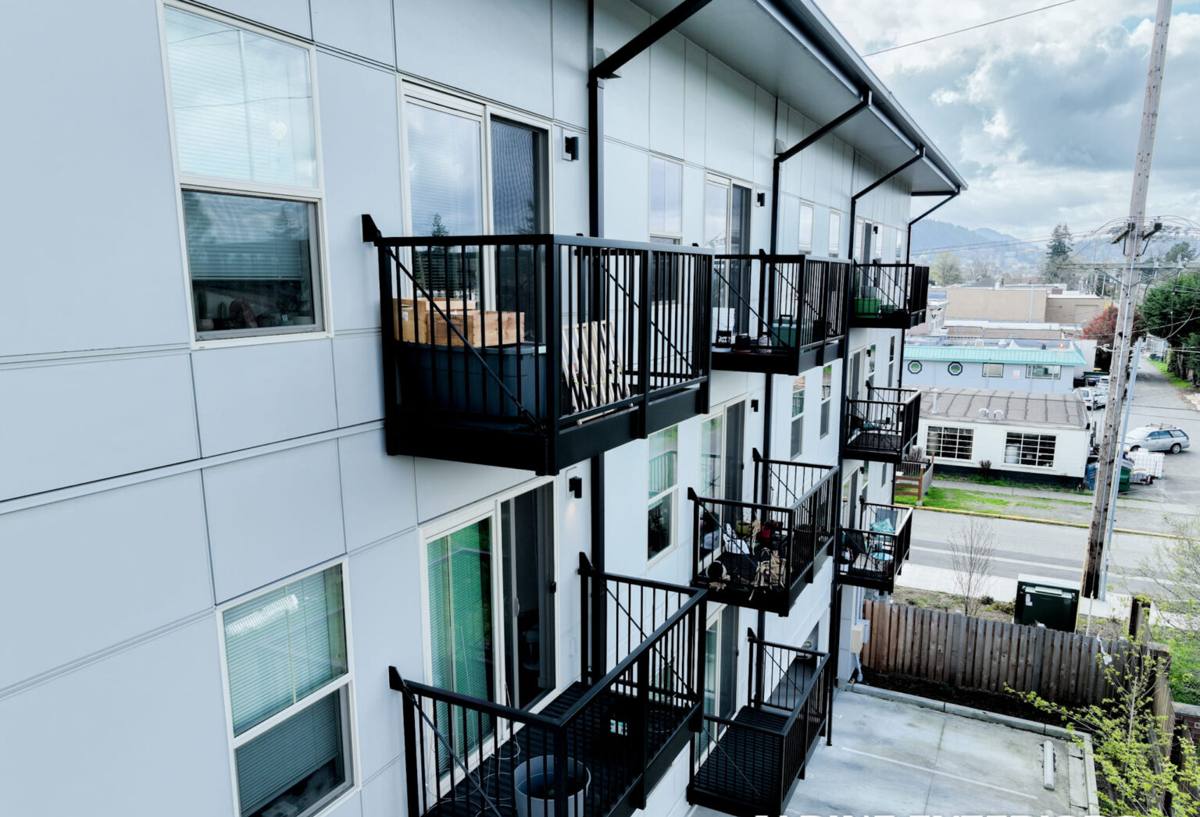
Signs a Birch Bay Home Needs Replacement, Not Repair
Not every siding problem calls for a full tear-off. But there's a point where patching individual boards or recaulking every year or two stops being cost-effective and starts being a way of throwing money at a problem that keeps coming back. Here's how we tell the difference on a coastal property.
- Soft, spongy, or crumbling material when pressed — a sign moisture has gotten behind the surface layer
- Persistent moss or dark staining that returns within a season of cleaning
- Visible warping, buckling, or gaps at panel seams and corners
- Paint or finish that's failing across large sections rather than a single spot
- Rot or soft sheathing discovered once even a small section of siding is pulled back
- Rising energy bills that point to a compromised weather barrier behind the cladding
If you're seeing two or more of these, it's worth having someone look at the wall assembly itself, not just the visible siding — because in a salt-air, high-rainfall environment like Birch Bay, surface damage is often a symptom of moisture that's already working on what's underneath.
What a Correct Siding Replacement Actually Involves
A siding replacement done right is not just stripping old material and nailing up new panels. In a coastal exposure like Birch Bay, the steps you can't see matter as much as the finished look.
Tear-Off and Inspection
Full removal of the old siding gives us a direct look at the sheathing, framing, and any prior water intrusion. This is the only point in the project where hidden rot, compromised sheathing, or failed flashing can be caught and fixed before they're sealed back up behind new cladding for another 20-plus years.
Weather-Resistive Barrier and Flashing
A correctly lapped weather-resistive barrier, properly integrated window and door flashing, and careful attention to every penetration (vents, hose bibs, light fixtures) are what actually keep driving rain out of the wall assembly. On a home exposed to wind-driven rain off the water, sloppy flashing detail is the single most common cause of siding failure — regardless of what material goes on top of it.
Installation to Manufacturer Spec
Correct fastener type and spacing, proper clearance at grade and roof lines, and factory-specified gaps and caulking joints all matter. Skipping these details is invisible on installation day and expensive five years later.
Why We Install Only James Hardie Fiber Cement
We don't install vinyl, LP SmartSide, Cemplank, Allura, primed spruce, or cedar. That's not a marketing angle — it's a standard we hold because of what we've seen these materials do, and not do, in exactly the conditions Birch Bay homes face.
| Material | Where It Falls Short in a Coastal Climate |
|---|---|
| Vinyl | Can warp or become brittle with temperature swings and UV exposure; seams and J-channels give wind-driven rain a path inward over time |
| Engineered wood (e.g. LP SmartSide) | Wood-based core is vulnerable to swelling and edge deterioration if moisture reaches a cut edge or fastener puncture, which is a real risk in a high-rainfall environment |
| Cedar / primed spruce | Requires ongoing refinishing and is naturally more susceptible to moisture absorption and moss colonization without diligent maintenance |
| James Hardie fiber cement | Non-combustible, dimensionally stable in wet-dry cycling, factory-baked ColorPlus finish resists fading and doesn't rely on field-applied paint for its primary protection |
James Hardie's HZ5 product line is engineered specifically for regions with freeze-thaw cycling and heavy moisture exposure — a good match for Whatcom County's marine climate. The fiber cement composition doesn't swell, rot, or feed moss the way wood-based products can, and the ColorPlus factory finish means the color layer is baked on under controlled conditions rather than applied on-site, which matters when your home sits in a salt-air environment that's hard on field-applied paint. Hardie also backs the product with a strong, transferable warranty — something worth real weight when you're making a 20-to-30-year decision about your home's exterior.
Our Process, Start to Finish
- Free on-site estimate — we walk the exterior, assess current siding condition, and check for signs of moisture behind the cladding
- Written scope and quote — clear on material, prep work, flashing details, and timeline before any work begins
- Tear-off and sheathing inspection — old siding removed, substrate checked and repaired as needed
- Weather barrier and flashing installation — the layer that actually keeps water out
- Hardie panel installation to spec — correct fastening, clearances, and joint treatment
- Final walkthrough — we go over the finished job with you before calling it done
Why Local Experience in Birch Bay Matters
A crew that already works this stretch of Whatcom County knows what to expect before the first estimate walk-through: where salt exposure tends to hit hardest depending on a home's orientation to the water, how moss establishes itself on shaded north and west walls, and how to sequence a project around the region's wetter months so materials aren't installed into conditions that compromise the work. That's different from a contractor working from a generic siding checklist who treats a Birch Bay waterfront home the same as a dry inland lot.
Local experience also means practical knowledge of permitting expectations in Whatcom County and realistic scheduling around the weather windows that actually exist here — not the ones on a national franchise's template.
Caring for Hardie Siding After Replacement
Fiber cement asks for far less upkeep than wood or vinyl, but a coastal setting still benefits from a little routine attention.
- Rinse exterior walls periodically to clear accumulated salt residue, especially on water-facing sides
- Keep gutters clear so overflow doesn't run down siding and feed moss growth
- Trim back vegetation that keeps walls shaded and damp
- Inspect caulking at trim and penetrations annually and touch up as needed
- Address any impact damage promptly — Hardie touch-up paint is made for exactly this
What Drives the Cost of a Siding Replacement
| Cost Factor | Why It Matters |
|---|---|
| Home size and wall complexity | More square footage and more corners, gables, and trim details mean more labor and material |
| Condition of existing sheathing | Rot or moisture damage found during tear-off adds repair scope before new siding goes on |
| Siding profile and color | Lap width, trim style, and ColorPlus color selection affect material cost |
| Site access | Waterfront lots, steep grades, or tight setbacks can add time and equipment needs |
| Tear-off scope | Full removal of old material versus a partial re-side changes labor hours |
Every Birch Bay property is different, which is why we walk the site in person rather than quoting off a phone call or photos. If you're noticing any of the wear signs described above, or you're simply ready to stop maintaining a material that keeps losing the fight against salt air and rain, we're happy to take a look and put together a clear, no-pressure estimate — no obligation, just an honest read on where your home stands and what it would take to fix it right.