 Bellingham Exterior
 Why Birch Bay Puts Windows Through More Than Most Bellingham Neighborhoods
Birch Bay sits right on the water, and that changes what a window has to survive day to day. Homes a few blocks off the water still catch salt-laden wind coming off the Strait, driving rain that hits siding sideways instead of falling straight down, and a wet season that stretches long enough to grow moss on anything that stays damp. None of that is dramatic on its own, but it adds up fast on a window that wasn't installed with those conditions in mind.
We work windows throughout Whatcom County, and Birch Bay consistently shows problems earlier than inland Bellingham properties with otherwise similar-age windows. Corroded hardware, soft trim, and fogged glass show up years sooner on exposed coastal lots. That's not a knock on any particular window brand — it's just what happens when salt air and constant moisture meet a gap in the installation, a weak seal, or hardware that wasn't rated for the exposure.
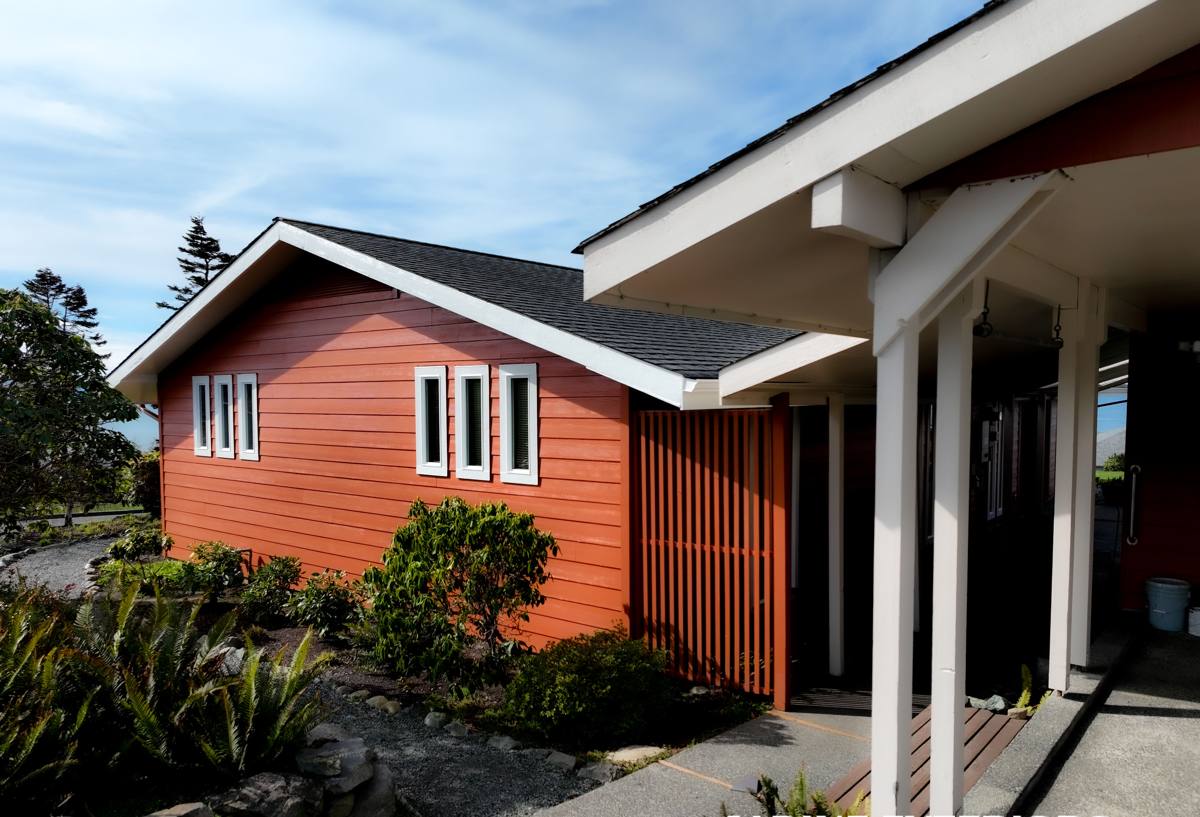
Signs a Birch Bay Home Needs Window Attention
Some of these show up gradually enough that homeowners get used to them before realizing they're a problem. Worth checking for before deciding whether you need a repair, a reseal, or a full replacement:
- Locks, cranks, or hinges that feel gritty, stiff, or show white/green corrosion — common on coastal hardware even when the frame looks fine
- Condensation or fog between panes on dual-pane glass (a failed seal, not a cleaning issue)
- Visible gaps or cracked caulk at the frame-to-siding joint, especially on the side of the house that takes the worst weather
- Soft or discolored trim and sill wood, or moss/algae staining that keeps returning after cleaning
- Drafts you can feel with a hand near the frame on a windy day
- Wood or vinyl frames that have visibly warped, bowed, or separated at the corners
- Noticeably higher heating bills without any other explanation
Any one of these can be a minor fix. Several together, especially on an older window, usually means the installation is losing its fight with the weather and replacement is the more honest recommendation.
What a Correct Installation Actually Involves
Window installation looks simple from the outside — pull the old one, set the new one, caulk the edges. Done that way, it fails early in an exposure like Birch Bay's. Done correctly, most of the work happens where you can't see it once the trim goes back on.
Flashing and Water Management
Every opening needs a sill pan and properly lapped flashing tape that ties into the house wrap, so any water that gets past the exterior trim sheds back out instead of soaking into the framing. On a wind-driven rain coast, water doesn't just run down a wall — it gets pushed sideways and upward under trim edges. Flashing details that would be adequate on a sheltered inland lot aren't always enough here, and skipping or shortcutting this step is the single biggest cause of hidden rot behind a window that looks fine from the curb.
Sealing Against Salt-Laden Wind
Backer rod and a quality exterior sealant at the frame perimeter keep wind-driven moisture and salt air out of the wall cavity. We also pay attention to weep holes and drainage paths staying clear — a window that can't drain the small amount of water that does get past the outer seal will trap it against the frame, and salt air accelerates whatever corrosion or rot follows.
Shimming, Fastening, and Insulation
The window needs to be plumb, level, and square before it's fastened, with shims placed so the frame doesn't rack or bow under normal building movement. The gap between the window frame and the rough opening gets insulated (not just caulked shut) so it doesn't become a cold spot or a place for condensation to form inside the wall.
Choosing Window Materials for a Coastal Lot
There's no single "best" window for Birch Bay — it depends on the home, the budget, and how exposed the specific opening is. Here's how the common frame materials hold up under salt air and constant moisture:
| Frame Material | Coastal Performance | Maintenance |
|---|---|---|
| Vinyl | Doesn't corrode or rot; performs well in salt air; UV exposure can fade or become brittle over decades | Low — occasional cleaning |
| Fiberglass | Very stable in temperature swings and moisture; strong resistance to salt air and coastal weathering | Low |
| Wood (unclad) | Handsome, but bare wood is the most vulnerable to Birch Bay's damp, salt-air conditions without diligent upkeep | High — regular painting/sealing |
| Wood-clad (vinyl or aluminum exterior) | Wood interior warmth with a weather-facing shell; the cladding needs to be fully sealed at joints or moisture can get trapped between layers | Moderate |
| Aluminum | Strong, but conducts cold and can corrode faster in salt air unless properly coated and finished | Moderate |
Hardware matters as much as frame material. We prefer corrosion-resistant hardware finishes for anything within a few blocks of the water — cheaper standard hardware is often the first thing to fail on a coastal install, well before the frame or glass show any wear.
Glass Packages
For this climate, dual-pane glass with a low-E coating is the practical baseline — it manages heat loss through our long wet season without adding cost for cooling performance we rarely need this far north. Argon-filled units add a modest efficiency bump. We'll talk through what actually makes sense for your specific windows rather than upselling a package that doesn't fit the house.
Our Installation Process
- On-site assessment — we look at each opening individually, since exposure varies window to window on the same house depending on which direction it faces
- Measurement and ordering — accurate measurements matter more on older homes, where openings are rarely perfectly square
- Careful removal — we check the rough opening and sill for hidden rot or water damage once the old window is out, and address it before anything new goes in
- Flashing and sill pan installation — the water-management layer described above, done before the window ever gets set
- Setting, shimming, and fastening — plumb, level, square, and properly anchored
- Insulating and sealing — gap insulation, then exterior sealant at the perimeter
- Trim and finish work — matched to the home so the new window doesn't look like a patch job
- Walkthrough and cleanup — we test operation and locks with you before we leave, and clear the job site
What Affects Cost on a Birch Bay Project
| Factor | Why It Matters Here |
|---|---|
| Number and size of windows | Straightforward driver of material and labor cost |
| Frame material | Vinyl is typically the most budget-friendly; fiberglass and wood-clad cost more upfront but can mean less coastal maintenance long-term |
| Exposure of the opening | Windows on the water-facing side of a home may warrant upgraded hardware or sealant details, adding modest cost |
| Condition of the existing opening | Hidden rot or water damage found during removal adds repair work before the new window can go in |
| Access | Second-story or hard-to-reach openings take more time and equipment |
| Trim and finish scope | Matching existing trim profiles or repainting/staining adds to the finish-work portion of the job |
We give straightforward, itemized estimates rather than a single lump number, so you can see exactly where the cost comes from and where there's room to adjust scope.
Why It Matters That We Already Work in Birch Bay
A crew that mostly works inland Bellingham can still install a window correctly on paper and have it underperform here. Coastal exposure changes small decisions — how much sealant redundancy to build in, which side of the house needs the more robust flashing detail, whether standard hardware is worth the upcharge to upgrade. Those calls come from having actually seen how Birch Bay homes age, not from a manual.
We're also familiar with the mix of housing stock along this stretch of Whatcom County — older beach cottages with settled, non-square openings, and newer builds where the shortcuts are more likely hiding behind fresh paint. Knowing which is which before we start saves time and avoids surprises mid-project.
Maintaining Windows After Installation
A correct installation buys you years of low-maintenance performance, but a coastal lot still asks a little more upkeep than an inland one:
- Rinse salt residue off frames and glass periodically, especially after storms — it's abrasive and speeds up wear on hardware and finishes
- Lubricate locks and cranks occasionally to keep salt air from stiffening the mechanisms
- Keep an eye on moss or algae buildup on north-facing or shaded trim and clean it before it holds moisture against the wood
- Check exterior caulk lines once a year for cracking or separation, and have gaps resealed before water gets behind them
- Make sure gutters and downspouts near windows are clear, since overflow is a common source of water reaching a window it wasn't meant to hit
None of this is heavy maintenance — it's the difference between a window that looks and performs the same in ten years and one that starts showing coastal wear in three or four.
Get a Straightforward Estimate
If you're weighing a repair against a full replacement, or just want a second opinion on windows that are starting to show their age, we're happy to take a look and walk you through what we see — no pressure, no upsell. Use the form below to request a free estimate for your Birch Bay property.