 Bellingham Exterior
 Cordata Is a Different Kind of Exterior Environment
Cordata sits in north Bellingham, close enough to Bellingham Bay and the Salish Sea that homes here deal with a genuine marine climate, not just "Pacific Northwest rain." That means salt-tinged air working on fasteners and finishes, wind-driven rain that gets pushed sideways into wall assemblies rather than falling straight down, and a moss season that can run from early fall through late spring. None of that is dramatic on any given day. It's the accumulation over years — the freeze-thaw cycles, the constant damp, the UV that does show up between storms — that separates exteriors that hold their look for twenty-plus years from ones that start showing problems in five.
Whatcom County's building stock in and around Cordata is a mix: newer subdivisions built in the last couple of decades alongside older homes that have already been through one or two rounds of siding, roofing, or window replacement. Whichever category a house falls into, the exterior products used the first time around often weren't specified for how much moisture this area actually sees over a full year.
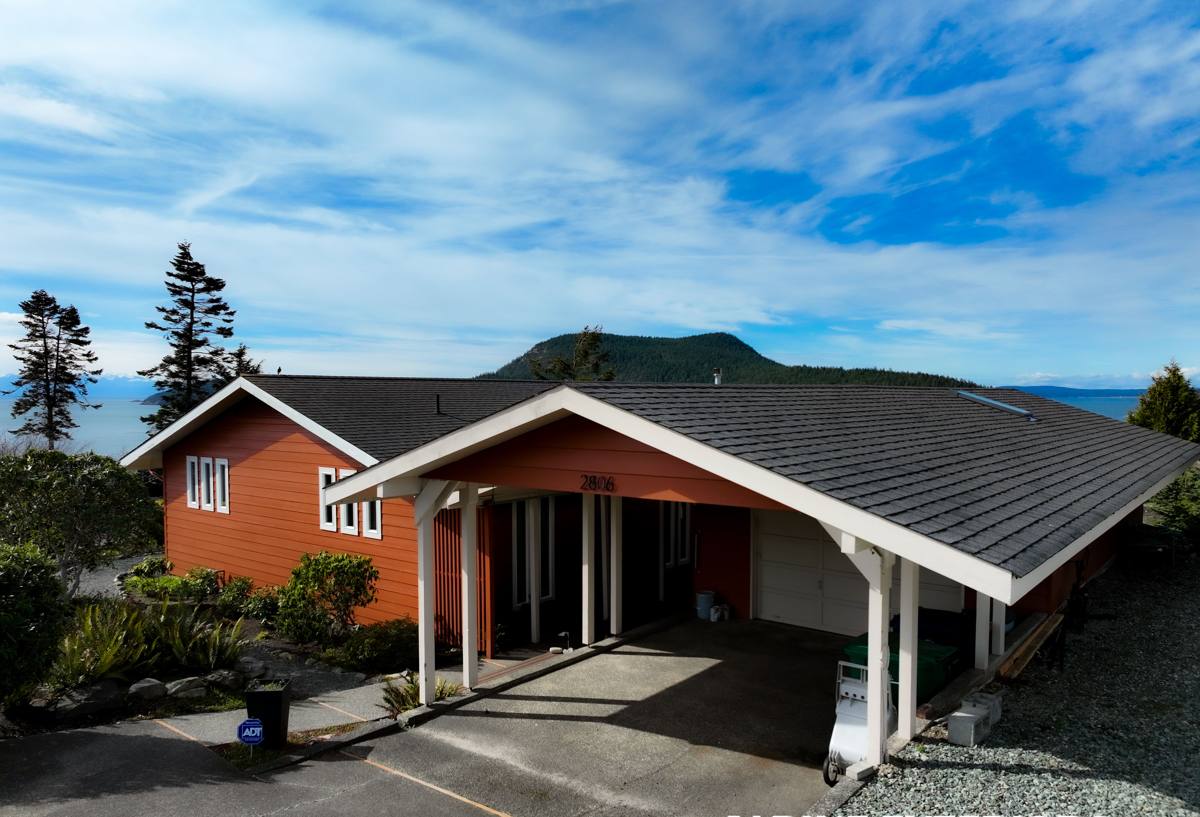
What Driving Rain and Moss Actually Do to a House
Wind-Driven Rain
Straight-down rain is easy to manage — laps, flashing, and gravity do most of the work. Wind-driven rain is different. It gets forced up under laps, into seams, and around trim and window edges that were never meant to see water moving sideways or upward. Over time this is what causes hidden rot behind siding that looks fine from the curb, and it's why flashing detail and water-resistive barrier work matter as much as the siding material itself.
Moss and Sustained Dampness
A long moss season means roofs, decks, and shaded siding sections stay damp longer than they would in a drier climate. Moss holds moisture against the surface it's growing on, which accelerates wear on roofing materials and keeps wood-based siding or trim wet enough, long enough, to start breaking down. On decks it also creates a slip hazard that's worth taking seriously, especially on stairs.
Salt Air
Even a few miles inland from the bay, salt-laden air corrodes exposed metal fasteners, fades certain paint finishes faster than manufacturers' published timelines suggest, and generally shortens the useful life of anything not specifically engineered for a coastal-adjacent environment.
Siding: Why We Only Install James Hardie
We install James Hardie fiber cement siding exclusively — we don't do vinyl, LP SmartSide, Cemplank, Allura, or primed wood species like spruce or cedar. That's a deliberate standard, not a lack of options.
Why We Ruled the Alternatives Out
Vinyl expands and contracts with temperature swings and can warp or crack in cold snaps; it also isn't fire-resistant and tends to fade over time in a way that's hard to touch up. Wood-based engineered siding (like LP SmartSide) performs reasonably well when installed and maintained perfectly, but any breach in the edge sealant or a missed caulk joint gives moisture a path into the substrate — and in a climate with this much sustained dampness and driving rain, that margin for error is thinner than we're comfortable with. Primed cedar or spruce siding looks great on day one but requires an ongoing paint and caulk maintenance schedule that most homeowners underestimate, and it's a food source for the same moisture-loving organisms that thrive here.
Why Hardie
James Hardie fiber cement is non-combustible, doesn't support moss and mildew growth the way wood does, and holds its factory-applied ColorPlus finish far longer than field-applied paint. Hardie also engineers specific product lines (HZ5, for example) for higher-moisture, more severe climate zones — which is relevant here, not just marketing language. The warranty is transferable, which matters if a home changes hands, and correctly installed Hardie siding is one of the few exterior claddings genuinely built to shrug off decades of coastal Washington weather rather than just survive it.
Roofing in a High-Moss, High-Rainfall Neighborhood
Roofs in Cordata take the brunt of both driving rain and moss growth, especially on north-facing slopes and anywhere shaded by mature trees. A roof that's failing usually doesn't announce itself with a dramatic leak first — it shows up as granule loss, soft spots, moss mats holding water against shingles, or staining in the attic that's been quietly getting worse for a season or two. Proper ventilation and underlayment matter as much as the roofing material on top, since trapped moisture under the roof deck causes damage that has nothing to do with what's visible from the ground.
Windows: Condensation, Drafts, and Water Intrusion
Older single-pane or early dual-pane windows in this climate tend to show three problems: persistent interior condensation from the temperature and humidity differential, drafts around aging seals, and — the more serious one — water finding its way into the wall cavity around the window frame during wind-driven rain events. Window replacement is also the moment to correct flashing details that may have been done poorly the first time, since the window itself is only as weather-tight as the flashing and sealant integrating it into the wall.
Decks: Built for Wet, Not Just for Looks
A deck in Cordata spends most of the year damp. That affects material choice, fastener selection, and how the substructure is ventilated underneath. Moss buildup on deck boards and stairs isn't just cosmetic — it's a genuine slip risk and a sign that the surface isn't shedding water and drying out between rain events the way it should. Good deck work here means thinking about drainage and airflow underneath the structure as much as the boards you walk on.
Why a Local Crew Matters
An exterior contractor working out of the Bellingham area day in and day out sees how these products actually perform in Whatcom County weather, not just how they're rated in a manufacturer's data sheet written for a national average climate. That local track record shapes real decisions: how tight flashing details need to be around windows and doors, how much overhang or grade slope matters for a given lot, and which trouble spots — north-facing walls, shaded rooflines, low decks — tend to need extra attention here specifically. It also means someone who's answering the phone locally if a warranty question or a follow-up item comes up down the road, rather than a crew that did one job in the area and moved on.
What Our Process Looks Like
Every project starts with an honest look at what's actually going on with the exterior — not just the visible surface, but what's likely happening underneath it given the home's age and exposure. From there we scope the work, walk through material and product decisions with the homeowner, and handle removal, repair of anything found during tear-off, and installation to manufacturer spec.
Signs It's Worth Getting an Exterior Looked At
- Moss or dark staining that keeps coming back on siding, roofing, or deck boards
- Soft or spongy spots when you press on siding or decking
- Paint that's peeling, bubbling, or cracking faster than it should
- Persistent condensation or drafts around window frames
- Visible gaps, warping, or separation at siding seams and trim joints
- Granule buildup in gutters or bald patches on roofing
What Drives the Cost of Exterior Work
Every home and project is different, so we don't quote sight-unseen, but these are the main factors that move a project's scope and cost up or down.
| Factor | How It Affects the Project |
|---|---|
| Home size and wall/roof area | More square footage means more material and labor time, straightforwardly |
| Condition found during removal | Hidden rot or water damage behind old siding or roofing adds repair work before new material goes on |
| Access and site complexity | Steep rooflines, tight lot lines, or multi-story walls affect equipment and labor time |
| Material and product line | Hardie's different HZ lines, panel styles, and factory finishes carry different costs |
| Number of window and door openings | More openings mean more flashing, trim, and detail work per square foot |
| Existing ventilation and drainage | Correcting poor attic or wall ventilation adds work but prevents repeat failures |
Let's Take a Look at Your Exterior
If you're in Cordata or elsewhere around Bellingham and dealing with moss, a soft spot, an aging roof, or windows that never seem to stay sealed, we're glad to come take a look. There's no pressure and no cost to get an honest read on what's going on and what your options are — you can start with the estimate form below.