 Bellingham Exterior
 Birch Bay's Coastal Climate Is Harder on a Roof Than People Realize
Birch Bay sits right on the water, and that changes what a roof has to deal with compared to a house a few miles inland in Bellingham or Ferndale. The marine air carries salt, the wind off the water drives rain sideways under loose flashing and worn shingle edges, and the shaded, damp lots that are common around here keep roofs wet longer after every storm. That combination — salt, moisture, and shade — is exactly what accelerates corrosion, rot, and moss growth. A roofing product and installation method that work fine in a drier part of Whatcom County can underperform right on the bay if they weren't chosen and installed with that exposure in mind.
This page is specifically about metal roofing for Birch Bay properties: what the climate demands, what a correct installation actually involves, and what our process looks like when we work in this area.
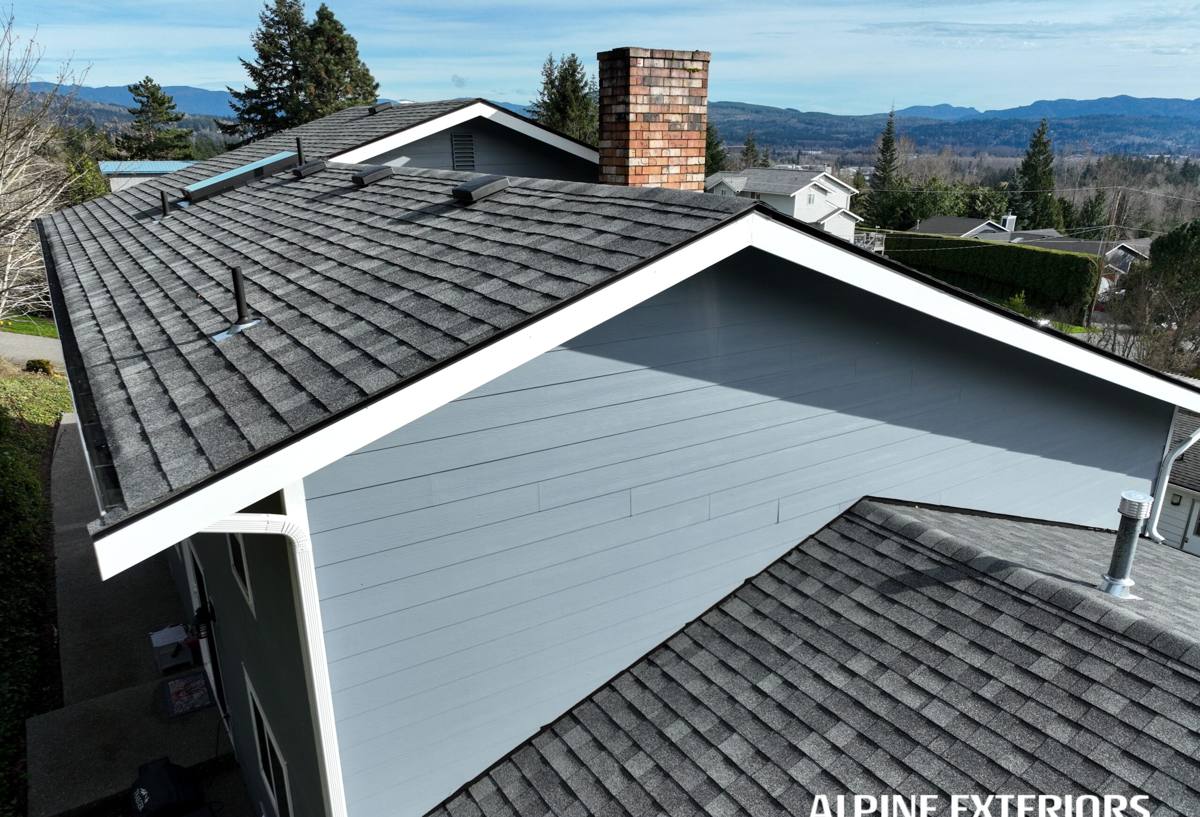
Why Metal Roofing Makes Sense for a Property Like This
Metal roofing isn't the right fit for every home or every budget, but for waterfront and near-waterfront properties in Birch Bay, it solves several problems at once:
- Sheds water fast. Steep-pitch metal panels don't give wind-driven rain the horizontal seams and shingle tabs that water can work its way under.
- Resists moss and algae better than shingles. Moss still needs a damp surface with texture to grip onto, and a smooth painted metal panel gives it far less to hold to than a shingle mat, though moss can still grow in shaded valleys and where debris collects.
- Long service life. A correctly installed and maintained metal roof will typically outlast an asphalt shingle roof by decades, which matters when you're weighing the higher upfront cost against how many times you'd otherwise re-roof.
- Handles wind well. Properly fastened panels resist uplift better than shingles in the gusty conditions that come through the bay.
The trade-off is that metal roofing is more sensitive to installation quality than asphalt shingles. Panel expansion and contraction, fastener choice, and flashing details all matter more, and mistakes show up sooner in a salt-air environment than they would inland.
What Salt Air Actually Does to a Roof System
Salt-laden air accelerates corrosion of any exposed metal that isn't properly coated or isolated — fasteners, flashing, and cut panel edges are the usual weak points. It's not the painted face of a quality panel that fails first; it's the small stuff around it: exposed screw heads with worn-out neoprene washers, uncoated cut edges where a panel was trimmed on site, or two dissimilar metals in contact with each other that set off galvanic corrosion. None of that is visible from the ground, which is why it gets missed on roofs that weren't built with coastal exposure in mind.
The details that matter most near the water
- Fasteners rated for the coating system being used, with intact rubber washers
- Cut panel edges sealed or protected rather than left bare
- No direct contact between incompatible metals (for example, certain flashing paired with the wrong panel alloy)
- Flashing and sealant details built for wind-driven rain, not just vertical rainfall
What a Correct Metal Roofing Installation Involves
A metal roof is only as good as the assembly underneath it. The visible panels get all the attention, but the layers below them are what actually keep a Birch Bay home dry through a wet winter.
Underlayment and moisture barrier
We use a synthetic or self-adhering underlayment suited to metal roofing, with extra attention at eaves, valleys, and any low-slope transitions where wind-driven rain is most likely to be forced backward.
Ventilation
Metal roofs need proper intake and exhaust ventilation to manage condensation on the underside of the panels, especially given how much moisture is in the air near the bay. Skipping this is a common shortcut that leads to hidden deck problems years later.
Flashing and penetrations
Every roof-to-wall transition, chimney, vent pipe, and skylight curb is a place where water can find a way in. These get custom-fit flashing and sealed correctly rather than relying on caulk to do the work of good sheet metal.
Fastening and panel seams
Panels need to be fastened per the manufacturer's spacing and torque guidance, with room for thermal expansion, and seams need to be finished in a way that doesn't trap water or debris.
Choosing the Right Metal Roofing System for a Coastal Lot
Not all metal roofing is the same, and the right choice depends on the home, the roof's exposure to wind and salt spray, and the budget. Here's how the common options compare for a property in this area:
| Panel Type | Best For | Coastal Considerations |
|---|---|---|
| Standing seam | Homes with direct water views or high wind exposure | Concealed fasteners mean fewer exposed penetration points for salt to attack; higher upfront cost |
| Exposed-fastener panels | Budget-conscious projects, outbuildings, secondary structures | Fastener washers wear out over time and need periodic inspection in salt air |
| Standard painted steel | Most residential applications | Coating quality matters more here than inland; ask about the specific coating system |
| Premium PVDF (Kynar-type) coatings | Homes closest to the water or with high salt exposure | Better fade and chalk resistance over time in marine air, at a higher material cost |
We'll walk through these trade-offs with you during the estimate rather than defaulting to whatever is easiest to install. A roof on a sheltered, tree-covered lot a half-mile off the water doesn't need the same spec as one facing open water.
Our Process for a Birch Bay Metal Roofing Project
- On-site assessment. We look at your current roof, the home's exposure to wind and salt spray, ventilation, and any existing moisture or moss problems before recommending anything.
- Straightforward proposal. You get a clear scope of work and pricing, with the panel and coating options explained in plain terms — no pressure to upsell to the most expensive system if it isn't needed.
- Tear-off and deck inspection. Old roofing comes off and the deck gets inspected for rot or soft spots before anything new goes down, since covering up a bad deck is how small problems become expensive ones.
- Underlayment, flashing, and panel installation. Done in the sequence and to the spacing that the system requires, not rushed to fit a schedule.
- Final walkthrough. We go over the finished roof with you, including what maintenance to expect and when to check on it.
Living With Moss Season: Maintenance That Actually Matters
Whatcom County's long wet season means moss and organic debris are a fact of life, even on a metal roof. Metal panels resist moss far better than shingles, but valleys, gutters, and any spot where leaves or needles collect can still stay damp long enough for growth to start. A little seasonal attention goes a long way:
- Clear debris from valleys and gutters before the fall rains set in
- Check that gutters are pitched correctly and draining, not backing water up under the roof edge
- Look at exposed fasteners periodically for washer wear if the roof uses an exposed-fastener system
- Trim back overhanging branches that keep sections of the roof shaded and damp
- After major windstorms, do a quick visual check for lifted flashing or displaced panels
None of this requires a professional visit every year, but a home right on the bay will need this attention more consistently than one further inland.
What Metal Roofing Costs in This Area
Pricing depends on roof size, pitch, panel type, and how much tear-off and deck repair is involved, so we won't quote a number without seeing the roof. In general terms, here's what moves the price:
| Factor | Effect on Cost |
|---|---|
| Panel type (exposed-fastener vs. standing seam) | Standing seam typically costs more due to labor and material |
| Coating system | Premium coatings cost more upfront but hold up longer in salt air |
| Roof complexity (valleys, dormers, penetrations) | More cuts, flashing, and labor time |
| Deck condition | Rot or soft decking found during tear-off adds repair cost |
| Tear-off vs. new construction | Removing and disposing of old roofing adds labor and dump costs |
A metal roof costs more upfront than asphalt shingles, but the calculation for a Birch Bay property should include how many shingle re-roofs you'd otherwise pay for over the same span of years, plus the moisture and moss issues shingles tend to develop faster in this climate.
Signs Your Current Roof May Need Attention
- Moss or dark streaking building up faster than it used to, or coming back soon after cleaning
- Granule loss in gutters if you currently have asphalt shingles
- Rusty streaking around fasteners or flashing on an existing metal roof
- Any staining on interior ceilings, especially after a windstorm with rain
- Visibly lifted or curling shingle edges, or panels that look loose along a seam
If you're seeing any of these, it's worth getting a look before the next wet season rather than after a leak shows up inside.
Why a Crew That Already Works in Birch Bay Matters
A roofing crew that primarily works drier, inland jobs may not think twice about coastal-grade fasteners, edge sealing, or the ventilation needs that come with consistently damp marine air. Working regularly in Birch Bay and along the Whatcom County coastline means we're used to building for that exposure by default, not treating it as a special request. We're also familiar with the kind of wind-driven rain patterns and moss growth this specific stretch of coastline produces, which shapes decisions like flashing details and panel choice before the crew ever gets on the roof.
If you're weighing a metal roof for a Birch Bay home, we're happy to come take a look and give you a straightforward, no-pressure estimate — no obligation, just an honest read on what your roof actually needs.