 Bellingham Exterior
 Birch Bay Roofs Work Harder Than Most
Birch Bay sits right on the water, and that changes what a roof has to deal with year-round. Homes a few blocks inland in Bellingham or elsewhere in Whatcom County still get plenty of rain, but Birch Bay adds salt-laden air off the bay, near-constant onshore wind, and long stretches of shaded, damp conditions that never fully dry out between storms. That combination is hard on asphalt shingles specifically, and it's why a roof installed the same way you'd install one in a drier inland climate often underperforms out here.
Three things drive most of the roofing problems we see in Birch Bay: salt air slowly breaking down exposed metal and adhesives, driving rain that finds its way into any gap in flashing or underlayment, and a moss season that can run most of the year on north-facing and shaded slopes. None of these are dramatic on their own. Together, over a decade or two, they're what separates a roof that makes it to 25-30 years from one that starts failing at 12-15.
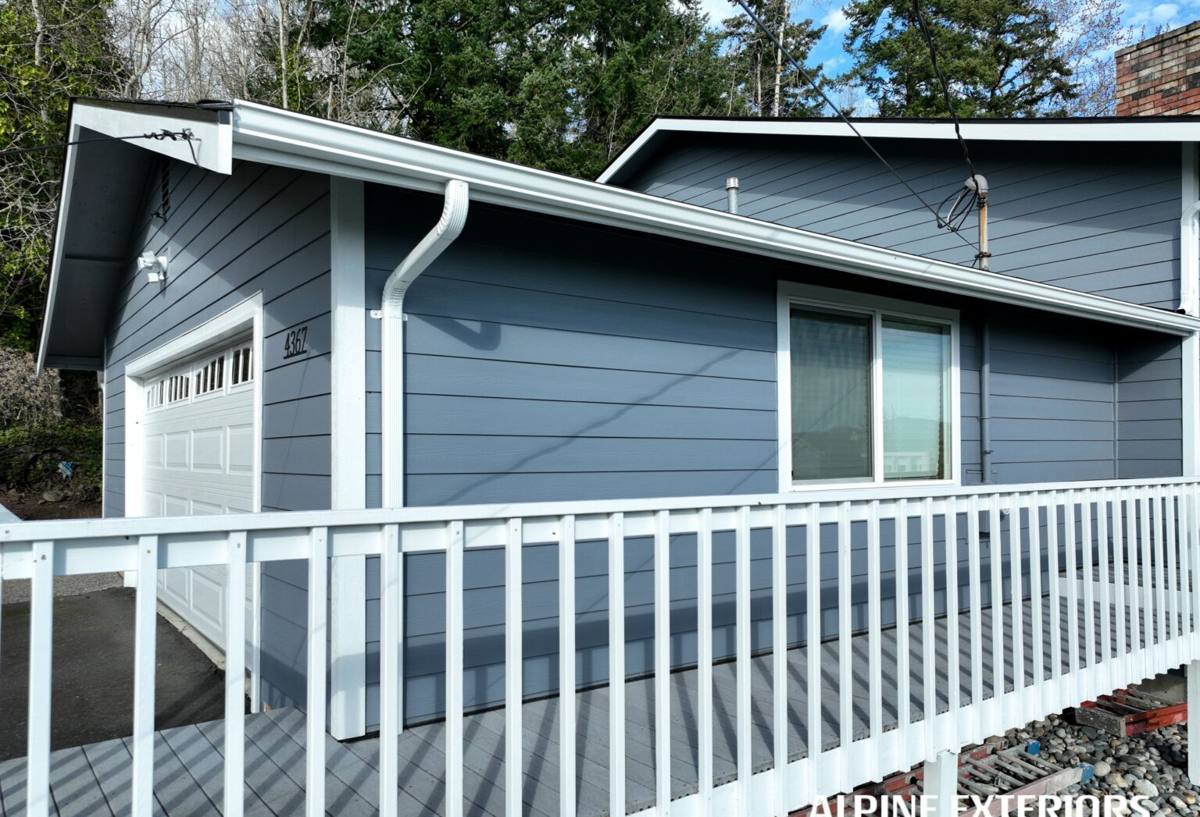
What Salt Air, Rain, and Moss Actually Do to a Shingle Roof
Salt Air
Airborne salt accelerates corrosion on exposed fasteners, flashing, and vent components. Once a nail head or a piece of step flashing starts to corrode, it stops sealing the way it should, and that's usually where a leak starts — not through the shingles themselves, but through the metal and fasteners around them.
Driving Rain
Wind off the water pushes rain sideways and uphill under the shingle tabs, especially at valleys, roof-to-wall transitions, and low-slope sections. A roof built for calmer conditions can get away with minimal underlayment coverage in those spots. A Birch Bay roof can't — wind-driven rain will find any shortcut.
Moss
Moss needs shade and moisture to take hold, and Birch Bay's tree cover combined with marine humidity gives it both, for most of the year. Moss isn't just cosmetic. As it grows, it lifts shingle edges, holds water against the roof deck, and works its way into fastener holes. Left alone for a few seasons, it shortens the life of an otherwise sound roof.
What a Correctly Installed Shingle Roof Needs Out Here
A roof that's going to hold up in this environment isn't about buying a more expensive shingle — it's about the details underneath and around the shingles. This is where most of the difference between a roof that lasts and one that doesn't actually gets decided.
- Ice-and-water shield at eaves, valleys, and penetrations — a self-adhering membrane that seals around nail holes, not just felt paper, in the spots most exposed to wind-driven rain
- Full synthetic underlayment across the field — a secondary water barrier under the shingles that doesn't degrade the way old-style felt does in persistent moisture
- Corrosion-resistant flashing and fasteners — appropriate metal choices at chimneys, walls, and valleys so salt air doesn't compromise them years before the shingles are due for replacement
- Balanced intake and exhaust ventilation — keeps the underside of the roof deck dry and reduces the trapped moisture that helps moss and mold get started
- Correct nailing pattern and shingle exposure — under-nailed or improperly exposed shingles are one of the most common causes of early wind and rain damage we find on older Birch Bay roofs
- Algae- and moss-resistant shingle options — shingles with copper or zinc granules built in to slow moss and algae growth on shaded slopes
Shingle Options: What's Worth It in a Marine Climate
Not every shingle upgrade matters equally here. Some are worth the extra cost for a Birch Bay home; others mostly matter for appearance. Here's how the common options stack up for this specific environment.
| Shingle Type | How It Handles Salt Air & Rain | Moss Resistance | Typical Lifespan Here |
|---|---|---|---|
| Standard 3-tab | Adequate with proper underlayment; less wind resistance | None built in — needs regular cleaning | 15-20 years |
| Architectural (laminate) | Better wind and rain performance, thicker profile | None unless algae-resistant version specified | 20-30 years |
| Algae/moss-resistant architectural | Same strong wind and rain performance | Built-in copper/zinc granules slow regrowth | 25-30 years, less maintenance |
| Impact-rated (Class 4) | Stronger against wind-driven debris | Depends on granule type — ask specifically | 25-30+ years, may qualify for insurance discounts |
For most Birch Bay homes, especially anything with shaded or north-facing slopes, we recommend at least an algae-resistant architectural shingle. The extra upfront cost is modest compared to the labor cost of moss treatment and cleaning over the life of a standard shingle roof.
Signs a Birch Bay Roof Needs Attention
Because salt air and moss damage build up slowly, a lot of homeowners don't notice a problem until there's already a leak. These are the signs worth acting on before that happens.
- Moss visible on north-facing or shaded slopes, especially near valleys
- Granules collecting in gutters or at downspout outlets
- Shingle edges curling, cupping, or looking "shiny" and bald in spots
- Rust staining running down from flashing, vents, or chimney metal
- Soft or discolored spots on interior ceilings after heavy wind-driven storms
- Visible daylight or gaps around roof penetrations from the attic
Any one of these on its own isn't an emergency. A few of them together, especially on a roof that's 15+ years old, usually means it's time for an honest inspection rather than a wait-and-see approach.
How We Approach a Birch Bay Roofing Project
1. On-Site Inspection
We walk the roof and the attic, not just look from the ground. That's the only way to catch soft decking, ventilation problems, or flashing issues that a drive-by estimate misses.
2. Straight Answers, Written Estimate
We'll tell you honestly whether you need a full replacement or if targeted repairs make sense. Full asphalt shingle roof replacements on a typical single-family home generally run in the mid-to-high five figures depending on size, slope complexity, and how much decking needs to be replaced — we'll give you real numbers for your specific roof, not a generic quote.
3. Tear-Off and Deck Check
Old material comes off down to the deck so we can actually see what's underneath — this is where moisture damage from years of moss and driving rain usually shows up, and it needs to be fixed before new shingles go down, not covered over.
4. Underlayment and Flashing First
This is the step that matters most for a coastal home. Ice-and-water shield, synthetic underlayment, and corrosion-resistant flashing go in correctly before a single shingle is installed.
5. Shingle Installation and Ventilation
Shingles go down to manufacturer spec for nailing and exposure, and we verify intake and exhaust ventilation is balanced — not just present.
6. Cleanup and Walkthrough
Magnetic sweep for stray fasteners, gutters checked, and a walkthrough so you know exactly what was done and what to watch for going forward.
What Drives Cost on a Shingle Roof Replacement
Roofing quotes vary for real reasons. Here's what typically moves the number up or down on a Birch Bay project.
| Factor | Why It Matters |
|---|---|
| Roof size and slope complexity | More valleys, dormers, and pitch changes mean more labor and flashing detail |
| Number of existing layers | Tear-off of multiple old layers costs more than a single-layer removal |
| Decking condition | Rotted or moisture-damaged plywood found during tear-off needs replacement before new shingles go on |
| Shingle grade chosen | Standard vs. algae-resistant vs. impact-rated changes material cost per square |
| Ventilation upgrades needed | Adding proper intake or exhaust venting on an older home adds labor but reduces future moisture problems |
| Access and site conditions | Steep pitch, tall homes, or difficult material staging on a lot near the water can affect labor time |
Why Local Experience in Birch Bay Matters
A roofing crew that mostly works drier inland neighborhoods can still install a technically sound roof — but they may not default to the underlayment coverage, flashing metal, and ventilation choices that make sense specifically for a home exposed to salt air and driving rain off the bay. Working regularly in Birch Bay and along the rest of the Whatcom County coastline means we've seen which details actually cause callbacks in this environment, and we build every roof around avoiding them from the start rather than fixing them later.
It also means we're not guessing at what your roof has been through. A shingle roof on a shaded, water-facing lot ages differently than one a mile inland, and the inspection, materials, and installation approach should reflect that difference.
Get a Straight-Talk Estimate
If your roof is showing moss, granule loss, or you're just not sure how much life it has left, we're happy to take a look and give you a clear, no-pressure assessment. Fill out the form below for a free estimate on your Birch Bay asphalt shingle roofing project.