 Bellingham Exterior
 What Primed Wood Siding Actually Is
Primed wood siding is dimensional lumber — usually finger-jointed pine, spruce, or fir — that arrives from the mill with a factory-applied primer coat instead of raw wood. It's been a staple in Pacific Northwest construction for decades because it's affordable, easy for framing crews to install, and it takes paint well when it's fresh. Walk through older Bellingham neighborhoods and you'll see plenty of it, especially on homes built before fiber cement became widely available.
The primer is not a finish coat. It's a base layer designed to help the topcoat paint adhere and to slow (not stop) moisture absorption until the homeowner or builder applies real paint. That distinction matters more here than almost anywhere else in the country, and it's the reason we don't install primed wood siding on the homes we work on.
What It Gets Right
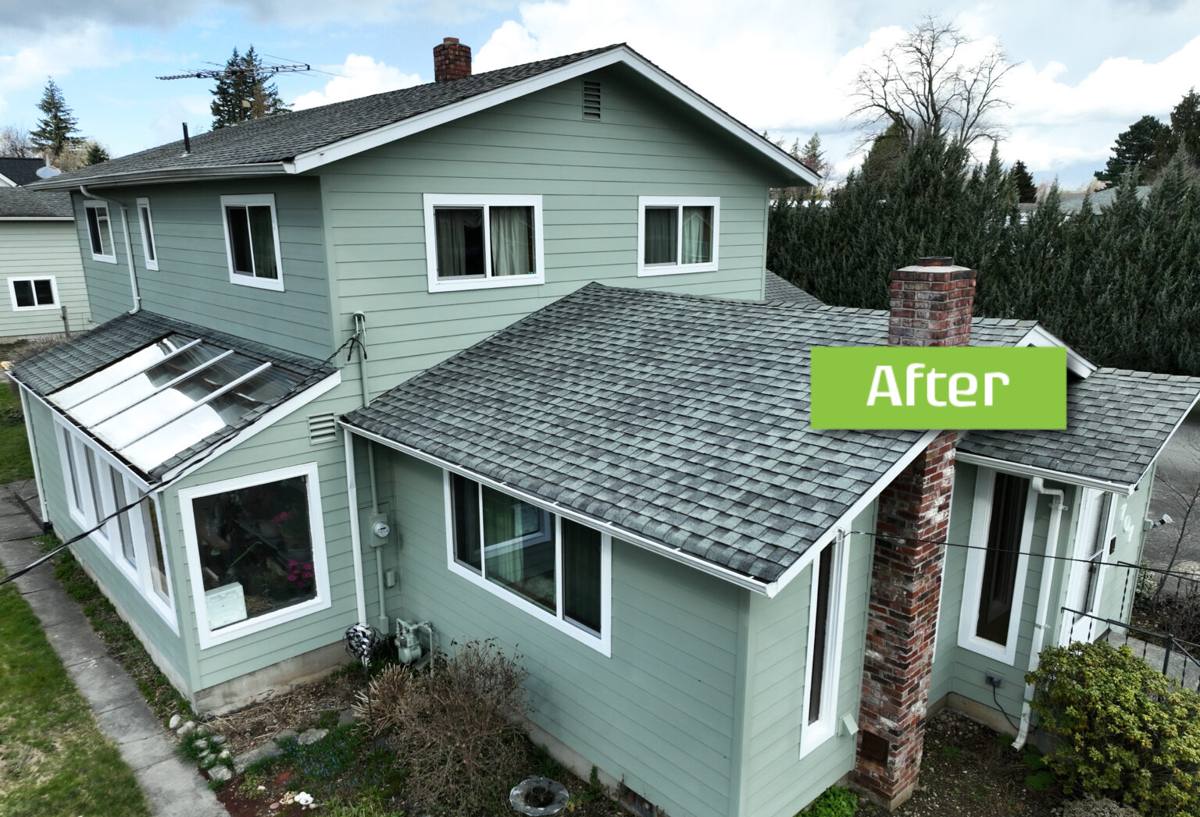
We'll give primed wood its due before explaining why we walked away from it. It's genuinely easy to cut, nail, and repair with basic tools, which keeps labor costs down on the install side. It takes paint in a wide range of colors and sheens, and a well-maintained wood exterior has a warmth and texture that manufactured products spend a lot of R&D trying to replicate. For a dry climate with disciplined repainting cycles, it can hold up reasonably well.
The problem is that "dry climate" and "disciplined repainting cycles" describe almost nowhere in Whatcom County.
The Maintenance Reality in a Marine Climate
Paint Failure and Moisture Cycling
Bellingham sits on Bellingham Bay, which means salt-laden air moves through the area regularly, and the region sees a long, wet fall-through-spring stretch punctuated by driving, wind-blown rain rather than gentle vertical rainfall. That combination is hard on any painted wood product. Wood siding swells when it absorbs moisture and shrinks as it dries out between storms. Paint film can't flex with that cycle indefinitely — it cracks, then water gets behind the film at the crack, and the cycle accelerates from there.
Primed wood siding is particularly vulnerable because the factory primer is a thin, single coat. It buys the installer some time before the topcoat goes on, but once the siding is exposed to a full Bellingham wet season, that primer alone won't keep water out of the wood fibers. If the topcoat paint isn't applied promptly and maintained on a real schedule, moisture gets a head start it never gives back.
Moss, Algae, and the North Sound Shade Problem
Whatcom County's tree cover and cloud-heavy winters create ideal conditions for moss and algae growth on north-facing and shaded wall sections. On wood siding, that growth isn't just cosmetic — moss holds moisture directly against the wood surface for weeks at a time, well past what the paint film was designed to tolerate. We regularly see this on shaded gable ends and under deep eaves on older wood-sided homes across Bellingham, Fairhaven, and the county's more wooded lots.
Where Primed Wood Siding Tends to Fail First
Wood siding rarely fails uniformly across a wall. It fails at predictable weak points, and knowing them helps explain why the maintenance burden is so much higher than most homeowners expect going in.
- Butt joints where two boards meet end-to-end — end grain soaks up water far faster than the face of the board.
- Bottom courses near grade, decks, and hardscape, where splashback keeps the lower boards wet longer than the rest of the wall.
- Nail heads that back out slightly as wood expands and contracts, breaking the paint seal around each fastener.
- Cut ends at corners and trim that were field-cut on site and never got primer or sealant on the exposed end grain.
- Shaded, low-airflow wall sections where moss and algae get a foothold and paint dries slowest after rain.
Each of these is a place where a small maintenance gap — one missed repaint cycle, one caulk joint that opened up — turns into rot that spreads under intact-looking paint before anyone notices from the ground.
Cost Over Time
The sticker price on primed wood siding is genuinely lower than fiber cement at install. What changes the math is what happens over the following 15-20 years of Whatcom County weather.
| Factor | Primed Wood Siding | James Hardie Fiber Cement |
|---|---|---|
| Repainting cycle | Every 4-7 years in this climate | ColorPlus finish backed by a 15-year finish warranty; field paint only if you choose primed Hardie |
| Moisture vulnerability | High — end grain, butt joints, nail backout | Low — engineered to resist moisture absorption and swelling |
| Moss/algae susceptibility | Moderate to high on shaded walls | Low; surface doesn't hold moisture the way wood fiber does |
| Insect vulnerability | Yes — carpenter ants, woodpeckers, wood-boring insects | No — not a food or nesting source |
| Fire rating | Combustible | Non-combustible core material |
| Typical service life installed to spec | 15-25 years with active maintenance | 30+ years, often longer |
None of these numbers are guarantees — actual performance depends heavily on installation quality, sun/shade exposure, and how consistently a homeowner keeps up with maintenance. But the pattern is consistent: wood siding's lower upfront cost gets absorbed, and then some, by repainting labor and earlier repairs over a normal ownership period.
Insurance, Warranty, and Resale Considerations
A few practical factors beyond day-to-day maintenance are worth knowing before you commit to wood siding:
Warranty structure. Primed wood siding warranties typically cover manufacturing defects in the board itself, not the paint job, not moisture damage from a missed maintenance window, and not insect damage. In practice, most of what actually goes wrong with wood siding over time falls outside what the warranty covers.
Insurance and wildfire-adjacent risk. Combustible cladding is increasingly a factor some insurers weigh in coverage and pricing decisions, particularly as wildfire risk gets reassessed across Western Washington. Non-combustible siding doesn't guarantee a lower premium, but it's a factor worth asking your carrier about.
Resale. Buyers and home inspectors in this region have gotten wood-siding-savvy. Visible paint failure, soft spots at butt joints, or moss staining on a listing photo reads as deferred maintenance to a buyer, even if the underlying structure is sound. That can show up as a negotiating point at inspection.
Why We Standardized on James Hardie Instead
We made a deliberate call to install only James Hardie fiber cement siding, and it comes down to matching the product to what this specific climate actually demands. Hardie's HZ5 product line is engineered for climates that cycle through freeze-thaw and heavy moisture exposure — which describes a typical Bellingham winter well. The fiber cement core doesn't swell, rot, or attract wood-boring insects the way solid wood does, and it's non-combustible.
The factory-applied ColorPlus finish is baked on under controlled conditions, which gives it more consistent coverage and UV resistance than a field-applied topcoat over primer, and it comes with its own 15-year finish warranty separate from the product warranty on the siding itself. For a coastal, moss-prone, rain-heavy county like Whatcom, that combination of moisture resistance, non-combustibility, and a finish that isn't fighting the weather from day one is why Hardie is what we put on homes — not primed wood, not vinyl, not the composite alternatives.
We're not telling every homeowner in Bellingham that their existing wood siding needs to come off tomorrow. Well-maintained wood siding with a disciplined repainting schedule can still have useful life left in it. What we are saying is that when a customer asks us to install new siding, we don't recommend or install primed wood, because we don't think it's the right long-term investment for this climate — and we'd rather turn down that install than sell something we don't believe will hold up.
Signs Your Primed Wood Siding Needs Attention
If you already have primed or painted wood siding on your Bellingham home, here's what to watch for before small problems become structural ones:
- Paint that's cracking, peeling, or alligatoring, especially on south- and west-facing walls
- Soft or spongy spots when you press on the siding near the bottom courses or at butt joints
- Visible moss or dark algae staining on shaded sections that hasn't been cleaned in a season or two
- Nail heads that have backed out or rust-stained the paint around fasteners
- Gaps or cracking in the caulk lines at trim, corners, and window edges
- Any woodpecker activity or small holes, which often signal insect activity underneath
Catching these early with a repaint and caulk touch-up is far cheaper than replacing rotted boards later.
Get an Honest Assessment
If you're weighing a repaint versus a full siding replacement, or you're just not sure how much life is left in your current siding, we're happy to take a look and give you a straight answer — including telling you if a repaint is genuinely your best option right now. Reach out for a free, no-pressure estimate using the form below.