 Bellingham Exterior
 Board & Batten in a Salt-Air, Rain-Driven Neighborhood
Birch Bay sits right where Whatcom County's shoreline exposure meets long, wet Pacific Northwest winters, and that combination is hard on exterior siding in ways that inland Bellingham homes don't deal with as much. Board and batten has become a popular look here — the vertical lines read well against the shoreline setting, and the deep shadow gaps give a home real texture instead of a flat wall. But board and batten is also a siding style with more seams, more fastener penetrations, and more places for water to find a way in than a plain lap profile. Done right, it holds up beautifully in this climate. Done with the wrong material or the wrong details, it becomes a maintenance problem within a few years. This page is about doing it right, specifically for Birch Bay homes.
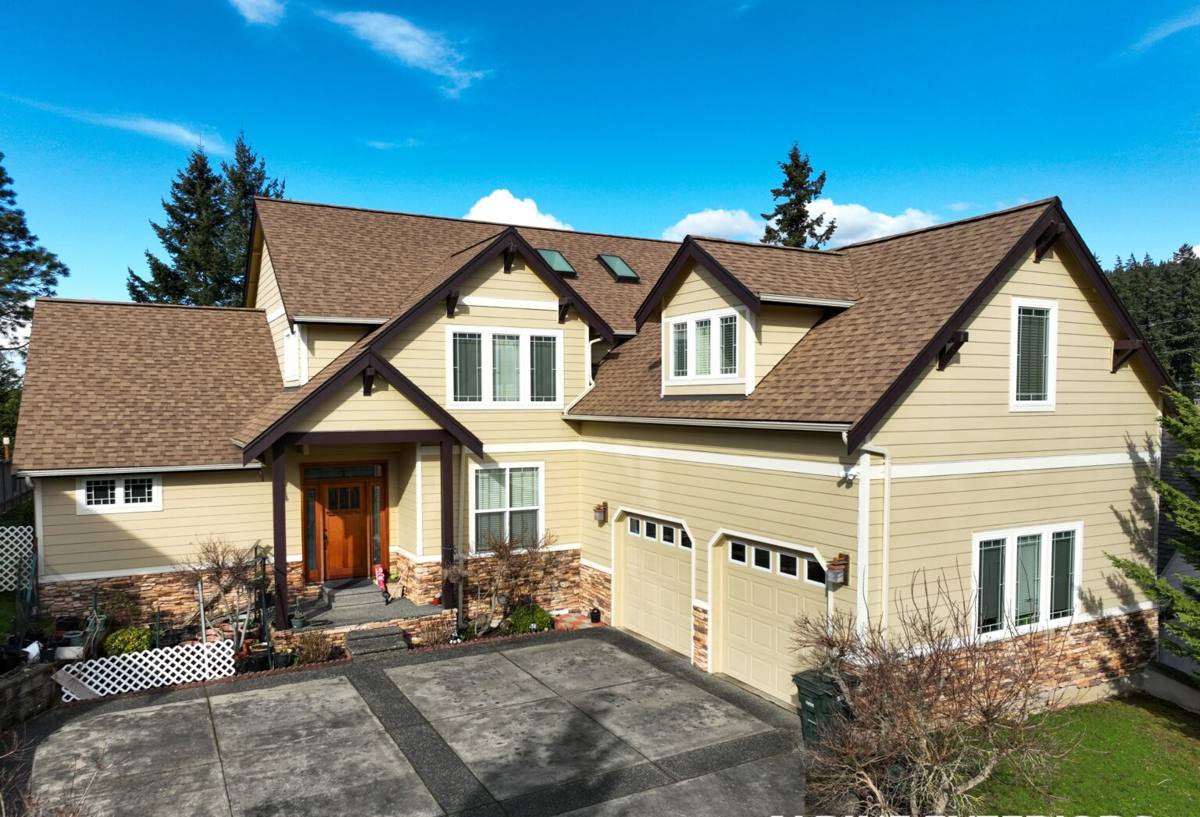
What Board & Batten Siding Actually Is
Board and batten is a vertical siding pattern: wide flat panels (or boards) installed side by side, with narrower strips — the battens — covering the seams between them. Some homes use the reverse version, where the battens sit proud of recessed panels for an even bolder shadow line. Either way, the appeal is the same: strong vertical lines, a more custom look than standard horizontal lap siding, and a style that pairs well with the mix of coastal cottage and modern farmhouse designs common around Birch Bay.
Vertical Lines, Real Shadow Lines
The depth of the batten reveal is what makes or breaks the look. Thin, flimsy battens read as an afterthought. Properly sized battens over a correctly spaced substrate throw a real shadow line that changes with the light throughout the day — that's the detail that separates a board and batten job that looks intentional from one that looks like a lap siding job with trim glued on.
Why We Only Install It in James Hardie Fiber Cement
We install James Hardie fiber cement siding exclusively — including for board and batten profiles — and we won't put vinyl board and batten, engineered wood panels, or primed cedar on a Birch Bay home, even when a customer asks for it by name. Here's the honest reasoning, not a sales pitch.
What We Won't Install and Why
Vinyl board and batten looks the part from the street, but it's a thin extruded plastic panel that expands and contracts with temperature swings, and in a wind-exposed shoreline location it can rattle, warp, or pull away at the fasteners over time. Engineered wood (LP SmartSide and similar products) uses a wood-strand core that performs fine in a lot of climates, but it depends entirely on unbroken paint and caulk lines to keep moisture out of that core — a tough standard to maintain year after year in a place that sees this much rain. Cedar board and batten is genuinely beautiful and we understand the appeal, but real wood in a salt-air, high-moisture environment means an ongoing commitment to refinishing, and even well-maintained cedar eventually deals with checking, cupping, or rot at end grain and fastener points. James Hardie fiber cement is cement, sand, and cellulose fiber — it doesn't absorb moisture the way wood-based products do, it's non-combustible, and the factory-applied ColorPlus finish is baked on to resist the fading and peeling that field-applied paint struggles with in this climate. That's why it's the only product we put our name behind.
What Birch Bay's Climate Actually Does to Siding
Every recommendation on this page traces back to a handful of real conditions this area throws at an exterior wall:
- Salt air: Airborne salt off the bay accelerates corrosion on fasteners, flashing, and any hardware that isn't rated for a marine-influenced environment.
- Wind-driven rain: Storms here don't just fall straight down — wind pushes rain sideways into vertical seams and under poorly lapped trim, which is exactly where board and batten has more joints than lap siding.
- Long moss and algae season: Shaded north- and east-facing walls, tree cover, and the region's damp stretch from fall through spring give moss and algae months to establish themselves on any surface that holds moisture.
- Freeze-thaw cycling: Whatcom County doesn't get brutal winters, but it does get repeated freeze-thaw swings, which is hard on any material or sealant that isn't dimensionally stable.
None of these are reasons to avoid board and batten — they're reasons to be precise about material choice and installation detail.
What a Correct Installation Involves
Board and batten fails early for one of a few predictable reasons: no drainage plane behind it, battens fastened directly through both layers into sheathing without accounting for movement, or gaps in flashing at windows, corners, and the base of the wall. We build every Birch Bay board and batten job around a few non-negotiables.
Rainscreen and Drainage
A furred-out rainscreen gap behind the siding lets any moisture that does get past the cladding drain and dry out instead of sitting against the wall assembly. In a rainfall-heavy area like this one, that gap is what keeps incidental moisture from becoming a rot problem.
Batten Spacing and Fastening
Battens need consistent spacing and correct fastener placement so they're anchored into structure, not just face-nailed into the panel below. Fastener heads get set and sealed to manufacturer spec — sloppy fastening here is one of the fastest ways a board and batten wall starts leaking.
Flashing and Sealant Details
Every window, door, corner, and the base of the wall gets proper flashing and integrated water-resistive barrier work before a single board goes up. Sealant is used at specified joints only — it's a backup layer, not a substitute for correct flashing, which is where a lot of lesser installs cut corners.
Our Process for Birch Bay Homes
- On-site assessment: We walk the home, check the existing wall assembly, note wind exposure and shade patterns, and identify any moisture damage that needs addressing before new siding goes up.
- Plan and product selection: We spec the right James Hardie board and batten configuration, reveal size, and ColorPlus finish for the home's design and exposure.
- Tear-off and prep: Old siding comes off, sheathing is inspected and repaired as needed, and the water-resistive barrier and flashing details go in correctly the first time.
- Installation: Rainscreen furring, boards, battens, and trim go up to manufacturer specification, with fastening and sealant handled per Hardie's published installation requirements.
- Final walkthrough: We inspect every elevation with the homeowner before calling the job done.
Board & Batten Material Comparison
| Material | Salt Air / Moisture Behavior | Maintenance Demand | Fire Performance |
|---|---|---|---|
| James Hardie fiber cement | Does not absorb moisture like wood-based products; factory finish resists coastal wear | Low — periodic washing, no repainting cycle | Non-combustible |
| Vinyl | Won't rot, but can warp or loosen under wind and temperature swings | Low, but panels can't be repainted and impact damage means replacement | Combustible plastic |
| Engineered wood (e.g. LP SmartSide) | Wood-strand core depends on intact paint/caulk to resist moisture intrusion | Moderate — finish must be monitored and maintained | Combustible, wood-based |
| Cedar | Natural material; performs well only with disciplined, ongoing sealing | High — refinishing cycle required | Combustible |
Cost Factors Worth Understanding
Board and batten typically costs somewhat more than plain lap siding on the same wall, simply because of the extra material (battens) and labor (more fastening and flashing detail per square foot). Beyond material choice, the biggest cost variables on a Birch Bay job are usually how much of the existing wall assembly needs repair once old siding comes off, the amount of trim and corner detailing the home's design calls for, and wall height/access on multi-story or steep-lot homes. We break all of this out in a written estimate rather than a single lump number, so you know what you're paying for.
Keeping Board & Batten Looking Right Over Time
James Hardie fiber cement is low-maintenance, not zero-maintenance. A short seasonal routine keeps it performing and looking sharp:
- Rinse the exterior with a garden hose or soft wash a couple of times a year to clear salt residue and organic buildup, especially on shaded elevations.
- Walk the perimeter after major storms and check for debris caught behind battens or against the base of the wall.
- Watch gutters and downspouts — overflow running down a wall is one of the most common causes of localized moss and streaking.
- Keep an eye on caulked joints at trim and penetrations; report any cracking or separation early rather than waiting.
- Trim back vegetation and tree cover that keeps a wall section shaded and damp longer than the rest of the home.
Why Hiring a Crew That Already Works Birch Bay Matters
Board and batten installed to a generic spec sheet doesn't automatically hold up to a specific site. A crew that already works this stretch of Whatcom County knows which elevations tend to take the worst wind-driven rain, which lots hold shade and moisture longer into the season, and how local permitting and wind exposure requirements apply to exterior work here. That local familiarity shows up in the small decisions — flashing details at a particularly exposed corner, extra attention on a shaded north wall — that a crew unfamiliar with the area might not think to make. It's also worth asking any contractor bidding board and batten work directly what siding material they install and why, and whether they'll stand behind the installation in writing, not just the manufacturer's product warranty.
If you're weighing board and batten siding for a home in Birch Bay, we're happy to walk the property, talk through what your specific exposure calls for, and put together a straightforward, no-pressure estimate. There's a form below — reach out and we'll get a look scheduled.