 Bellingham Exterior
 Exteriors Built for Happy Valley's Climate
Happy Valley sits close enough to Bellingham Bay that salt-tinged air is a real factor in how exterior materials age here, and it's far enough into the Pacific Northwest's marine climate that homes deal with long stretches of driving rain most of the year. Add in the shade from mature trees on many older Happy Valley lots, and you get an exterior environment that stays damp for weeks at a time during fall, winter, and early spring. That combination — moisture, salt air, and shade — is exactly what drives moss growth on roofs and siding, wood rot at trim and corners, and premature failure of materials that weren't built with this climate in mind.
We work throughout Bellingham and Whatcom County, and Happy Valley homes see a pretty consistent pattern of wear: north-facing siding that stays wet longer than the rest of the house, roof valleys and shaded slopes that collect moss first, window sills and trim that take on water at the joints, and deck boards that go slick and green if they're not cleaned or built with the right drainage. None of this is unusual for the area — it's just what a coastal Whatcom County climate does to a house over time. The fix isn't fighting the climate, it's building and maintaining the exterior in a way that accounts for it.
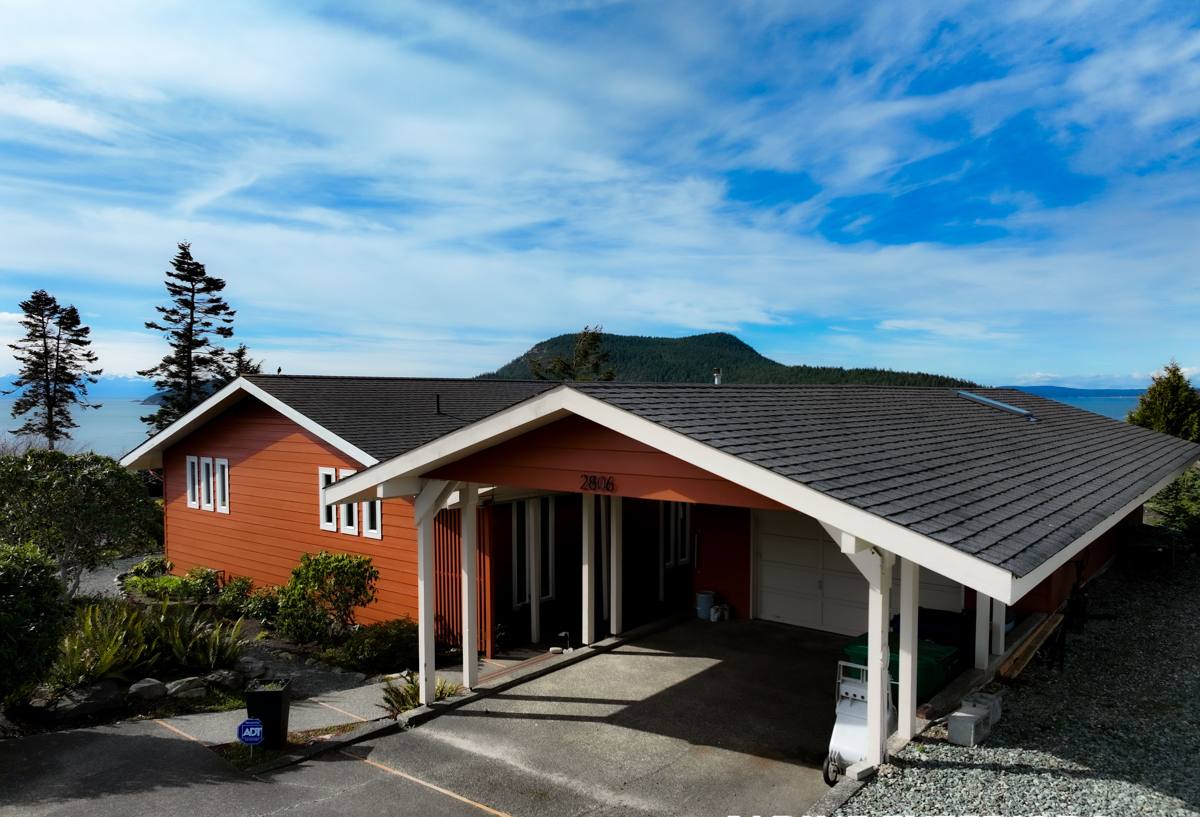
Siding That Holds Up to Salt Air and Rain
Siding takes the brunt of the weather in Happy Valley, and it's also the part of the house most homeowners notice failing first — usually as peeling paint, swollen panel edges, or dark streaking that won't wash off. We install James Hardie fiber cement siding exclusively, and that's a deliberate choice based on what we've seen hold up in this climate versus what struggles.
Why We Don't Install Everything on the Market
Vinyl siding is affordable and easy to install, but it's a plastic product that expands and contracts with temperature swings, can crack in impact-prone areas, and never really stops looking like vinyl. In a wet climate it also traps moisture behind it if the house wrap and flashing details aren't done exactly right, which is a bigger risk than the siding material itself gets credit for. LP SmartSide and other engineered wood products perform reasonably well when properly maintained, but they're wood-based at their core — meaning the cut edges and any breach in the factory coating are vulnerable to moisture intake, which is a real liability given how many wet days Happy Valley sees in a typical year. Primed spruce and cedar are beautiful materials, but they require an ongoing paint and caulk maintenance schedule that most homeowners don't want to keep up with decade after decade in a climate this damp.
James Hardie fiber cement is cement, sand, and cellulose fiber — it doesn't rot, it's non-combustible, and it holds paint (in the form of Hardie's factory-applied ColorPlus finish) far longer than field-applied paint on wood products. It's also engineered in regional formulations, including an HZ10 product line built specifically for climates like ours with heavy moisture exposure. That's the standard we hold every Happy Valley siding job to.
Roofing for a Long Moss Season
Moss is the defining roofing problem in Happy Valley and across most of Bellingham. Shaded roof slopes, north-facing valleys, and areas under tree cover stay damp long after the rest of the roof has dried out, and moss takes hold in exactly those conditions. Left unaddressed, moss lifts shingle edges, holds moisture against the roof deck, and shortens the life of the roofing material significantly faster than sun-exposed sections of the same roof.
When we work on a Happy Valley roof, we're looking at more than just the shingles — we're checking underlayment condition, flashing at chimneys and valleys, ventilation in the attic space, and how well the roof is set up to shed water and dry out between storms. A roof that's properly ventilated and flashed will resist moss and rot far longer than one that looks fine from the ground but is trapping moisture underneath.
- Roof valleys and north-facing slopes checked first — they collect moss and debris fastest
- Flashing inspected at chimneys, skylights, and roof-to-wall transitions, common leak points in wind-driven rain
- Attic ventilation reviewed, since poor airflow accelerates moisture damage from the inside out
- Gutters and downspouts confirmed clear and properly pitched, since standing water backs up under shingles
Windows That Stop Wind-Driven Rain
Bellingham's rain doesn't just fall straight down — storms off the water often push rain sideways against west- and south-facing walls, and older single-pane or poorly flashed windows are where that water finds its way in. In Happy Valley's mix of older homes and newer builds, we see everything from original wood-frame windows that have simply reached the end of their service life to newer installations where the flashing detail around the window opening was never done correctly.
Window replacement is as much about the installation as it is about the window itself. A high-quality window installed with poor flashing will still leak; a mid-grade window installed correctly, with proper head flashing, sill pan, and integration into the house wrap, will keep water out for decades. We treat every window opening as a moisture-management detail first and an aesthetic upgrade second — because in this climate, that's the order that actually protects the house.
Decks Built to Handle Standing Moisture
A deck in Happy Valley spends a huge share of the year wet, and that changes how it should be built. Board spacing, joist spacing, and the type of fasteners used all affect how quickly a deck dries out between rain events — and a deck that stays damp too long is a deck that grows moss, stains, and eventually rots at the joists and ledger board, which is the connection point that matters most for safety.
We build and repair decks with drainage and airflow as a starting point, not an afterthought: proper board gapping, joist protection, correctly flashed ledger connections, and hardware rated for wet exposure. A deck built this way sheds water instead of holding it, which is the difference between a deck that needs pressure washing once a year and one that needs board replacement every few years.
Comparing Exterior Material Options in a Wet Climate
| Material | Moisture Behavior | Ongoing Maintenance | Typical Lifespan Here |
|---|---|---|---|
| Vinyl siding | Doesn't absorb water itself, but traps moisture behind it if installed poorly | Low, but prone to cracking and fading over time | Moderate, install quality dependent |
| Wood-based siding (LP SmartSide, cedar, primed spruce) | Vulnerable at cut edges and coating breaches | High — paint, caulk, and inspection on a recurring schedule | Shorter without diligent upkeep |
| James Hardie fiber cement | Doesn't rot or absorb moisture like wood; engineered for wet regions | Low — factory finish holds up without repainting for many years | Long, with proper installation |
| Asphalt composition roofing | Vulnerable to moss lift and moisture retention if not ventilated | Periodic moss treatment and gutter maintenance | Depends heavily on ventilation and shading |
Why a Local Whatcom County Crew Matters
Exterior work in Happy Valley isn't the same job as exterior work in a dry inland climate, and it isn't identical to work three hours south either — Bellingham's specific mix of marine air, rainfall totals, and tree cover calls for judgment calls that come from having actually worked on houses in this area. A crew that knows which slopes hold moss longest, which flashing details fail first in this rain pattern, and how to sequence a siding or roofing job around Whatcom County's weather windows is going to deliver a longer-lasting result than a generic approach copied from a different climate.
Being local also means we're not disappearing after the invoice is paid. If a question comes up two years down the road about how a detail was flashed or how a warranty works, we're still in the area and still reachable — not a crew that rolled through once and moved on.
Signs Your Happy Valley Home Needs Exterior Attention
- Dark green or black streaking on siding, especially on north-facing or shaded walls
- Moss buildup on roof valleys or the lower edges of shingles
- Soft or spongy trim boards around windows, doors, or roof edges
- Paint that's peeling, bubbling, or chalking rather than just fading
- Deck boards that stay damp long after nearby ground has dried, or nails/screws that have started to lift
- Water stains on interior ceilings or walls near exterior corners, which often trace back to flashing failures outside
Getting Started
If you're noticing any of these signs on a Happy Valley home, or you're just planning ahead for an exterior project, we're happy to take a look and walk through what we're seeing and why. There's no pressure and no obligation — just a straightforward estimate based on your home's actual condition. Use the form below to request a free estimate.