 Bellingham Exterior
 Siding Repair in Sehome: A Job That Starts With Diagnosis, Not a Price
Sehome is one of Bellingham's older, established central neighborhoods, and a lot of the siding on its homes has been through decades of Whatcom County weather without a close inspection. Siding repair here isn't just patching a visible crack or swapping a warped board. It's figuring out whether the damage in front of you is the whole problem or just the part that finally became visible. Salt air, driving rain, and a moss season that can run most of the year on shaded slopes all work on a house slowly, and by the time siding looks bad from the sidewalk, there's often more going on behind it.
We do siding repair and replacement work throughout Bellingham, including Sehome, and we install James Hardie fiber cement exclusively. That matters for repair work specifically, because when we open up a damaged section of siding, what we find underneath, and what we recommend to fix it, is shaped by the fact that we're not trying to sell a homeowner into a full-house replacement or patch a system we don't believe in. We tell you what we actually see.
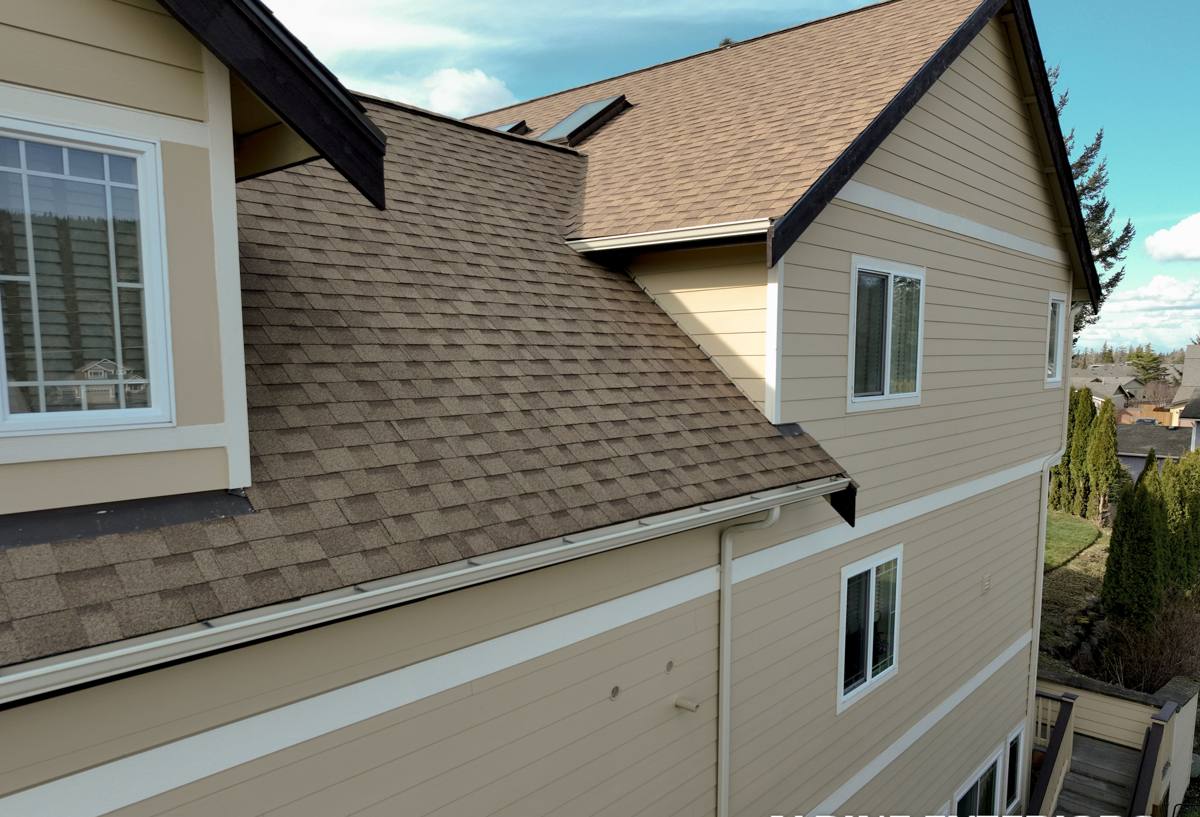
What Sehome's Climate Does to Siding Specifically
Salt Air and Fastener Corrosion
Sehome sits inland of Bellingham's immediate waterfront but still well within reach of salt-laden air moving off the Salish Sea. That salt exposure accelerates corrosion on nails, staples, and any exposed metal trim or flashing tied into the siding system. A repair that reuses corroded fasteners, or that doesn't account for salt exposure in the replacement hardware, tends to fail again faster than the original installation did.
Driving Rain Pushed Sideways
Rain in this part of Washington usually arrives on a wind rather than falling straight down, which pushes moisture horizontally into seams, laps, and butt joints rather than just sheeting off a wall. That's a different failure pattern than a drier climate sees, and it means siding repair here has to pay close attention to how water is shed at every joint and transition, not just whether the surface material itself is sound.
A Long Moss and Mildew Season
Mature tree cover and mild, moist temperatures give Bellingham a moss and mildew season that can run most of the year, and Sehome's shaded lots and tree-lined streets are no exception. North-facing walls and anywhere airflow is limited tend to grow moss and algae first. On siding materials that are even slightly porous, or that hold moisture against the substrate, that growth holds even more water against the wall once it establishes, which is exactly the condition that turns a small area of damage into a bigger repair.
What a Correct Siding Repair Actually Involves
A siding repair that only addresses the visible symptom, replacing a cracked or stained board and calling it done, often misses the reason that board failed in the first place. A correct repair process on a Sehome home typically includes:
- Removing enough surrounding material to see the real extent of damage, not just the piece that looks bad, since moisture tends to travel sideways along seams before it shows on the surface.
- Checking the water-resistive barrier and flashing underneath, since siding is the outer layer of a larger wall assembly, and a failed flashing detail will keep causing damage even after new siding goes up over it.
- Inspecting for soft or rotted sheathing, which has to be addressed before new siding goes back on, or the repair is only cosmetic.
- Matching material and profile so a repaired section doesn't stand out or create an uneven seam that becomes its own future water entry point.
- Re-flashing and properly lapping every seam and joint in the repaired area to the same standard as a full installation, not a shortcut version of it.
- Using corrosion-resistant fasteners appropriate for a salt-air environment, not whatever happens to be on the truck.
Skipping any one of those steps doesn't necessarily show up right away. It shows up in twelve to twenty-four months, when the same area fails again, usually worse than before because moisture had that much longer to work on the sheathing underneath.
How We Approach a Sehome Siding Repair Call
1. On-Site Inspection Before Any Recommendation
We walk the property and look at the damaged area along with the rest of the siding, the grading around the foundation, and any obvious moisture sources like downspouts discharging near the wall or shaded areas with heavy moss buildup. A repair recommendation that's made without seeing the whole house is a guess, not an assessment.
2. Honest Repair-vs-Replace Guidance
Some damage is isolated and a straightforward repair is the right call. Other times, especially on older Sehome homes where siding may already be decades old, a damaged section is a symptom of broader wear across the wall, and patching one spot while ignoring the rest just delays a bigger job and adds cost in the meantime. We tell you which situation you're in, plainly, and why.
3. Repair Work Done to the Same Standard as New Installation
We don't treat repair work as a lesser job. Flashing, fastening, and material matching follow the same standards we'd use on a full siding install, because a repair that isn't done right just becomes a callback.
4. A Clear Look at What's Underneath Before We Close It Back Up
Before any new siding goes back over a repaired section, we show you what we found underneath if there's anything worth seeing, whether that's sound sheathing or something that needs attention. You shouldn't have to take our word for what was behind the wall.
Why We Only Repair and Replace With James Hardie
We used to work with a wider range of siding products. We stopped, and that decision came out of years of repair calls and tear-offs on homes in exactly this kind of climate, not a supplier arrangement.
- Non-combustible core: Fiber cement doesn't feed a fire the way wood-based siding products can, which matters for homeowner safety and often for insurance considerations.
- Factory-applied ColorPlus finish: Color is baked on in a controlled factory process rather than brushed on in the field, so it holds up longer against fading and moisture intrusion than site-applied paint, and it's easier to match on a partial repair.
- Climate-engineered HZ product lines: Hardie's HZ5 formulation is built for regions with heavy moisture exposure and freeze-thaw cycling, which fits Whatcom County's climate well.
- Dimensional stability: Fiber cement doesn't swell, warp, or cup the way engineered wood products can after repeated exposure to a wet season, which means a repaired section stays flat and matched to the surrounding wall over time.
- Strong transferable warranty: Hardie backs the product with one of the stronger warranty structures in the industry, as long as installation follows their spec, including repair work.
We don't install LP SmartSide, vinyl siding, Cemplank, Allura, primed spruce, or cedar, and we don't patch those products with Hardie material either, since mixing systems creates its own compatibility and appearance problems. Each of those products has a place in the market and plenty of homeowners are satisfied with them. We've simply made a professional call that in a climate with this much sustained moisture and salt exposure, we'd rather install and repair one system we fully stand behind than offer a cheaper patch that quietly shifts risk back onto the homeowner.
Repair or Replace: What Actually Drives That Decision
| Factor | Leans Toward Repair | Leans Toward Replacement |
|---|---|---|
| Extent of damage | Isolated to one wall section or a few boards | Recurring damage in multiple areas, or damage found on inspection beyond what's visible |
| Age of existing siding | Relatively recent installation, otherwise in good condition | Original siding decades old, nearing the end of its practical service life |
| Sheathing condition | Sheathing underneath is sound once opened up | Soft, rotted, or moisture-damaged sheathing found in the repair area |
| Material match | Existing profile and color can be reasonably matched | Discontinued profile or faded finish that won't match a patch |
| Underlying cause | A one-time or localized event, like impact damage | A systemic issue like failed original flashing or long-term moisture exposure across the wall |
Exact costs depend on the home, the extent of hidden damage, and how much of the wall assembly needs attention, which is why we walk the property and open up the affected area before giving a real number rather than quoting off a phone call.
Signs a Sehome Home Needs Siding Repair
- Soft or spongy siding when pressed, especially low on the wall or around window and door trim
- Cracked, split, or visibly warped boards, particularly after a hard freeze-thaw stretch
- Moss or dark staining that returns quickly after cleaning, especially on shaded, north-facing walls
- Peeling or bubbling paint that suggests moisture trapped behind the surface
- Gaps or separation at seams, corners, or trim boards
- Staining or discoloration that tracks downward from a window or roof-to-wall transition
- A musty smell or visible staining on interior walls that share an exterior wall with damaged siding
Why a Crew That Already Works Sehome Matters
A contractor who repairs siding across Bellingham regularly, rather than occasionally, has seen how salt air, wind-driven rain, and moss actually behave on real walls through a full year of weather, not just how a product performs on a spec sheet. That shapes practical judgment calls on a Sehome repair: how far to open up a damaged section before assuming the rest is fine, where flashing tends to fail first on homes of a certain age in this neighborhood, and which shortcuts will quietly cause a callback two winters later. A crew that only occasionally works this specific climate is more likely to apply generic repair details that don't quite hold up against what this part of Bellingham throws at a house.
Get a Free, No-Pressure Estimate
If you're dealing with damaged, soft, or moss-covered siding on a Sehome home, we're glad to take a look and give you an honest read on whether it's a repair or something bigger, no upsell script, no pressure. Reach out using the form below to schedule a free estimate.