 Bellingham Exterior
 Siding Installation in Sehome: What This Neighborhood's Homes Actually Need
Sehome sits close in to downtown Bellingham, wrapped around Sehome Hill and within a short drive of Bellingham Bay. It's one of the city's older, more established neighborhoods, with a housing mix that ranges from early-to-mid-century homes near the university to newer infill construction on the surrounding slopes. That mix matters for siding work, because a house built in the 1950s and a house built in the 2000s can need very different repair and installation approaches even when they sit two blocks apart. What doesn't change block to block is the climate load every exterior wall in Sehome has to shed: salt-tinged marine air rolling off the bay, long stretches of driving rain, and a moss season that can run most of the year on shaded, north-facing walls. Siding installed without that reality in mind tends to fail early — not because the product is bad, but because the install didn't account for how water actually moves across a wall in this part of Whatcom County.
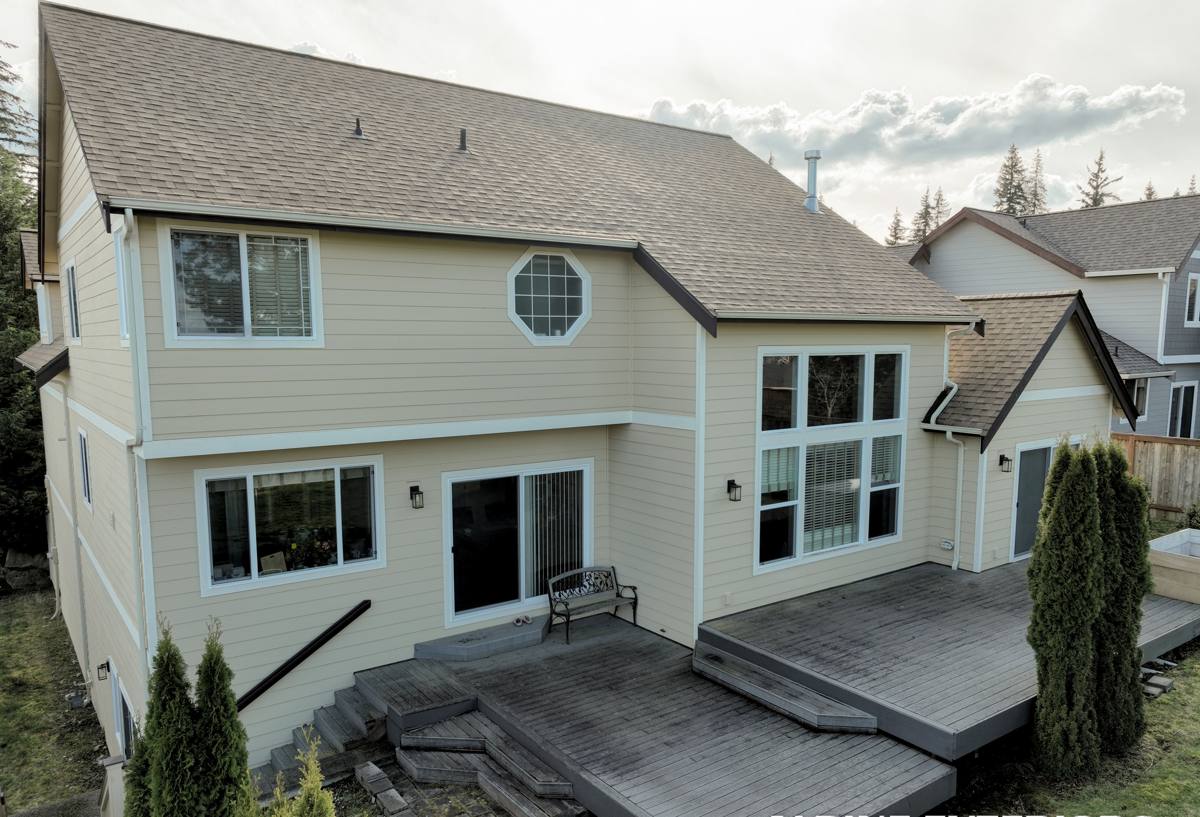
Why Bellingham's Climate Is Hard on Siding
Salt Air and Corrosion
Proximity to Bellingham Bay means a steady, low-level dose of salt-laden air, especially on west- and north-facing elevations. Salt air accelerates corrosion of exposed fasteners, trim flashing, and any metal components in a siding system. Over years, that corrosion can compromise the very details that are supposed to keep water out — a rusted flashing edge or a corroded nail head is a failure point waiting to happen.
Driving Rain
Whatcom County doesn't get the heaviest rainfall totals in Western Washington, but it gets a lot of wind-driven rain, particularly during fall and winter storms that push moisture sideways into wall assemblies rather than straight down. Siding that relies on face-sealing alone — caulk and paint doing all the work — struggles here. Sehome's elevation changes and tree cover also create pockets where wind funnels rain against specific elevations more than others, which is something a crew that's actually worked the neighborhood learns to watch for.
Moss Season
Shaded lots under mature trees, common throughout Sehome, stay damp longer after every rain event. That extended dampness is exactly what moss and algae need to establish on siding, trim, and fascia. Moss holds moisture against the surface, and on the wrong substrate that translates into swelling, rot, or coating breakdown well before the material's expected lifespan is up.
What a Correct Siding Installation Actually Involves
Good siding is a system, not just a surface. The visible panels get the attention, but the layers behind them determine whether the wall stays dry for the next 30-plus years. A correct installation in a climate like Bellingham's includes:
- A continuous, code-compliant weather-resistive barrier installed shingle-style so every layer drains over the one below it
- Properly lapped and sealed flashing at every window, door, deck ledger, and roof-to-wall transition
- Correct fastener type, spacing, and embedment for the specific siding product — not generic nails driven at a contractor's convenience
- Adequate clearance between the siding's bottom edge and grade, decks, patios, and roof lines so splash-back and standing water can't wick into the material
- Rainscreen or drainage gap furring where the wall assembly and product warranty call for it, so bulk water has somewhere to go besides the sheathing
- Sealed, back-primed, or factory-finished cut edges at every field cut, especially at corners and penetrations
Skip any one of these and the siding might look fine for a few years while quietly failing behind the surface. This is the part of the job that doesn't show up in a driveway estimate but shows up in a moisture inspection ten years later.
Why We Install Only James Hardie Fiber Cement
We made a deliberate decision to install one siding system: James Hardie fiber cement, in its climate-engineered HZ5 configuration built for the Pacific Northwest. We don't install vinyl, LP SmartSide, cedar, primed spruce, or other fiber cement brands like Cemplank or Allura. That's not a marketing position — it's a standard we hold because of what we've seen these products do, and not do, over time in exactly this kind of coastal, wet, moss-prone climate.
Fiber cement is non-combustible, which matters increasingly in Washington as wildfire-driven insurance scrutiny tightens statewide. It doesn't feed moss and mildew the way wood-based products can, holds paint and factory finishes far longer than wood substrates, and resists the swelling, cupping, and rot that driving rain and prolonged dampness cause in cellulose-based siding. James Hardie's ColorPlus factory finish is baked on under controlled conditions rather than field-applied, which means better adhesion and color retention than most site-painted alternatives — a real advantage under Bellingham's UV-and-rain cycle. The company backs its HZ5 products with a strong, transferable limited warranty, which gives homeowners real recourse if a manufacturing defect shows up years down the road. When it's installed to spec — and that "installed to spec" qualifier matters more with fiber cement than with almost any other siding — it's the product we're comfortable putting our name behind on a Sehome home.
How Our Sehome Siding Installation Process Works
1. On-Site Assessment
We walk the home, evaluate the existing wall assembly, check for hidden moisture or rot at trim, windows, and penetrations, and note the specific exposure conditions of each elevation — which walls take the worst of the wind-driven rain, which stay shaded and damp longest.
2. Tear-Off and Substrate Repair
Old siding comes off down to the sheathing. Any rot, soft spots, or compromised framing gets repaired before anything new goes on — covering over a hidden problem is how small issues turn into structural ones.
3. Weather Barrier and Flashing
A new weather-resistive barrier goes on correctly lapped, followed by flashing at every window, door, and penetration, integrated so water sheds outward at every layer rather than finding a path inward.
4. James Hardie Panel Installation
HZ5 panels, lap siding, or trim go up per James Hardie's published installation instructions — correct fastener schedule, correct clearances, correct joint treatment — because deviating from spec is also how a manufacturer warranty gets voided.
5. Finish and Final Walkthrough
Trim, caulking at appropriate joints only (not as a substitute for flashing), and a final walkthrough with the homeowner to review the completed work and care going forward.
Comparing Siding Options in Sehome's Climate
Homeowners researching siding in Bellingham inevitably compare materials. Here's an honest look at how the common options hold up against salt air, driving rain, and moss — the three conditions that define Sehome's exposure.
| Material | Moisture & Moss Resistance | Maintenance Burden | Typical Lifespan Here |
|---|---|---|---|
| James Hardie Fiber Cement (HZ5) | Strong — non-combustible, doesn't feed moss/rot, factory finish sheds UV and rain well | Low — occasional wash, no repainting for years | 30-50 years installed to spec |
| Vinyl | Won't rot, but can warp/crack in temperature swings and doesn't stop moisture from reaching sheathing behind it | Low, but limited repair options if damaged | 20-30 years, variable |
| Cedar / Primed Spruce | Attractive but absorbs moisture; prone to rot and moss growth in shaded, damp exposures | High — regular refinishing, caulking, moss treatment | 15-25 years without heavy upkeep |
| LP SmartSide (engineered wood) | Better than raw wood, but still a wood-strand product sensitive to sustained moisture and edge exposure | Moderate — coating maintenance and edge sealing matter | 20-30 years, installation-sensitive |
Every material on this list can perform reasonably well when installed correctly and maintained. The differences show up over time, in how much upkeep a homeowner has to put in and how the product behaves when installation details aren't perfect — which is a real-world risk on every job, not just the ones we do.
Signs a Sehome Home May Need New Siding
Because so many Sehome properties sit under mature tree canopy or face the bay directly, siding wear here often shows up as moisture damage before it shows up as obvious cosmetic failure. Watch for:
- Persistent green or black staining on north- or west-facing walls that returns shortly after cleaning
- Soft or spongy spots when you press on siding near the bottom edge or around window trim
- Visible cupping, warping, or separated seams, especially on wood-based products
- Peeling or bubbling paint that keeps recurring in the same spots year after year
- Rising energy bills alongside drafts near exterior walls, which can point to a compromised weather barrier
- Visible corrosion on fasteners, flashing edges, or trim hardware
Any one of these on its own isn't necessarily urgent. Several together, especially on a home that's due for a full re-side anyway, are worth having assessed before another wet season sets in.
Why Hiring a Crew That Already Works in Sehome Matters
Siding installation is one of those jobs where local, specific knowledge changes outcomes. A crew that regularly works Sehome and the surrounding Bellingham neighborhoods already knows which elevations in this part of town take the worst wind-driven rain, how long shaded walls stay wet after a storm rolls through, and what City of Bellingham permitting and inspection expectations look like for exterior work on this housing stock. That's different from a crew that installs siding across a dozen unrelated climate zones and applies the same generic approach everywhere. Whatcom County's mix of salt exposure, rainfall pattern, and tree cover is specific enough that installation details — drainage gaps, flashing sequencing, fastener choice — genuinely need to be tuned to it, not just to a manufacturer's minimum spec sheet.
Caring for James Hardie Siding After Installation
One of the practical advantages of fiber cement in this climate is how little ongoing care it demands compared to wood-based alternatives. A periodic soft wash to clear moss and algae buildup, keeping gutters and downspouts clear so water doesn't sheet down the wall face, and trimming back vegetation that keeps a wall shaded and damp will keep a correctly installed Hardie system performing for decades. There's no annual repainting cycle to plan around, and the factory ColorPlus finish is designed to hold its color far longer than field-applied paint on wood or engineered wood siding.
If your Sehome home's siding is showing its age, or you're planning ahead of the next wet season, we're happy to take a look and walk you through what your home specifically needs. Fill out the form below for a free, no-pressure estimate.