 Bellingham Exterior
 Sehome's mix of older bungalows, hillside homes, and newer infill sits close enough to Bellingham Bay that every roof in the neighborhood deals with the same three enemies: salt-laden air rolling in off the water, wind-driven rain that doesn't care how good your shingles look, and a moss season that runs longer here than almost anywhere else in Whatcom County. When a storm rolls through and rattles your roof, the damage isn't always obvious from the ground — and it isn't always what a homeowner assumes it is. This page walks through what storm damage actually looks like on a Sehome roof, what a correct repair involves, and how our process works when you call us in after a bad weather event.
Why Sehome Roofs Take a Different Kind of Beating
Every neighborhood in Bellingham deals with wind and rain, but Sehome's combination of proximity to the bay, mature tree cover, and a mix of roof ages and styles creates its own set of pressure points.
Salt Air and Metal Fatigue
Homes closer to Bellingham Bay get a steady, low-grade dose of salt-laden air. Over years, that air accelerates corrosion on exposed metal roofing components — flashing, valleys, drip edge, gutter fasteners, and vent boots. A fastener or flashing seam that's been quietly corroding for a decade is exactly the kind of weak point a storm finds first. It usually doesn't fail on a calm day; it fails the night the wind picks up and rain gets driven sideways into every gap.
Wind-Driven Rain and Wind Uplift
Storms in this part of Washington rarely bring straight-down rain. Wind pushes it sideways and, on gusty nights, upward under shingle edges and around flashing that was never quite sealed right to begin with. That's a very different failure mode than a simple leak — water can travel several feet from the actual entry point before it shows up as a stain on a ceiling, which is why DIY patch jobs so often miss the real problem.
The Long Moss Season
Sehome's tree canopy and hillside lots mean a lot of roofs stay shaded and damp well into what should be the dry season. Moss doesn't just look bad — it holds moisture against shingles and under tab edges, which speeds up granule loss and makes a roof more vulnerable the next time a storm hits. A roof that's already compromised by moss damage will fail faster and more visibly under wind and rain than a clean one.
What Actually Counts as Storm Damage
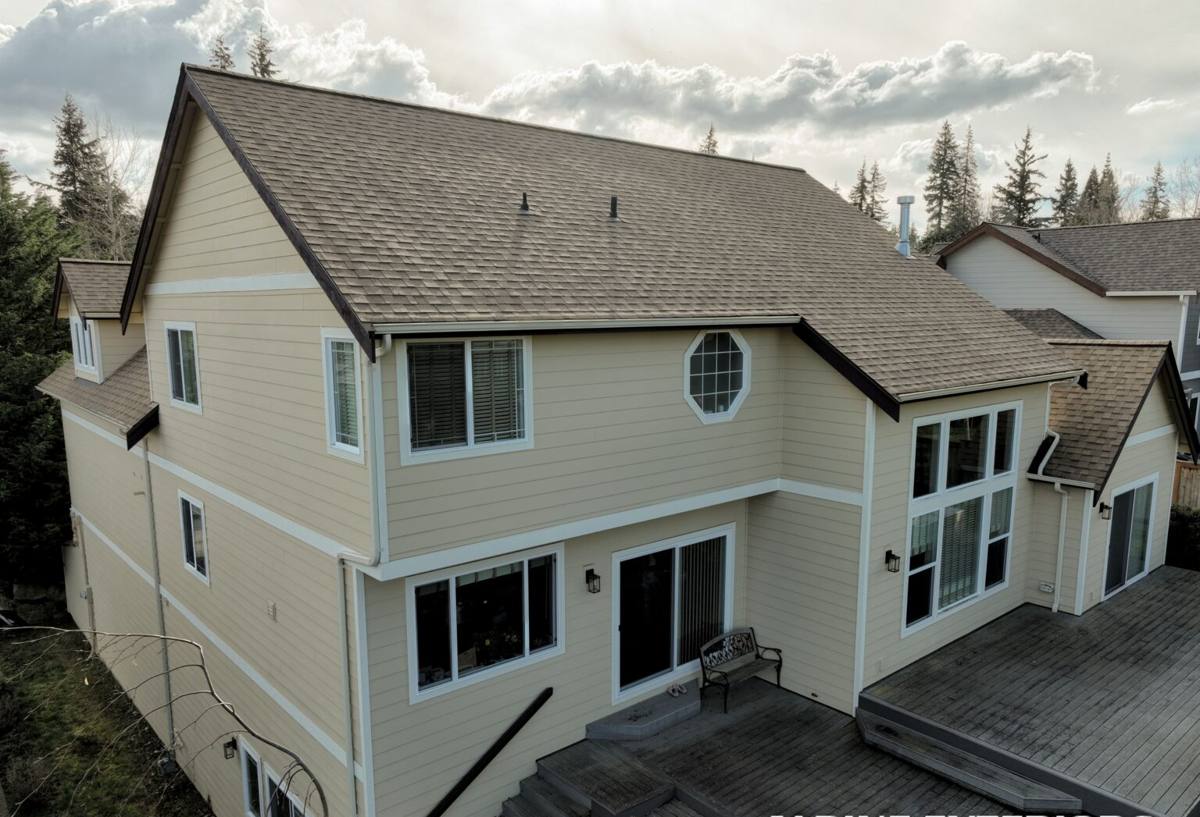
Not every roof problem that shows up after a storm was caused by the storm. Wear and tear, an aging roof nearing the end of its service life, or a poor install from years ago can all surface at the same time a storm hits — which matters both for how we approach the repair and for how an insurance adjuster will look at it. Real storm damage tends to be sudden, localized, and traceable to a specific event: a branch impact, a gust that lifted a shingle edge, or a flashing seam torn open by wind.
After a windstorm or heavy rain event, it's worth doing a careful walk-around of your property (from the ground — we don't recommend homeowners get on the roof after a storm) and checking for these signs:
- Shingle pieces, granules, or shingle "tabs" in the gutters or on the ground near the house
- Visible curling, lifting, or missing shingles, especially near ridges, edges, and valleys
- Dented or bent metal flashing, vent caps, or gutter sections
- New or worsening water stains on interior ceilings or upper-floor walls
- Debris — branches, needles, or moss clumps — freshly dislodged onto the roof surface
- Sagging or soft-feeling spots visible from an upstairs window or across the street
- Gutters pulling away from the fascia or overflowing during rain
If you see two or more of these after a specific storm, it's worth having someone look before the next round of rain finds the opening.
Getting the Diagnosis Right the First Time
The single biggest mistake in storm repair isn't skipping the work — it's fixing the visible symptom and missing the actual entry point. A missing shingle is easy to spot and easy to replace. What's harder is tracing where wind-driven water actually traveled once it got under the roofing layer, because it rarely drips straight down from where it entered.
A correct repair starts by checking the whole assembly, not just the top layer:
- Shingles or roofing material — condition, granule loss, and whether replacement pieces will actually match the existing roof's age and color
- Underlayment — whether wind or impact damage has torn or exposed the moisture barrier underneath
- Flashing and valleys — the most common real source of leaks that get blamed on "the shingles"
- Decking — soft or water-stained plywood underneath means the repair has to go deeper than the surface
- Ventilation — poor attic ventilation traps moisture and accelerates the same moss and rot problems the storm exposed
Skipping any one of these steps is how a "repaired" roof leaks again in the next storm, at a new spot the homeowner assumes is a separate problem.
Our Storm Damage Repair Process
When you call us after storm damage in Sehome, here's how we handle it:
- Inspection. We assess the full roof, not just the area you're worried about — storm damage is often more widespread than it looks from the ground.
- Documentation. We photograph and note the damage clearly enough to support an insurance claim, including close-ups of the specific failure points.
- Temporary protection. If there's active exposure — a torn section, missing flashing, an open spot — we get it covered and weather-tight before anything else, so the interior of your home isn't taking on more damage while repairs are scheduled.
- Honest scope and options. We tell you plainly whether this is a targeted repair or whether the damage (or the roof's underlying age) points toward something larger, and walk through the trade-offs.
- Material matching. For a repair (rather than a full replacement), we work to match existing shingle color, profile, and age as closely as realistically possible, since a mismatched patch is its own kind of eyesore.
- The repair itself. Proper tear-out of the damaged section, underlayment and flashing addressed where needed, new material installed to manufacturer spec — not just nailed over the old failure point.
- Cleanup and final check. Debris removed, gutters cleared of anything knocked loose during the repair, and a final walk-through so you know exactly what was done.
Repair or Replace: Weighing Your Options
Not every storm-damaged roof needs full replacement, and not every "small leak" is actually small once you're inside the roof assembly. Here's a general guide to how we think through it — every roof is different, so this is a starting point for the conversation, not a diagnosis from a distance.
| Damage Type | Typical Sign | Usual Approach | Cost Factor |
|---|---|---|---|
| Localized wind uplift, few shingles | Missing/lifted shingles in one area | Targeted repair with matched materials | Lower — limited material and labor |
| Flashing failure | Leak near chimney, skylight, or valley | Flashing replacement, may not need new shingles | Low to moderate — depends on access |
| Impact damage (branch, debris) | Puncture, cracked or torn shingle, dented metal | Section repair, decking check if punctured | Moderate — depends on decking condition |
| Widespread granule loss / moss damage | Bald patches, moss coverage, aging roof | Often points toward partial or full replacement | Higher — but avoids repeat repair costs |
| Storm damage on a roof already near end of life | Roof is 18+ years old with storm damage layered on top | Replacement usually more cost-effective long-term | Highest upfront, lowest cost-per-year |
We'll always give you the honest read on which category your roof falls into rather than defaulting to the most expensive option — a well-executed repair on a roof with years of life left is often the right call, and we'll say so.
Insurance Claims After a Storm
Many storm damage repairs in Sehome go through homeowner's insurance, since wind and impact damage is typically a covered event (your specific policy is what governs this, not us). What we can do is make the process smoother on your end: clear photo documentation taken at the time of inspection, a written scope of the damage and the cause, and, if needed, being available to meet with your adjuster to point out what they might not catch from a ladder inspection alone. Filing promptly after a storm matters too — insurers can be skeptical of damage reported weeks or months after an event, even when it's legitimate.
Moss, Shade, and Long-Term Roof Health in Sehome
Because so much of Sehome sits under mature tree cover, moss isn't a one-time cleanup — it's an ongoing maintenance issue that directly affects how much damage a storm can do. A roof with heavy moss growth holds water longer, has already lost some of its granule protection, and gives wind something to grab onto at lifted edges. Addressing moss isn't cosmetic; it's part of keeping the roof's actual defenses intact.
A few habits that meaningfully extend a Sehome roof's storm resistance:
- Keep gutters clear of needles and debris so wind-driven rain has somewhere to go
- Address moss buildup before it spreads across full shingle courses, not after
- Trim back branches that overhang the roofline to reduce both shade and impact risk
- Check attic ventilation periodically — poor airflow keeps the underside of the decking damp, which accelerates rot from the inside
- Have the roof looked at after any storm with sustained winds, even if nothing looks obviously wrong from the ground
Materials and Craftsmanship Built for This Climate
Not every roofing product performs the same way under Bellingham's specific mix of salt air, wind-driven rain, and shade-driven moss growth. When we repair or replace sections of a storm-damaged roof, we lean toward materials and details that hold up specifically in this environment: corrosion-resistant flashing and fasteners rather than standard-grade hardware, proper synthetic underlayment as a secondary moisture barrier, and shingle products with solid wind and impact ratings rather than the cheapest option available. We also pay close attention to ventilation detailing during any repair, since a roof that breathes properly resists both moss buildup and the wood rot that follows trapped moisture. None of this is about upselling — it's about not being back at your house for the same leak in two years.
Why a Crew That Already Works in Sehome Matters
Storm damage repair isn't just a technical skill — it's a familiarity skill. A crew that regularly works in Sehome already knows the general age and construction patterns common to the neighborhood's housing stock, understands how hillside lots and mature tree cover affect both access and damage patterns, and is familiar with Bellingham and Whatcom County permitting requirements for roofing work when a repair crosses into replacement territory. That familiarity shows up in small but real ways: knowing which flashing details tend to fail first on homes of a certain age, having a realistic sense of how quickly moss reclaims a shaded roof after a repair, and not needing to relearn local code requirements on your project's dime.
If your roof took a hit in the last storm — or you're just not sure whether that stain on the ceiling is new — we're happy to come take an honest look. Estimates are free and there's no pressure to move forward with anything; you'll get a clear explanation of what we find and what your real options are, using the form below to get started.