 Bellingham Exterior
 Asphalt Shingle Roofing Built for Sehome's Climate
Sehome sits close enough to Bellingham Bay that salt-laden air is a real factor in how roofing materials age here, and it's tucked into enough tree cover and hillside terrain that shade, moisture, and moss are a near-constant presence for a good chunk of the year. That combination — salt air, driving rain off the water, and a long wet season that keeps roofs damp for months at a time — is harder on asphalt shingles than most manufacturers' warranty language accounts for. A roof that would last three decades in a dry inland climate can show real wear in twenty or less here if it wasn't installed with this specific environment in mind.
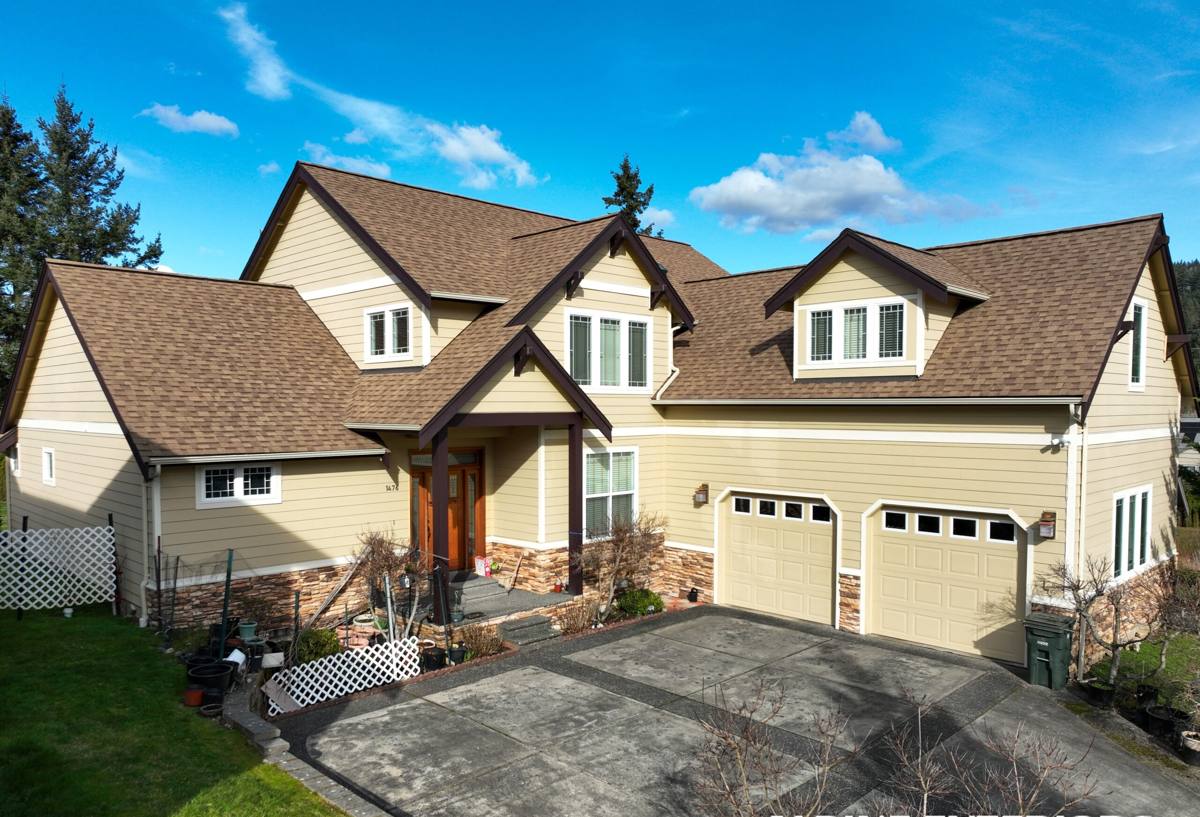
This page is about one job, done right, in one part of Bellingham: asphalt shingle roofing for Sehome homes. Not a general overview of roofing services — the specifics of what this climate does to a roof, what a correct installation looks like in response, and why it matters to work with a crew that already knows this neighborhood.
What Whatcom County Weather Does to a Shingle Roof
Three things drive most of the roofing problems we see in Sehome, and they compound each other.
Salt Air and Coastal Moisture
Homes closer to the bay deal with airborne salt that accelerates corrosion on exposed metal — nails, flashing, vent stacks, and gutter hardware. Once corrosion starts on a fastener or flashing edge, it creates a path for water intrusion that has nothing to do with the shingles themselves being worn out. This is why fastener and flashing material choice matters as much as shingle brand in this part of Bellingham.
Driving Rain
Wind-driven rain off the water doesn't just fall straight down — it gets pushed sideways and upward under shingle edges, ridge caps, and around penetrations like plumbing vents and chimneys. A roof system that only handles vertical rainfall well will eventually leak here, usually at a transition point rather than in the open field of the roof.
The Long Moss Season
Whatcom County's wet season runs long, and shaded, north-facing, or tree-covered sections of roof — common on Sehome's hillside lots — stay damp for extended stretches. That dampness is exactly what moss and algae need to establish. Left unmanaged, moss lifts shingle edges, holds moisture against the roof deck, and turns a cosmetic issue into a structural one over a few seasons.
What a Correct Installation Actually Involves
A shingle roof is a system, not a single product. In a climate like this, the components underneath and around the shingles do as much work as the shingles themselves.
Underlayment and Water Barrier
We treat synthetic underlayment as the baseline, not an upgrade, and we pay particular attention to self-adhering ice-and-water barrier at eaves, valleys, and any low-slope transitions — the spots where wind-driven rain and ponding are most likely to find a weak point.
Ventilation
Poor attic ventilation traps moisture underneath the roof deck, which shortens shingle life from below even when the surface looks fine. We check intake and exhaust balance on every re-roof rather than assuming the existing setup was adequate — a lot of older Sehome homes were built before current ventilation standards and are working with less airflow than they should have.
Flashing and Penetrations
Chimneys, skylights, plumbing vents, and roof-to-wall transitions are where the large majority of shingle roof leaks actually originate. We use corrosion-resistant flashing material given the coastal air exposure, and we don't reuse old flashing just to save time on a tear-off.
Fastening and Wind Exposure
Correct nail placement and count matter more than most homeowners realize — under-nailed shingles are one of the most common causes of wind-lift failure, and Bellingham gets enough storm wind off the water to expose that shortcut within a few seasons.
Signs Your Sehome Roof Needs a Look
Most roof failures don't happen suddenly — there are usually warning signs for months or years before a leak shows up inside the house. Worth checking for, or asking us to check for:
- Granules collecting in gutters or at downspout outlets, a sign shingles are wearing down
- Dark streaking or green-black patches, especially on shaded or north-facing slopes
- Moss growth thick enough to lift shingle edges rather than just sitting on the surface
- Curling, cupping, or cracking shingles, particularly on older or south-facing sections
- Rust staining around vent stacks, flashing, or exposed fasteners
- Soft spots or sagging when walked on, which can indicate deck moisture damage
- Daylight visible through the roof deck from inside the attic
- Water stains on interior ceilings, especially near chimneys, skylights, or exterior walls
Any one of these on its own isn't necessarily an emergency, but a few together, especially with a roof that's fifteen years or older, is worth a professional look before the next wet season.
Moss and Algae: Managing It Instead of Just Removing It
Moss removal alone treats the symptom, not the cause. If shaded sections of a roof stay damp for weeks at a time, moss will come back within a season or two of a cleaning. Our approach on Sehome roofs is to address why the moisture sits there in the first place — tree canopy trimmed back where practical, gutters and valleys cleared so water doesn't pool, and where appropriate, zinc or copper strips installed at the ridge that let rainwater carry trace metal down the roof slope and suppress regrowth over time. That's a maintenance measure, not a one-time fix, and we'll tell you honestly if a roof's shade exposure means moss control needs to be part of an ongoing routine rather than a single visit.
We also don't recommend aggressive pressure washing on asphalt shingles — it strips protective granules and shortens the roof's life faster than the moss itself would. Soft washing and manual removal, done at the right time of year, is the safer approach.
Choosing a Shingle for This Climate
Not every asphalt shingle product is built the same way, and the right choice depends on the home, the budget, and how much of the roof sits under tree cover or takes direct wind off the bay.
| Shingle Type | Typical Lifespan | Wind Rating | Best Suited For |
|---|---|---|---|
| Standard 3-Tab | 15–20 years | Lower | Budget-driven projects, secondary structures |
| Architectural / Dimensional | 25–30 years | Moderate to high | Most Sehome homes — the standard we recommend |
| Impact-Resistant (Class 4) | 30+ years | High | Homes with heavy tree exposure or storm-prone lots |
For most Sehome properties, we lean toward architectural shingles as the practical baseline — they hold up better to wind-driven rain and moss pressure than 3-tab products, without the premium cost of impact-rated lines. Homes under heavy tree cover, where falling branches and debris are a recurring issue, are where we bring up Class 4 shingles as a worthwhile upgrade rather than an unnecessary one.
Repair or Replace? How We Actually Decide
We don't default to recommending a full replacement when a repair will genuinely hold up. The decision usually comes down to a few honest questions:
- Is the damage isolated to one area (a repair) or spread across multiple slopes (a sign of system-wide wear)?
- Is the roof deck underneath still sound, or has sustained moisture caused rot that a surface repair won't fix?
- How much life is realistically left in the rest of the shingles — is a repair a two-year patch or a ten-year fix?
- Is the existing ventilation and flashing setup adequate, or would a repair leave known weak points untouched?
We'll walk you through what we find and what it means in plain terms, including when a repair is the right call financially and structurally — we're not trying to sell a replacement a roof doesn't need yet.
Our Process, Start to Finish
Every roofing job on a Sehome home follows the same sequence:
- On-site inspection covering the shingles, decking, flashing, ventilation, and any interior signs of moisture
- A written estimate that separates out labor, materials, and any deck repair contingencies before work starts
- Protection of landscaping, siding, and gutters during tear-off and installation
- Correct underlayment, flashing, and fastening per manufacturer specification and local building code
- Final walkthrough and cleanup, including a magnetic sweep for stray nails
Most jurisdictions in Whatcom County, including Bellingham, require a permit for a full roof tear-off and replacement — we handle that as part of the job rather than leaving it for the homeowner to sort out.
Why a Local Sehome Crew Matters
Roofing crews that work across a wide region without a real local base tend to treat every job the same way, regardless of climate. A crew that regularly works Sehome and the surrounding Bellingham neighborhoods knows which streets sit in near-constant shade, which lots take the worst of the wind off the bay, and which older homes are likely to have ventilation or flashing shortcuts from a previous re-roof. That local pattern recognition shows up in fewer callbacks and fewer surprises mid-project.
It also matters for response time. Storm damage and sudden leaks don't wait for a convenient week, and a crew based in the area can get eyes on a problem and a tarp on a roof faster than one dispatching from out of town.
Get a Straight Answer on Your Roof
If you're dealing with visible wear, moss buildup, or just want an honest read on how much life is left in your Sehome home's roof, we're glad to take a look. The estimate is free, there's no pressure attached to it, and you'll get a clear explanation of what we find — use the form below to get started.