 Bellingham Exterior
 Siding Replacement for Sehome Homes
Sehome sits close enough to Bellingham Bay and the surrounding hills that its homes take on a specific mix of exposures: salt-laden air moving in off the water, long stretches of overcast and driving rain through fall and winter, and enough tree cover in older sections of the neighborhood to keep north- and west-facing walls shaded and damp well into spring. None of that is unusual for Whatcom County, but it does mean siding here ages differently than siding in a dry inland climate. A replacement job that doesn't account for it will look fine on installation day and start showing problems within a few wet seasons.
This page is about one job, done right, for this neighborhood: full siding replacement, not patch repair, on homes dealing with Bellingham's climate day in and day out.
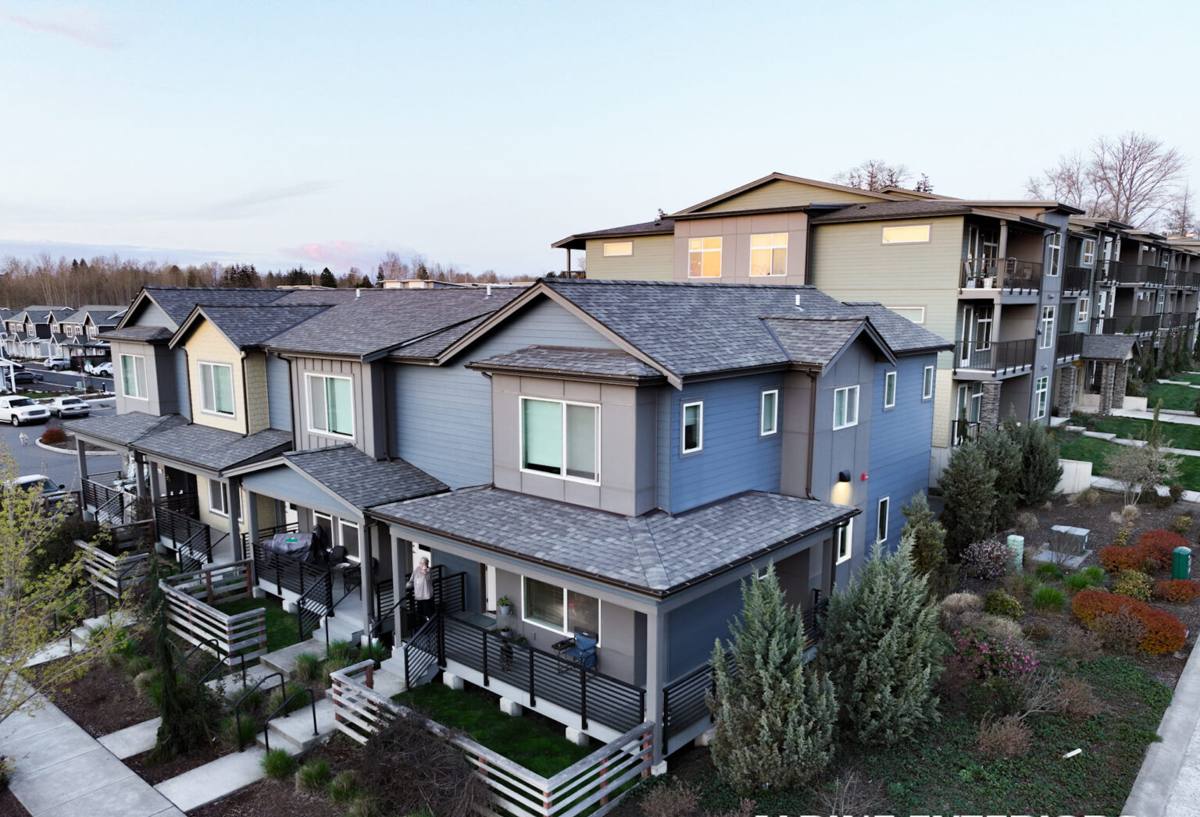
What Bellingham's Climate Actually Does to Siding
Salt air and moisture
Homes closer to the water pick up fine salt and moisture in the air that settles on exterior surfaces. Over years, this accelerates corrosion of exposed fasteners and trim metal, and it keeps painted and coated surfaces slightly damper than they'd be further inland. Siding materials that rely on a factory paint film to keep moisture out are only as good as that film — once it's compromised, salt-laden moisture finds the seams.
Moss and shaded, damp walls
Whatcom County's moss season isn't a one-month event — shaded, north-facing walls in tree-lined parts of Sehome can stay damp for most of the year. Moss and algae hold moisture against the wall surface far longer than open air would, and on materials that swell, delaminate, or rot when saturated, that's a slow, steady problem rather than a dramatic one. It shows up as soft spots, staining, and paint failure long before anything looks structurally wrong.
Driving rain and wind exposure
Storms off the Sound bring rain sideways, not straight down. That means every horizontal seam, window head, and butt joint on a wall is a potential entry point, not just the field of the siding itself. Flashing details and lap spacing matter more here than they would in a calmer climate, because the water is actively being pushed into gaps rather than just running down the face of the wall.
Signs a Sehome Home Needs Siding Replacement, Not Just Repair
Repair makes sense when the damage is isolated and the rest of the siding is sound. Replacement is the right call when the problems are spread across the house or point to something happening behind the siding, not just on its surface.
- Soft, spongy, or crumbling siding when pressed, especially near the bottom of walls or under windows
- Paint or finish that's failing across multiple walls, not just one weathered side
- Persistent moss, algae, or dark staining that comes back within a season of cleaning
- Visible warping, buckling, or gaps opening up at seams and corners
- Interior signs — musty smell, peeling interior paint, or soft drywall — near exterior walls
- Siding that's original to a home built more than 20-25 years ago and hasn't been replaced
- Rising energy bills with no other explanation, suggesting the wall assembly is no longer doing its job
What a Correct Siding Replacement Involves
Siding replacement isn't just pulling off the old material and nailing up new panels. On a home that's been dealing with coastal Washington weather for years, what's happening underneath the siding matters as much as what goes back on top.
- Full tear-off so the sheathing underneath can actually be inspected, not just the visible face of the old siding
- Sheathing repair where moisture has caused rot or soft spots — covering over compromised sheathing just moves the problem behind the new siding
- A correct weather-resistive barrier, installed with proper laps and sealed penetrations, since this is the layer actually keeping wind-driven rain out of the wall assembly
- Flashing at every horizontal transition — window heads, door heads, deck ledgers, and butt joints — sized and lapped so water sheds outward instead of collecting
- Correct fastening and clearances per the manufacturer's installation instructions, including ground clearance and gaps at trim, so the new siding can dry out after it gets wet
- Finish work — caulking, trim, and touch-up painting where field-cut edges are exposed
Skip any one of these steps and the new siding can still fail on the same timeline as the old siding did, just with a fresh coat of paint hiding it for the first few years.
Why We Install Only James Hardie Fiber Cement
We install James Hardie fiber cement siding exclusively. We don't offer vinyl, LP SmartSide, Cemplank, Allura, or primed wood siding like cedar or spruce as alternatives, and that's a deliberate standard, not a lack of options. Each of those products has real strengths, but in a wet, salt-air, moss-prone climate like Bellingham's, the trade-offs on maintenance, moisture behavior, and long-term appearance are ones we're not willing to install and stand behind.
| Factor | Vinyl | LP SmartSide (engineered wood) | Cedar / primed wood | James Hardie fiber cement |
|---|---|---|---|---|
| Moisture / rot risk | Low rot risk, but can warp and gap | Vulnerable at cut edges and seams if not sealed and maintained | Absorbs moisture; prone to rot without diligent upkeep | Non-combustible cement composite; engineered to resist moisture damage |
| Moss / algae exposure | Growth sits on the surface, needs regular cleaning | Growth plus underlying moisture can degrade the substrate | Traps moisture under growth, accelerating decay | Factory finish resists staining better; still needs normal cleaning |
| Finish durability | Color baked in but can fade and become brittle | Field paint required; recoat cycle depends on upkeep | Needs regular repainting or staining, often every few years | ColorPlus factory finish backed by its own coating warranty |
| Typical upkeep | Occasional washing; damage often means panel replacement | Caulk and paint maintenance to protect seams and edges | Frequent refinishing and moisture monitoring | Periodic washing and caulk checks; less refinishing burden |
Fiber cement isn't magic — it still has to be installed to spec, with correct flashing and clearances, to perform the way it's designed to. But the material itself gives us a non-combustible, dimensionally stable base with a factory finish and a manufacturer warranty structure we're comfortable putting our name behind on homes exposed to this much rain and salt air.
Hardie's HZ5 product line is engineered specifically for climates with significant moisture exposure, which fits Whatcom County. We'll walk through color and plank style options as part of the estimate, matched to what suits the specific home.
Our Process, Start to Finish
- On-site assessment — we look at the current siding, sheathing condition where accessible, and trouble spots specific to the home's exposure (shade, wind direction, water flow off the roof)
- Written estimate — scope, product line and color selection, and a realistic cost range before any work starts
- Tear-off and inspection — old siding removed, sheathing checked and repaired as needed before anything new goes up
- Weather barrier and flashing installation — the part of the job that determines whether the house stays dry for the next few decades
- Hardie installation — fastened, spaced, and finished to manufacturer specification
- Final walkthrough — checking caulking, trim, and finish details with the homeowner before calling the job done
Why a Crew That Already Works in Sehome Matters
Siding jobs in this neighborhood run into the same handful of conditions repeatedly — mature tree cover shading certain walls, homes close enough together that access and staging take some planning, and a mix of home ages and original siding types. A crew that's already worked houses in this area isn't guessing at how Bellingham weather has treated a given wall; they've seen the pattern before and know what to check for before it becomes a bigger repair.
Local also means accountability that isn't going anywhere. Whatcom County permitting requirements, typical lot setups in established neighborhoods like Sehome, and the reality of scheduling around this region's wet months are all things a local crew handles as routine, not as a learning curve on your project.
Cost Factors for Sehome Siding Replacement
Every home is different, and we won't quote a number without seeing the house, but these are the factors that most affect the price of a siding replacement in this area.
| Factor | Why it affects cost |
|---|---|
| Home size and wall complexity | More square footage, corners, and gables means more material and labor |
| Sheathing condition | Rot or moisture damage found during tear-off adds repair work before new siding goes on |
| Current siding type | Some materials come off faster and cleaner than others |
| Trim and detail level | Additional trim board work and detailing add labor time |
| Access and site conditions | Tight lots, tree cover, or difficult staging can add time |
| Product line and color | Hardie plank styles and factory colors vary in material cost |
An on-site estimate is the only way to get a number that actually reflects your home rather than a neighborhood average.
If your Sehome home is showing any of the wear signs above, or you're just planning ahead before the next wet season sets in, we're happy to take a look and put together a free, no-pressure estimate — no obligation, just a straight assessment of what your siding needs.