 Bellingham Exterior
 Building or Adding On in Sehome? The Window Install Has to Match the Neighborhood
Sehome sits close to Bellingham Bay and Sehome Hill, which means new construction here deals with a specific mix of conditions: salt-tinged marine air, wind-driven rain that comes at the wall sideways more often than straight down, and a wet season long enough to grow moss on anything that holds moisture. Whether you're framing a new home, finishing an addition, or converting a garage or attic space, the windows going into those rough openings are one of the first things standing between your framing and Whatcom County's weather for the next several decades. Get the install right at the new-construction stage and you rarely think about it again. Get it wrong and you're chasing rot, mold, or fogged glass behind the trim a few years down the road.
This page covers new-construction window installation specifically — windows set into open framing before siding and interior finish go on, not replacement windows dropped into an existing opening. It's a different job with different stakes, and it's worth understanding before your framing crew, GC, or window sub gets started.
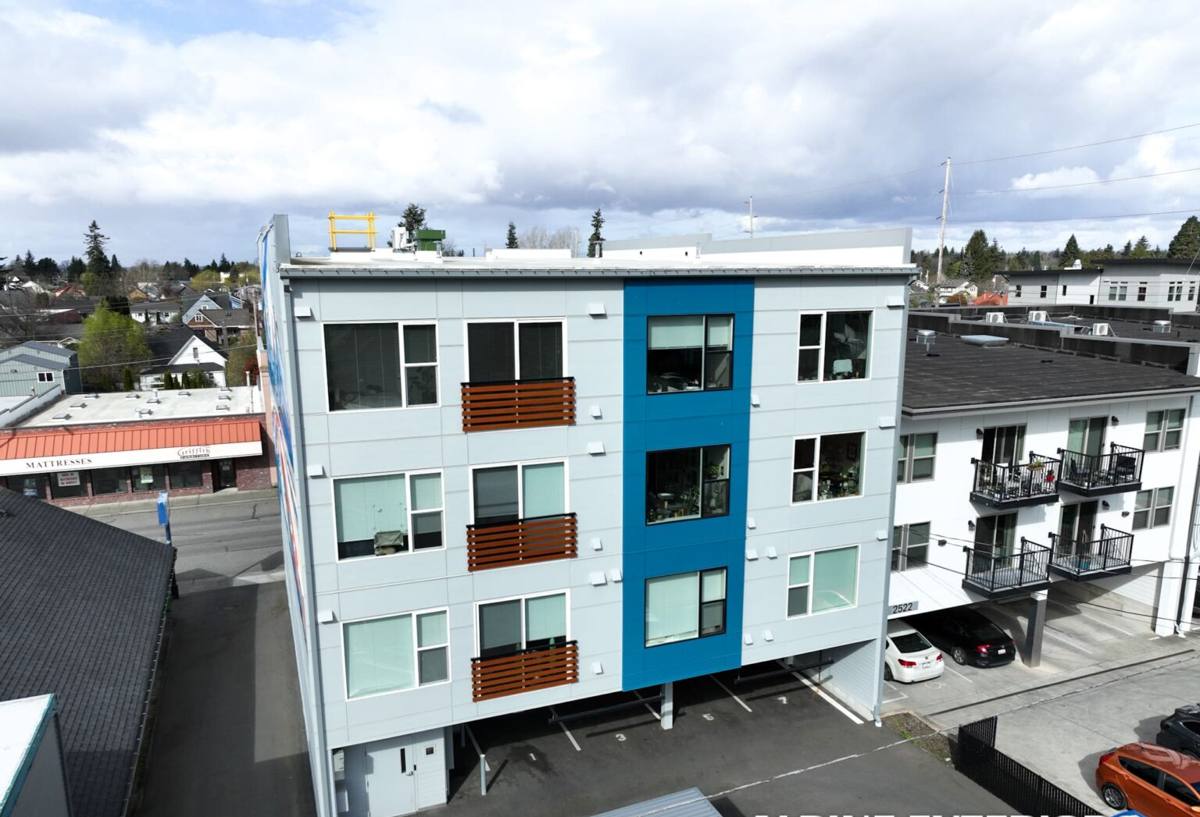
What Sehome's Climate Actually Does to a New Window Install
Bellingham's exterior contractors deal with a fairly consistent set of stressors across the whole city, but a few show up harder in neighborhoods like Sehome that sit near the water and get more exposure off the bay.
Salt Air
Marine air carries salt that accelerates corrosion on fasteners, flashing, and window hardware over time. It's not dramatic — nobody's window frame rusts through in year two — but it does mean material choice and flashing metal compatibility matter more here than they would twenty miles inland.
Driving Rain
Whatcom County storms regularly push rain sideways into wall assemblies, not just down onto rooflines. A window that's watertight when tested with a garden hose straight-on can still leak under wind-driven rain if the flashing details around the rough opening weren't built for lateral water pressure. This is the single most common source of water intrusion we see traced back to new-construction window installs that were rushed.
Long Moss Season
Extended damp periods mean anything that traps moisture against wood — a missing sill pan, a reversed flashing lap, caulk used as a substitute for proper flashing — becomes a slow-motion problem. Moss and mildew showing up on sills or trim within the first couple of wet seasons is usually a sign water is getting behind the window, not just sitting on top of it.
None of this means new construction in Sehome needs exotic materials. It means the flashing sequence and installation details need to be built for this climate specifically, not generic best practice pulled from a drier region.
New-Construction Windows vs. Replacement Windows — Why the Job Is Different
Homeowners and even some builders sometimes assume "installing a window" is one job. It isn't. New-construction installs happen with open stud bays and full access to the water-resistive barrier (WRB), while replacement installs work around existing siding and trim. That difference changes almost every step.
| Factor | New-Construction Install | Replacement Install |
|---|---|---|
| Access to framing | Full — studs, sheathing, WRB all exposed | Limited — working through existing opening |
| Flashing method | Full sill pan, WRB integration, nailing fin flashed in shingle-lap sequence | Flush-fin or block-frame methods adapted to existing siding |
| Window type used | Nail-fin (flanged) windows, typically | Insert/replacement windows, often flangeless |
| Best time to catch defects | Before siding goes on — cheap to fix | After the fact — expensive to fix |
| Long-term risk if done wrong | Water intrusion into wall cavity, hidden rot | Similar, but often masked longer by existing trim |
The upside of new construction is that it's the cheapest point in a home's life to get this right. There's no siding to cut into, no trim to disturb, no guessing what's behind the wall. The downside is that mistakes made here get sealed behind siding and drywall and often aren't discovered until there's a stain on an interior wall or trim, years later.
What a Correct New-Construction Window Install Actually Involves
A window box sitting square in a rough opening looks the same whether it was flashed correctly or not — until it rains sideways for a few years. Here's what separates a correct install from one that just looks finished:
- Sill pan flashing at the base of the rough opening, sloped or with a back dam, so any water that does get past the window drains back out instead of pooling on the sill
- WRB integration in proper shingle-lap order — housewrap or building paper overlapping the flashing at the sides and top so water is always directed outward and downward, never trapped behind a lap that runs the wrong way
- Correctly lapped jamb and head flashing, tied into the WRB with compatible tape or self-adhered flashing membrane — not just caulk
- Nailing fin fastened per manufacturer spec, not just "enough nails to hold it up" — under- or over-fastening both cause problems
- Backer rod and sealant at the interior air seal, separate from the exterior water seal — these are two different jobs and conflating them is a common shortcut
- Square, plumb, and level set before fastening — an out-of-square window stresses the frame, binds hardware, and can compromise the seal over time
- Compatible fasteners and flashing metals given the salt-air exposure common in Sehome and other bay-adjacent parts of Bellingham
Every one of those steps is invisible once siding goes on. That's exactly why they need to be done right the first time — there's no cheap way to inspect them again later.
How We Approach a Sehome New-Construction Window Job
The process doesn't change dramatically house to house, but the sequencing and attention to flashing detail is where quality actually gets decided.
1. Rough Opening Check
Before any window goes in, we verify the rough openings are square, correctly sized for the specified window unit, and that sheathing and WRB are in good condition. Catching a framing error here costs minutes; catching it after windows are set costs hours.
2. Sill Pan and Flashing Install
We build the sill pan and flashing sequence to handle Whatcom County's wind-driven rain specifically — this is the step that gets shortcut most often on rushed builds, and it's the one that determines whether the window leaks in year three or stays dry for the life of the house.
3. Window Set
Windows are set plumb, level, and square, then fastened per manufacturer specification along the nailing fin.
4. Flashing Tie-In
Jamb and head flashing get integrated into the WRB in correct shingle-lap order, so the whole wall assembly sheds water as one system rather than relying on the window alone.
5. Interior Air Seal
Backer rod and sealant go in on the interior side as a separate air-seal step, not a substitute for the exterior water management.
6. Final Check
We walk every opening before siding closes it up, because that's the last point anyone can visually confirm the flashing is right.
Choosing Materials for a Bay-Adjacent Neighborhood
Sehome's proximity to the water doesn't require unusual products, but it's worth understanding the trade-offs when specifying windows for new construction here.
Frame Material
Vinyl remains the most common choice for new construction in Whatcom County builds because it doesn't corrode and handles moisture well, though it expands and contracts more with temperature swings than fiberglass. Fiberglass costs more but holds paint and dimensional stability better over time, which some homeowners prefer for larger openings. Wood-clad windows offer a traditional look but need more attention to maintenance given the area's damp season — the cladding protects the exterior, but any breach in that cladding exposes wood to a climate that doesn't forgive standing moisture. We'll walk through what fits your build and budget rather than push one product line.
Glazing and Performance
Double-pane, low-E glazing is standard for new construction in this climate and meets Washington's energy code requirements. For west- and south-facing openings that catch more direct weather, argon-filled units and a slightly higher-performance glass package are worth the modest upcharge — not for looks, but because those elevations take the brunt of driving rain and wind.
Hardware and Fasteners
Given the salt air common to bay-adjacent Bellingham neighborhoods, we spec corrosion-resistant fasteners and flashing metals rather than whatever's cheapest at the supply house. It's a small cost difference at install time and a meaningful one over twenty years.
What New-Construction Windows Cost — and What Actually Drives the Number
Pricing for a full new-construction window package varies a lot based on quantity, size, and product line, so we won't quote a number without seeing the plans. What we can tell you is what actually moves the price:
| Cost Factor | Why It Matters |
|---|---|
| Number and size of openings | More and larger windows means more material and labor, straightforwardly |
| Frame material | Vinyl is generally the most budget-friendly; fiberglass and wood-clad cost more upfront |
| Glazing package | Standard low-E vs. upgraded argon/higher-performance glass for exposed elevations |
| Custom vs. stock sizes | Non-standard openings require custom units, which add cost and lead time |
| Access and staging | Multi-story builds or tight lots add labor time for safe, careful setting |
| Flashing and WRB condition | Fixing framing or WRB issues before install adds time but avoids much bigger cost later |
We'd rather walk your plans and give you a real number than throw out a range that doesn't mean anything for your specific build.
A Quick Checklist for Homeowners and Builders
If you're managing a build or addition in Sehome and want to make sure the window package is handled correctly, these are worth confirming with whoever's doing the install:
- Is there a sill pan flashing detail at every rough opening, not just caulk at the sill?
- Is the WRB lapped in proper shingle order — top over sides, sides over sill — at every window?
- Are fasteners and flashing metals rated for coastal/marine exposure, not just standard interior-grade hardware?
- Is someone walking and photographing flashing details before siding covers them up?
- Does the glazing package meet Washington energy code for this climate zone?
- Are window sizes and rough openings confirmed against the actual units ordered before framing is finalized?
Any contractor doing this work regularly should be able to answer these without hesitation.
Why a Crew That Already Works Sehome Makes a Difference
New-construction window installation isn't complicated in concept, but it's unforgiving of shortcuts, and it's the kind of work where local experience shows up in the details. A crew that's flashed openings through a full Whatcom County wet season knows how driving rain behaves against bay-adjacent walls, understands what Bellingham's permitting and inspection process expects at framing stage, and has already made — and corrected — the mistakes that show up in this specific climate. That's not something you can fully substitute with a generic install checklist, even a good one. It's also why we'd rather walk your rough openings and flashing plan in person than estimate a job like this sight unseen.
If you're planning new construction or an addition in Sehome and want the window package done right from the framing stage forward, we're happy to take a look and put together a free, no-pressure estimate — just fill out the form below.