 Bellingham Exterior
 Roofing Built for Sehome's Coastal, Moss-Prone Climate
Sehome sits close enough to Bellingham Bay and the Salish Sea that salt-laden air is a real factor in how a roof ages here, not just a coastal cliché. Add Whatcom County's long wet season, driving rain that comes in sideways off frequent windstorms, and the shade and moisture that mature tree canopy and hillside terrain create around much of the neighborhood, and you get a roofing environment that is genuinely harder on materials than a lot of the country deals with. Moss doesn't just grow here — it grows for most of the year, and it grows fast on any roof surface that stays damp and shaded.
A new roof installed for Sehome needs to be evaluated against that reality from the start: how the material sheds wind-driven rain instead of letting it wick sideways under the edges, how well it resists moss and algae staining year after year, and how the ventilation and underlayment system behind it manages the moisture that inevitably works its way into a wet-climate roof system. Get those decisions right and a roof performs for decades. Get them wrong and you're looking at premature granule loss, soft decking, or leaks well before the shingles' rated lifespan is up.
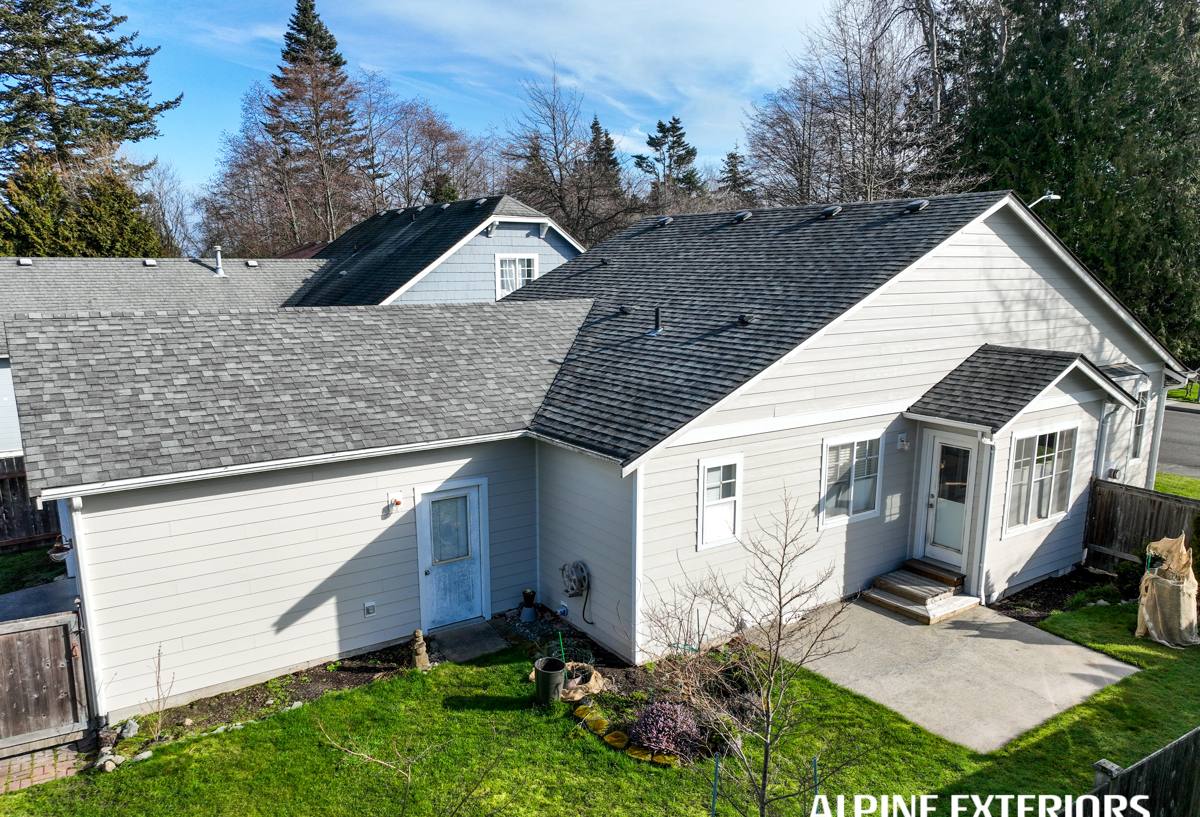
What a Correct Roof Installation Actually Involves
"New roof" sounds simple, but the quality of a roof replacement is decided almost entirely by what happens underneath the material you can see. A roof that looks fine from the street can still be doing the job badly.
Tear-Off and Deck Inspection
We remove the old roofing down to the deck rather than layering over it. That's the only way to actually see the plywood or plank sheathing underneath, which is where years of slow leaks or trapped moisture show up as soft spots, delamination, or rot — especially common on older Bellingham-area homes where ventilation wasn't built to modern standards. Any damaged decking gets replaced before anything new goes down. Installing new roofing over a compromised deck just hides the problem for a while.
Underlayment and Water Protection
In a climate that gets sustained, wind-driven rain, the underlayment layer matters as much as the shingle or panel on top. We use a synthetic or self-adhering underlayment system suited to the pitch and exposure of the roof, with self-adhering ice-and-water membrane at the eaves, valleys, and any low-slope transitions — the spots where water is most likely to back up or drive in sideways during a heavy storm.
Flashing Details
Chimneys, skylights, vent pipes, and roof-to-wall intersections are where the majority of roof leaks actually start, not in the open field of shingles. Correct flashing means new metal at every one of those transitions, properly step-flashed and counter-flashed rather than sealed over with caulk as a shortcut. Caulk fails; properly lapped metal doesn't.
Ventilation
A roof deck that can't breathe traps moisture from inside the house, which shortens the life of the roofing material from underneath and feeds the exact conditions moss and mold need to take hold. We balance intake at the eaves with exhaust at the ridge so the attic space actually moves air instead of just sitting humid.
Choosing a Roofing Material for a Sehome Home
There's no single "best" roofing material — the right choice depends on your roof's slope, your home's style, your budget, and how much long-term maintenance you're willing to take on. Here's how the common options stack up specifically against Bellingham's rain, wind, and moss exposure.
| Material | Moss & Algae Resistance | Wind & Rain Performance | Typical Lifespan | Maintenance |
|---|---|---|---|---|
| Architectural (laminate) asphalt shingle | Good with algae-resistant granules; still needs periodic moss removal in shaded areas | Strong wind ratings when installed with proper nailing pattern | 25–30 years | Moderate — periodic cleaning, gutter checks |
| 3-tab asphalt shingle | Fair; more prone to visible staining over time | Lower wind rating than architectural shingles | 15–20 years | Moderate to higher |
| Standing seam metal | Excellent — smooth surface sheds moss and debris | Excellent for wind and heavy rain shedding | 40–60 years | Low |
| Composite / synthetic shake or slate | Good, product-dependent | Strong; engineered for wind uplift resistance | 30–50 years | Low to moderate |
| Cedar shake | Poor without diligent upkeep — organic material feeds moss growth | Good when properly installed, but seams are more vulnerable to wind-driven rain | 20–30 years with maintenance | High — regular treatment and moss control required |
For most Sehome homes, architectural asphalt shingle remains the practical middle ground — good performance, reasonable cost, and a wide range of colors that work with the neighborhood's mix of home styles. Metal roofing is worth serious consideration on steeper, heavily shaded lots where moss has been a chronic problem, since it gives moss almost nothing to hold onto. We'll walk your specific roof and give you an honest recommendation rather than steering you toward one product by default.
Moss, Algae, and Salt Air: The Long-Term Threats
Two slow-moving problems do more damage to roofs in this area than storms do: moss and airborne salt exposure.
Moss holds moisture directly against the roofing material, works its way under shingle tabs as it grows, and can lift edges enough to let wind-driven rain in underneath. It thrives on north-facing slopes, under tree cover, and anywhere shade keeps a roof from drying out between rains — conditions that describe a lot of Sehome's tree-lined, hillside lots. Algae-resistant shingles, adequate ventilation, and keeping overhanging branches trimmed back all reduce how fast it returns, but no roofing material is permanently moss-proof in this climate. Periodic gentle cleaning (never pressure washing, which strips granules and shortens shingle life) is part of realistic roof maintenance here.
Salt air is the quieter issue. It accelerates corrosion on exposed metal — fasteners, flashing, vent caps, and gutter hardware — faster than it would inland. That's why material selection for anything metal on a Sehome roof should account for corrosion resistance, not just cost.
Our New Roof Installation Process
- On-site inspection and estimate. We assess your existing roof, decking condition (where visible), ventilation, and any problem areas, and give you a clear, itemized estimate.
- Material selection. We go over the options that fit your home, budget, and how much long-term maintenance you want to take on.
- Scheduling around the weather. Roofing work depends on dry conditions to install correctly, so we plan around Bellingham's forecast rather than rushing a job into the rain.
- Tear-off and deck repair. Old roofing comes off, decking is inspected, and any damaged sections are replaced.
- Underlayment, flashing, and ventilation installation. The systems that do the real waterproofing work go in before the finish material.
- New roofing installation. Installed to manufacturer specifications so your warranty stays intact.
- Cleanup and final walkthrough. Job site cleared, magnetic sweep for stray nails, and a walkthrough so you know exactly what was done.
Signs Your Roof Needs Replacing, Not Another Repair
- Shingles that are cupping, curling, or losing granules in visible patches
- Moss or algae staining that returns quickly after cleaning, even in the same season
- Soft or spongy spots when walking the roof, or sagging visible from the ground
- Daylight visible through the attic roof deck, or damp insulation after storms
- Flashing that's rusted, cracked, or separating around chimneys and vents
- Granules collecting in gutters in noticeably increasing amounts
- A roof approaching or past its material's expected lifespan, even without obvious damage
- Multiple past repairs in different areas rather than one isolated issue
One or two of these on their own might mean a targeted repair is still worth it. Several at once, especially on a roof already past the midpoint of its expected life, usually means replacement is the more cost-effective path.
Why Hiring a Crew That Already Works in Sehome Matters
A roof installed by a crew unfamiliar with this specific climate is guessing at things that a locally experienced crew already knows: how much ice-and-water membrane a given slope actually needs given typical Whatcom County rain volume, which ventilation setups actually keep moss from coming back on shaded lots, and how Bellingham's building department expects roofing permits and inspections to be handled. That familiarity shows up in fewer callbacks and a roof that's set up to handle the specific conditions it will face for the next few decades, not generic assumptions from a drier climate.
It also means a crew that's around after the job is done — for warranty questions, for a maintenance question three years down the line, or simply because we're still working in the neighborhood and have a reputation to stand behind here.
What to Expect on Cost
Roof replacement cost depends on roof size and pitch, how many layers of old roofing need to come off, decking repair needs, material choice, and roof complexity (valleys, dormers, chimneys, and skylights all add labor). Rather than quote a number that won't reflect your actual roof, we provide a detailed, itemized estimate after an on-site inspection so you know exactly what you're paying for and why.
If your Sehome home's roof is showing its age or you're just planning ahead, we're happy to take a look and give you a straightforward, no-pressure estimate — fill out the form below to get started.