 Bellingham Exterior
 Roof Repair Built for Fairhaven's Coastal Conditions
Fairhaven sits close enough to Bellingham Bay that its homes take a different kind of weathering than roofs just a few miles inland. Salt-laden air moves through the neighborhood on a regular basis, driving rain comes in sideways off the water during winter storms, and the tree cover that gives the area its character also means shade, damp debris, and a long moss season that never fully lets up. A roof here doesn't fail the same way a roof in a drier climate does — it fails from the slow accumulation of moisture, organic growth, and metal fatigue. Repairing it correctly means understanding that pattern, not just patching whatever is leaking today.
This page covers what roof repair actually looks like for a Fairhaven home: the specific damage this climate causes, what a proper repair involves, and how we approach the work when we're on your roof.
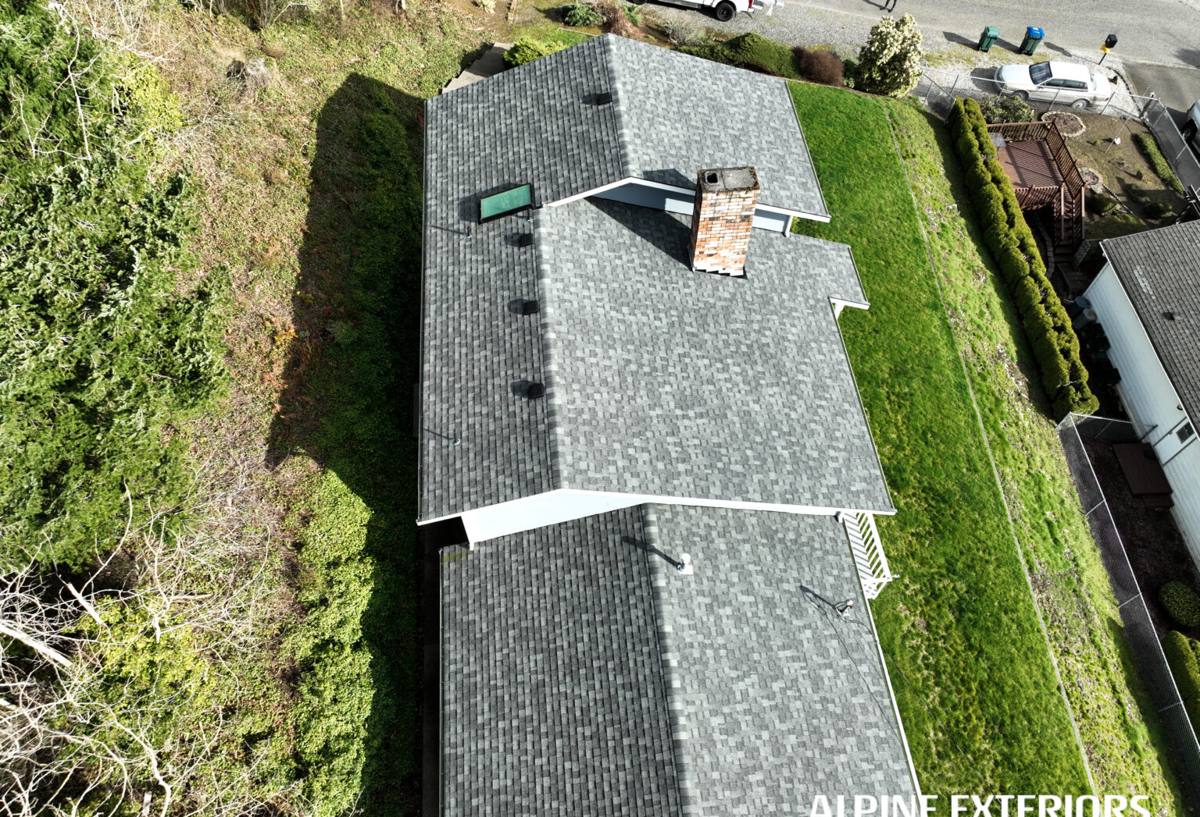
Why Fairhaven Roofs Age Differently
Salt Air and Metal Fatigue
Homes near Bellingham Bay deal with airborne salt that settles on flashing, fasteners, and any exposed metal on the roof. Over years, that accelerates corrosion on nails, valley flashing, and vent boots well before the shingles themselves are due for replacement. A roof that looks fine from the ground can have flashing that's already compromised underneath.
Driving Rain and Wind-Driven Water
Storms off the water don't just fall straight down — they push rain sideways under shingle edges, around chimneys, and into any gap in the flashing. This is why so many Fairhaven leaks show up at valleys, roof-to-wall transitions, and skylight edges rather than in the open field of the roof. Standard nail patterns and flashing details that work fine in calmer conditions can come up short here.
Moss, Shade, and Moisture Retention
Fairhaven's tree canopy is part of what makes the neighborhood pleasant to live in, but it also means roofs stay shaded and damp longer after rain than roofs in open, sun-exposed areas. That extended dampness is exactly what moss needs to take hold. Moss doesn't just sit on top of shingles — it lifts the edges as it grows, holds water against the roof surface, and works its way into seams over a season or two if it's left alone.
Common Fairhaven Roof Problems We See
- Moss colonies lifting shingle edges along north-facing and shaded slopes
- Corroded valley flashing letting water track sideways into the attic
- Wind-driven rain finding its way under shingles near chimneys and dormers
- Granule loss and premature shingle wear on southwest-facing slopes exposed to storm winds
- Clogged gutters and downspouts backing water up under the roof edge
- Rust staining and pitting on exposed fasteners and pipe boots
What a Correct Roof Repair Actually Involves
A lot of roof repairs fail within a year or two because they treat the symptom instead of the cause. If a ceiling stain shows up, the fastest fix is to seal the spot where water is currently showing through — but that's rarely where the water is actually getting in. Water travels along the underlayment and decking before it ever reaches a spot you can see.
Diagnosis Before Repair
A proper repair starts with tracing the leak to its actual entry point, which usually means inspecting flashing, valleys, penetrations, and the roof deck itself rather than just the ceiling below. We look at the whole system — shingles, underlayment, flashing, ventilation — because a leak is often the result of two or three small failures compounding, not one obvious hole.
Matching the Repair to the Damage
Once we know the cause, the repair should match its severity. A section of moss-lifted shingles might need a limited tear-off and re-shingle of that slope. Corroded flashing usually needs full replacement, not caulk over the rust. Soft or delaminating decking underneath has to be replaced — patching shingles over rotten sheathing just hides a structural problem that will keep getting worse.
Moss and Debris Removal Done Correctly
Moss removal matters, but how it's done matters just as much. Aggressive scraping or high-pressure washing strips granules and shortens the life of otherwise sound shingles. We remove moss with methods that clear the growth without damaging the shingle surface, then address the underlying moisture and shade conditions so it doesn't come back as fast.
Repair vs. Replacement: How We Make That Call
Not every roof issue in Fairhaven needs a full replacement, and not every roof can be patched indefinitely either. The table below outlines the general factors we weigh.
| Factor | Leans Toward Repair | Leans Toward Replacement |
|---|---|---|
| Roof age | Under roughly 15 years | Near or past manufacturer lifespan |
| Extent of damage | Isolated to one slope or area | Spread across multiple slopes |
| Decking condition | Solid, no soft spots | Soft, delaminated, or water-stained |
| Flashing condition | Localized corrosion | Widespread rust or failed seams |
| Moss history | First or occasional occurrence | Repeated growth despite cleaning |
| Granule loss | Minimal, isolated | Heavy loss, bald patches visible |
We'll always give you a straight answer on which side of that line your roof falls on, along with the reasoning, not just a recommendation.
Our Process on Fairhaven Roofs
1. Inspection and Documentation
We walk the roof (or use ladder and drone inspection where a walk-on inspection isn't safe or appropriate) to document the actual condition — shingles, flashing, valleys, vents, and any decking access points we can check. We'll show you exactly what we found before recommending anything.
2. Honest Scope and Written Estimate
You get a written scope of what needs to happen and why, with repair and — if relevant — replacement options laid out side by side. No pressure to go bigger than the roof actually needs.
3. The Repair Itself
Work is done to match the existing roofing system where possible, with attention to the details that matter most in this climate: proper flashing overlap, correctly sealed penetrations, and fastening that accounts for wind exposure near the water.
4. Cleanup and Walkthrough
We clear debris, old materials, and any moss removed from the roof, then walk the completed work with you so you know exactly what was done.
Materials and Details That Matter in This Climate
Given the salt air and rain exposure, a few details make a real difference in how long a repair lasts:
- Corrosion-resistant flashing and fasteners rather than standard-grade materials
- Ice-and-water shield or equivalent underlayment reinforcement at valleys and eaves, where wind-driven rain is most likely to intrude
- Proper attic and roof ventilation, since trapped moisture underneath the roof deck compounds everything the exterior weather is already doing
- Sealants and adhesives rated for sustained damp conditions, not just fair-weather installation
We make these choices as our standard practice on Fairhaven repairs, not as an upsell — cutting corners here just means a return trip in a year or two.
What Homeowners Can Check Between Professional Visits
You don't need to get on the roof to catch early warning signs. From the ground or attic, a homeowner can reasonably check for:
- Moss visible along roof edges or shaded slopes
- Granules collecting in gutters or at the base of downspouts
- Water stains or discoloration on attic rafters or ceiling drywall
- Sagging or uneven rooflines when viewed from the street
- Gutters overflowing during rain instead of draining cleanly
- Daylight visible through the roof deck from inside the attic
Any of these are worth a professional look before the next storm season, especially given how quickly moisture-related damage can spread once it gets a foothold in this climate.
Why a Local Fairhaven Crew Matters
Roof repair isn't just about technique — it's about knowing what a specific neighborhood's conditions actually do to a roof over time. A crew that regularly works in Fairhaven and the surrounding Bellingham area already knows which slopes tend to hold moss, which flashing details fail first near the water, and how Whatcom County's wet season timing affects when repairs should happen versus wait. That local pattern recognition means fewer surprises, more accurate diagnoses, and repairs built for the conditions your roof actually faces — not generic conditions from somewhere drier.
Being local also means we're a short drive away if something needs a follow-up look after the next big storm, not a call center connecting you to whoever's available.
Get a Free, No-Pressure Estimate
If you're dealing with a leak, visible moss, or just want an honest look at your roof's condition before the next rainy stretch rolls in, we're happy to take a look. The estimate is free, there's no pressure to act on anything beyond what your roof actually needs, and you'll get a clear explanation of what we find. Use the form below to get started.