 Bellingham Exterior
 Fairhaven Roofs Face a Tougher Climate Than Most People Realize
Fairhaven sits close to Bellingham Bay, and that proximity to saltwater changes what a roof has to deal with day in and day out. Salt-laden air accelerates corrosion on exposed metal fasteners, flashing, and vent components faster than it does further inland. Add in Whatcom County's driving winter rain — the kind that comes sideways off the water during a southwesterly blow — and you've got a roof that has to shed water under real wind pressure, not just gravity. Then there's the moss. Between the marine humidity, the tree cover common throughout the neighborhood, and a wet season that can stretch from October well into May, moss and moisture-loving growth get a long runway to take hold on any roof that isn't shedding water and drying out efficiently.
None of this means a roof in Fairhaven needs to be exotic or overbuilt. It means the installation details — the ones nobody sees once the job is done — matter more here than they would in a drier, calmer climate. That's the difference between a roof that looks fine for a few years and one that actually performs for its full service life.
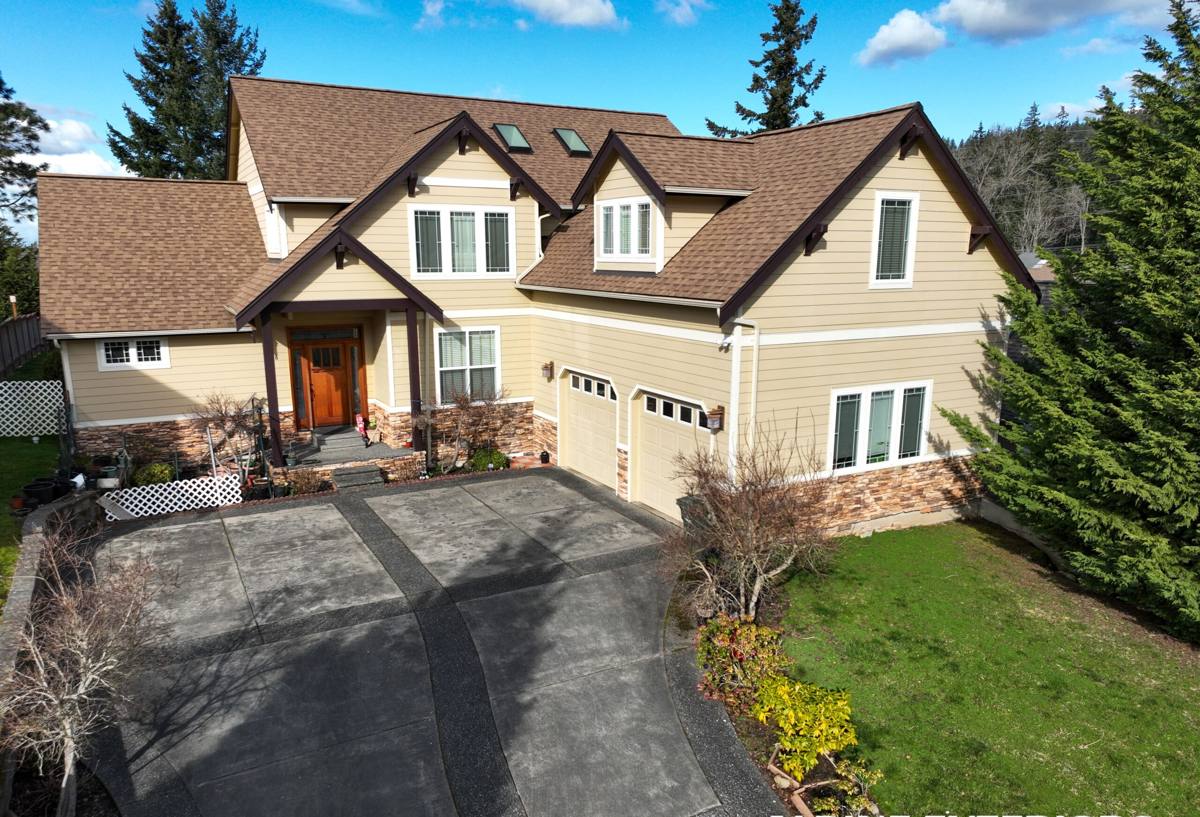
Signs Your Fairhaven Home Needs a New Roof, Not Another Patch
Roof repairs have their place, but there's a point where patching becomes a way of spending money without solving the underlying problem. Homeowners in this part of Bellingham typically start looking at full replacement when they see:
- Granule loss heavy enough that shingles look patchy or the gutters are full of grit
- Curling, cupping, or cracked shingles across multiple slopes, not just one problem area
- Moss or dark streaking that keeps coming back within a season or two of cleaning
- Soft spots, sagging, or visible daylight in the attic where there shouldn't be any
- Repeated leaks around the same penetration — chimney, skylight, or vent — even after repair
- A roof that's simply reached the end of its material's realistic lifespan, especially if it was installed with builder-grade materials or minimal flashing work
If you're only dealing with one of these, a repair may still make sense. If you're seeing two or three together, it's usually a sign the roof system as a whole — decking, underlayment, and covering — is failing rather than one isolated spot.
What Goes Into a Correct New Roof Installation
A new roof is only as good as the layers nobody sees. In a climate like this one, cutting corners on any of the following is where roofs quietly fail years before they should.
Tear-Off and Deck Inspection
We remove the old roofing down to the deck rather than layering over it. That's the only way to actually see the plywood or plank sheathing underneath, which is where hidden rot from years of slow moisture intrusion usually shows up first. Any soft, delaminated, or water-stained decking gets replaced before anything new goes down — installing new shingles over compromised decking just hides the problem for another buyer or another season.
Underlayment and Water Protection
Given how much of the year Whatcom County spends under active rainfall, we treat underlayment as a real second line of defense, not a formality. That includes self-adhered ice-and-water membrane at the eaves, valleys, and any low-slope transitions where wind-driven rain is most likely to work its way backward under the covering.
Flashing at Every Penetration
Chimneys, skylights, vents, and wall-to-roof transitions are where the vast majority of leaks actually start — not in the open field of shingles. We use new step flashing, counter-flashing, and pipe boots at every penetration rather than reusing old flashing or relying on sealant alone. Sealant fails; properly lapped metal flashing doesn't rely on that failure point.
Ventilation That Matches the Home
A roof that can't breathe traps moisture in the attic, which shortens the life of the decking and the covering from underneath — often before any problem is visible from the outside. We check intake at the eaves and exhaust at the ridge or through vents, and balance the two, rather than assuming whatever was there before was sized correctly.
Choosing a Roofing Material for a Marine Climate
There's no single "best" roofing material — the right choice depends on your home's slope, style, budget, and how much long-term maintenance you want to take on. Here's how the common options stack up for a home exposed to salt air and heavy seasonal moisture:
| Material | Moisture & Moss Resistance | Maintenance | Typical Lifespan |
|---|---|---|---|
| Architectural asphalt shingle | Good with proper ventilation; algae-resistant granules help slow staining | Periodic moss/debris removal | 25–30 years |
| Standing seam metal | Excellent — sheds water fast, minimal surface for moss to grip | Low; occasional fastener/coating check | 40–50+ years |
| Synthetic composite (shake-look) | Very good; doesn't absorb moisture like wood | Low | 30–50 years |
| Cedar shake | Moderate; needs consistent airflow and upkeep to resist moss and rot | Higher — regular treatment and inspection | 20–30 years with upkeep |
We don't push cedar shake as a default choice for homes this close to the bay. It can look great, but it requires a level of ongoing maintenance and airflow management that most homeowners don't want to sign up for, and it's less forgiving of the long wet stretches this area gets. If you love the look, synthetic composite products now get close to the appearance with a fraction of the maintenance burden — that's a fair trade-off worth discussing, not a knock on cedar as a material.
Our Installation Process, Start to Finish
- On-site assessment — we look at the existing roof, attic ventilation, and any problem areas before quoting anything
- Written estimate — material options, scope, and price laid out clearly, no pressure to decide on the spot
- Scheduling around weather — we plan tear-off in windows that avoid leaving your home exposed to an incoming system
- Tear-off and deck inspection — full removal, with any damaged sheathing replaced and documented
- Underlayment, flashing, and ventilation installed — the layers that determine whether the roof actually performs
- New roofing installed to manufacturer specification — correct nailing pattern, exposure, and fastening for wind and rain exposure
- Cleanup and magnetic sweep — job site and yard cleared of debris and stray fasteners
- Final walkthrough — we go over the finished roof and warranty coverage with you directly
Why a Crew That Already Works Fairhaven Matters
Roofing crews who work across a wide, varied territory tend to treat every job the same way. A crew that regularly works in and around Fairhaven has a better feel for the specifics that actually affect the outcome: how tree canopy in parts of the neighborhood affects debris load and moss growth, how steep or hillside lots change staging and safety setup, and how salt exposure near the water shifts which fastener and flashing metals hold up best over time. That local familiarity shows up in fewer surprises during the job and a roof that's built for the conditions it will actually face, not a generic specification pulled from a catalog.
It also matters for permitting and inspection. Bellingham and Whatcom County have their own permitting requirements for roof replacement, and a crew that pulls permits here regularly moves through that process faster and with fewer hiccups than one working from out of the area.
Cost Factors for a Fairhaven Roof Replacement
Every roof is different, but the same handful of factors drive most of the price difference between jobs. Rather than quote a number that won't mean much without seeing your roof, here's what actually moves the estimate:
| Factor | Why It Affects Cost |
|---|---|
| Roof size and number of facets | More material and more edges, valleys, and penetrations to flash |
| Pitch and access | Steeper roofs and difficult access require more safety setup and labor time |
| Layers of existing roofing | Multiple old layers mean more tear-off labor and disposal |
| Decking condition | Rotted or delaminated sheathing needs replacement before new roofing goes down |
| Material choice | Asphalt, metal, and synthetic products carry different material and labor costs |
| Ventilation upgrades | Adding or correcting intake/exhaust venting adds labor but pays off in roof longevity |
Most asphalt shingle replacements on a typical Fairhaven home land in a broad mid-range for the region; metal and premium synthetic products run higher up front but can mean decades longer before the next replacement. We'll walk you through where your specific roof falls once we've actually looked at it.
Protecting Your New Roof Through Moss Season
A correctly installed roof will hold up on its own, but a small amount of seasonal upkeep goes a long way in this climate. We recommend:
- Clearing gutters and downspouts before the fall rains start in earnest
- Removing overhanging branches that keep shaded areas of the roof damp longer than the rest
- Having moss or algae growth treated early rather than letting it establish over a full wet season
- Checking attic ventilation isn't blocked by insulation or storage after any attic work
- Scheduling a quick visual inspection after major windstorms, which is when flashing and fasteners are most likely to shift
None of this requires climbing on the roof yourself — most of it can be checked from the ground or handled during a routine service visit.
If your roof is showing its age or you're just planning ahead, we're happy to take a look and give you a straight answer about what it needs. Fill out the form below for a free, no-pressure estimate on new roof installation for your Fairhaven home.