 Bellingham Exterior
 Storm Damage Roofing in Fairhaven: What Makes This Neighborhood Different
Fairhaven sits close enough to Bellingham Bay that roofs here take on a different kind of wear than homes further inland in Whatcom County. Salt-laden air moves in off the water, driving rain comes through sideways during winter storm systems, and the tree cover that gives the neighborhood its character also means more moss, more shade, and slower drying times after every storm. None of that is a defect in the neighborhood — it's just the climate homeowners here are working with, and it changes what "storm damage repair" actually needs to look like.
A repair crew that mostly works subdivisions on the east side of Bellingham or further out in the county isn't necessarily wrong about roofing — they just may not be tuned in to what salt air does to fasteners and flashing over time, or how a moss-heavy roof hides water intrusion longer than a clean one. That local pattern recognition is a big part of what you're paying for when you hire a crew that already works Fairhaven regularly.
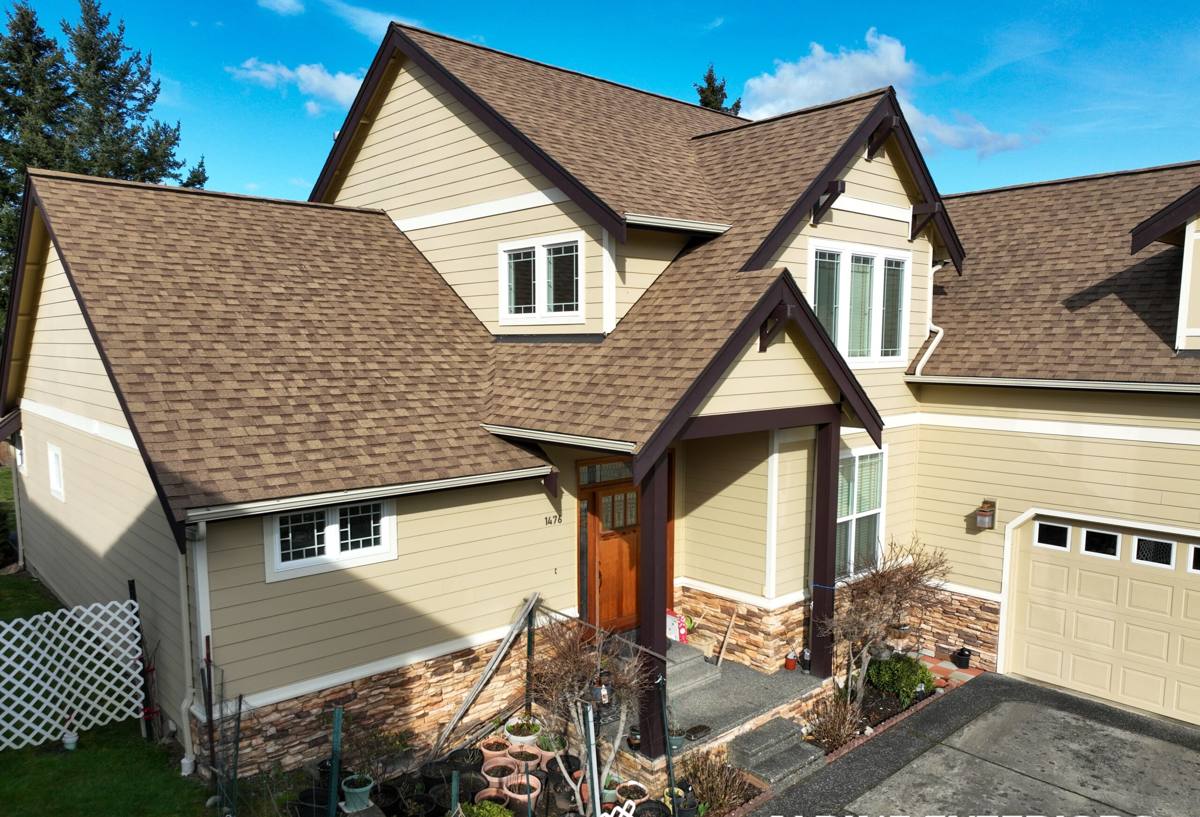
What Counts as Storm Damage on a Fairhaven Roof
Storm damage isn't always a dramatic hole in the roof deck. In our experience working this part of Bellingham, it's more often one of these:
- Wind-lifted or creased shingles where the sealant strip has broken loose, especially along ridgelines and roof edges exposed to bay winds
- Missing or displaced ridge cap shingles after a strong southwesterly blow
- Impact damage from fallen branches or debris, common under the mature tree canopy in and around Fairhaven
- Flashing pulled loose or bent at chimneys, skylights, and roof-to-wall transitions
- Water staining or active leaks inside the attic or ceiling that only shows up during or after driving rain
- Granule loss and soft spots that aren't from a single storm but from cumulative saturation over a wet moss season
That last one matters. A lot of what looks like "storm damage" after a big weather event is actually storm damage that's been building for months — a small gap in flashing or a cracked shingle that finally lets water through during a heavy rain event. Part of our job is telling you honestly which one you're dealing with.
Salt Air and Fastener Corrosion
Homes closer to the water see accelerated corrosion on exposed metal — nail heads, flashing, gutter hardware, and vent boots. It's slow, and it's not something you notice until a fastener finally lets go in a windstorm. When we're repairing storm damage in Fairhaven, we're checking fastener condition around the repair area, not just patching the visible damage, because a repair fastened with already-corroding hardware won't hold through the next storm.
How We Approach a Storm Damage Repair Call
1. Inspection First, Before Any Talk of Scope
We walk the roof (or use a pole camera and ladder inspection when conditions are unsafe to walk) and check the attic from the inside where accessible. Storm damage often has an entry point that's separate from where the water shows up on your ceiling — water travels along rafters and sheathing before it drips somewhere visible, so we trace it back rather than just patching where the stain is.
2. Emergency Tarping When Needed
If there's active water intrusion and the repair can't happen immediately — because of ongoing weather, material availability, or insurance scheduling — we'll get a temporary tarp or dry-in secured so the damage doesn't spread while you wait. This is a stopgap, not a fix, and we're upfront about that.
3. Documentation
We photograph the damage before we touch anything. If you're filing an insurance claim, this documentation is often more useful to your adjuster than anything we say in a phone call — it shows the damage in context, not just a close-up of the repaired area after the fact.
4. The Repair Itself
Scope depends entirely on what the inspection finds. Sometimes it's a handful of shingles and a flashing reseal. Sometimes it's a full section of decking that needs to come out because it's been saturated long enough to lose structural integrity. We'll show you the difference and explain why, rather than defaulting to the bigger job.
5. Follow-Up
Because Fairhaven gets enough driving rain events in a normal winter to test a repair fairly quickly, we're comfortable coming back to check a repair after the next significant storm if you want that peace of mind.
Storm Damage Types and What Each One Typically Requires
| Damage Type | Typical Cause Locally | What the Repair Usually Involves |
|---|---|---|
| Lifted or creased shingles | Sustained wind off the bay, aging sealant strips | Shingle replacement, resealing tabs, spot-check surrounding sealant |
| Missing ridge cap | High gusts during winter storm systems | Ridge cap replacement matched to existing profile and color |
| Flashing failure | Corrosion, thermal movement, prior improper installation | Remove and reflash chimney, skylight, or wall transition |
| Impact damage | Falling branches or debris under tree cover | Deck inspection first, then shingle and possibly sheathing replacement |
| Slow moisture intrusion | Moss buildup holding water against shingles over a wet season | Moss removal, shingle assessment, possible underlayment repair |
Cost for any of these depends on how far the damage extends once we're actually up there — a repair that looks like three shingles from the ground sometimes turns out to be a section of compromised decking underneath, and vice versa. We'll always show you what we find before doing work beyond the original scope.
Materials We Use for Storm Repairs
For patch and repair work, matching the existing roof matters more than it does on a full replacement — mismatched shingle color or profile is one of the most common complaints homeowners have after a rushed storm repair. We keep this in mind when sourcing materials and will tell you honestly if an exact match isn't available, rather than installing something that will stand out.
On flashing, we favor materials and installation methods that hold up to sustained coastal moisture rather than whatever installs fastest. That's a professional standard we apply because of what this climate does to a roof over years, not a knock on any particular manufacturer — different flashing and underlayment products have different moisture behavior and maintenance needs, and we choose based on what performs well close to the water.
Insurance Claims for Storm Damage
Most homeowner policies cover sudden storm damage — wind, falling debris, that kind of thing — but usually exclude damage from gradual wear like long-term moss buildup or a roof that was already past its service life. This is why an honest inspection matters before you file a claim: we'll tell you which category your damage falls into so you're not surprised by a denial, and we'll give you documentation that supports whichever category it actually is.
We're happy to meet your adjuster on site if that's useful, and we can walk through the estimate with you so you understand what's included and why.
Is It an Emergency? A Quick Checklist
Not every storm-related roof issue needs same-day attention, but some do. Use this as a rough guide:
- Active dripping or water spreading on an interior ceiling — treat as urgent, call right away
- Visible daylight through the roof deck from the attic — urgent
- A section of shingles or a tarp-worthy area of decking exposed — urgent, especially if more rain is forecast
- Missing shingles with no visible interior leak yet — schedule promptly, doesn't always require an emergency callout
- Granule loss, minor moss, or cosmetic wind damage with no leak — schedule a standard inspection
- Uncertain whether something you saw from the ground is actual damage — worth a quick inspection call rather than waiting for the next storm to make it worse
Why a Crew That Already Works Fairhaven Matters
Fairhaven's mix of older homes, mature trees, and proximity to the water means the roofs here age differently than roofs in newer, more open subdivisions elsewhere in Bellingham. A crew that regularly works this neighborhood has already seen how a given roof style holds up to a decade or two of salt air and driving rain, which flashing details tend to fail first, and how aggressive the moss really gets on a shaded north-facing slope near the water. That's not something you can fully substitute with a generic storm damage checklist — it comes from doing the work here repeatedly.
We also understand that some homes in and around Fairhaven's historic areas may have aesthetic considerations worth respecting during a repair, even where no formal review is required — matching rooflines and materials thoughtfully rather than treating every repair as purely functional.
Preventing the Next Storm From Doing the Same Damage
A storm repair is a good moment to address the conditions that made the damage worse than it needed to be. If moss contributed to the problem, we'll talk about a moss treatment and removal schedule suited to a shaded, coastal lot. If corroding fasteners or aging flashing were part of the failure, we'll flag other areas of the roof likely to follow the same pattern before they turn into next winter's emergency call. None of this is upselling for its own sake — it's the difference between fixing what broke and fixing what's likely to break next.
If a recent storm has left your Fairhaven roof with missing shingles, a leak, or damage you're not sure how to categorize, we're glad to take a look and give you a straightforward, no-pressure estimate — just fill out the form below to get started.