 Bellingham Exterior
 Deck Replacement in Fairhaven: Building for Bellingham's Climate, Not Against It
Fairhaven's older homes and newer infill alike share one thing in common: decks here take a beating that inland properties never see. Salt-laden air off the bay, driving rain that comes in sideways off Puget Sound, and a moss season that can stretch from October well into May all work on wood, fasteners, and footings year after year. A deck that was built without those conditions in mind rarely makes it past ten or twelve years before it needs more than a patch job. Replacing it correctly, with materials and details matched to this specific stretch of Whatcom County, is what actually buys you decades instead of years.
This page is about one job, done right, in one neighborhood: full deck replacement for Fairhaven homes. Not a repair, not a re-deck-over-old-framing shortcut — a real replacement that starts at the ledger and footings and works up from there.
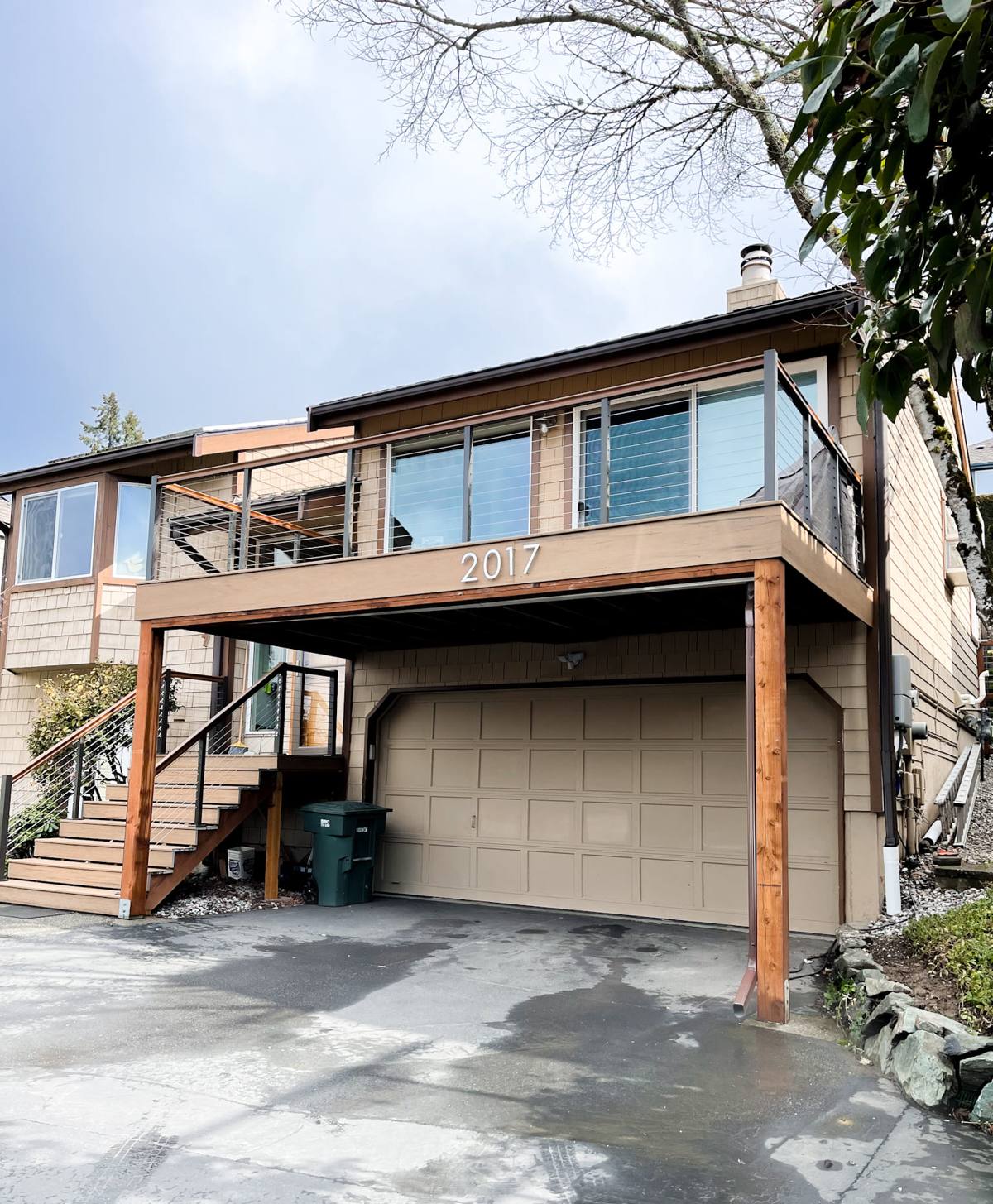
What Fairhaven's Climate Actually Does to a Deck
Salt Air and Metal Fatigue
Proximity to the water means airborne salt settles on every exposed surface, including the fasteners and hardware holding a deck together. Standard galvanized screws and joist hangers corrode faster near the shoreline than they would ten miles inland. Once a fastener starts to rust, it loses grip strength long before the wood around it shows any visible damage — which is why decks near the water sometimes fail structurally while still looking fine from the yard.
Driving Rain and Water Intrusion
Bellingham doesn't get the heaviest rainfall in the state, but a lot of it arrives at an angle, driven by wind off the bay. That matters for a deck because water doesn't just fall straight down onto the decking boards — it gets pushed sideways into ledger connections, under poorly flashed rim joists, and into end-grain cuts that weren't sealed. Most of the rot we find in old Fairhaven decks starts at these entry points, not on the open deck surface.
Moss, Shade, and Slow Drying
Fairhaven's tree cover and marine layer mean a lot of decks sit in partial shade for much of the year. Combined with the region's long wet season, that adds up to surfaces that stay damp far longer than they would in full sun. Moss and algae take hold in that environment, and beyond making boards slippery, they hold moisture directly against the wood surface, accelerating decay in exactly the boards that already dry the slowest.
Signs an Existing Deck Needs Full Replacement, Not Repair
- Soft or spongy spots in the decking, especially near the house or in shaded corners
- Rust streaking below joist hangers or visible corrosion on structural screws
- A ledger board that shows staining, gaps, or separation from the house rim joist
- Posts or footings that feel loose or have visible settling/heaving
- Persistent moss regrowth within weeks of cleaning, even after treatment
- Railings that flex or wiggle under normal hand pressure
- A deck older than 15-20 years built with untreated fasteners or no flashing at the ledger
Any one of these on its own might be repairable. Two or more together, especially anything involving the ledger connection or footings, usually means the structure has been compromised long enough that a full replacement is the honest recommendation rather than a patch that buys another season or two.
What a Correct Deck Replacement Involves
Starting at the Ledger
The ledger board — where the deck attaches to the house — is the single most common failure point on decks in this climate, because it's the one spot where wood, water, and the building envelope all meet. A proper replacement means removing the old ledger, inspecting the rim joist and sheathing behind it for hidden rot, and installing new flashing designed to shed water away from the house rather than trap it against the connection.
Footings and Framing Sized for the Ground Here
Whatcom County soils and moisture patterns call for footings set to proper frost depth and sized for the actual load of the structure, not just whatever was there before. We don't reuse old footings or posts without inspecting them first — a footing that's shifted or heaved, even slightly, undermines everything built on top of it.
Fastener and Hardware Selection
Given the salt air this close to the water, we default to stainless steel or high-grade coated fasteners and connectors rather than standard galvanized hardware, particularly for structural connections like joist hangers and ledger bolts. It costs more up front and it's the difference between hardware that lasts the life of the deck and hardware that's the first thing to fail.
Decking Material Choices
Every decking material has trade-offs in this climate, and we'll walk through them honestly rather than push one option.
| Material | How It Handles This Climate | Maintenance | Typical Lifespan Here |
|---|---|---|---|
| Pressure-treated lumber | Good rot resistance when properly sealed; needs re-sealing to handle constant damp/shade cycles | Annual cleaning and periodic sealing | 15-20 years with upkeep |
| Cedar | Naturally moisture-resistant, ages well visually, but softer and more prone to moss holding surface moisture | Regular cleaning, occasional oiling | 15-25 years with upkeep |
| Composite decking | Doesn't rot or absorb water the way wood does; performs consistently in shaded, damp spots | Periodic washing to prevent surface algae/moss film | 25-30+ years |
| Tropical hardwoods | Very dense and rot-resistant, but installation is sensitive to moisture content and requires specific fasteners | Occasional oiling to maintain color | 25+ years |
None of these are wrong choices. The right one depends on your budget, how much shade the deck sits in, and how much upkeep you actually want to do. We'll give you a straight answer based on your specific site, not a sales pitch for whatever we happen to have a deal on.
Drainage and Detailing Matter More Here Than Almost Anywhere Else
A deck built for a dry climate and a deck built for Bellingham's marine environment can look identical and perform completely differently within five years. The details that make the real difference are the ones you don't see once the job is finished:
- Proper board spacing so decking dries between rain events instead of trapping moisture
- Joist tape or flashing over the tops of joists to keep fastener penetrations from becoming water entry points
- Ledger flashing that integrates correctly with the house's existing siding or trim water management
- Post bases set above grade and away from standing water or mulch beds that hold moisture
- Adequate airflow underneath low-clearance decks to prevent the damp, shaded microclimate that accelerates decay
These aren't upgrades — they're the baseline for a deck that's supposed to hold up under Fairhaven's rain and shade patterns for decades rather than one decade.
Our Process for a Fairhaven Deck Replacement
1. On-Site Assessment
We walk the existing deck with you, check the ledger, footings, and framing for hidden damage, and talk through what's actually driving the need for replacement rather than assuming.
2. Honest Scope and Material Discussion
You get a clear rundown of material options with real trade-offs for your specific site — sun exposure, proximity to the water, how the deck is used — so you're choosing based on how it'll perform here, not a generic brochure comparison.
3. Demolition and Structural Inspection
Once the old decking and railings come off, we inspect the ledger connection, rim joist, and framing that were hidden underneath. This is often where we find the rot or corrosion that wasn't visible from the surface, and we'll show you what we find before covering it back up.
4. Rebuild from the Structure Up
New or reinforced footings, correctly flashed ledger, appropriately rated fasteners and hardware, then framing, decking, and railings — in that order, with each step inspected before the next begins.
5. Final Walkthrough
We go over the finished deck together, including basic maintenance guidance specific to the material you chose and this climate — cleaning schedule, what to watch for, and when to call us if anything looks off.
Why a Crew That Already Works Fairhaven Matters
Deck framing, flashing, and material choices that work fine in a drier inland climate can underperform badly this close to the water. A crew that regularly works Fairhaven and the surrounding Bellingham waterfront knows which fastener grades hold up, how much ledger flashing detail is actually necessary versus overkill, and which decking materials fight the shade-and-moss cycle instead of feeding it. That local pattern recognition doesn't come from a manual — it comes from having replaced decks in this exact microclimate before and having seen, firsthand, which details held up and which ones didn't.
It also means we're not guessing about permitting requirements or typical footing depths for this part of Whatcom County, which keeps the project moving instead of stalling on avoidable back-and-forth.
What This Typically Costs
Deck replacement costs vary widely based on size, material choice, height off the ground, railing style, and how much of the existing framing and footings can be reused versus rebuilt. Composite decking runs higher up front than pressure-treated lumber but costs less over time in maintenance and replacement cycles. Rather than throw out a broad number that doesn't reflect your actual deck, we'll give you a real, itemized estimate after seeing the site — that's the only way to give you a figure you can actually plan around.
Get a Free, No-Pressure Estimate
If your Fairhaven deck is showing soft spots, rust stains, persistent moss, or is simply old enough that you're wondering how much longer it has, we're glad to take a look. Use the form below to request a free estimate — no obligation, no pressure, just a straight assessment of what your deck needs and what it would take to replace it right for this climate.