 Bellingham Exterior
 Why Windows Take a Beating in Fairhaven
Fairhaven sits close enough to Bellingham Bay that salt-laden air is a fact of life, not an occasional nuisance. That air finds every weak point in a window assembly — hardware, weep holes, exposed fasteners, even the microscopic gaps in a tired weatherstrip. Add Whatcom County's long wet season, where driving rain comes in sideways off the water for days at a time, and you have a climate that tests windows harder than most inland parts of the state. Then there's moss season. It doesn't just grow on roofs — it takes hold in window sills, tracks, and any horizontal surface that stays damp and shaded, and once it's established it holds moisture against the frame year-round.
None of this means Fairhaven homes need exotic products. It means the basics — frame material, glazing, and especially installation — have to be done correctly for the actual conditions here, not for a showroom in a dry climate.
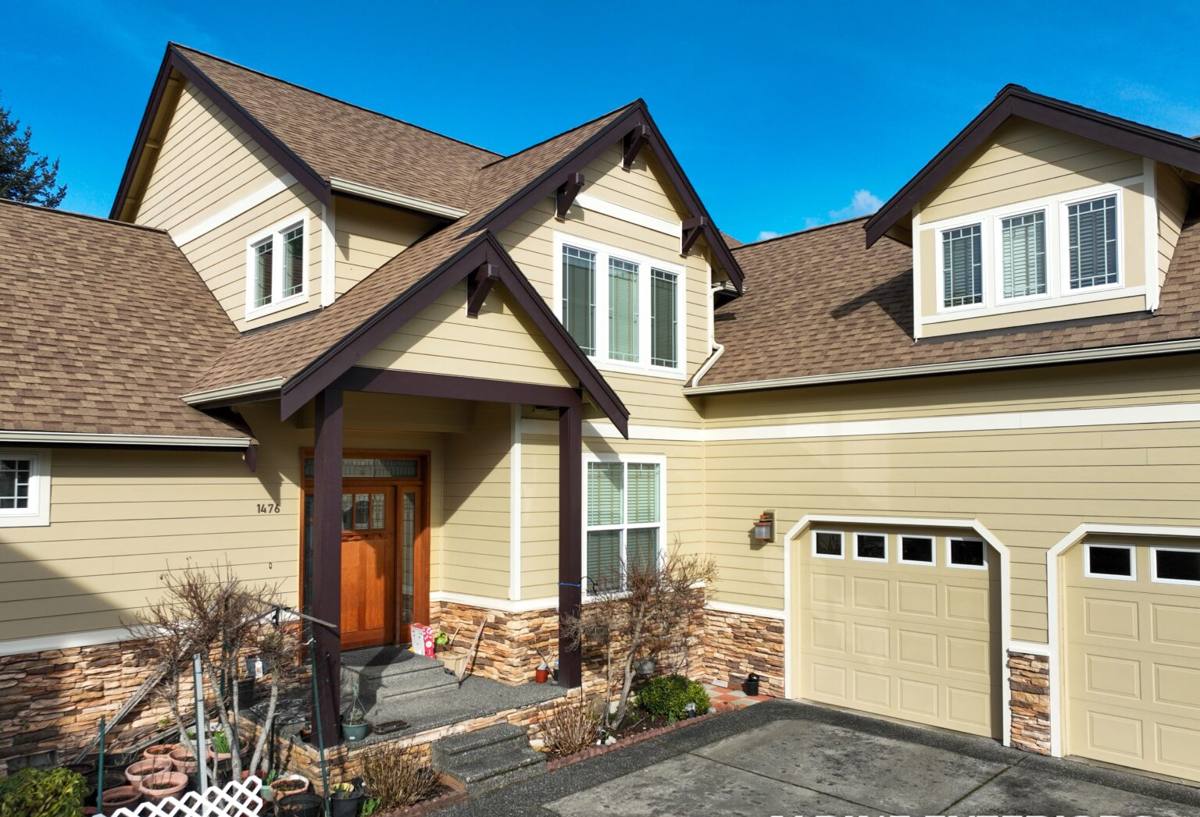
What "Energy-Efficient" Actually Means for a Window
The phrase gets used loosely, so it's worth being specific. A window's energy performance comes down to a handful of measurable factors:
- U-factor — how much heat escapes through the window. Lower is better, and it matters more here than in milder climates because Bellingham winters are long and gray, not brutally cold but persistent.
- Low-E coatings — a microscopically thin metallic layer that reflects heat back into the room in winter and blocks unwanted solar heat in summer, without noticeably changing how much light comes through.
- Gas fill — argon or krypton between panes, which insulates better than plain air and reduces the convective currents that make a window feel drafty even when it's sealed.
- Spacer system — the material separating the panes at the edge. Cheap metal spacers conduct cold straight to the glass edge and are one of the first places condensation shows up.
A window can have excellent glass and still perform poorly if the frame is warping, the weatherstripping has failed, or it was installed with gaps behind the trim. Efficiency is a system, not a single spec on a label.
Frame Material Options for Coastal Whatcom County Homes
Frame material decides how a window ages, not just how it performs on day one. In a marine environment like Fairhaven's, that aging curve matters as much as the initial U-factor.
| Frame Material | How It Handles Salt Air & Moisture | Maintenance | Typical Trade-Off |
|---|---|---|---|
| Vinyl | Won't rust or rot; handles moisture well | Low — occasional cleaning | Limited color options; can expand/contract with big temperature swings |
| Fiberglass | Excellent — dimensionally stable, resists salt corrosion | Low | Higher upfront cost than vinyl |
| Wood-clad | Good if cladding stays intact; exposed wood is vulnerable near the coast | Moderate to high — cladding seams and interior wood need attention | Best fit for historic-character homes; needs more diligence in this climate |
| Aluminum | Conducts cold readily; can corrode over time in salt air unless properly finished | Low to moderate | Usually the least efficient option for our climate |
We don't push one material on every home. A vinyl replacement window makes sense for a straightforward efficiency upgrade on a standard home. A fiberglass or wood-clad unit earns its keep on a home where appearance and long-term stability matter more than shaving costs. What we steer people away from is aluminum-frame replacements in this specific setting — not because aluminum is a bad material everywhere, but because its thermal performance and corrosion resistance are a poor match for Fairhaven's air and rain.
Double-Pane vs. Triple-Pane: What Actually Makes Sense Here
Triple-pane windows get marketed hard, and they do have a lower U-factor than double-pane. But Bellingham's climate is mild compared to places where triple-pane earns its cost difference fastest — we don't see the deep sub-zero stretches that make the extra pane pay for itself quickly through heating savings alone.
For most Fairhaven homes, a quality double-pane window with a good Low-E coating and argon fill delivers strong performance for the investment. Triple-pane can make sense on a north-facing wall that catches wind off the water, on a room with a persistent cold-draft complaint, or when a homeowner is prioritizing sound dampening as much as thermal performance — Fairhaven's proximity to rail and marine traffic is a real consideration for some properties. We'll walk through where triple-pane genuinely helps versus where it's just added cost, rather than defaulting to the upsell.
Installation Is Where Efficiency Is Won or Lost
A high-spec window installed poorly will underperform a modest window installed correctly. In a climate that throws driving rain at a wall for days at a stretch, the installation details around the window matter as much as the window itself. Water doesn't need a big gap to get in — it needs one uncaulked seam or one piece of flashing lapped the wrong direction.
A correct installation in our climate includes:
- Removing old caulk, rot, and any compromised sheathing around the opening before the new unit goes in — not covering over a hidden problem
- Properly lapped flashing so water is directed out and down, never trapped behind the siding
- A continuous, compatible sealant bead at all sides — not just the visible trim line
- Shimming the frame square and plumb so the sash operates and seals correctly for the life of the window
- Insulating the gap between the rough opening and the frame without overpacking, which can bow the frame and cause air leaks
- Interior and exterior trim reset cleanly, with weep holes and drainage paths left clear
Skip any one of these and you can end up with a window that looks fine, carries a good energy rating on paper, and still lets in moisture or drafts within a year or two — especially with the wind-driven rain this area gets.
Working Around Fairhaven's Older and Historic Homes
Fairhaven has a real mix of housing stock, including a number of older and character homes near its historic core. Replacing windows on these properties isn't always a simple swap. Original openings are often out of square after decades of settling, trim profiles may need to be matched or rebuilt rather than replaced with stock material, and in some cases the goal is a window that reads correctly from the street while performing like a modern one on the inside.
We treat these as a different scope of work than a standard replacement — more careful measurement, more attention to matching existing lines, and, where it matters to the homeowner, window options built to resemble traditional wood sash rather than an obviously modern profile. If your home falls under any historic district guidelines, that's worth raising early so we can plan around it rather than around a surprise.
Signs Your Current Windows Are Costing You Money
Not every window problem is obvious from across the room. Common signs we see on Fairhaven homes include:
- Condensation or fogging between the panes — a sign the seal has failed and the gas fill is gone
- Visible moss or dark staining building up in the sill or track
- Drafts you can feel near the frame on a windy day, even with the window latched
- Wood trim that's soft, discolored, or separating from the frame
- A noticeable difference in indoor comfort between rooms with newer versus original windows
- Rooms that feel cold or damp closest to the water-facing side of the house
Any one of these is worth a look. Together, they usually mean the window is no longer doing its job, even if it still opens and closes fine.
Our Process From Estimate to Final Seal
We keep the process straightforward and honest about what your home actually needs:
- On-site assessment — we look at each window individually, not just the house as a whole, since exposure and condition often vary wall to wall.
- Straight talk on options — frame material, glazing package, and where triple-pane is or isn't worth it for your specific rooms, with real trade-offs explained.
- Clear estimate — a written scope so you know what's being replaced, what installation work is included, and why.
- Removal and inspection — old windows come out carefully, and we check the opening for hidden rot or water damage before anything new goes in.
- Correct installation — flashing, sealing, shimming, and insulating done to hold up against this specific climate, not a generic checklist.
- Final walkthrough — every window operates, seals, and looks right before we consider the job done.
Why Local Experience in Fairhaven Matters
A window that performs well in a dry inland climate can fail early here if it's the wrong material or poorly installed against wind-driven rain and salt air. Crews who work regularly in Fairhaven and along the greater Bellingham waterfront learn which details actually matter in this environment — where moisture collects, which frame materials hold up, and how to work around the quirks of older neighborhood housing stock. That local pattern recognition is hard to replace with a generic install crew passing through Whatcom County for a single job.
If your windows are drafty, fogged, or just past their working life, we're happy to take a look and give you a straightforward, no-pressure estimate — no guesswork, just what your home actually needs.