 Bellingham Exterior
 Metal Roofing Built for Fairhaven's Coastal Conditions
Fairhaven sits close enough to Bellingham Bay that salt-laden air, wind-driven rain, and long stretches of shade from mature trees all show up in how a roof ages here. A metal roof can be one of the best long-term investments a Fairhaven homeowner makes, but only if it's specified and installed with this specific environment in mind. A metal roof installed the same way you'd install one in a dry inland climate will not perform the same way in Fairhaven, and the difference shows up in fastener corrosion, trapped moisture, and moss buildup within a few years rather than decades.
This page covers what Fairhaven homes actually need from a metal roof, what a correct installation involves, and how our process addresses the conditions unique to this part of Whatcom County.
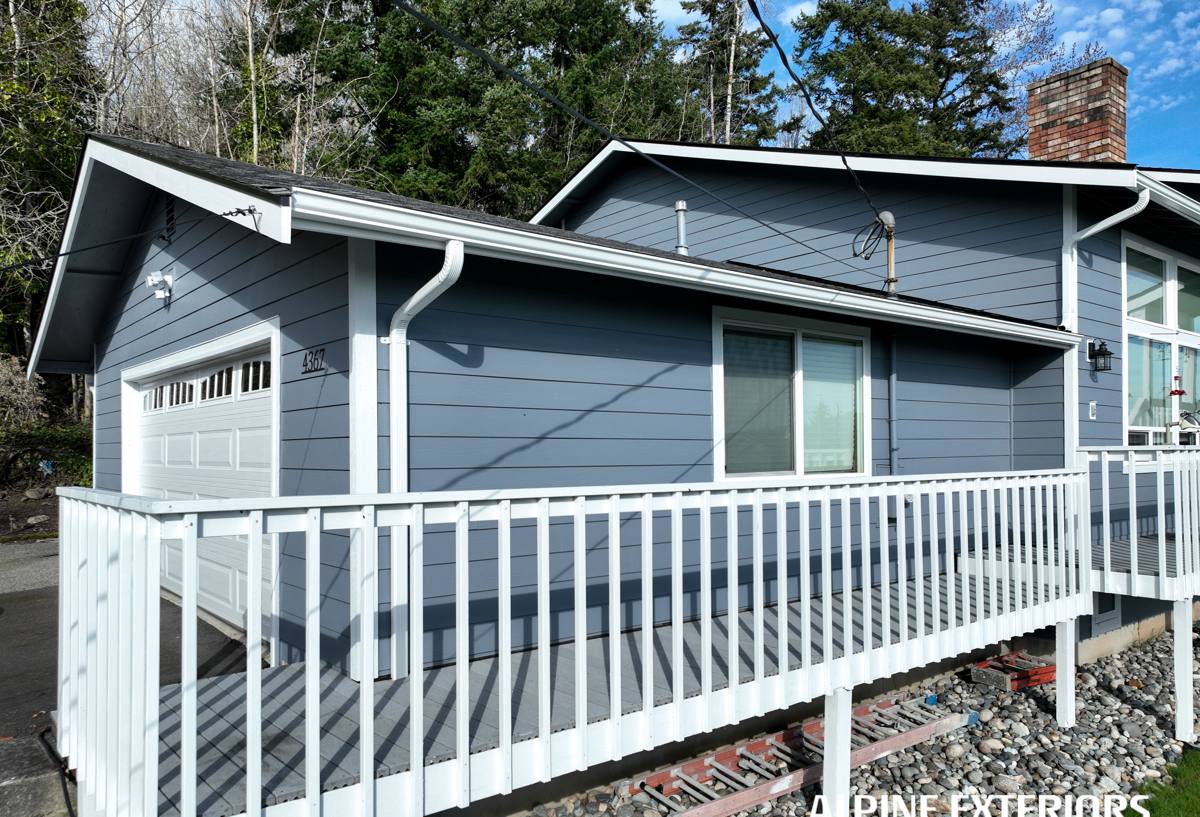
What Bellingham's Climate Does to a Roof in Fairhaven
Salt Air and Corrosion
Proximity to the bay means airborne salt is a constant, low-level presence on every exterior surface, including the roof. Salt accelerates corrosion at any point where metal is exposed, cut, or fastened, particularly at fastener heads, cut panel edges, and flashing seams. Standard steel fasteners or uncoated cut edges will corrode faster in Fairhaven than they would even a few miles further inland, and once corrosion starts at a fastener it tends to spread outward into the surrounding panel.
Driving Rain
Storms coming off the water frequently push rain sideways rather than straight down, which means water finds its way under standard laps, around poorly sealed penetrations, and into any gap that a purely gravity-fed drainage design would otherwise handle fine. Underlayment, seam design, and flashing detail matter more here than they would in a calmer inland setting.
Moss and Organic Growth
Shaded lots, moisture-holding tree cover, and a long wet season combine to make Whatcom County one of the more moss-prone regions in the state. Metal roofing resists moss far better than asphalt shingles or wood shakes because there's no organic mat for spores to root into, but moss and debris can still accumulate in valleys, at panel laps, and around low-slope transitions if those areas aren't detailed to shed water and debris cleanly.
Why Metal Roofing Suits Fairhaven Homes
Metal roofing has real advantages for this environment when it's installed correctly:
- Sheds wind-driven rain more effectively than lapped shingle systems when seams and flashing are properly detailed
- Provides no organic surface for moss to establish a root mat, unlike wood shakes or aging asphalt shingles
- Handles heavy, sustained rainfall without the granule loss and mat saturation that shortens shingle roof life
- Lasts multiple decades when the coating system and fasteners are matched to a coastal-influenced climate
- Sheds snow and ice more predictably, reducing ice-dam-related moisture intrusion during cold snaps
None of these benefits are automatic, though. They depend on choosing the right panel system, coating, and fastener package for this specific setting, and on installation details that account for wind-driven rain and salt exposure rather than a generic install approach.
Choosing the Right Metal Roofing System
Not every metal roofing product is a good match for a coastal-influenced climate like Fairhaven's. The panel profile, seam type, and coating all affect how well the roof holds up to salt air and driving rain over time.
| Panel Type | Best Fit For | Coastal Considerations |
|---|---|---|
| Standing seam | Most Fairhaven homes, especially those close to the bay | Concealed fasteners reduce corrosion entry points; raised seams shed wind-driven rain well |
| Exposed-fastener panels | Detached garages, outbuildings, budget-conscious projects | Fastener gaskets wear over time and need periodic inspection in salt air |
| Stone-coated steel | Homes wanting a shake or tile look | Coating protects the steel core but cut edges still need sealing |
| Aluminum panels | Homes directly exposed to salt spray or wind off the water | Naturally corrosion-resistant, a strong option for the most exposed lots |
We walk homeowners through these trade-offs based on the specific home's exposure, roof pitch, and how close it sits to the water, rather than defaulting to one product for every job.
Coatings and Fasteners Matter As Much As the Panel
The coating system on the metal itself, and the fastener package used to attach it, often matter more than the base panel choice. A high-quality panel installed with the wrong fasteners will still develop corrosion streaking at every screw head within a few years. In Fairhaven, we favor fastener and coating combinations rated for coastal exposure, not just standard residential-grade hardware, because the cost difference upfront is small compared to the cost of redoing fastener work later.
What a Correct Metal Roof Installation Involves
Deck Inspection and Prep
Before any panel goes down, the existing roof deck needs to be inspected for rot, soft spots, or moisture damage, especially around valleys and any area that's been holding moss or debris. Skipping this step is one of the most common shortcuts in the trade, and it's the one most likely to cause problems that don't show up until years later.
Underlayment
A synthetic, high-temperature underlayment rated for the wind-driven rain conditions common here provides a second line of defense if any water does get past the metal surface. This matters more in Fairhaven than in drier parts of the state, because sideways-blown rain tests the roof's secondary drainage layer more often.
Flashing and Penetrations
Chimneys, vents, skylights, and wall transitions are where most roof leaks originate, metal or not. Flashing needs to be formed and lapped correctly, sealed with materials rated for the coating on the panels, and installed so that it sheds water in the direction storms actually come from at this location, not just straight downhill.
Panel Seams and Fastening
Seam type and fastener spacing are set based on the panel profile and the wind exposure of the specific roof. Standing seam systems use concealed clips rather than through-panel fasteners, which removes the most common corrosion entry point over time.
Our Installation Process
- On-site inspection of the existing roof, deck condition, and specific exposure of the home
- Panel, coating, and fastener recommendation based on the home's location and roof design
- Written estimate with a clear scope, so there are no surprises about what's included
- Deck repair as needed before any underlayment or panel installation begins
- Underlayment and flashing installed with attention to wind-driven rain paths specific to the site
- Panel installation with fastener spacing and seam detail matched to the chosen system
- Final walkthrough covering maintenance expectations and what to watch for over time
Moss, Debris, and Long-Term Roof Health
Metal roofing's resistance to moss is one of its biggest advantages in Whatcom County, but it isn't total immunity. Moss and organic debris can still build up in valleys, around low-slope sections, and anywhere leaves and needles collect against a seam or transition. Left in place, that debris holds moisture against the roof surface and can eventually affect coatings and fasteners even on a metal roof. Keeping valleys and gutters clear, and trimming back overhanging branches where practical, does more for a metal roof's long-term appearance and performance in Fairhaven than almost anything else a homeowner can do.
Maintenance Checklist for Fairhaven Homeowners
- Clear moss, needles, and leaf debris from valleys and low-slope areas at least once a year
- Check gutters and downspouts for blockages, especially after fall leaf drop and winter storms
- Look at fastener heads and cut edges for early signs of corrosion streaking
- Inspect flashing around chimneys, vents, and skylights for lifted or deteriorated sealant
- Trim overhanging branches that keep sections of the roof shaded and damp
- After major windstorms, do a visual check for lifted panels or loosened fasteners
Cost Factors for Fairhaven Metal Roofing Projects
Metal roofing costs more upfront than asphalt shingles, but the right system installed correctly is designed to outlast several shingle roof replacements. Rough cost drivers for a Fairhaven project include:
| Factor | Why It Affects Cost |
|---|---|
| Panel type (exposed-fastener vs. standing seam) | Concealed-fastener systems cost more but reduce long-term corrosion risk in salt air |
| Roof complexity | More valleys, dormers, and penetrations mean more flashing work and labor time |
| Deck condition | Rot or moisture damage found during tear-off adds repair work before panels go on |
| Coating and fastener grade | Coastal-rated coatings and fasteners cost more but reduce maintenance and corrosion over time |
| Roof pitch and access | Steeper roofs and difficult access add labor and safety equipment time |
We provide a written, itemized estimate so homeowners can see exactly where the cost is going, rather than a single lump number.
Why a Crew That Already Works in Fairhaven Matters
A contractor who regularly works in Fairhaven and the surrounding Bellingham area already knows which fastener and coating packages hold up here, which flashing details actually stop wind-driven rain from this direction, and how aggressively moss builds up on shaded lots near the water. That local pattern recognition is difficult to substitute with a generic install approach brought in from a drier or less exposed region. It also means faster response if a storm causes damage, and a crew that's still around years later if a warranty question comes up.
If you're weighing a metal roof for your Fairhaven home, we're happy to walk the roof, talk through the panel and coating options that make sense for your exposure, and put together a free, no-pressure estimate with no obligation.