 Bellingham Exterior
 Roofing in York Isn't the Same Job as Roofing Inland
Homes in the York neighborhood sit close enough to Bellingham Bay and the broader Whatcom County coastline that the air itself works against a roof year-round. Salt-laden moisture rides in on the wind, settles into fasteners and flashing, and speeds up corrosion that a roof forty miles inland wouldn't see for another decade. Add the region's long stretch of driving rain — the kind that comes in sideways during a real Pacific frontal system — and you've got a climate that punishes any weak point in a roofing system, not just the obvious ones.
Then there's moss. Bellingham's tree cover, shade patterns, and mild, damp winters give moss and moisture-loving growth close to eight or nine months a year to establish itself on north-facing slopes and anywhere shade lingers. Moss isn't just cosmetic — it holds water against shingles, lifts edges, and works its way under flashing over time. A new roof installed for York needs to be planned around all three of these things at once: salt exposure, wind-driven rain, and a moss season that never really stops.
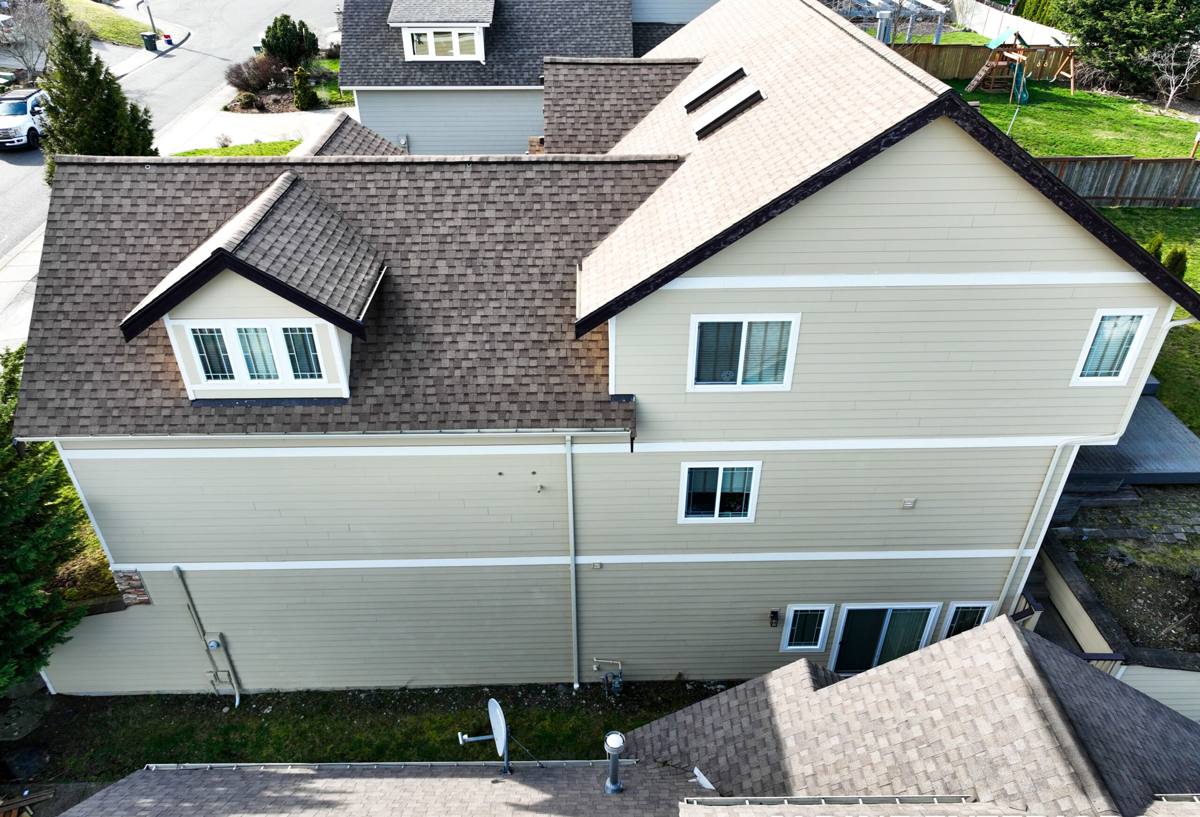
What a Correct New Roof Installation Actually Involves
"New roof" gets used loosely. A correct installation is a full system, not just new shingles laid over the old ones. Each layer does a specific job, and skipping or shortcutting any one of them is where most premature failures start.
Full Tear-Off, Not an Overlay
We remove the existing roofing down to the deck. Overlaying a second layer on top of old shingles traps moisture, hides deck damage, and voids most manufacturer warranties outright. It also means nobody actually looks at the wood underneath — which, in a climate this wet, is exactly where problems hide.
Deck Inspection and Repair
Once the old roofing is off, the decking gets inspected board by board. Any soft, delaminated, or water-stained sheathing gets replaced before anything new goes down. Installing a new roof over compromised decking is one of the most common shortcuts in the trade, and it's the one that causes the most expensive comebacks.
Underlayment Built for Wet Climates
We use synthetic or ice-and-water underlayment at eaves, valleys, and roof penetrations — the places wind-driven rain actually gets pushed under shingle edges. In a region that sees sustained horizontal rain during winter storms, standard felt alone isn't enough protection at these vulnerable transition points.
Flashing at Every Transition
Chimneys, skylights, sidewalls, and valleys all need properly formed metal flashing, not just roofing cement. Salt air accelerates corrosion on cheap or thin flashing, so material choice here matters as much as the installation technique.
Ventilation That Matches the Home
Balanced intake and exhaust ventilation keeps the attic dry and temperature-stable, which reduces moisture buildup underneath the roof deck and slows moss regrowth on the surface above it.
Choosing a Roofing System for York's Climate
There's no single "best" roof for every home — it depends on the roof's pitch, the home's shade exposure, and what the homeowner wants to maintain long-term. Here's how the common options actually compare for a coastal, moss-prone, salt-exposed property like the ones in York.
| Roofing System | Moss & Moisture Behavior | Salt Air Durability | Typical Lifespan |
|---|---|---|---|
| Architectural Asphalt Shingle | Good with proper ventilation; needs periodic moss treatment on shaded slopes | Solid when paired with corrosion-resistant flashing and fasteners | 25–30 years |
| Standing Seam Metal | Sheds moisture fastest; least hospitable surface for moss to take hold | Excellent with marine-grade coatings and stainless fasteners | 40–50+ years |
| Synthetic/Composite Shingle | Good moisture resistance; surface texture varies by product | Good; less prone to corrosion since it's non-metallic | 30–50 years, varies by manufacturer |
Cost, appearance, and how much annual maintenance a homeowner wants to take on all factor into this decision as much as raw performance numbers. We walk through the honest trade-offs for your specific roof rather than pushing one system on every job.
Cost Factors for a New Roof in York
Two roofs of the same size can price out very differently once you account for what's actually involved. The broad range for a full residential tear-off and reroof runs from the mid four figures for a small, simple roof to well into five figures for larger or more complex homes — but the real number depends on these factors:
| Factor | Why It Moves the Price |
|---|---|
| Roof pitch and access | Steeper roofs and limited ground access slow down every stage of the job and add safety equipment |
| Number of existing layers | Tearing off two layers of old shingles takes longer and generates more disposal cost than one |
| Decking condition | Rot or delamination found during tear-off means plywood replacement before anything else proceeds |
| Roof complexity | Valleys, dormers, skylights, and chimneys all add flashing work and labor time |
| Material choice | Standing seam metal and premium composite products cost more upfront than architectural asphalt |
| Ventilation upgrades | Adding or correcting intake/exhaust venting is worth doing during a reroof, not after |
We put all of this in writing before work starts — no surprise add-ons discovered halfway through the job that weren't discussed up front.
Signs a York Home Needs a New Roof, Not Another Patch
Repeated repairs make sense until they don't. These are the signals that a full replacement is the more honest recommendation:
- Granule loss heavy enough that you're finding shingle grit in gutters every season
- Shingles that are curling, cupping, or cracking across multiple slopes, not just one spot
- Soft spots or noticeable give when walking the roof deck
- Moss buildup thick enough that it's lifting shingle edges rather than just sitting on the surface
- Daylight visible through the attic decking, or water staining on attic sheathing
- A roof approaching or past 20–25 years old with multiple past repairs already on record
- Rusted, cracked, or separating flashing around chimneys, skylights, or valleys
If a roof is only showing one or two of these in isolation, targeted repair is often still the right call — we'll tell you that instead of recommending a full replacement it doesn't need yet.
Our Installation Process, Step by Step
- On-site inspection and estimate — we assess the current roof, attic ventilation, and any visible problem areas before quoting.
- Material selection — we go over system options based on your home's exposure, pitch, and budget.
- Scheduling around the weather — in this climate, timing a tear-off to avoid getting caught mid-job by a rain system matters, and we plan for it.
- Full tear-off and deck inspection — old roofing comes off completely, decking gets checked and repaired as needed.
- Underlayment and flashing installation — water-resistant underlayment and new flashing go in at every vulnerable point.
- Roofing material installation — installed to manufacturer specification, not shortcuts, so the warranty stays valid.
- Ventilation check and correction — intake and exhaust venting confirmed or upgraded as part of the job.
- Final walkthrough and cleanup — magnetic sweep for nails, full site cleanup, and a walkthrough of the finished roof with the homeowner.
Why Hiring a Crew That Already Works in York Matters
A roofing crew that regularly works this specific part of Bellingham already knows which slopes in the neighborhood hold shade and grow moss fastest, how close certain streets sit to salt spray off the bay, and what the local permitting process actually requires before a tear-off starts. That's not something you get from a crew that mostly works dry, inland jobs and treats every roof the same way.
It also matters for scheduling. Whatcom County's wet season isn't a minor inconvenience for a reroof — a tear-off left exposed to a sudden storm can mean real water damage to a home's interior. A crew that plans its York jobs around this region's actual weather patterns, rather than a generic install calendar, is protecting your home during the one phase of the project where it's most vulnerable.
What to Expect After Your New Roof Is Installed
A new roof isn't fully maintenance-free, even a good one. In this climate, we recommend a periodic check for moss regrowth on shaded slopes, keeping gutters clear so water isn't backing up under the shingle edge, and a visual check of flashing points after major storms. We'll walk you through manufacturer warranty terms and what routine maintenance (or lack of it) can affect that coverage, so there are no surprises down the line.
If your York-area roof is showing its age or you're planning ahead of a problem rather than reacting to one, we're glad to come take a look. The estimate is free, there's no pressure attached to it, and you'll get a straight answer about whether you need a full replacement or something less — just fill out the form below to get started.