 Bellingham Exterior
 Building Decks for Blaine's Coastal Conditions
Blaine sits right up against Semiahmoo Bay and the Strait of Georgia, which means homes here deal with a version of Whatcom County weather that's a notch harsher than what you'll find further inland around Bellingham. Salt-laden air off the water, wind-driven rain, and a moss season that can stretch from October clear into May all put extra demands on an outdoor structure. A deck built to a generic spec sheet won't hold up the same way out here as one built with Blaine's specific exposure in mind.
We're a Bellingham-based crew that works Blaine regularly, and we approach every custom deck project here the same way: material selection, fastener choice, and drainage detailing all get adjusted for proximity to salt water and for how much direct weather exposure the site actually gets. That's the difference between a deck that looks good for one season and one that holds up for twenty years.
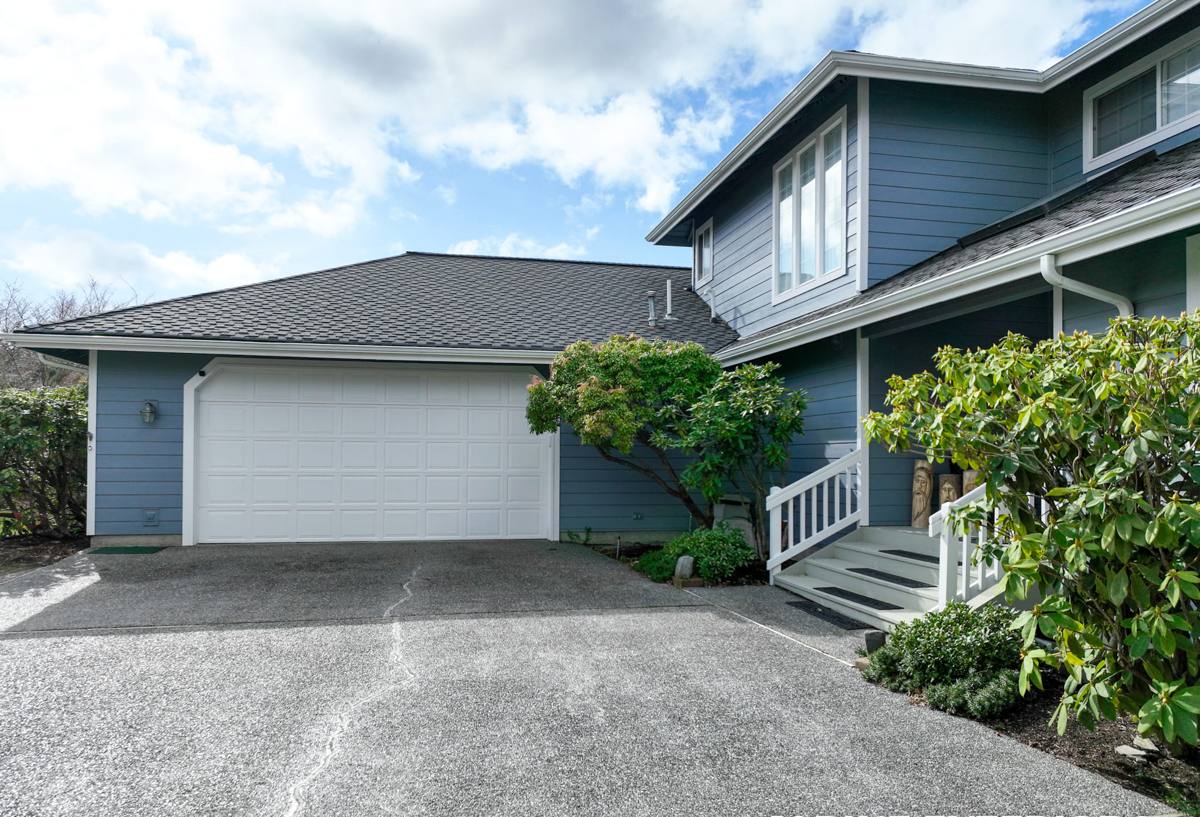
What Blaine's Climate Actually Does to a Deck
Salt Air and Metal Fatigue
Homes closer to Semiahmoo Bay and the waterfront get airborne salt that accelerates corrosion on anything metal — fasteners, joist hangers, railing brackets, even the heads of exposed screws. Standard galvanized hardware can start showing rust streaks within a couple of years in a heavy salt-exposure zone. This isn't cosmetic only; corroded fasteners lose holding strength over time, which matters a lot on a structure people walk on.
Driving Rain and Moisture Intrusion
Whatcom County rain rarely falls straight down — wind off the strait pushes it sideways, which means ledger board connections, stair stringers, and any wood-to-house junction take on more moisture than they would in a calmer climate. Water that gets trapped behind poorly flashed connections is one of the most common causes of hidden rot we find when we're asked to repair or replace an older deck.
Moss, Algae, and Surface Traction
Extended damp, low-light stretches favor moss and algae growth on any horizontal wood or composite surface that doesn't get much sun or airflow. Beyond looking bad, a mossy deck surface gets slick and becomes a real slip hazard, especially on stairs. Board spacing, surface texture, and site orientation all affect how much of a moss problem a given deck will develop.
What a Correctly Built Deck Looks Like Out Here
A deck that's going to hold up in Blaine's conditions isn't fundamentally a different product than a deck anywhere else — it's the same core structure built with tighter attention to a handful of details that matter more here than they would in a drier, calmer climate.
- Stainless steel or high-grade coated fasteners in areas with direct salt air exposure, not standard galvanized hardware
- Proper ledger board flashing with a drainage gap or self-adhering membrane behind it, not just caulk
- Joist tape or cap flashing on structural framing to keep end-grain and fastener penetrations from wicking moisture
- Footings and post bases set to shed water away from end grain, with post bases that hold wood off standing moisture
- Deck board spacing and orientation that account for the site's actual sun and airflow, not a one-size-fits-all gap
- Under-deck ventilation where the structure is low to the ground, so trapped humidity has somewhere to go
None of this is exotic. It's standard best practice applied consistently, which is exactly where a lot of decks fall short — not because the materials were wrong, but because a detail got skipped under time pressure.
Material Choices for a Blaine Deck
There's no single "right" decking material for every Blaine property — the right call depends on how close the site is to the water, how much sun it gets, and what the homeowner wants to maintain long-term. Here's how the common options actually compare under this area's conditions.
| Material | How It Handles Salt Air & Rain | Maintenance | Typical Lifespan Here |
|---|---|---|---|
| Pressure-treated lumber | Good with proper sealing; needs reapplication | Annual cleaning, re-sealing every 1-2 years | 15-20 years with upkeep |
| Cedar | Naturally rot-resistant; still needs finish upkeep near salt exposure | Regular cleaning and periodic oil/stain | 15-20 years with upkeep |
| Composite decking | Excellent — doesn't absorb moisture or corrode | Occasional washing, no sealing/staining | 25-30+ years |
| PVC decking | Excellent; fully synthetic, unaffected by salt | Low — periodic washing only | 25-30+ years |
Composite and PVC decking have become popular choices for Blaine's waterfront and near-waterfront properties specifically because they sidestep the moisture-absorption and corrosion issues that wood-based products face in salt air. That said, real wood still has a place — it's less expensive up front, it can be repaired board-by-board rather than replaced, and plenty of homeowners simply prefer the look and feel. We'll walk through the honest trade-offs for your specific site rather than push one product line.
Framing and Substructure — Where the Real Durability Comes From
The decking surface is what everyone sees, but the framing underneath is what actually determines how long the deck lasts and how safe it stays over time. This is also where corner-cutting is hardest to spot after the fact — a deck can look fine on the surface for years while the structure underneath is quietly failing.
For Blaine projects we pay particular attention to:
- Post-to-footing connections — proper post bases and adequate footing depth for our frost line and soil conditions
- Joist hanger material — upgraded corrosion resistance for sites with meaningful salt exposure
- Beam sizing — sized for actual span and load, not the minimum that happens to pass inspection
- Ledger attachment — properly through-bolted and flashed, since this connection carries a large share of the deck's total load
A deck framed correctly the first time rarely needs structural attention again for decades. One framed to minimum code with the wrong hardware for the site is a much more likely candidate for a costly mid-life repair.
Our Process for a Blaine Custom Deck
1. Site Visit and Assessment
We walk the property, look at sun exposure, wind exposure, proximity to water, drainage patterns, and existing structure if there's a deck to replace. This is also when we talk through how the space will actually get used — entertaining, grilling, hot tub, quiet morning coffee spot — because that shapes layout as much as the site does.
2. Design and Material Selection
We put together a layout and material recommendation based on what we saw on-site, not a generic template. If your lot is more sheltered and gets good sun, wood may make total sense. If you're closer to the water with heavier salt exposure, we'll steer the conversation toward composite or PVC and explain why.
3. Permitting
Deck projects above a certain size or height typically require a permit in Whatcom County jurisdictions. We handle the permitting process as part of the project so you're not left chasing paperwork.
4. Construction
Framing first, with inspection where required, then decking, railing, and any stairs. We build in the drainage and flashing detail described above as standard practice, not an upgrade.
5. Final Walkthrough
We walk the finished deck with you, cover basic care for whatever material you chose, and make sure everything meets what was discussed at the start.
Cost Factors for a Custom Deck in Blaine
Every deck project is priced around the specifics of the site and the design, but a few factors consistently move the number more than others:
| Factor | Why It Affects Cost |
|---|---|
| Deck size and shape | More square footage and complex shapes mean more material and labor |
| Height off grade | Taller decks need more substantial framing, footings, and often railings/stairs |
| Decking material | Composite and PVC cost more upfront than wood but less over the deck's life |
| Site access | Tight or sloped lots near the water can slow excavation and material staging |
| Railing and stair design | Custom railing systems and multi-level stairs add material and labor time |
| Hardware upgrades | Corrosion-resistant fasteners for high salt-exposure sites add modest cost for real longevity |
We give straightforward, itemized estimates rather than a single vague number, so you can see exactly what's driving the cost and where there's room to adjust the scope if needed.
Why a Local Crew Matters for This Job
Deck building isn't unique to Whatcom County, but building one that's going to hold up in it takes familiarity with what actually happens to decks around here over time. A crew that mostly builds inland or in a different climate zone may not default to upgraded fasteners near salt exposure, or may not think to detail under-deck ventilation for a shaded, damp lot — not because they're careless, but because it's not what they see every day.
We're based in Bellingham and work Blaine regularly enough to know what a five-year-old deck out here typically looks like — where it's holding up and where it isn't. That's the kind of thing you only learn by actually working the area, not from a spec sheet.
Maintaining Your Deck After It's Built
Even a well-built deck needs some seasonal attention in this climate. A short, honest maintenance checklist:
- Sweep leaves and debris off the surface regularly, especially in fall, so moisture doesn't sit trapped underneath
- Clean moss and algae off the surface at the first sign of growth rather than waiting until it's established
- Check railing and stair connections annually for any looseness
- For wood decks, plan on re-sealing or re-staining every one to two years depending on sun exposure
- Keep gutters and downspouts near the deck clear so runoff isn't dumping directly onto or under the structure
- Have fastener and framing connections inspected every few years, particularly on decks close to the water
If you're planning a new deck or replacing an aging one in Blaine, we're happy to come take a look and put together a free, no-pressure estimate — just fill out the form below and we'll get in touch.