 Bellingham Exterior
 Why Blaine Homes Need a Different Approach to Siding
Blaine sits right on the water at the top of Whatcom County, which means homes here deal with a combination of stresses that inland Bellingham properties don't face nearly as often. Salt-laden air off the Strait of Georgia and Semiahmoo Bay accelerates corrosion on fasteners and trim, wind-driven rain finds its way into siding laps and seams that would stay dry elsewhere, and the long gray stretch of fall through spring gives moss and algae months of damp surfaces to colonize. Siding that isn't specified and installed with those conditions in mind tends to show its age early — fading, staining, swelling at the bottom edges, and soft spots around windows and trim.
We install James Hardie fiber cement siding exclusively, and on a project like this, that decision isn't about brand preference. It's about what actually holds up a few blocks from saltwater with rain coming in sideways off the water most of the winter.
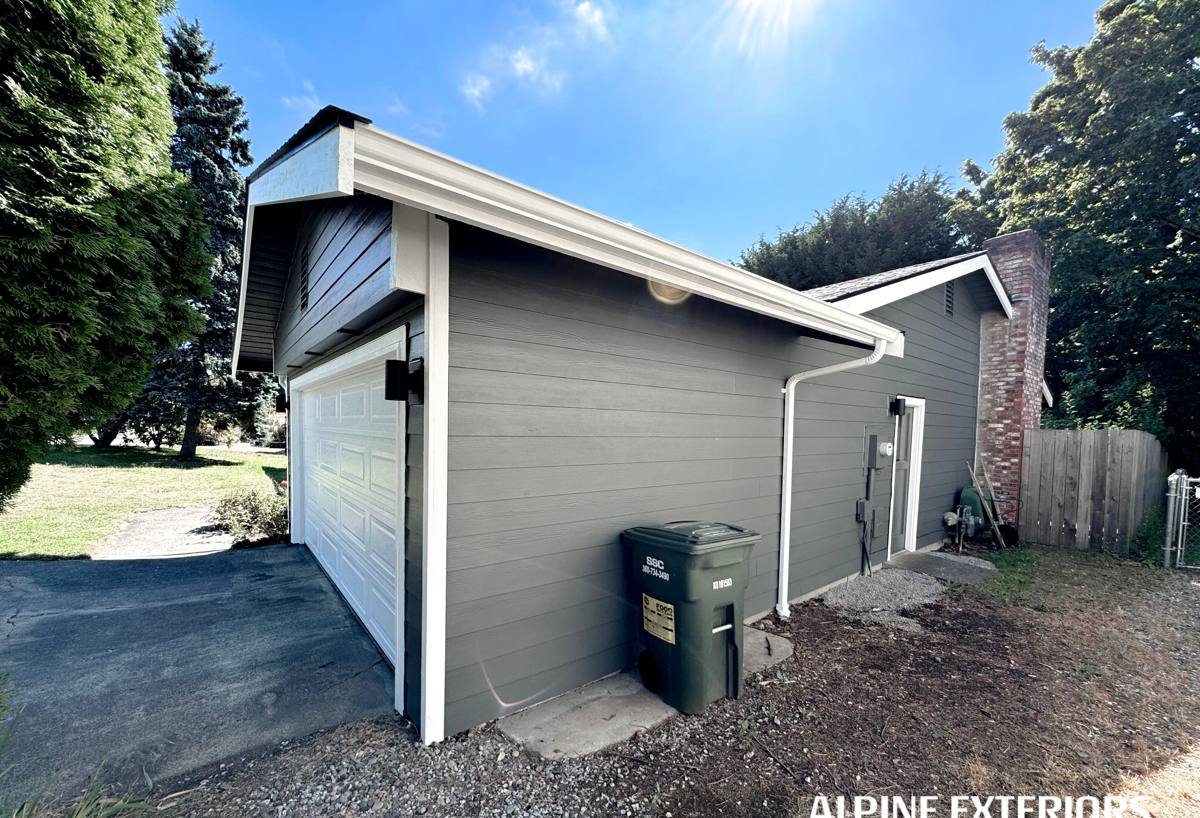
What Salt Air and Driving Rain Actually Do to Siding
Salt Air
Airborne salt is corrosive to metal and hard on organic materials. Fasteners, flashing, and any exposed wood trim take the brunt of it. Coatings that aren't rated for coastal exposure chalk and fade faster than the same product would inland, and any siding material with wood content is more prone to moisture uptake when it's constantly exposed to salt-humid air.
Driving Rain
Blaine's exposure to weather coming off the water means rain doesn't always fall straight down — it gets pushed sideways into wall assemblies, especially on west- and northwest-facing elevations. That puts real stress on every horizontal lap, every window and door flashing detail, and every butt joint in the siding. A field that would tolerate a marginal installation in a more sheltered spot won't tolerate it here.
Moss and Algae Season
Whatcom County's wet season runs long, and shaded or north-facing walls can stay damp for weeks at a stretch. Moss and algae need moisture and organic material to establish themselves, and siding with the wrong surface chemistry or trapped moisture behind it gives them exactly that.
Why We Install Only James Hardie Fiber Cement
James Hardie siding is fiber cement — a mix of cement, sand, and cellulose fibers that is non-combustible and dimensionally stable in a way that wood-based and vinyl products aren't. For a property like this one, three characteristics matter most:
- Low organic content: Fiber cement doesn't feed moss and algae the way wood-based siding products can, which matters on the shaded, damp elevations common in this area.
- Factory-applied ColorPlus finish: The finish is baked on at the factory under controlled conditions, which holds color and resists fading and chalking far better than field-applied paint exposed to salt air and UV.
- Climate-engineered HZ5 formulation: Hardie's HZ5 product line is engineered for the Pacific Northwest's freeze-thaw and moisture cycles, which is a meaningfully different product than what's sold in drier climates.
We don't install LP SmartSide, vinyl siding, Cemplank, Allura, or bare cedar or primed spruce siding. Each of those products has legitimate uses somewhere, but for a coastal Whatcom County property, they each carry trade-offs — moisture sensitivity, seam and expansion behavior, finish longevity, or long-term maintenance demands — that we don't think make sense to put on a home a few blocks from saltwater. We'd rather install one product correctly than offer five options and let the wrong one fail quietly over a decade.
What a Correct Siding Installation Involves Here
The material is only half the job. A large share of siding failures we get called out to inspect trace back to installation shortcuts, not the product itself. On a Blaine home, the details that matter most are:
Water Management Behind the Siding
A drainable weather-resistive barrier and correctly lapped, correctly fastened flashing at every window, door, and penetration is non-negotiable in a driving-rain environment. Siding is the second line of defense, not the only one — if the water management layer behind it is wrong, no amount of good siding will keep a wall dry.
Fastening and Clearances
Hardie specifies fastener type, spacing, and embedment for a reason, and those specs get more important, not less, in salt air where corrosion-resistant fasteners actually earn their keep. Ground clearance and clearance from roof lines and decks also matter more here, since standing moisture at the base of a wall is a common failure point in wet climates.
Caulking and Joint Treatment
Butt joints, trim intersections, and penetrations need to be treated according to spec — either flashed and left to shed water, or properly sealed, not just caulked over as an afterthought. Done wrong, these are exactly where driving rain finds its way in.
Finish Touch-Up
Cut edges and any field touch-up need the correct sealer and touch-up paint so the factory finish's protection isn't compromised at the one place it's most vulnerable — the cut end of a plank.
Our Installation Process
| Step | What Happens |
|---|---|
| Assessment | We inspect the existing siding, sheathing, and any signs of moisture intrusion or moss/algae staining, and check ground clearance and drainage around the foundation. |
| Removal & Sheathing Check | Old siding comes off and we evaluate the sheathing underneath for rot or soft spots before anything new goes up — this is where hidden problems from years of water intrusion get found. |
| Weather Barrier | A drainable weather-resistive barrier goes on, correctly lapped from the bottom up, with all seams and penetrations treated. |
| Flashing | Windows, doors, and any wall penetrations get flashed to shed water outward, not trap it behind the siding. |
| Hardie Installation | Panels or lap siding are installed to manufacturer spec — fastener type and spacing, clearances, and joint treatment specific to HZ5 product for this climate. |
| Trim & Finish | Trim is installed, cut edges are sealed, and touch-up is done with the matched ColorPlus system. |
| Final Walkthrough | We walk the property with the homeowner to review the finished work and answer questions about care going forward. |
Cost Factors for a Blaine Siding Project
Every property is different, so we don't quote a number without seeing the job, but the main factors that move a siding project's scope and cost are fairly consistent:
| Factor | Why It Matters |
|---|---|
| Existing sheathing condition | Rot or water damage found during tear-off adds repair scope before new siding can go on. |
| Home size and complexity | More corners, dormers, and trim detail mean more labor and material. |
| Siding profile chosen | Lap siding, panel siding, and shingle-style Hardie products differ in material and labor cost. |
| Trim and accessory scope | Fascia, soffit, and trim replacement alongside siding changes total project cost. |
| Access and site conditions | Multi-story sections, tight lot lines, or landscaping can affect staging and labor time. |
Why It Matters That We Already Work in Blaine
A contractor who works this stretch of Whatcom County regularly already knows what north-facing walls look like here after a wet winter, which elevations take the worst of the wind off the water, and where moss tends to establish first. That's not something you get from a spec sheet — it's from having done this work in this specific environment repeatedly. It also means we're not guessing at how a coastal HZ5 installation should differ from a job we might do further inland, and we're a known, findable crew if a question comes up after the work is done rather than a name that only shows up for the install.
Signs Your Current Siding Isn't Holding Up
- Soft or spongy spots when you press on the siding, especially near the bottom courses or under windows
- Persistent moss or algae growth that comes back shortly after cleaning
- Visible gaps, warping, or buckling at seams and butt joints
- Paint or finish that's chalking, peeling, or fading unevenly across different walls
- Staining or discoloration running down from window and door trim
- Rising utility bills that suggest the wall assembly isn't insulating or sealing the way it used to
Any one of these on its own isn't necessarily an emergency, but together — or left unaddressed through another wet season — they're a sign the siding is no longer doing its job as a weather barrier.
Get a Free, No-Pressure Estimate
If your Blaine home's siding is showing wear from salt air, wind-driven rain, or a stubborn moss problem, we're happy to take a look and walk you through what we're seeing and what it would take to fix it right. There's no pressure and no obligation — just a straight assessment from a crew that installs one product, does it correctly, and works this part of Whatcom County regularly. Fill out the form below to schedule a free estimate.