 Bellingham Exterior
 Deck Replacement in York: Built for the Wet Side of Washington
York is one of Bellingham's older, established neighborhoods, which means a lot of the decks here were built decades ago under different codes, with different materials, and often with framing that was never designed to handle the number of wet-dry cycles it's been through since. When a deck in York starts to fail, it's rarely one obvious problem. It's usually years of moisture working into joints, fasteners corroding quietly under the decking, and moss holding water against wood that never gets a chance to fully dry. Replacing a deck the right way here means understanding that pattern, not just tearing off old boards and nailing down new ones.
This page covers what deck replacement actually involves for a York property, what tends to go wrong with decks in this part of Bellingham, and how we approach the job so the new structure holds up to the next twenty winters, not just the next one.
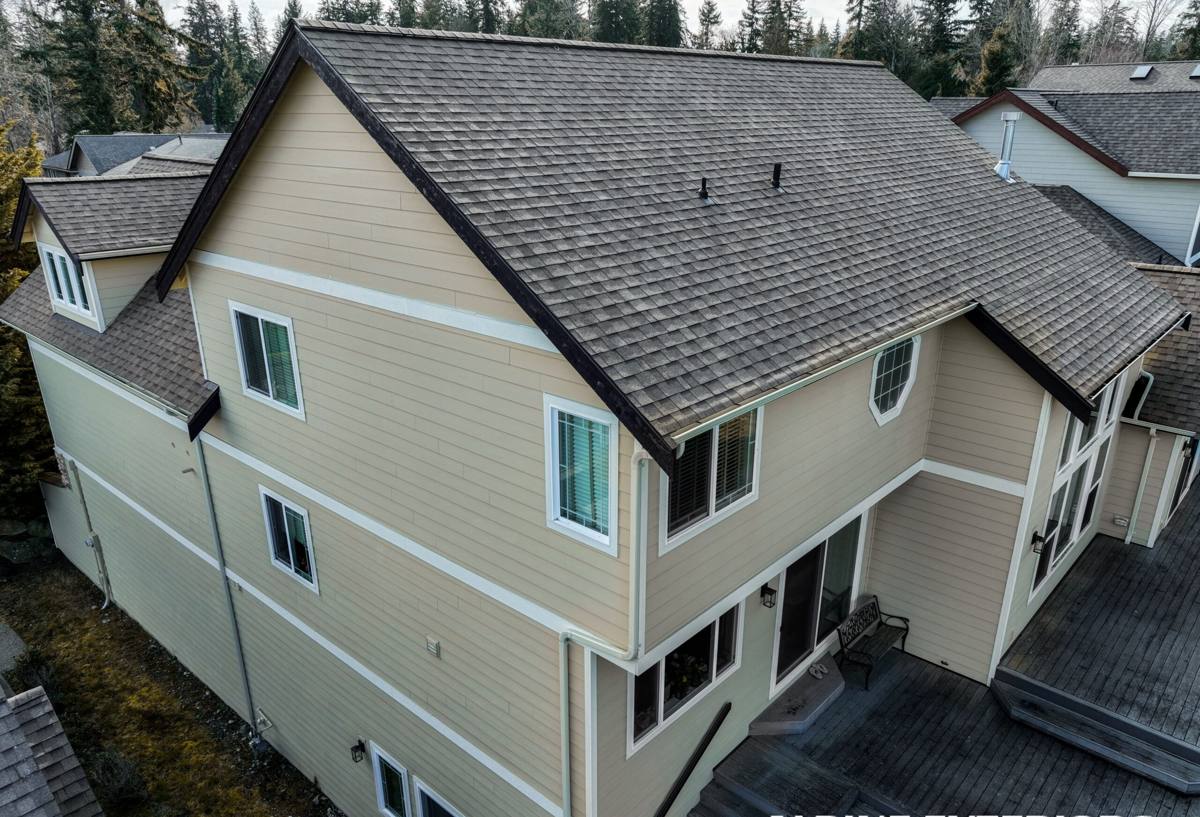
Why York's Climate Is Tough on Decks
Bellingham sits right on the water, and that proximity brings a mix of conditions that are hard on exterior wood structures. Salt-laden air off Bellingham Bay accelerates corrosion on fasteners, brackets, and any exposed metal hardware. Add Whatcom County's long, wet winters and the mild, shaded microclimates common in older neighborhoods like York, and you get extended stretches where a deck's surface and substructure simply don't dry out.
Moss is the most visible symptom, but it's not the real problem — it's a sign of the real problem. Moss grows where moisture sits, and moss that's allowed to spread holds even more water against the wood underneath it, feeding rot in ledger boards, joists, and post bases that you can't see from the surface. By the time boards are visibly cupping or spongy, the damage underneath is usually further along than it looks.
Signs You Need a Replacement, Not a Repair
Not every tired-looking deck needs to come out completely. But there's a point where patching boards is throwing money at a structure that's already compromised underneath. Here's what tells us a full replacement is the honest recommendation:
- Soft, spongy, or springy spots in the decking or framing when you walk across it
- Visible rot, dark staining, or crumbling wood at the ledger board where the deck attaches to the house
- Fasteners that are rusted, backing out, or leaving reddish-brown streaks on the wood
- Posts or footings that have shifted, settled, or show cracking at grade level
- Persistent moss or algae growth that returns within weeks of cleaning
- Railings that flex or feel loose when you lean on them — a safety issue, not a cosmetic one
- A deck original to a home built more than 20–25 years ago that has never had structural work done
If you're only seeing one or two of these on a deck that's otherwise sound, a repair may genuinely be enough. We'll tell you that directly during an inspection — replacement isn't the answer to every problem, and we're not going to sell you a full rebuild when a repair will do the job.
What a Correct Deck Replacement Involves
Tear-Off and Structural Inspection
Once the old decking and railings are removed, we inspect what's underneath — ledger board, joists, beams, posts, and footings — before deciding what stays and what gets rebuilt. This is the step that gets skipped when a job is done too fast, and it's the single biggest factor in whether a new deck lasts.
Ledger Board and Flashing
The ledger board, where the deck bolts into the house, is the most common failure point on decks in wet climates. Proper flashing that sheds water away from the house framing, rather than trapping it against the ledger, is non-negotiable. This is also one of the most commonly cut corners in older or budget deck work, and it's usually the reason a deck rots from the inside out while looking fine on top.
Framing and Fasteners
We frame with lumber rated for ground contact where it matters and use fasteners and structural hardware rated for corrosive, coastal environments — not standard interior-grade hardware that starts rusting within a season this close to the bay.
Decking Surface and Railings
Once the structure is sound, we install the decking material and railings you've chosen, set to current code for guardrail height, baluster spacing, and stair geometry — details that matter for safety and for passing inspection.
Choosing the Right Decking Material
There's no single "correct" decking material — it depends on your budget, how much upkeep you want to do, and how the deck is used. Here's how the common options compare for a wet, moss-prone climate like Bellingham's:
| Material | Upfront Cost | Maintenance | How It Handles Our Climate |
|---|---|---|---|
| Pressure-treated wood | Lowest | Annual cleaning, periodic staining/sealing | Durable if maintained; neglect leads to graying, splintering, and moss buildup |
| Cedar | Moderate | Regular sealing to maintain color and resist moisture | Naturally rot-resistant but still needs upkeep in constant damp conditions |
| Capped composite / PVC | Highest | Occasional washing, no staining or sealing | Resists moisture absorption and moss staining well; won't rot |
We install all three depending on what a homeowner wants. Our honest opinion: in a neighborhood like York, where mature landscaping keeps some yards shaded and damp for long stretches, composite decking earns its higher upfront cost through lower long-term maintenance. But plenty of homeowners prefer the look and feel of real wood and are willing to keep up with sealing — that's a legitimate choice too, as long as it's a conscious one.
Cost Factors for a Deck Replacement
Every deck is different, so we won't quote a number without seeing the site, but these are the variables that move the price most:
| Factor | Why It Matters |
|---|---|
| Deck size and footprint | More square footage means more material, labor, and footings |
| Framing condition | Full structural rebuild costs more than decking-only replacement over sound framing |
| Decking material | Composite runs higher upfront than pressure-treated wood; cedar sits in between |
| Height and stairs | Multi-level decks or long stair runs add framing, railing, and code requirements |
| Railing style | Cable, glass, and custom railings cost more than standard baluster railings |
| Site access | Tight lots or limited equipment access, common on older York properties, can add labor time |
| Permit and inspection | Required for most full replacements and factored into the timeline and price |
Our Process, Start to Finish
- Free on-site inspection and honest assessment of whether you need a repair or a full replacement
- Written estimate covering materials, structural work, and a realistic timeline
- Permit pulled where required before any demolition begins
- Tear-off, structural inspection, and framing repair or rebuild as needed
- Decking, railing, and stair installation to current code
- Final walkthrough with you before we consider the job done
We don't skip the inspection step or the permit step to move faster. Both exist to protect you — one from paying to build on a rotten frame, the other from having an uninspected structure that can complicate a home sale or insurance claim down the road.
Permits and Codes in Bellingham and Whatcom County
Most full deck replacements in Bellingham require a permit, particularly when the structure is being rebuilt rather than just resurfaced, or when railing height and guardrail requirements are involved. Requirements can vary based on deck height, size, and whether it's attached to the house. We handle the permit process as part of the job so you're not left figuring out city requirements on your own, and so the finished deck is something you can stand behind if you ever sell the home.
Why a Local York Crew Makes a Difference
Working regularly in York and the surrounding Bellingham neighborhoods means we already understand the patterns specific to this area: which yards hold moisture longest, how tree cover affects moss growth, what kind of access older lots typically allow, and what condition to expect when we open up a ledger board on a home of a certain age. That's not something a crew coming in from outside the area picks up on the first visit.
It also means accountability. We're not doing a one-off job and moving on — we're a contractor other homeowners in your neighborhood can ask about, which keeps us honest about the quality of the work and the materials we recommend.
Caring for Your New Deck Year-Round
A well-built deck still needs some seasonal attention in this climate. Keep gutters and downspouts clear so runoff isn't dumping onto or near the deck. Sweep leaves and debris off the surface regularly, especially in fall, since trapped organic matter is what feeds moss and mildew. For wood decking, plan on inspecting the sealant or stain annually and reapplying as it wears. For composite decking, an occasional wash with a soft brush and mild cleaner is usually all that's needed. Either way, a quick visual check each spring — looking at the ledger board, fasteners, and post bases — catches small issues while they're still small.
If your deck in York is showing its age, or you just want an honest opinion on whether it's a repair or a replacement, we're happy to take a look. Reach out for a free, no-pressure estimate using the form below.