 Bellingham Exterior
 Storm Damage Roof Repair in Lynden
Lynden sits inland from Bellingham Bay in the heart of Whatcom County, but "inland" doesn't mean sheltered. Winter windstorms move through the Nooksack Valley with real force, driving rain sideways under shingles and shakes, and the long stretch of grey, wet weather that defines a Pacific Northwest fall and winter gives moss and moisture months at a time to work into any weak point in a roof system. When a storm rolls through and takes a few shingles, cracks a ridge cap, or knocks a branch onto the roof deck, the damage is rarely limited to what you can see from the ground.
We repair storm-damaged roofs for homeowners in Lynden and the surrounding Whatcom County communities. This page covers what storm damage actually looks like on roofs built for this climate, what a correct repair involves, and what to expect if you call us after a storm.
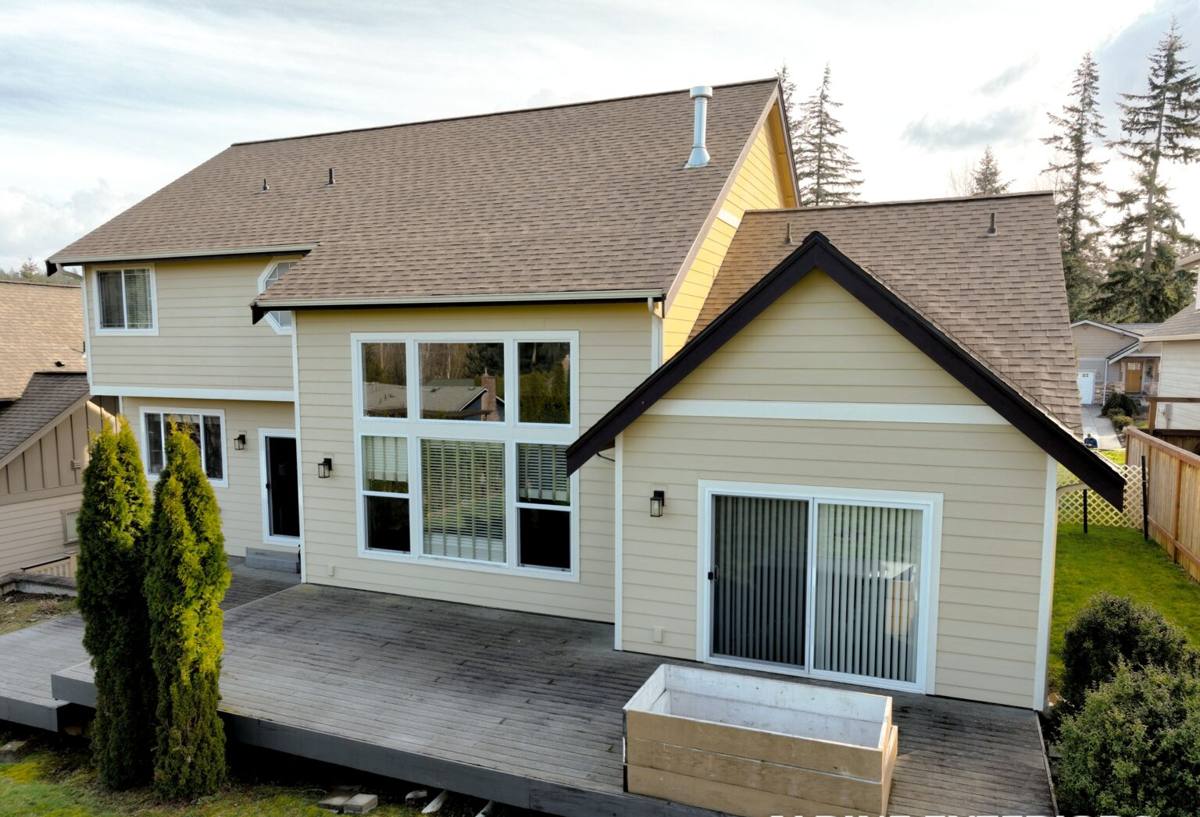
How Local Storms Actually Damage a Roof
Wind-Driven Rain
A roof covering is designed to shed water moving downward, not water being pushed sideways or upward under an edge. When wind gusts drive rain at a steep angle during a storm, water can work under shingle tabs, around flashing, and into any gap that wouldn't normally see moisture. This is one of the most common causes of interior leaks that show up days or even weeks after the storm has passed — the water found a path in, but it takes time to travel through the underlayment and decking before it reaches a ceiling.
Wind Uplift and Debris
Sustained wind and sharp gusts can lift shingle tabs, loosen ridge caps, and in worse cases tear sections of roofing off entirely. Falling or wind-thrown branches are a separate but related problem — even a glancing hit can crack a shingle, punch through a shake, or dent metal flashing in a way that isn't obvious from a ladder-length look but is enough to let water in over time.
Moss and Trapped Moisture
Whatcom County's long wet season keeps roofs damp for extended stretches, and shaded or north-facing slopes in particular grow moss readily. Moss itself doesn't cause storm damage, but it makes storm damage worse: moss holds water against the roofing material, lifts shingle edges as it grows, and can mask a crack or a lifted tab that would otherwise be easy to spot. A roof that goes into a windstorm already carrying a moss load is more vulnerable than a clean one.
What a Correct Storm Damage Repair Involves
A rushed storm repair is one of the most common ways a roof ends up with a second, larger problem a year later. Doing it right means treating the storm damage as a chance to check the whole system, not just patch the visible spot.
- Full roof inspection, not just the area that looks damaged — wind and debris damage is often spread out, not confined to one spot
- Decking check underneath any removed shingles, since wet or soft decking needs to be replaced before new roofing goes down, not covered over
- Underlayment integrity around the repaired area, since a torn or displaced underlayment layer defeats the point of a shingle repair
- Flashing inspection at chimneys, vents, valleys, and wall intersections — these are the areas most likely to have been disturbed by wind or impact
- Matching materials as closely as possible in type, profile, and color so the repair doesn't stand out or create a mismatched wear pattern down the road
- Proper fastening per manufacturer spec, not just enough nails to hold the piece down until the next inspection
Common Storm Damage We See on Whatcom County Roofs
| Damage Type | Typical Cause | What It Looks Like | Urgency |
|---|---|---|---|
| Lifted or missing shingle tabs | Wind gusts, aging adhesive strips | Visible gaps, shingle pieces in the yard | Address before next rain |
| Cracked or split shakes/shingles | Branch or debris impact | Localized cracks, sometimes hard to spot from the ground | Address before next rain |
| Displaced ridge cap | Sustained high wind | Gap along the roof peak | High — direct path for water |
| Bent or lifted flashing | Wind, impact, or age combined with a storm event | Rust streaks, gaps at chimney or valley | High — common leak source |
| Moss-related lifting | Long wet season, shaded slopes | Green growth, spongy feel underfoot | Moderate — worsens with time |
| Granule loss on shingles | Wind-driven rain and hail impact | Bare-looking patches, granules in gutters | Moderate — accelerates aging |
Our Repair Process
- Inspection and documentation. We walk the full roof, photograph the damage, and check attic or interior signs of water intrusion where accessible.
- Written scope and estimate. You get a clear explanation of what's damaged, what needs to be repaired versus what's cosmetic, and a straightforward price — no vague allowances.
- Insurance documentation, if needed. If you're filing a storm damage claim, we provide the photos and written findings your adjuster will want to see.
- Repair. We remove and replace only what's actually compromised, check the decking and underlayment underneath, and match materials to the existing roof wherever possible.
- Final check. We confirm flashing, fasteners, and the surrounding roofing are sound before we call the job done — not just the immediate repair spot.
Repair or Replace? What Actually Decides It
Not every storm-damaged roof needs a full replacement, and not every roof that looks fine after a storm actually is. The honest answer depends on a few specific factors, and we'll tell you plainly which situation you're in.
| Factor | Leans Toward Repair | Leans Toward Replacement |
|---|---|---|
| Roof age | Roof is well within its expected service life | Roof is already near or past its expected lifespan |
| Extent of damage | Damage limited to one section or a few isolated spots | Damage spread across multiple slopes or the whole roof |
| Decking condition | Decking underneath is dry and solid | Decking is soft, rotted, or shows repeated past water damage |
| Prior repair history | This is the first significant issue | This is one of several storm or moisture repairs over the years |
| Material availability | Matching material is still available | Original material is discontinued and mismatched repairs would be obvious |
Documenting Storm Damage for Insurance
If you plan to file a claim, timing and documentation matter. Photograph visible damage as soon as it's safe to do so, avoid walking a wet or storm-damaged roof yourself, and get a professional inspection before making any repairs beyond emergency tarping. Adjusters weigh clear, dated documentation heavily, and a written inspection report from a roofing contractor carries more weight than a phone photo taken from the driveway. We provide that documentation as a standard part of our storm damage inspections, whether or not you end up filing a claim.
After the Storm: A Homeowner's Checklist
- Check gutters and the ground around the house for shingle granules, shingle pieces, or flashing fragments
- Look for water stains, sagging, or new spots on interior ceilings, especially after wind-driven rain
- Note any branches or debris that landed on or near the roof, even if nothing looks obviously broken
- Avoid getting on the roof yourself, especially if it's wet, mossy, or steep
- Call for an inspection promptly — a small storm repair delayed through another wet season often becomes a bigger one
- Keep any photos or notes you take; they're useful whether you repair now or later
Why a Crew That Already Works in Lynden Matters
Storm damage repair isn't just about fixing what's visible — it's about knowing how this specific climate behaves on a roof over time. A crew that regularly works Whatcom County roofs knows which slopes tend to hold moss, how wind typically moves through the valley during a storm system, and what kind of flashing failures show up most often on local roof designs. That local pattern recognition is what separates a repair that holds up through the next storm season from one that gets revisited in a year.
We're also positioned to respond quickly when Lynden and the surrounding area get hit, rather than being spread thin across a much larger service radius. That matters when a leak is active and every day of delay means more water finding its way into decking, insulation, or drywall.
If you've got storm damage — or you're not sure whether what you're seeing is storm damage or just normal wear — we're happy to take a look. Fill out the form below for a free, no-pressure estimate and honest read on what your roof actually needs.