 Bellingham Exterior
 Roofing for a Wooded, Lakeside Community
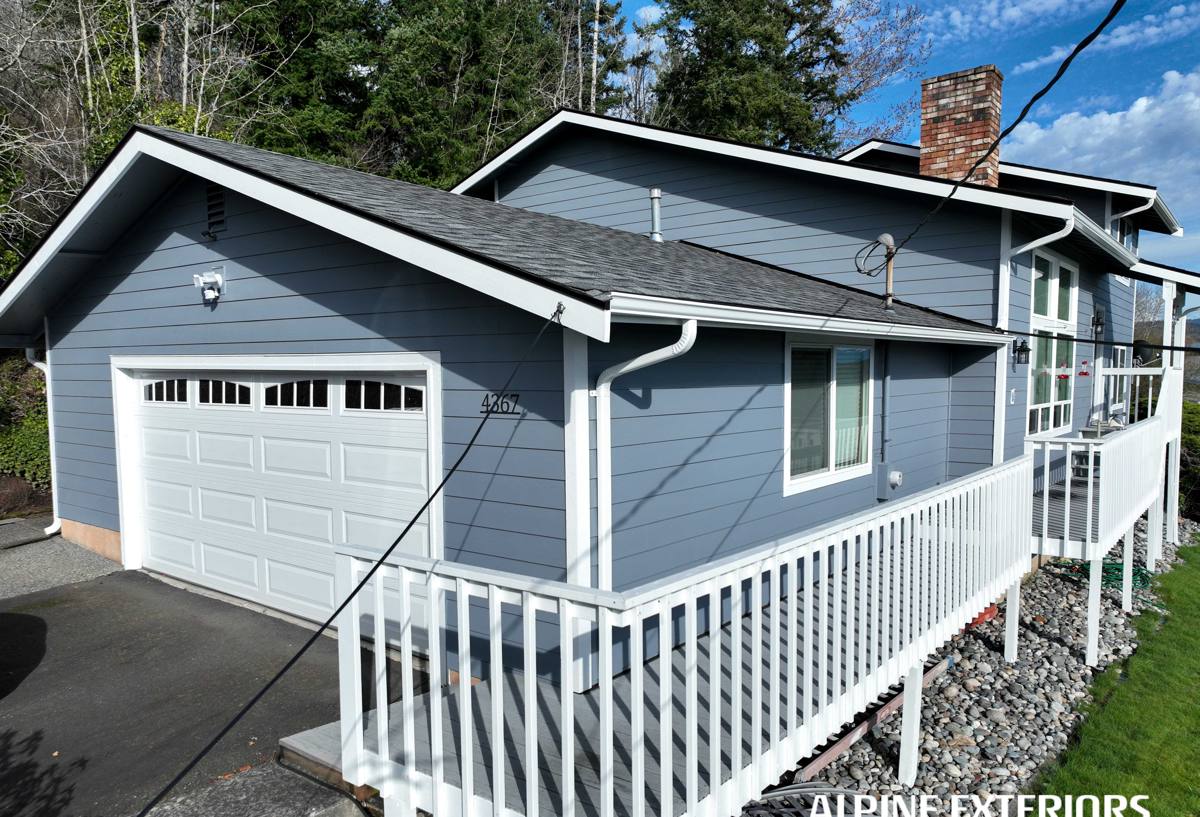
Sudden Valley sits in a different microclimate than most of Bellingham. Wrapped around Lake Whatcom and shaded by heavy stands of fir and cedar, homes here deal with conditions that a roof three miles away in town rarely sees to the same degree: near-constant shade on north- and east-facing slopes, humid air pulled off the lake, and a steady rain of needles, cones, and leaf litter that never fully stops. Add in the salt-tinged marine air that moves through Whatcom County off the Sound, and you have a combination that shortens the life of an asphalt shingle roof faster than most homeowners expect if it isn't installed and maintained with that environment in mind.
An asphalt shingle roof can absolutely handle this climate well — it's still the most practical, cost-effective option for the vast majority of Sudden Valley homes. But "handle it well" depends on decisions made at the install: how the deck was prepped, how the roof breathes, what underlayment went down first, and how the edges and valleys were flashed. Get those wrong and moss, trapped moisture, and granule loss show up years earlier than they should.
What Sudden Valley's Climate Actually Does to a Shingle Roof
Shade and Moisture
Tree cover is the defining feature of most Sudden Valley lots, and it's a mixed blessing for a roof. Shade keeps a house cooler in summer, but it also means large sections of roof rarely see direct sun. Without sun exposure to dry things out, moisture from lake humidity, morning fog, and rain sits longer on the shingle surface — and that's exactly the condition moss and algae need to establish.
Moss Season Is Longer Here
Western Washington has a moss season everywhere, but on a shaded, lake-adjacent lot it runs longer and comes back faster after treatment than it does on an open, sun-exposed roof in town. Moss isn't just cosmetic — its root structure lifts shingle edges and tabs, and once it takes hold it holds water against the roof surface long after the rain stops, which accelerates granule loss and shortens the shingle's service life.
Debris Load
Needles, cones, and leaf litter collect in valleys, behind chimneys, and along the downslope edge of dormers faster on a heavily treed lot than on a typical suburban roof. That debris holds moisture directly against the shingle surface and, if it's not cleared, works its way into gutters and eventually under the shingle edge at the eaves.
Salt Air and Driving Rain
Whatcom County's proximity to Puget Sound and the Strait means fasteners, flashing, and any exposed metal on the roof are exposed to salt-laden air over time, which speeds up corrosion on lower-quality metal components. Driving rain off the Sound and the Bay tests every flashing detail and every shingle nail-line — an improperly nailed or under-lapped shingle roof shows leaks around chimneys, skylights, and valleys well before it ever shows a leak in the open field of the roof.
What a Correct Asphalt Shingle Job Looks Like Here
A shingle roof is only as good as everything installed underneath it. In a shaded, moisture-heavy setting like Sudden Valley, the details matter more than the shingle brand printed on the wrapper.
- Deck inspection and repair — any soft, delaminated, or water-stained sheathing gets replaced before a single shingle goes down. Nailing shingles over a compromised deck is how a 30-year shingle fails in ten.
- Ice-and-water shield at vulnerable points — eaves, valleys, and around every roof penetration get a self-adhering waterproof membrane, not just felt. This is the detail that stops the slow leaks that show up as ceiling stains months after a heavy rain event.
- Synthetic underlayment across the field — a durable, breathable synthetic layer outperforms old-style felt in a damp climate and gives the roof a second line of defense if wind-driven rain ever gets under a shingle tab.
- Proper flashing at every transition — chimneys, skylights, dormers, and sidewalls all need step flashing and counter-flashing done correctly, not caulk used as a substitute for metal.
- Balanced intake and exhaust ventilation — this is frequently the most overlooked part of a re-roof, and it's the one that matters most under a tree canopy. Poor ventilation traps moisture in the attic, which condenses on the underside of the deck and accelerates rot from the inside out.
- Correct nailing pattern and shingle exposure — every manufacturer specifies a nail count and placement for their wind rating. Crews that rush this step void the warranty without the homeowner ever knowing it.
Choosing the Right Shingle for This Setting
Not every asphalt shingle is built the same way, and the right choice for a shaded, moss-prone Sudden Valley roof isn't always the cheapest option on the shelf. Here's how the common tiers compare for this climate specifically.
| Shingle Type | Typical Lifespan | How It Performs Under Tree Cover / Moisture |
|---|---|---|
| 3-Tab (economy) | 15–20 years | Thinner profile, less algae resistance unless treated; moss and staining show sooner in constant shade |
| Architectural / Laminate | 25–30 years | Heavier, more durable mat; better moisture resistance and holds up better against moss intrusion at the tabs |
| Algae-Resistant (AR) Shingles | 25–30+ years | Copper or zinc granules blended in to slow algae and moss growth — worth the upgrade on shaded, lake-proximity lots |
| Impact-Rated (Class 4) | 30+ years | Best resistance to debris impact from falling branches and cones common on heavily wooded lots |
For most Sudden Valley homes, we recommend at minimum an algae-resistant architectural shingle. The upcharge over standard architectural shingles is modest, and on a shaded lot it's one of the few upgrades that pays for itself in reduced maintenance and a cleaner-looking roof for longer between treatments.
Moss Prevention: Beyond Just the Shingle
The shingle itself is only one part of moss control. A full approach for a wooded lot includes:
- Zinc or copper control strips installed near the ridge, which release trace metal ions with every rainfall to inhibit moss and algae growth across the field below them
- Keeping nearby branches trimmed back from the roofline so less debris and shade fall directly on the shingles
- Scheduled gentle cleaning — soft washing, never pressure washing, which strips granules and shortens shingle life
- Clear valleys and gutters going into fall and again after the heaviest leaf drop, since a clogged valley is one of the most common causes of a slow, hard-to-diagnose leak
Our Process, Start to Finish
1. On-Site Inspection
We walk the roof (not just the ground) to check deck condition, existing ventilation, flashing details, and moss or moisture patterns specific to how your lot is shaded and oriented.
2. Honest Scope and Options
You get a clear explanation of what's actually needed — full replacement, partial repair, or maintenance — along with shingle options suited to your home's sun exposure and tree cover, not a one-size-fits-all quote.
3. Deck Prep and Repair
Any damaged sheathing is replaced before underlayment goes down. This step gets skipped by crews trying to move fast, and it's the single biggest predictor of how long a new roof will actually last.
4. Installation
Ice-and-water membrane at vulnerable areas, synthetic underlayment across the field, correct flashing at every penetration and transition, and shingles installed to the manufacturer's nailing spec for full wind and warranty compliance.
5. Ventilation Check
We confirm intake and exhaust venting are balanced for your attic's size — critical in a climate where trapped moisture is a bigger long-term threat than any single storm.
6. Site Cleanup
Magnetic nail sweep, tear-off debris hauled out, and the property left the way we found it. Sudden Valley's private roads and shared access points mean we're mindful of where equipment and trailers sit during the job.
Signs Your Sudden Valley Roof Needs a Look
- Visible moss, especially on north-facing slopes or areas shaded most of the day
- Dark streaking or staining that keeps returning shortly after cleaning
- Granules collecting in gutters or at the base of downspouts
- Shingle tabs that are curling, cupping, or lifting at the edges
- Soft spots when walked, or visible sagging along the roofline
- Daylight visible through the attic decking, or damp insulation after a heavy rain
- Recurring debris buildup in valleys that doesn't clear on its own between rains
Why Local Experience in Sudden Valley Matters
A roof crew that mostly works flat, open, in-town lots doesn't always account for what a heavily wooded, lake-adjacent property actually needs — the extra attention to ventilation, the case for algae-resistant shingles, or the moss-prevention details that make the difference here. Crews already familiar with Sudden Valley also know the practical side: private, sometimes narrow roads, gate or access considerations, and being respectful of a quiet residential community while equipment is on site. None of that shows up on a quote, but it shows up in how smoothly the job actually goes.
Cost Factors to Understand
We don't publish blanket prices because roof cost depends on real variables specific to your home — but here's what actually drives the number up or down.
| Factor | Why It Matters |
|---|---|
| Roof size and number of facets | More valleys, dormers, and hips mean more flashing detail and labor time |
| Deck condition | Rot or delamination found at tear-off adds material and labor to replace sheathing |
| Shingle tier chosen | Algae-resistant and impact-rated shingles cost more per square but reduce maintenance and last longer under tree cover |
| Existing ventilation | Adding or correcting intake/exhaust venting is a smaller job during a full tear-off than after the fact |
| Access and site conditions | Steep pitch, tree clearance, and driveway/road access all affect how the job is staged |
| Layers to remove | Multiple existing layers of old roofing add tear-off time and disposal cost |
Get a Straight Answer on Your Roof
If you're noticing moss, staining, or just aren't sure how much life is left in your Sudden Valley roof, we're happy to take a look and give you an honest read — no pressure, no upsell script. Fill out the form below for a free estimate, and we'll walk the roof and talk through what your specific home actually needs.