 Bellingham Exterior
 Why Blaine Roofs Wear Out Differently Than Roofs Inland
Blaine sits right on the water, close to Semiahmoo Bay and Drayton Harbor, which puts homes here in a different weather pattern than roofs even a few miles inland in Bellingham. The combination of salt-laden air, near-constant winter rain coming off the Strait, and a moss season that can run eight months or longer means a roof in Blaine ages on a different clock than a roof in a drier, more sheltered part of Whatcom County. We see it in the field constantly: fasteners and flashing that corrode early, shingle granules that wash off faster on wind-exposed slopes, and moss colonies that take hold in shaded, north-facing sections within a year or two of installation if the roof wasn't built with that in mind.
None of this means a roof in Blaine has to fail early. It means the installation has to account for conditions that a generic, one-size-fits-all roofing job usually ignores.
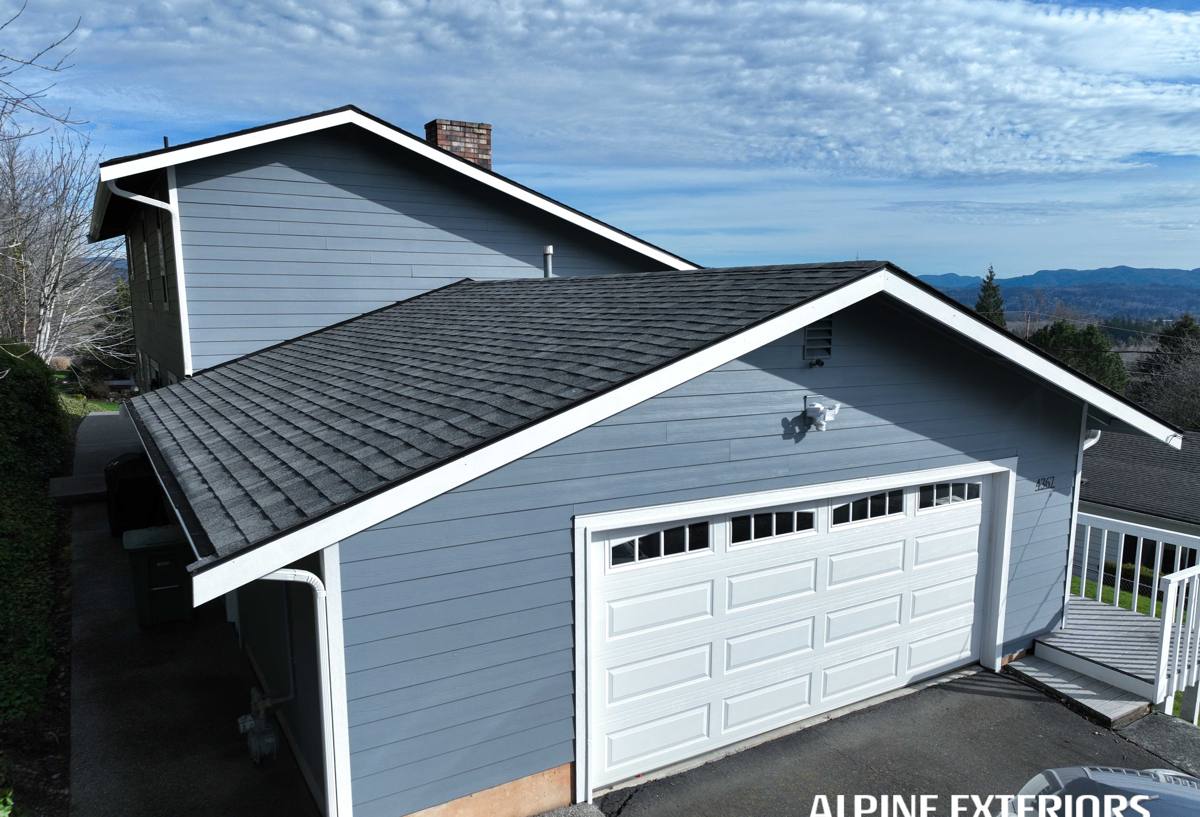
What Blaine's Climate Actually Does to a Roof
Salt Air and Corrosion
Airborne salt from the bay accelerates corrosion on anything metal — nail heads, flashing, drip edge, and the fasteners holding shingles down. Standard electro-galvanized nails and low-grade flashing can start showing rust streaks and pitting well before the shingles themselves are due for replacement. Once fasteners weaken, shingles can lift in wind, and once flashing corrodes, water finds a way behind it.
Driving Rain and Wind-Driven Water
Storms coming off the water don't just fall straight down, they get pushed sideways into roof edges, valleys, and wall-to-roof transitions. A roof that would perform fine in a calmer inland setting can leak in Blaine if the underlayment, flashing laps, and valley details aren't built for wind-driven rain specifically.
A Long Moss Season
Cool, damp, shaded conditions for most of the year give moss and algae a long runway to establish themselves, especially on north-facing slopes and under tree cover. Moss isn't just cosmetic — it holds moisture against the roof surface, works its way under shingle edges, and can lift shingles enough to let water in underneath.
What a Correct Roof Installation Involves
A new roof is more than laying down new shingles over what's there. Done right, it's a full system, and every layer matters more in a coastal, moss-prone climate like Blaine's.
Tear-Off vs. Overlay
We tear off down to the decking rather than layering new shingles over old ones. An overlay hides problems — soft decking, trapped moisture, failed underlayment — instead of fixing them, and it traps heat and moisture between layers, which is exactly the wrong move in a wet climate. Tear-off also lets us actually inspect the decking and address any rot or soft spots before they're covered up for another 20-plus years.
Underlayment and Ice-and-Water Shield
Standard felt underlayment is not enough for the amount of driving rain Blaine gets. We use synthetic underlayment for overall coverage and self-adhering ice-and-water shield membrane at the vulnerable spots — eaves, valleys, around chimneys and skylights, and along roof-to-wall transitions — where wind-driven water is most likely to find a way in.
Flashing and Fasteners Built for Salt Exposure
Given the corrosion risk from salt air, we don't cut corners on metal. That means quality flashing at all penetrations and valleys, and fasteners rated to hold up in a coastal environment rather than the cheapest option available. This is one of the areas where a lower bid often means a shorter roof life — the shingles might carry a long warranty, but the flashing and nails holding everything together don't always get the same attention.
Ventilation
Proper intake and exhaust ventilation keeps the attic temperature and moisture level in balance. Without it, moisture builds up under the roof deck, which shortens shingle life from underneath and creates the exact damp conditions moss thrives on above. We check existing ventilation on every reroof and correct it when it's inadequate, which is common on older Blaine homes that were never updated for current airflow standards.
Choosing a Roofing Material That Fits This Climate
There's no single "best" roofing material for every home — it depends on your roof's exposure, slope, budget, and how much maintenance you want to take on. Here's how the common options stack up for a coastal, moss-prone setting like Blaine.
| Material | Typical Lifespan | Coastal / Moss Performance | Maintenance |
|---|---|---|---|
| Standard 3-tab asphalt shingle | 15-20 years | Adequate on well-ventilated, sun-exposed roofs; more moss-prone on shaded slopes | Low, but moss removal needed periodically |
| Architectural (dimensional) shingle | 25-30 years | Thicker profile sheds water better; algae-resistant granule options available | Low, occasional moss/debris cleaning |
| Metal roofing | 40-50+ years | Sheds moisture fast, very moss-resistant on steeper slopes; needs corrosion-rated fasteners near the water | Very low |
| Cedar shake | 20-30 years with upkeep | Attractive but holds moisture and needs regular treatment in a damp, mossy climate | High — regular cleaning and treatment required |
For most Blaine homes, we lean toward architectural shingles with algae-resistant granules or metal roofing on steeper, shade-prone slopes. We're honest about the trade-offs of every option rather than steering everyone toward the same product — a low-slope roof under tree cover has different needs than a steep, open, sun-exposed one.
Moss and Algae: Prevention Built In, Not Bolted On
The best moss control happens during installation, not after the fact. That includes:
- Copper or zinc strips at the ridge on shaded roofs, which release trace metal ions that inhibit moss growth as rain washes over them
- Algae-resistant shingle products on north-facing or heavily shaded sections
- Correct ventilation so the underside of the deck isn't feeding moisture back into the moss-prone surface
- Clean valley and flashing details so moss and debris don't dam water against the roof edge
None of this makes a roof moss-proof forever — nothing does in this climate — but it substantially extends the time between moss treatments and reduces how aggressively you'll need to clean and treat the roof over its life.
Our Installation Process
- On-site inspection and honest assessment of your current roof, decking condition, and ventilation
- Written estimate covering materials, tear-off, disposal, flashing, and any decking repair contingencies
- Permitting through the appropriate local jurisdiction before work begins
- Full tear-off to bare decking, with decking repairs made as needed
- Installation of underlayment, ice-and-water shield at vulnerable areas, new flashing, and the chosen roofing material
- Ventilation correction where needed
- Final walkthrough and cleanup, including magnetic sweep for stray fasteners
We communicate at each stage rather than disappearing until the job is "done." If we find rotted decking or other issues once the old roof is off, we show you before we cover it up and price it honestly.
Permits and Local Requirements
Roof replacements in Blaine require a permit through the appropriate local building department, and coastal exposure can bring wind-load and fastening-pattern requirements into play depending on your roof's location and slope. We handle the permitting process as part of the job so you're not left tracking down inspections yourself.
Why a Crew That Already Works in Blaine Matters
A roofing crew that mostly works drier, inland jobs can still install a roof correctly on paper and have it underperform here — not because the workmanship was bad, but because the details that matter in Blaine (fastener corrosion resistance, valley and flashing work built for wind-driven rain, moss prevention on shaded slopes) aren't things you think about if you don't deal with them regularly. Working throughout Whatcom County, including Blaine and the rest of the Bellingham area, means we see how roofs actually perform in this specific climate over years, not just how they look the day they're finished.
Signs Your Roof May Need Replacing, Not Just Repair
- Granule loss showing up in gutters or downspouts
- Curling, cracking, or missing shingles, especially on wind-exposed slopes
- Persistent moss or algae that returns quickly after cleaning
- Daylight visible through the attic decking or staining on interior ceilings
- Roof is approaching or past the expected lifespan of its material
- Flashing around chimneys, vents, or skylights showing rust or gaps
If you're only seeing one or two of these, a repair may still be the right call — we'll tell you that directly if that's what the roof needs, rather than pushing a full replacement you don't need yet.
Get a Straight Answer on Your Roof
If your roof is showing its age, dealing with persistent moss, or you just want an honest read on how much life it has left, we're glad to take a look. We offer free, no-pressure estimates for new roof installation in Blaine and the surrounding area — use the form below to get started.